
Located in the heart of Washington, D.C., Griffith Stadium was more than just a ballpark; it was a landmark that witnessed the ebb and flow of baseball history in the nation’s capital. From its peculiar dimensions to its role as a home for both the Washington Senators of Major League Baseball (MLB) and the Homestead Grays of the Negro Leagues, Griffith Stadium etched itself into the annals of American sports. Constructed in 1911, the stadium not only stood as an architectural marvel but also as a testament to a bygone era of baseball characterized by strategy, quirkiness, and local flavor.
Situated at the intersection of what is now known as Florida Avenue and Georgia Avenue NW, Griffith Stadium was initially built to replace the wooden structure of National Park, which was destroyed by a fire in March 1911. The new ballpark was constructed with durability and longevity in mind, featuring steel and concrete—materials that would stand the test of time and ensure that the facility could withstand the elements and the roaring crowds that would soon fill its stands.
Griffith Stadium is significant not just for its physical location and structure, but for the unique moments and personalities it hosted. Memories of Walter Johnson’s fastball, the raucous cheers of fervent fans, and the aroma of freshly cut grass blend together to evoke a palpable sense of nostalgia. This ballpark was a microcosm of American culture during the early 20th century, capturing the essence of baseball through its idiosyncrasies and unique design. In this article, we will delve into the distinctive characteristics of Griffith Stadium, its influence on Washington baseball, and the unforgettable moments that etched it into the collective memory of baseball enthusiasts.
Unique Dimensions of Griffith Stadium
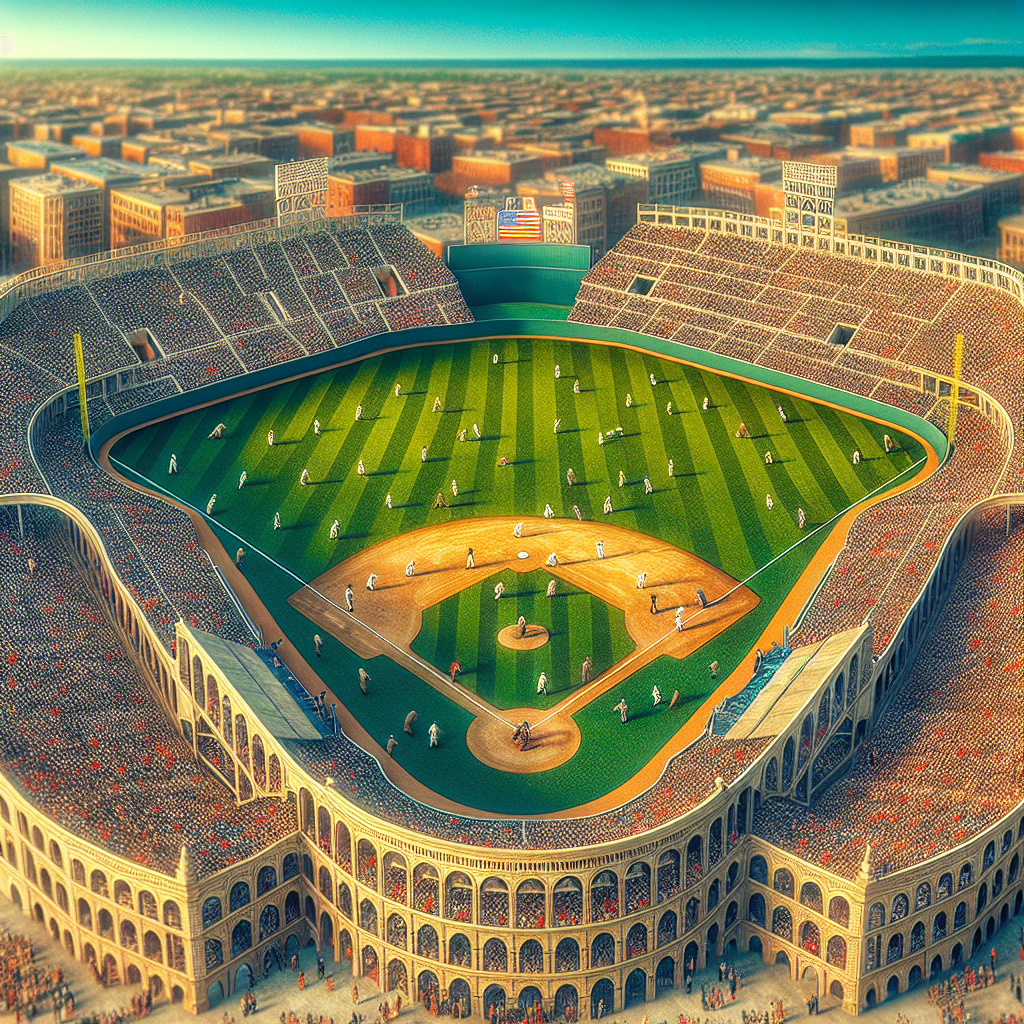
One of the most compelling aspects of Griffith Stadium was its unique and unconventional dimensions. Unlike the symmetrical outfields seen in modern ballparks, Griffith Stadium’s outfield had irregular contours that created distinct challenges for hitters and fielders alike. The peculiar layout was largely a result of the surrounding urban landscape. The left-field corner was notoriously short, with the wall jutting out sharply due to the constraints imposed by nearby residential buildings. Right field, meanwhile, extended deep into what seemed like an endless expanse, making it a pitcher-friendly part of the outfield.
The left-field foul pole stood at a mere 350 feet, but directly beyond it, the outfield wall took a sharp turn, creating an odd nook that gave rise to the phrase “Chinese Home Run”—a term used to describe a ball that barely cleared the fence for a home run. On the opposite side of the spectrum, the center-field wall was an imposing 421 feet from home plate, creating a Bermuda Triangle for balls hit in that direction. This configuration meant pitchers had an advantage and hitters had to be strategic, aiming their shots to exploit the shorter parts of the outfield while avoiding the cavernous depths of center field.
Additionally, the presence of the outfield bleachers altered the stadium’s dimensions further. These bleachers jutted into fair territory, often turning what would have been routine catches into thrilling plays at the wall. The intricate and sometimes bewildering dimensions of Griffith Stadium required players to adapt and develop specialized skills, creating a game within the game that delighted fans. For pitchers, Griffith Stadium was a sanctuary; for hitters, it was a puzzle to solve.
Home of the Washington Senators
The primary inhabitants of Griffith Stadium were the Washington Senators, a team that embodied the spirit and struggles of the capital city. The Senators’ history at Griffith Stadium was marked by moments of brilliance, epitomized by the legendary pitcher Walter Johnson. Known as “The Big Train,” Johnson is often considered one of the greatest pitchers in the history of the game. His tenure with the Senators brought the club to prominence, culminating in their World Series victory in 1924—an achievement that remains a highlight in the franchise’s storied past.
Griffith Stadium was not merely a venue for baseball games; it was the epicenter of baseball culture in Washington, D.C. Fans flocked to the stadium not just to watch the Senators play, but to be part of a community. The ballpark became a gathering place where stories were shared, friendships forged, and memories created. Baseball at Griffith Stadium served as an escape for many, providing a sense of normalcy and joy during times of economic hardship, war, and social upheaval.
Over the years, while the Senators often languished in the standings, Griffith Stadium remained a constant in the lives of its dedicated fans. The stadium and the team forged a bond that transcended wins and losses, embodying the resilience and enduring spirit of Washington baseball. Despite the challenges on the field, the Senators continually found ways to capture the imagination of their supporters, making Griffith Stadium synonymous with baseball in the nation’s capital.
The Homestead Grays and Negro League Baseball
Griffith Stadium also played a significant role in Negro League baseball, serving as a home field for the Homestead Grays, one of the most dominant teams of the era. The Grays, featuring prominent figures such as Josh Gibson and Buck Leonard, brought a vibrant energy to the ballpark. Their games at Griffith Stadium offered African American fans an opportunity to partake in America’s favorite pastime at a time when Major League Baseball remained segregated.
The impact of the Homestead Grays on the Washington baseball scene cannot be understated. They brought a level of excellence and excitement that drew crowds in droves. Gibson, often dubbed the “Black Babe Ruth,” showcased prodigious power that mesmerized fans and made Griffith Stadium a focal point for baseball enthusiasts of all backgrounds. Buck Leonard, with his consistent hitting and sharp fielding, further cemented the Grays’ legacy as a premier team in Negro League history.
The presence of the Homestead Grays at Griffith Stadium not only enriched the ballpark’s history but also highlighted the broader social and cultural significance of baseball. Their success and the passionate following they garnered demonstrated the pervasive love for the game within the African American community. The Grays’ tenure at Griffith Stadium stands as a testament to the resilience and brilliance of Negro League players and their indelible contribution to the sport.
Memorable Moments and Legendary Figures
Griffith Stadium was a stage for unforgettable moments and legendary figures that left an indelible mark on baseball history. One of the most iconic events was the 1924 World Series, where the Washington Senators emerged victorious against the New York Giants in a dramatic seven-game series. Walter Johnson’s heroic performance in Game 7, where he pitched four scoreless innings in relief, sealed the championship and brought unparalleled joy to the fans.
Another moment etched in Griffith Stadium lore was when Mickey Mantle hit what many consider the longest home run in baseball history. On April 17, 1953, Mantle sent a pitch from Chuck Stobbs soaring over the left-center field bleachers, reportedly traveling an astonishing 565 feet. This prodigious blast added to the stadium’s mystique and cemented Mantle’s reputation as one of the game’s greatest power hitters.
Beyond epic performances, Griffith Stadium was also the setting for historical milestones. President Franklin D. Roosevelt threw out the ceremonial first pitch for the 1933 All-Star Game hosted at the stadium. This event not only highlighted the connection between baseball and the American presidency but also underscored Griffith Stadium’s status as a premier venue for significant baseball events.
The Post-Griffith Era and Lasting Legacy
Griffith Stadium’s eventual demolition in 1965 marked the end of an era for Washington baseball. However, its legacy endures in various forms. The stadium’s site is now occupied by the Howard University Hospital, but memories of the unique ballpark continue to resonate with those who witnessed its splendor. The stories, the games, and the characters that once graced Griffith Stadium contribute to its lasting legacy in the annals of baseball history.
Many of the traits and features that made Griffith Stadium unique have influenced the design of modern ballparks. The trend towards retro-style stadiums, which emphasize quirky dimensions and nostalgic elements, draws inspiration from historic venues like Griffith. The emphasis on community, the connection to local culture, and the celebration of baseball’s rich history are hallmarks of many current ballparks, reflecting the enduring influence of places like Griffith Stadium.
For fans of Washington baseball, Griffith Stadium remains a cherished memory, encapsulating a period of time when the sport was intimately woven into the fabric of the city. The stadium’s role in hosting both MLB and Negro League games speaks to its broad appeal and the inclusive spirit of baseball. It remains a symbol of a time when the game was raw, unpolished, and deeply rooted in communal experiences.
Conclusion
Griffith Stadium stood as a beacon of baseball excellence and cultural significance in Washington, D.C. From its quirky dimensions to its role in major league and Negro League baseball, the ballpark was a testament to the beauty and complexity of the sport. The memories forged within its walls and the legends that walked its field have become a permanent part of baseball’s rich tapestry.
By reflecting on the unique characteristics and historical moments of Griffith Stadium, we not only honor a bygone era of sports but also understand the evolution of baseball and its impact on American culture. The stadium may no longer physically exist, but its spirit lives on through the stories and legends that continue to inspire fans and players alike.
Griffith Stadium’s influence remains palpable in today’s baseball landscape, from architectural designs to community engagement initiatives. As we reminisce about the iconic ballpark, we are reminded of the timeless nature of baseball and its power to evoke emotions, create memories, and bring people together. Griffith Stadium will always hold a special place in the heart of Washington baseball, symbolizing a golden era of the game that will never be forgotten.
Frequently Asked Questions
1. What made Griffith Stadium’s dimensions unique?
Griffith Stadium, located in Washington, D.C., was renowned for its highly distinctive and irregular dimensions, which were largely a result of real estate challenges and urban constraints. Unlike modern ballparks with their standardized field sizes, Griffith’s playing field was anything but uniform. The stadium’s right field was unusually deep, due to a short right-field fence that made home runs less common, serving as an additional strategic challenge for batters. On the other hand, the left field was much more straightforward but significantly narrower, adding a unique tactical element to the game. The odd configuration of Griffith Stadium could turn a normally routine pop fly into a complicated play with every hit requiring astute judgment and strategy adjustment from both pitchers and batters. This led to memorable gaming moments and stories, contributing to its hallowed status among fans and players alike.
2. How did Griffith Stadium serve as a home for multiple baseball teams?
Griffith Stadium was a versatile venue at the heart of Washington’s baseball scene, hosting not only the Washington Senators of Major League Baseball but also serving as the home ground for the Homestead Grays of the Negro Leagues. This dual occupancy was a testament to the stadium’s significance in supporting diverse leagues during times when segregation was prevalent in America. The Senators, who played during the MLB season, shared the stadium with the Homestead Grays, a dominant team in Negro League Baseball during the 1930s and 1940s. This arrangement provided the Grays with a formidable home field advantage, playing games in a venue where both teams’ histories flourished side-by-side. Griffith Stadium is remembered for its inclusive role, transcending racial barriers and fostering the love of baseball in a city rich with political and social milestones. The cohabitation of these teams highlights not only a shared dedication to the sport but also a poignant chapter in baseball’s social history.
3. What historical significance does Griffith Stadium hold for Washington, D.C.?
Griffith Stadium was more than just a baseball park; it was a civic monument within the nation’s capital. Erected in 1911, the stadium witnessed an array of historical events and societal changes, becoming a cornerstone of community and culture. From hosting multiple MLB All-Star Games and key World Series matchups to bearing silent witness to shifts in racial attitudes as it played host to teams across segregated leagues, the stadium’s contribution to Washington’s identity went beyond sports. It played an essential role in bringing together communities, fostering unity in a city often characterized by its political duels. The stadium was a site where families congregated and where history unfolded—not just in baseball, but in the evolution of the country’s cultural landscape. After its closure and dismantling in the 1960s, memories of Griffith Stadium endure in the hearts of Washingtonians, whose shared heritage finds expression in both personal and collective remembrances of the landmark.
4. Can you elaborate on the architectural design of Griffith Stadium and its impact on gameplay?
The architectural design of Griffith Stadium was integral to its charm and influence on gameplay. The stadium’s architecture emerged from necessity with urban pressures and land availability—factors that contributed to its distinctive and quirky layout. The outfield’s unpredictable contours, marked by jutting angles and varying wall heights, created both challenges and opportunities for players. These elements meant that no two games were the same, with each game offering its own set of unique challenges based on the idiosyncratic field characteristics. Interestingly, the asymmetry forced players to hone specific skills—such as precision hitting and strategic fielding—and encouraged teamwork and cooperation. Moreover, the pavilion’s seating was designed to visually envelop fans in the action, immersing them directly into the energy of each match. The stadium’s structural distinctions effectively meant every game was an event in technical mastery and strategy, captivating players and spectators alike.
5. How did Griffith Stadium impact the local community in Washington, D.C.?
Griffith Stadium was a beacon of community and sociability within Washington, D.C., its presence felt deeply by the local population. It wasn’t merely a sports venue; it was a hub for social interaction, joy, and community spirit—a gathering place where people set aside differences in favor of shared enthusiasm for baseball and camaraderie. The stadium transcended boundaries, bringing together people from all walks of life to participate in the collective experience of America’s pastime. Community events, parades, and even local minor league games often took place in its vicinity, rooted in the stadium’s ability to galvanize and inspire. Its significance extended beyond the athletic narrative; it was woven into the social fabric of Washington. When the city evolved into a different kind of urban landscape, the shared memories of Griffith Stadium lived on as a poignant reminder of the community and heritage it once represented.