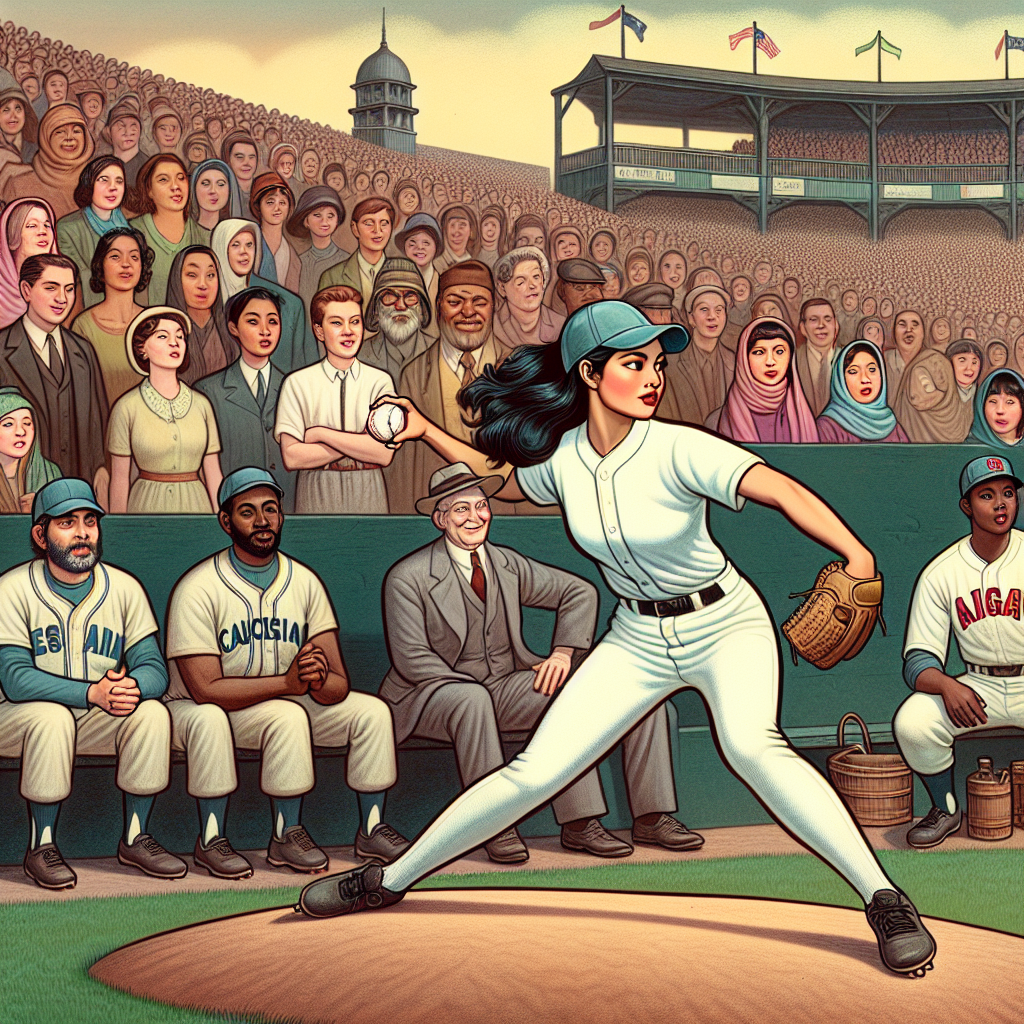
Baseball is deeply ingrained in the fabric of American culture, often evoking images of old-time legends, hot summer afternoons, and thrilling World Series finales. Yet, as ubiquitous as baseball’s presence is in North America, it’s a pastime that has historically excluded women. Dissecting the gender barriers in baseball unveils a fascinating yet complex tapestry involving cultural norms, social resistance, and ground-breaking individuals who dared to challenge the status quo. This article delves into the intricate history of women in baseball, shedding light on their struggles: how far they’ve come and how far there is to go.
The Early Days: Barriers Born
In the late 19th and early 20th centuries, as baseball evolved from a pastime into a professional sport, it swiftly became seen as a male domain. Women were primarily relegated to the sidelines as fans or, at most, mascots. Prevailing social attitudes, reflecting broader societal norms, dictated that sports, particularly baseball, were too rough for women, deemed unsuitable for the perceived frailty of the female physique. This narrative was maintained through cultural depictions and a media landscape that scarcely acknowledged women’s sporting capabilities.
Despite these barriers, “Bloomer Girls” teams in the late 1800s and early 1900s laid the groundwork advocating for women’s participation in baseball. Named after the trousers they wore, which challenged existing gender norms, the Bloomer Girls teams included several women who played alongside or against men, signifying a defiant entrance onto the playing field. However, as baseball professionalized, women found themselves increasingly marginalized, their roles minimized both culturally and logistically.
Pioneering Women: Breaking the Mold
The trailblazers who dared to break into this male-dominated arena faced considerable opposition. Women like Jackie Mitchell, who famously struck out Babe Ruth and Lou Gehrig in an exhibition game in 1931, became symbolic figures in challenging the status quo. However, Mitchell’s story is tinged with irony, as her achievements were dismissed as a stunt rather than a legitimate display of prowess, underscoring the significant gender prejudice of the era.
The formation of the All-American Girls Professional Baseball League (AAGPBL) during World War II marked a pivotal moment. Initially created as a wartime necessity when male players were drafted for military service, the AAGPBL offered women a platform to demonstrate their skills on a wider scale. The league, which played from 1943 to 1954, highlighted the capabilities of female players and garnered significant popularity, albeit still treated more as a novelty than a genuine element of professional sports.
Integration and Exclusion: The AAGPBL Aftermath
The dissolution of the AAGPBL in 1954 demonstrated both progress and the persistent exclusion of women from baseball. Despite achieving public support and proving women’s dedication to the sport, the league’s closure led to a regression in opportunities for women in baseball as wartime conditions reverted to peacetime. Baseball reverted to being a starkly male arena, pushing female athletes to the peripheries once again.
The societal integration narratives didn’t include women in baseball, largely because integration was seen through racial rather than gender lenses. While Jackie Robinson’s breaking of the color line pushed baseball toward racial inclusivity, gender inclusion wasn’t pursued with equivalent vigor. This stark discontent paved the way for future struggles and triumphs as women consistently sought to prove their place in baseball, struggling for acknowledgment and fair treatment.
Modern Inroads: Progress and Persistence
In the modern era, women’s roles in baseball have steadily grown, thanks in part to the groundwork laid by their historical counterparts. High-profile leagues and tournaments, such as the World Baseball Softball Confederation Women’s Baseball World Cup, have given female athletes a legitimate arena to shine. Increasingly, women are stepping into coaching, executive, and even broadcasting roles within baseball, reflecting a gradual but undeniable shift in the sport’s landscape.
The development of dedicated programs and recognition from organizations like Major League Baseball (MLB) aim to foster a new generation of female baseball players. Initiatives such as “Baseball for All,” which supports girls’ participation in baseball, demonstrate a significant advancement toward gender equality in the sport, though challenges persist in terms of equal resources, exposure, and respect compared to their male counterparts.
Challenges That Persist: The Road Ahead
While inroads have certainly been made, the journey toward full gender equity in baseball is fraught with ongoing difficulties. The barriers of tradition and entrenched perceptions present significant obstacles. Access to funding, visibility, and institutional support remain comparatively limited for women aspiring to make baseball their career, perpetuating the discernible gap between opportunities available to male and female athletes.
Broader advocacy and systemic change remain critical in addressing these issues. Public awareness, media coverage, and institutional endorsement are necessary to challenge outdated perceptions and promote inclusivity. Championing women’s achievements in baseball can inspire younger generations to pursue their passions minus the specter of gender limitations.
Conclusion: Reflecting on a Changing Game
Women’s contributions to baseball extend beyond mere participation; they represent a profound cultural shift challenging archaic gender norms and redefining who’s allowed to dream on the diamond. The female baseball pioneers serve not only as athletes but as standard-bearers for social justice and equity, challenging industry-wide perceptions and fostering broader societal change.
As society increasingly embraces gender inclusivity, baseball mirrors this through emerging female talent and the dismantling of barriers that have long excluded women. While there’s a considerable journey ahead, the steps taken by early pioneers, modern athletes, and advocates have set the stage for ongoing transformation. Looking to the future, the story of women in baseball isn’t just about the sport—it’s a broader tale of perseverance, equality, and cultural evolution.
Frequently Asked Questions
1. Why has baseball traditionally excluded women from participating at professional levels?
Baseball’s exclusion of women from professional levels can be traced back to deeply rooted cultural norms and societal perceptions about gender roles. Traditionally, sports in the United States have often been viewed through a masculine lens, subordinating feminine involvement to secondary status. These cultural stereotypes suggested that sports, especially those with physical or competitive aspects, were unsuitable arenas for women. Such attitudes were ingrained in societal structures, leading to the establishment of leagues and opportunities almost exclusively for men.
Additionally, there are historical instances where women were explicitly banned from playing baseball at the professional level, further entrenching the notion that it was a male domain. This exclusion wasn’t merely a result of indifference but was actively enforced through league policies and cultural reinforcements urging conformity to gender norms. While progress has been made in recent years with a slow racial and gender diversification of sports, baseball’s barriers are emblematic of a broader societal trend where traditional gender roles have been deeply embedded in various facets of life, leading to institutional and cultural resistance against women competing on “male” fields.
2. Are there any significant figures who have broken through the gender barriers in baseball?
Yes, there are several trailblazing women who have made significant strides in breaking through the gender barriers of baseball. One historical figure often cited is Effa Manley, an owner of the Newark Eagles of the Negro Leagues, and the first woman to be inducted into the Baseball Hall of Fame. Her managerial success and advocacy for player rights were pivotal in challenging gender roles within the sport.
In more recent times, people like Kim Ng, the first female general manager in Major League Baseball with the Miami Marlins, have paved the way for women in baseball administration. On the field, individuals like Justine Siegal, who became the first woman to coach a Major League Baseball team when she worked with the Oakland Athletics during their instructional league, have also smashed barriers. These figures have not only achieved personal milestones but also served as inspirations for future generations of women aspiring to carve out a place for themselves in the traditionally male-centric world of baseball.
3. How are cultural perceptions shifting regarding women in baseball?
In recent years, cultural perceptions surrounding women in baseball have progressively shifted towards inclusivity and acceptance. This shift is driven in part by increased visibility of women in various roles within the sport, thanks to activism and advocacy from women’s rights groups and changes in societal attitudes toward gender roles. There is now a growing recognition that talent and passion for baseball should not be constrained by gender, evidenced by the growing efforts to integrate girls and women into baseball programs from the grassroots level up to the professional leagues.
The movement for gender equality in sports is gaining momentum, with more women taking up roles as analysts, coaches, executives, and scouts. As role models emerge and succeed in these capacities, they are reshaping the narrative around female participation in baseball and proving to young girls that they too can aspire to, and achieve, these positions. These shifts are also reflected in media portrayals and public dialogue, both of which are increasingly portraying women as authoritative voices in baseball, helping to dismantle long-standing barriers.
4. What challenges still exist for women pursuing careers in professional baseball?
Despite progress, women still face numerous challenges in entering and thriving within professional baseball. One primary obstacle is the lack of infrastructure and opportunities tailored towards women. While there have been advances in women’s participation in sports in general, baseball-specific pathways for professional play, coaching, and other roles remain limited. This scarcity of structured programs and leagues for women interested in competitive baseball forces many to switch to softball or navigate careers in baseball through unconventional routes.
Additionally, women in baseball often encounter gender bias and discrimination, with preconceived notions dismissing their competence and capabilities purely based on gender. Breaking through the so-called “boy’s club” mentality present in many sports organizations can be difficult and requires a continuous push for policy change and cultural shifts. Further, representation remains a significant issue; with few role models, aspiring women in baseball might feel discouraged by the apparent lack of opportunities and recognition.
5. How can the baseball community support women’s participation in the sport?
The baseball community can support women’s participation by actively working towards inclusivity through policy changes, educational opportunities, and promoting a culture of respect and equality. Firstly, increasing investment in women’s baseball programs at all levels, from youth leagues to professional opportunities, will create more pathways for women to engage with the sport as players, coaches, and executives. This includes providing access to quality training facilities, coaching, and mentorship programs specifically designed to encourage female participation and development.
Furthermore, organizations should implement diversity and inclusion policies that ensure fair treatment and equal opportunities for women. This includes not only hiring and promoting women but also fostering an environment where diverse perspectives are valued and integral to the decision-making processes. Additionally, baseball’s governing bodies can support campaigns and initiatives that challenge stereotypes and spotlight the achievements of women in baseball, thus shifting public perceptions and inspiring future generations. Creating an ecosystem that celebrates all contributions and talents regardless of gender is key to leveling the playing field and supporting sustained participation of women in baseball.