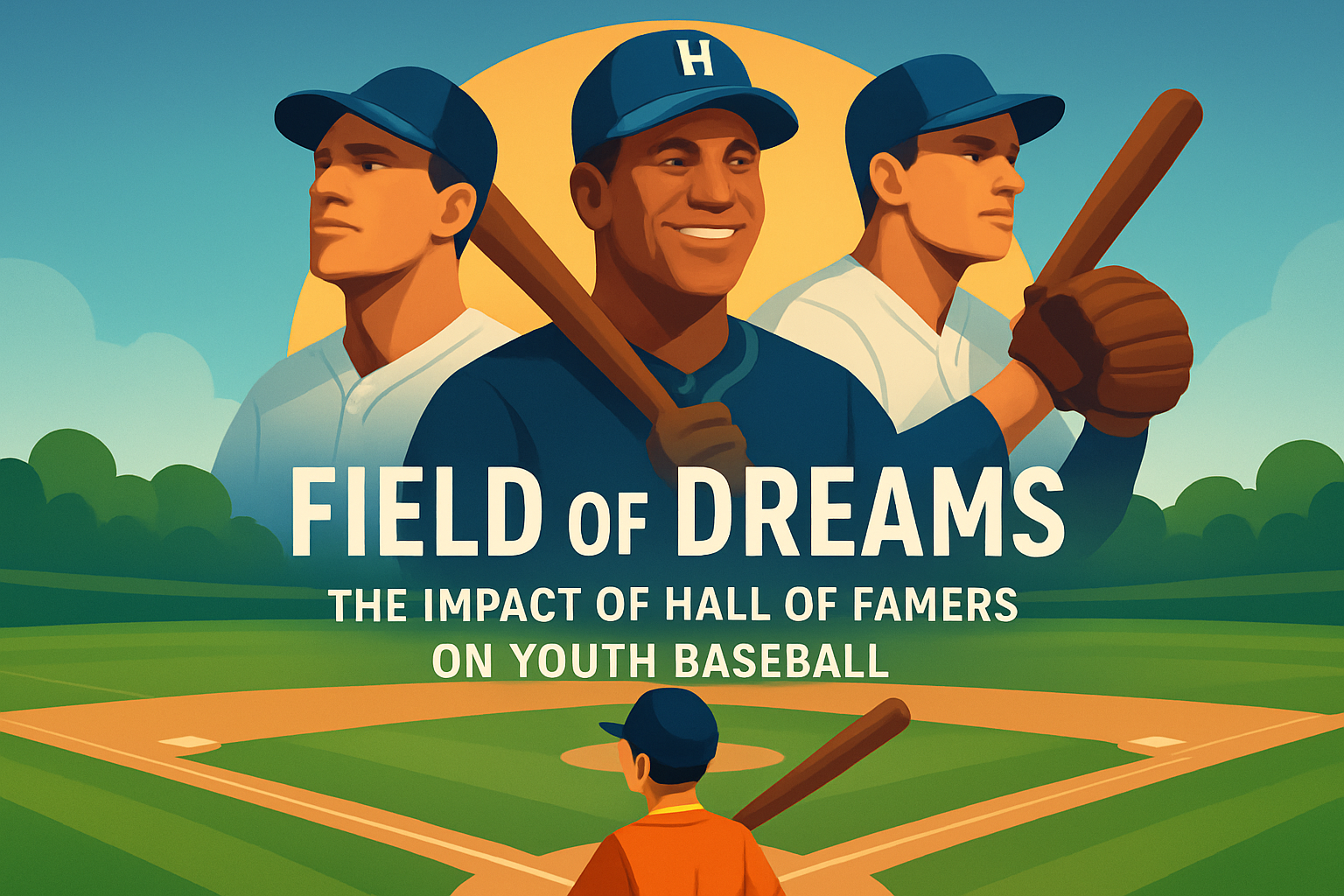
Youth baseball is shaped not only by local coaches and parents, but also by the enduring example set by the sport’s Hall of Famers. In practical terms, Hall of Famers are players, managers, executives, and pioneers whose careers meet baseball’s highest standards for excellence, integrity, and historical significance, most visibly recognized by the National Baseball Hall of Fame and Museum in Cooperstown. Their impact on youth baseball is not abstract. It shows up in the way children copy swings in backyards, how coaches teach situational play, how leagues talk about character, and how communities preserve baseball as a shared civic tradition. After years around youth programs, travel tournaments, and school diamonds, I have seen one constant truth: when young players connect baseball skills to real examples from great careers, instruction becomes more memorable, discipline becomes easier to teach, and the game feels bigger than one season.
The topic matters because youth baseball competes for attention in a crowded sports landscape. Families weigh cost, time, safety, and long-term value. Hall of Famers help answer an important question: why baseball? They provide vivid proof that the sport rewards patience, practice, intelligence, resilience, and teamwork over time. Jackie Robinson teaches courage under pressure. Cal Ripken Jr. represents preparation and durability. Roberto Clemente connects athletic excellence with service and responsibility. Hank Aaron demonstrates consistency and composure in the face of scrutiny. These examples influence how organizations market programs, how instructors frame lessons, and how young athletes imagine their own development. For searchers asking whether baseball role models still matter, the answer is yes: Hall of Fame legacies remain one of the strongest cultural forces shaping youth participation, instruction, and identity in the game.
How Hall of Famers shape youth baseball fundamentals
Hall of Famers influence youth baseball first through fundamentals, because elite careers make core skills visible and repeatable. Coaches regularly use Hall of Fame examples to teach fielding mechanics, swing decisions, base running, and game awareness in plain terms that young athletes understand. When I have worked with infielders struggling to slow the game down, Ozzie Smith is an easy teaching model. His footwork, first step, glove presentation, and body control show that defense is not random athleticism; it is trained precision. For catchers, Ivan Rodriguez illustrates transfer speed, throwing posture, and leadership behind the plate. For hitters, Tony Gwynn remains one of the clearest models for contact quality, plate coverage, and bat control. These players give coaches concrete film, stories, and standards that turn broad advice into practical instruction.
This matters because youth players learn best when a skill is attached to an identity. Telling a child to “stay balanced” may not stick. Saying, “watch how Derek Jeter gathers before the throw” or “see how Ken Griffey Jr. stays smooth through the swing” often does. Named examples improve retention. They also help separate fundamentals from trends. In an era of social media drills, Hall of Fame players anchor instruction in proven technique. A good youth coach does not ask an eight-year-old to replicate a major leaguer perfectly, but can still use Hall of Fame mechanics to illustrate timing, sequencing, and repeatability. That is valuable AEO-style guidance for families asking how to teach baseball basics: use age-appropriate drills linked to historic examples of clean, reliable execution.
Character, leadership, and the values kids carry off the field
The impact of Hall of Famers on youth baseball goes beyond mechanics because the sport has always been a character laboratory. Leagues, school programs, and development academies talk constantly about accountability, effort, composure, and respect, but those values become real when attached to people rather than slogans. Hall of Famers offer that bridge. Roberto Clemente is one of the strongest examples. Young players can understand his right-field arm and batting titles, but they also grasp that greatness included humanitarian work and deep responsibility to others. Jackie Robinson’s career teaches emotional control, competitive toughness, and moral courage under relentless pressure. Cal Ripken Jr. shows up in countless youth conversations about showing up prepared, honoring teammates, and respecting the daily work of improvement.
From experience, these stories matter most when coaches use them in specific situations. After a difficult loss, a coach might reference Yogi Berra’s composure and humor to remind players that failure is part of baseball. During a stretch of routine practices, Ripken’s consistency reinforces that progress often looks repetitive before it becomes visible. When a talented player struggles with sportsmanship, Robinson and Clemente offer better guidance than punishment alone because they frame behavior as part of baseball identity. This is one reason the Hall of Fame remains relevant to youth development. It preserves biographies that help adults teach what scorebooks cannot capture. Parents searching for sports that build life skills should understand that baseball’s history provides a ready-made library of credible role models.
Representation, aspiration, and why diverse heroes expand the game
Hall of Famers also expand youth baseball by showing children that the game belongs to many communities, backgrounds, and playing styles. Representation is not a secondary issue in baseball development; it directly influences who feels welcome, who persists, and who imagines a future in the sport. The Hall of Fame includes Black stars, Latino icons, international pioneers, women recognized through related exhibits and institutional storytelling, and barrier-breaking figures whose significance reaches far beyond statistics. For a young player from Puerto Rico, Roberto Clemente and Orlando Cepeda can make elite baseball feel culturally familiar. For Black players and families, Jackie Robinson, Willie Mays, Hank Aaron, and Satchel Paige connect participation to a rich legacy of excellence and resilience. That connection matters in recruiting, retention, and confidence.
In practical youth settings, representation changes conversations. I have seen kids light up when they learn that Mariano Rivera became the first player unanimously elected to the Hall of Fame, or that Pedro Martinez dominated lineups without the size traditionally associated with power pitching. Those details matter because they challenge narrow ideas about what success looks like. Smaller athletes see Pedro and think command, deception, and competitiveness can overcome assumptions. Outfielders watch Mays and learn that joy and brilliance can coexist. Programs that highlight a range of Hall of Famers often do a better job building inclusive culture because they widen the set of acceptable baseball identities. That is not just social messaging. It is a practical development tool that helps more players stay engaged long enough to improve.
How coaches and leagues use Hall of Fame examples in training
Youth coaches and league operators regularly translate Hall of Fame legacies into curriculum, practice design, and community events. The smartest programs do not use famous names as decoration. They build lessons around them. A hitting station might use Rod Carew to teach hand path and approach with two strikes. A pitcher fielding drill might start with Greg Maddux as the model for efficiency, control, and anticipation. Baserunning sessions often reference Rickey Henderson, even though his profile is bigger than youth baseball’s typical style, because he demonstrates reading pitchers, understanding leverage, and turning speed into strategy. The Hall of Famer becomes a reference point, and the drill becomes more coherent because players know why they are doing it.
Leagues also use Hall of Fame narratives in ceremonies, reading programs, and offseason clinics. A local opening day may honor Jackie Robinson to connect participation with inclusion. A defensive camp may lean on Brooks Robinson clips to show glove work that still translates at every level. These choices create internal linking signals across a baseball program: practice habits connect to history, history connects to values, and values connect to retention. For parents, that integrated approach is important. It shows that a league is not simply filling weekends with games. It is building baseball literacy. Well-run organizations often pair live instruction with museum resources, MLB videos, SABR research, and age-appropriate biographies, creating a stronger educational environment than generic rep-based training alone.
| Hall of Famer | Youth lesson | Practical use in coaching |
|---|---|---|
| Jackie Robinson | Courage and composure | Team discussions on sportsmanship, resilience, and inclusion |
| Tony Gwynn | Contact hitting and plate discipline | Two-strike approach drills and zone awareness work |
| Ozzie Smith | Footwork and defensive rhythm | Infield balance drills, first-step reactions, glove presentation |
| Cal Ripken Jr. | Preparation and consistency | Practice attendance standards, routine building, position fundamentals |
| Roberto Clemente | Excellence with responsibility | Leadership talks, community service projects, team culture building |
The media effect: highlights, museums, and digital storytelling
One reason Hall of Famers still matter to youth baseball is that modern media makes historical greatness easier to access than ever. Young players no longer rely only on what a local coach remembers. They can watch archival footage, documentary interviews, museum exhibits, stat breakdowns, and side-by-side comparisons within minutes. The National Baseball Hall of Fame and Museum plays a central role here by preserving artifacts, biographies, and historical context that help turn highlights into meaningful stories. MLB Network, Baseball Reference, FanGraphs, and educational content from youth organizations also help coaches and parents connect past greatness to current instruction. This digital ecosystem keeps Hall of Famers active in baseball culture, even for children who never saw them play live.
Access, however, changes the quality of influence depending on how adults frame it. A short clip of a spectacular play can inspire, but it may also confuse if presented without context. Good coaches explain what is repeatable and what is exceptional. A kid can learn from Nolan Ryan’s competitiveness and workload, but youth throwing plans should still follow modern arm-care principles, pitch-count rules, and guidance from medical bodies such as USA Baseball and Major League Baseball’s Pitch Smart program. That balance is important for trustworthiness. Hall of Famers inspire aspiration, but youth development still requires age-specific standards. The best use of baseball history is not nostalgia for its own sake. It is selective translation: preserving timeless lessons while adapting training to what sports science now knows.
Limits, tradeoffs, and what Hall of Fame influence cannot solve
Hall of Famers have powerful influence, but they do not solve youth baseball’s structural challenges by themselves. Cost remains a major barrier, especially in travel ball environments where equipment, private instruction, tournament fees, and transportation can exclude families. Historical inspiration cannot replace affordable access to fields, qualified coaches, and safe facilities. Nor can role models erase concerns about early specialization, overuse injuries, uneven competition, or burnout. In fact, adults sometimes misuse Hall of Fame stories by turning them into pressure. A parent may cite elite legends to demand perfection from a ten-year-old, ignoring that nearly every great player developed gradually and failed often. That is where nuance matters. Hall of Fame examples should motivate and guide, not become unrealistic measuring sticks.
There is also the issue of selective memory. Baseball history includes segregation, inequitable access, and eras shaped by very different training, scouting, and cultural norms. Responsible coaches acknowledge that context. Doing so does not diminish Hall of Famers; it strengthens their relevance by making their achievements more understandable and more human. It also helps youth players think critically about the game they are entering. If baseball wants Hall of Famers to continue inspiring the next generation, leagues must pair storytelling with action: scholarship programs, coach education, field investment, and intentional outreach. Inspiration works best when infrastructure supports it. The real lesson from Cooperstown is not only that greatness deserves remembrance. It is that baseball communities must build conditions where more children can participate long enough to discover their own version of excellence.
Hall of Famers continue to shape youth baseball because they connect skill, values, history, and belonging in a way few other influences can. They give coaches reliable teaching models, give parents credible examples of character development, and give young players a vocabulary for ambition that goes beyond wins and statistics. Their stories help explain why fundamentals matter, why representation matters, and why baseball remains a game of patience, intelligence, and resilience. Just as important, they remind communities that youth baseball is not only about producing elite athletes. It is about giving children a structured place to learn responsibility, handle failure, work with others, and enjoy steady improvement over time.
The strongest programs use Hall of Fame influence wisely. They pair inspiration with sound coaching, age-appropriate training, and real access for families. They do not ask kids to imitate legends blindly. They use legends to clarify principles, deepen commitment, and make baseball’s culture feel alive. That is the lasting impact of Cooperstown on local fields: it turns history into a practical tool for development. If you coach, parent, or lead a league, bring Hall of Fame stories into your season with intention. Show players the clips, share the biographies, connect the lessons to daily habits, and let the game’s greatest figures help the next generation build its own field of dreams.
Frequently Asked Questions
How do Hall of Famers influence youth baseball beyond simple admiration?
Hall of Famers influence youth baseball in ways that go far beyond posters on bedroom walls or highlight clips on a screen. Young players often learn the game by imitation, and the legends enshrined in baseball history give them visible examples of how to play with discipline, confidence, and purpose. Children copy batting stances, pitching deliveries, fielding routines, and even the way great players carry themselves after a win or a loss. That imitation matters because it helps shape early habits, and in baseball, habits often become the foundation of long-term development.
Just as important, Hall of Famers help define what excellence looks like. Their careers provide stories of preparation, resilience, teamwork, leadership, and sportsmanship that coaches and parents can use to teach lessons younger athletes understand. A child may not immediately connect with an abstract speech about perseverance, but a story about a Hall of Famer overcoming slumps, injuries, setbacks, or criticism can make that lesson real. In that sense, Hall of Famers serve as teaching tools as much as heroes. Their legacy gives youth baseball a deeper cultural identity, linking local games on community fields to the larger history of the sport.
Why are Hall of Famers such effective role models for young baseball players?
Hall of Famers are effective role models because they represent more than talent. In baseball, the Hall of Fame is associated with sustained excellence, integrity, competitive achievement, and lasting impact on the game. For young players, that combination is powerful. It shows that success is not only about having natural ability, but also about consistency, work ethic, composure, and respect for the game. When children learn about players who built legendary careers through daily commitment, they begin to understand that improvement comes from repetition, patience, and accountability.
They also make the values of baseball easier to see. A Hall of Famer’s career often includes moments that illustrate leadership under pressure, grace in adversity, and dedication to team success. Those qualities translate directly to youth sports, where character development is just as important as skill development. Even for children who are just learning how to throw, catch, or hit, the example of baseball’s most respected figures can encourage better attitudes and stronger habits. Hall of Famers become symbols of what is possible when passion for the game is matched by discipline and humility.
What practical lessons can coaches and parents teach from the stories of Hall of Famers?
Coaches and parents can use the stories of Hall of Famers to teach practical, age-appropriate lessons that connect baseball performance with personal growth. One of the biggest lessons is the value of fundamentals. Many all-time great players were known not just for flashy moments, but for mastering the basics over and over again. That reinforces an important message for young athletes: success usually begins with routine work, not shortcuts. Whether the topic is proper footwork, plate discipline, throwing mechanics, or situational awareness, Hall of Fame careers remind kids that fundamentals are what make advanced play possible.
Another lesson is perseverance. Nearly every legendary baseball career includes failure, adjustment, and persistence. That matters in youth baseball, where frustration can come quickly and confidence can disappear after a few mistakes. Hearing how great players worked through slumps, setbacks, and pressure helps children understand that struggle is a normal part of getting better. Parents and coaches can also draw on Hall of Fame examples to teach sportsmanship, respect for opponents, and the importance of contributing to a team in many different ways. These stories give adults a trusted framework for teaching not only how to play baseball, but how to approach competition with maturity.
How does the legacy of Hall of Famers help keep young players connected to baseball’s history and traditions?
The legacy of Hall of Famers gives youth baseball a sense of continuity. Young players are not just participating in a recreational activity; they are stepping into a game with a rich past, distinct traditions, and generations of memorable figures who helped shape its identity. When children learn about Hall of Famers, they begin to see baseball as something larger than their own season or local league. They discover that the way the game is played today has been influenced by athletes, managers, executives, and pioneers whose ideas and achievements still matter.
This historical connection can deepen a child’s appreciation for the sport. It helps explain why certain values remain central to baseball, such as respect for the rules, patience in development, and pride in team play. It can also make the sport more engaging, because history gives context to skills and strategies. A child who learns about a Hall of Famer known for defensive brilliance, clutch hitting, or leadership on and off the field may start to understand that baseball excellence takes many forms. That broader understanding can be especially valuable in youth baseball, where children are still discovering their strengths and learning that there is more than one way to contribute meaningfully to the game.
Can Hall of Famers still impact youth baseball today, even if many young players never saw them compete live?
Yes, absolutely. The influence of Hall of Famers does not depend on whether a child watched them play in real time. Their impact continues through storytelling, video, coaching philosophy, museum exhibits, books, documentaries, community programs, and the everyday language of the sport. Many youth players first encounter baseball legends through a coach explaining a hitting approach, a parent sharing memories, or a highlight reel that brings an earlier era to life. In that way, Hall of Famers remain active influences long after their playing or managing days are over.
Modern technology has actually expanded that reach. Young athletes can now study mechanics, interviews, and career moments with far greater access than previous generations had. More importantly, the values attached to Hall of Fame careers remain relevant in every era. Hard work, preparation, resilience, leadership, and love for the game never go out of style. Even when equipment, training methods, and the pace of youth sports evolve, the example set by baseball’s most respected figures still helps define what meaningful success looks like. For youth baseball, that makes Hall of Famers not just historical figures, but ongoing sources of inspiration and instruction.