
Tropicana Field, an iconic ballpark and home to the Tampa Bay Rays, is more than just a stadium; it’s a symbol of innovation and uniqueness in the world of baseball. Located in St. Petersburg, Florida, this dome stadium is a shelter from the unpredictable Florida weather, providing fans and players with a consistent environment conducive to enjoying America’s favorite pastime. Unlike many historic ballparks with traditional designs, Tropicana Field stands out with its domed structure, artificial turf, and various fan-friendly amenities that make every game an enjoyable experience. In this article, we’ll delve into the history, design, special features, and overall significance of Tropicana Field in the world of Major League Baseball.
History and Construction
The history of Tropicana Field dates back to the 1980s during a time when baseball fever was growing in the Tampa Bay area. Despite initial rejections from Major League Baseball, local officials were determined to bring a professional team to the region. Their perseverance paid off when, in 1995, the Tampa Bay Devil Rays (now simply the Rays) were established as an expansion team. Construction on the ballpark began in 1986 and completed in 1990, even though it took several years for the Rays to officially call it home. Built for a cost of around $130 million, the field immediately became known for its innovative design and architecture, specifically its domed roof.
One of the primary reasons for creating a dome-covered stadium was to combat the frequent rain showers and intense heat that characterize Florida’s climate. By providing a climate-controlled environment, games could be played without interruption, enhancing both player performance and fan comfort. Upon its completion, the stadium was initially named the Florida Suncoast Dome and served as a versatile venue for a range of events, including concerts and other sports before becoming primarily associated with baseball.
Design and Architecture
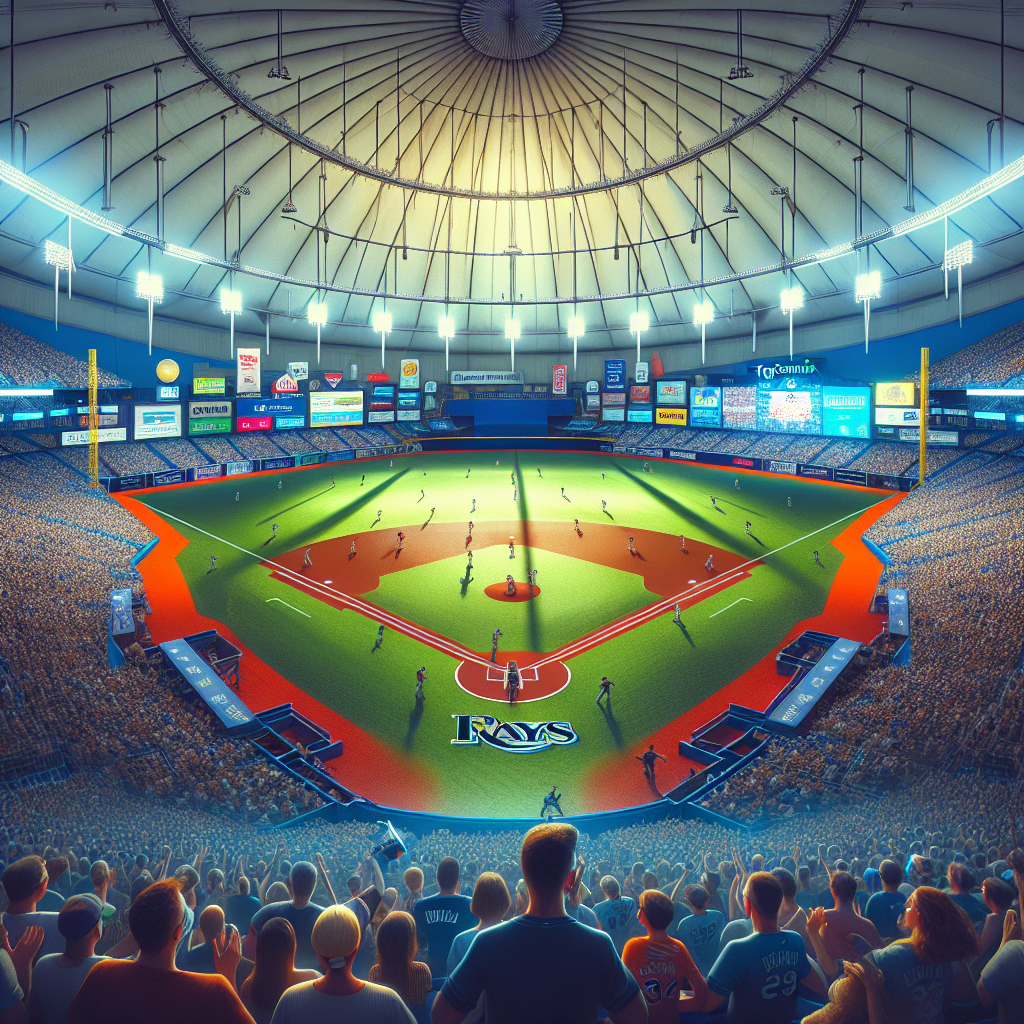
Tropicana Field’s design is dictated by its need to function effectively as a domed stadium. The dome itself is constructed as a fixed roof, making it one of the few Major League stadiums with such a feature. The roof is an engineering marvel, built using a Teflon-coated fiberglass that gives it a lightweight yet durable finish. This design minimizes the weight load on the structure, which is particularly crucial given Florida’s propensity for severe weather conditions like hurricanes.
The stadium also features a unique synthetic turf surface designed to mimic natural grass as closely as possible. Over the years, advances in turf technology have allowed for improved player safety and gameplay dynamics. The dome’s interior comprises various sections and seating arrangements that offer excellent views from virtually every angle. Additionally, the Tropicana Field has one of the biggest indoor video screens in Major League Baseball, providing fans with replays, statistics, and other engaging content.
Unique Features
Though relatively younger compared to historic ballparks like Fenway Park or Wrigley Field, Tropicana Field boasts several unique features that set it apart. One of the most striking features is the Rays Touch Tank, an actual 35-foot, 10,000-gallon tank filled with cownose rays, situated just beyond the right-center field fence. The tank is a fan favorite, offering a rare opportunity for spectators to interact with marine life while watching a game.
Another notable feature is the Dali Museum’s proximity to the ballpark, allowing a blend of athletic and artistic experiences. Fans can spend the day exploring surrealist art before heading over to catch a game, making for a rich cultural and entertainment experience.
In addition to its fan experiences, Tropicana Field is known for its quirky catwalks which have often influenced the outcome of games. Unlike any other MLB stadium, these catwalks, which are part of the structural element supporting the roof, have their own ground rules to dictate how the game proceeds when a baseball hits them.
Fan Experience
Visiting Tropicana Field offers a fan experience like no other. One of the most compelling aspects is its climate-controlled environment, making it a comfortable venue regardless of Florida’s sweltering temperatures or unexpected rain showers. The stadium offers a variety of seating options to cater to different preferences and budgets. From premium seats that provide a close view of the action to more economical choices that still offer excellent sightlines, there’s something for everyone.
Tropicana Field is family-friendly, featuring numerous amenities designed to keep kids entertained. An extensive food and beverage selection ensures that even the pickiest eaters find something to enjoy. Local cuisine is well-represented alongside traditional ballpark fare, allowing fans to savor unique culinary experiences.
The Rays’ Impact
Since the inception of the Tampa Bay Rays, Tropicana Field has witnessed numerous memorable moments and milestones in the team’s history. The stadium was the setting for the Rays’ incredible journey to the World Series in 2008, a dramatic turnaround for a franchise that had struggled in its early years. This period of success galvanized a fervent fanbase and positioned Tropicana Field as a fortress for the Rays.
The organization has committed to continuously improving the fan experience, implementing upgrades and renovations over the years. Such efforts underscore the significance of Tropicana Field not just as a sports venue but as a community hub that fosters a sense of belonging and pride for the Tampa Bay region.
Challenges and Controversies
Despite its many merits, Tropicana Field has not been without its challenges and controversies. The most notable among these is the debate surrounding the stadium’s location and attendance figures. Critics argue that the stadium’s position in St. Petersburg, as opposed to a more central or populous area of Tampa Bay, has hindered its ability to draw larger crowds.
There have been regular discussions about relocating to a new stadium, more optimally placed to attract higher attendance numbers and offer modern facilities. Yet, such proposals have encountered numerous hurdles, from political disagreements to financial constraints. These ongoing debates contribute to the complex narrative of Tropicana Field’s place in Major League Baseball.
Conclusion
Tropicana Field, the dome of the Tampa Bay Rays, stands as a unique and iconic landmark in the world of baseball. Its construction was driven by an unwavering resolve to bring Major League Baseball to the Tampa Bay area, set against the backdrop of a climate that necessitated innovative architectural solutions. From its climate-controlled environment and synthetic turf to its distinctive fan experiences like the Rays Touch Tank, Tropicana Field offers a semblance of consistency and enjoyment in an often unpredictable physical and economic landscape.
Despite its challenges, including debate over its location and discussions about potential relocation, Tropicana Field remains a vital component of the Tampa Bay community. It is more than a place where baseball games are played; it is a symbol of the community’s spirit, resilience, and innovation.
As the Tampa Bay Rays continue their journey in Major League Baseball, fans and players alike will always look back on the memories made at Tropicana Field with fondness. Whether its future involves further renovations or a move to a new location, the legacy of Tropicana Field will remain securely woven into the fabric of Tampa Bay’s sports history.