
In the vast tapestry of American history, few cultural phenomena have intertwined as closely with the political landscape as baseball. Often referred to as America’s pastime, baseball has not just been a sport; it has been a significant social institution that has mirrored, influenced, and even altered political dynamics throughout the nation’s history. From the very onset of its organization in the mid-19th century, baseball has played a role beyond the diamond, shaping and reflecting societal values and political sentiments.
The evolution of baseball follows a trajectory similar to that of the United States, marked by periods of remarkable progress, controversy, and transformation. It has been a forum for unity and division, a stage for public figures to express ideologies, and a platform where societal issues have been both challenged and entrenched. Baseball’s impact on political life displays a multifaceted relationship that operates at local, national, and even global levels.
At its roots, baseball is more than just a game. It represents a microcosm of the American spirit and principles, from individualism and the pursuit of excellence to community and inclusivity. Politicians have often tapped into baseball’s widespread appeal to craft relatable images and narratives, while policies and politics have often found their way into dugouts and grandstands. This discussion delves into various dimensions of how baseball and politics have influenced each other and continue to do so to this day.
The Early Years: Baseball as a Unifying Force
In the years following the Civil War, baseball emerged as a unifying force in a nation recovering from deep division. By the latter half of the 19th century, baseball games were venues where Americans could come together, set aside their differences, and find common ground in a shared love for the game. Politicians recognized this unifying power and frequently participated in baseball-related events to connect with constituents and craft a folksy, approachable image.
Baseball’s rise coincided with the industrial growth of the United States, attracting both players and fans from a broad spectrum of ethnic, economic, and social backgrounds. The sport served as an egalitarian arena where merit, rather than social status, prevailed. Politicians capitalized on this by attending and sponsoring games, using baseball to underscore their commitment to grassroots connectivity.
Notably, baseball’s growing popularity led to the establishment of the National League in 1876, marking a critical organizational milestone that solidified the sport’s presence across the country. It wasn’t long before baseball figures became symbols of national identity, with games and players gaining wide public affection. In turn, this prominence allowed the sport to become a powerful symbol of unity and restoration, celebrated by politicians and public figures as a testament to American resilience and spirit.
Desegregation and Baseball’s Role in Civil Rights
Perhaps one of the most profound intersections between baseball and American political life occurred during the civil rights movement. Jackie Robinson’s integration into Major League Baseball (MLB) with the Brooklyn Dodgers in 1947 not only challenged the status quo within the sport but also laid the groundwork for broader societal change. Robinson’s presence on the field was a pivotal moment in America’s push towards equality and civil rights, mirroring the struggles of the African American community during this time.
Robinson’s brave stance against racial bias channelled the political energy of the civil rights movement directly onto the baseball field. His success and resilience became a powerful symbol of racial integration and paved the way for progress beyond sports. Politicians of the time, including President Harry Truman and others, often referenced Robinson’s achievements as emblematic of a new American ethos that rejected segregation and embraced opportunity.
The integration of baseball was not just a triumph for African American athletes but a critical pressure point on political institutions to address racial inequalities. Baseball’s influence extended to debates and policies surrounding desegregation in other public domains, illustrating its role as a catalyst for significant political and societal shifts.
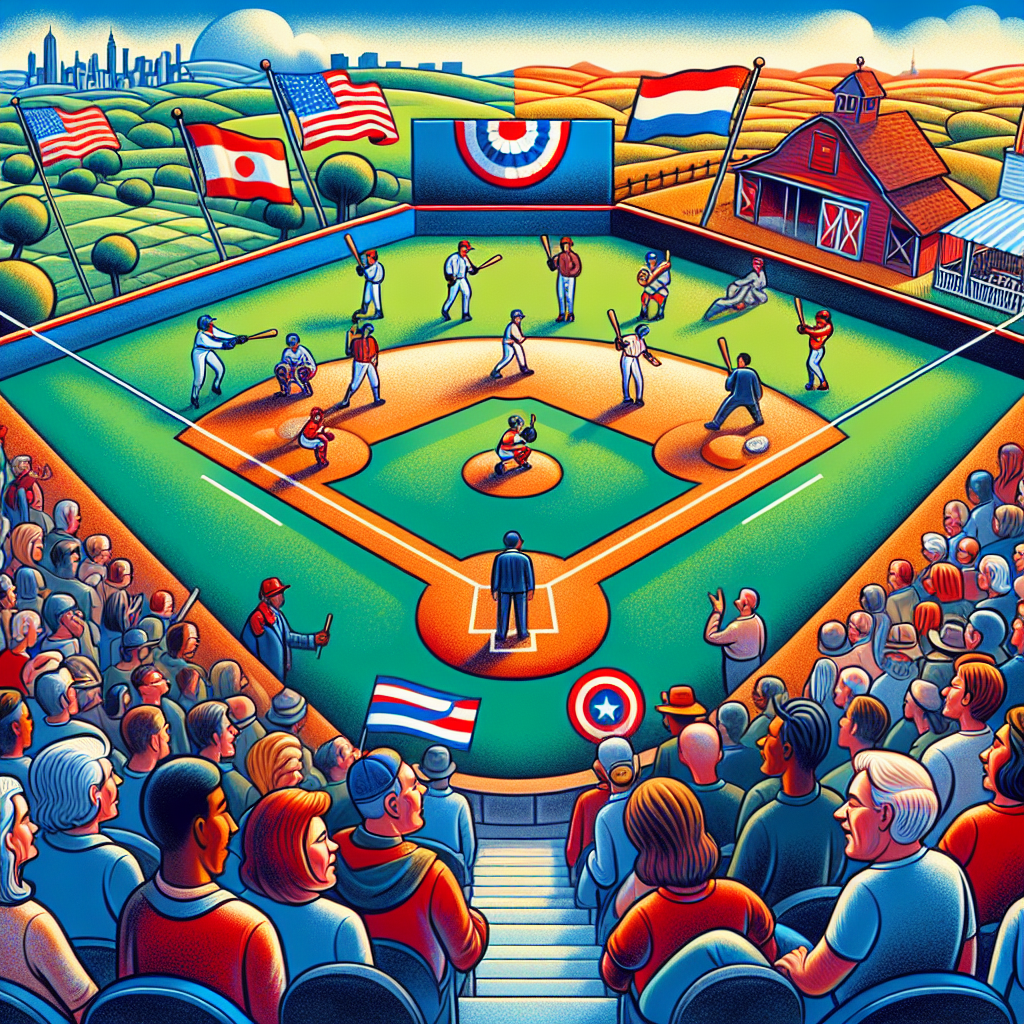
Baseball in Wartime: Morale and Propaganda
During periods of war, baseball played a crucial role in American political life as both a morale booster and a tool of propaganda. During World War II, for instance, baseball was vital in maintaining the nation’s spirit. President Franklin D. Roosevelt’s famous “Green Light Letter” urged the continuation of baseball during the war as a much-needed distraction and entertainment for the American public, reinforcing the sport’s importance in political and social terms.
Baseball’s integration into wartime propaganda highlighted its perceived role as more than just entertainment; it was viewed as vital to national identity and morale. Competitions provided a sense of normalcy and respite for service members and civilians alike, underscoring baseball’s capacity to support the nation during challenging times.
On the field, many players also made sacrifices, joining the military and signaling solidarity and patriotism. Their stories became points of national pride and political leverage, as they exemplified the country’s commitment to wartime efforts. The narrative of baseball, therefore, became intertwined with national discourse and deployed as a tool to support and inspire both on the home front and abroad.
The Stadium as a Political Arena
Professional baseball stadiums have also played vital roles as political arenas. These venues, with their ability to gather tens of thousands, have frequently been used for political speeches and rallies. This facet of baseball culture offers a unique space to intersect sports with public engagement and political discourse.
Across decades, Presidents have made it a tradition to throw the ceremonial first pitch at baseball games, a gesture signifying national unity and an unspoken confirmation of cultural relevance. This ceremonial act has turned sporting events into an extension of political theatre, blending political figures with popular culture, thereby solidifying baseball’s place in political life.
These stadiums serve as venues for politicians to connect with potential voters, espousing policies related to sports, community development, or simply marking their presence among ordinary citizens. The ballpark, therefore, offers a powerful context where political narratives can be played out in front of, and seemingly in unity with, engaged crowds, amplifying the sport’s political significance.
Baseball’s Impact on Policy and Legislation
Beyond symbolic gestures, baseball has directly influenced policy and legislation. Over the years, the sport has been a catalyst for debates on labor rights, particularly with regard to player contracts, free agency, and unionization. The struggle between players and owners underscored broader conversations about workers’ rights, labor policies, and antitrust laws.
The establishment of the MLB Players Association and subsequent legal battles over players’ autonomy and compensation were landmark moments for labor rights. These events echoed nationwide discussions and had consequent impacts on labor policy at large, showcasing how baseball could drive political discourse and policy reform beyond the diamond.
Baseball’s influence extended into economic policies as well, especially with regard to public funding for stadiums. City governments and legislators have often debated the economic ramifications of supporting or subsidizing such massive constructions, making baseball a fixture in discussions about public expenditure and economic development.
Global Influence and Baseball’s Diplomatic Role
As America’s influence expanded internationally, so too did baseball, which became an instrument of diplomacy and cultural exchange. Baseball’s international reach allowed it to operate as a soft power tool, enhancing diplomatic relations through sports diplomacy. Its global reach facilitated dialogues and exchanges even in places with complex political relationships with the United States.
Baseball tours and international competitions promoted goodwill and understanding, with players often seen as ambassadors of American culture and values. The sport exemplified a shared human experience, providing common ground even amidst political tensions. This was evidenced in initiatives such as sending teams to play and train in places like Japan, Cuba, and more recently, China and other emerging markets.
Moreover, events like the World Baseball Classic have not only celebrated the sport’s global appeal but have also encouraged collaboration and communication among nations, reinforcing baseball’s role as a channel for cross-cultural and political engagement.
Conclusion
Throughout its history, baseball has persistently mirrored and influenced the political landscape of America. Its ability to unify people in times of division, its contribution to civil rights and labor movements, and its use as a diplomatic tool demonstrate its profound impact on societal and political life. Baseball’s presence in the American political arena is both historical and ongoing, serving as a barometer of American values, attitudes, and challenges.
As we reflect on the many roles baseball has played—from a unifying force post-Civil War to a powerful stage for civil rights and labor movements—its place within American life becomes clear. Baseball is a cultural institution and a political agent, a reflection of who we are and an influencer in who we strive to become. The sport continues to operate within the political sphere, both shaping and being shaped by the political climates through which it passes.
In imagining baseball’s future role in American political life, the sport will likely continue to act as a conduit for forging new relations, challenging social norms, and providing a platform where Americans can confront and celebrate their shared history and identity. Baseball’s legacy is assured, not just within stadium walls but across legislation chambers, diplomatic dialogues, and the evolving social fabric of America.
Frequently Asked Questions
1. How has baseball historically influenced American politics?
Baseball’s influence on American politics dates back to the mid-19th century when it emerged as a structured sport. It reached its peak during times when America was grappling with significant social and political changes. For instance, during the Reconstruction Era post-Civil War, baseball transcended its role as a simple pastime and became a medium for unification, helping mend a nation in distress. By offering a common ground, it facilitated dialogue and fostered a sense of American identity amid the chaos.
In the 20th century, baseball’s reach extended into the political arena, influencing decisions and actions at government levels. Politicians began associating themselves with the sport, using its widespread appeal to garner support. This association provided a platform that symbolically resonated with values like fairness, teamwork, and the American Dream. Therefore, baseball became a gauge of public opinion and a soft power tool for policymakers.
2. Can you give examples of specific political events or movements where baseball played a role?
Absolutely! One of the most notable examples is Jackie Robinson’s entry into Major League Baseball in 1947. As the first African American to break the color barrier in professional baseball, Robinson’s signing with the Brooklyn Dodgers was not just a sports milestone, but a significant political statement in the civil rights movement. It challenged segregation norms and laid the groundwork for further desegregation in other societal sectors.
Another example is the 1919 Black Sox Scandal, which involved players of the Chicago White Sox allegedly conspiring to fix the World Series. The federal investigation and subsequent trial brought wider attention to issues of integrity and corruption, leading to reforms in both the sporting world and influencing political discourse around regulation and ethics in society at large. These events showed how deeply intertwined baseball was with significant social and political discussions.
3. How did political figures use baseball to connect with the public?
Political figures have long recognized baseball’s massive cultural significance and used it to resonate with voters. Presidents often invite championship-winning teams to the White House, a tradition that dates back to the early 20th century. This gesture acts as a symbolic representation of a commonality shared between the leader and the populace, reflecting a united national spirit.
Furthermore, politicians frequently throw first pitches at Major League Baseball games. This tradition began with President William Howard Taft in 1910 and continues as a notable ceremonial gesture. Such appearances were meant to humanize candidates, offering them an opportunity to present themselves as an everyday person, relatable and appreciative of national traditions. These events often became pivotal during campaigns, projecting an image of leadership aligned with robust social institutions like baseball.
4. In what ways has baseball been a mirror for American social issues?
Baseball has mirrored a wide array of American social issues through its history, ranging from civil rights to labor relations. As mentioned earlier, Jackie Robinson’s story in baseball reflected the broader civil rights movement, symbolizing the breaking down of racial barriers. The sport provided a visible platform for integrating African Americans into mainstream society, influencing public opinion and policy related to racial equality.
Labor relations were another significant area reflected and influenced by baseball. The players’ struggle for fair rights and conditions paralleled the American labor movement and led to significant changes, like the creation of the MLB Players Association. The challenges and successes experienced within baseball mirrored those of unionization efforts nationwide, highlighting issues of fairness, negotiation, and economic power.
5. What role does baseball currently play in American politics?
Today, baseball continues to be a vehicle for political narratives and gestures. With its extensive reach and passionate fan base, it remains an influential platform for addressing contemporary issues. For instance, recent years have seen baseball teams and players engaging in political activism and social justice campaigns, from kneeling during the national anthem to addressing gender equality and LGBTQ rights.
The MLB’s stance and response to political and social events also send strong signals to fans and followers. Decisions like moving the 2021 All-Star Game out of Atlanta in response to Georgia’s new voting laws demonstrated the sport’s ongoing role in reflecting and impacting political discourse. As American society continues to evolve, so too does the interplay between baseball and politics, maintaining the sport’s longstanding position as a cultural and political barometer.