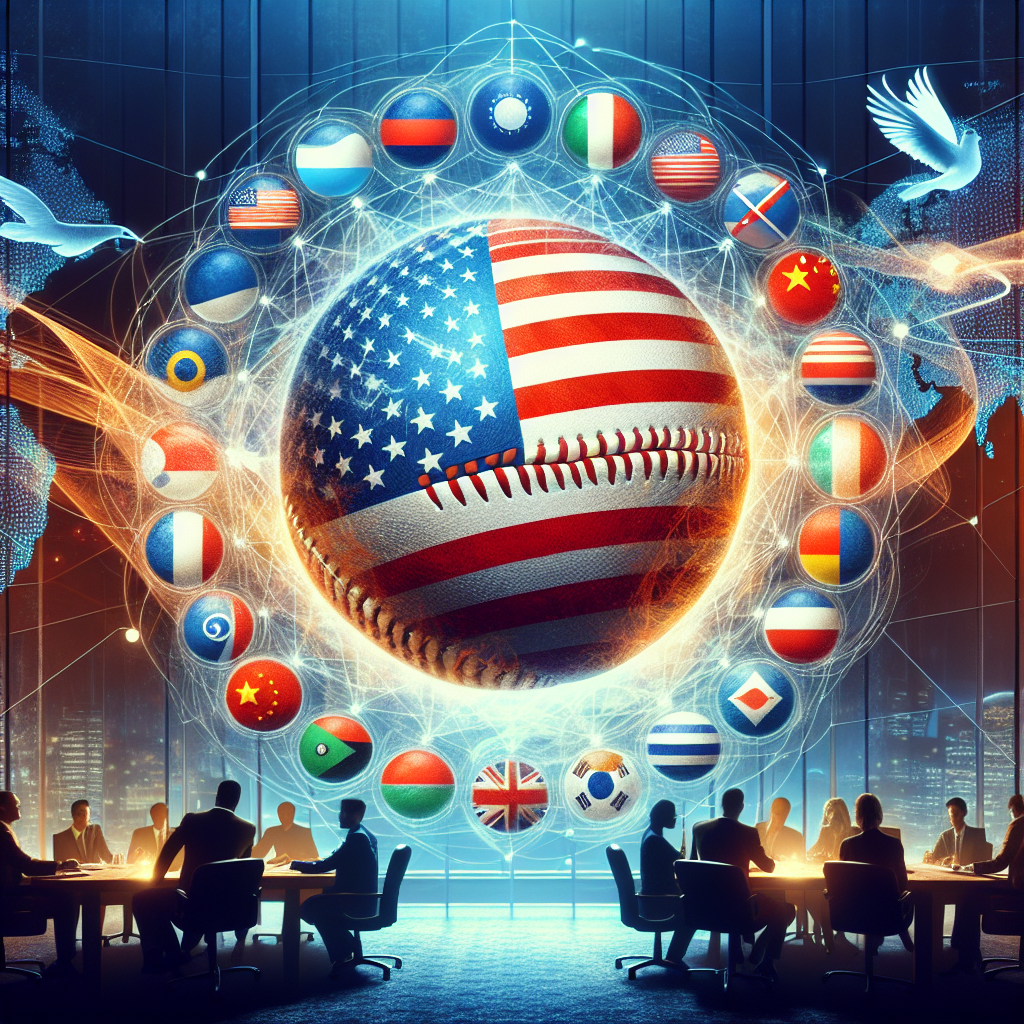
In the intricate web of international relations and cultural exchange, baseball has emerged as a unique instrument of soft power. This seemingly simple game, with its roots firmly planted in American soil, has managed to transcend borders and play a vital role in diplomacy. The narrative of baseball as a diplomatic tool begins with the spread of the sport globally, where it was not only a symbol of American culture but also a medium of connection across nations. This article aims to explore the multifaceted role of baseball in American diplomacy, highlighting its evolution from a national pastime to a powerful diplomatic asset.
The Early Days: Baseball as a Cultural Export
The reach of baseball beyond America’s shores started as early as the mid-19th century. Soldiers, merchants, and expatriates carried the game with them wherever they went, inadvertently planting the seeds of a sport that would later serve as a bridge between various cultures. During the late 1800s and early 1900s, baseball found its way into countries like Japan, Cuba, and the Dominican Republic, each of which would grow to embrace the sport fervently. This global proliferation of baseball was not simply by chance; it was fueled by the ethos of a burgeoning American identity that linked the sport to national values of fairness, competition, and teamwork.
In these early encounters, baseball served as more than just a game; it was a manifestation of a cultural idea that could be gently introduced to populations with different linguistic and social conditions. This cross-pollination opened dialogues with other cultures, establishing relationships that transcended the political frictions of the time. Baseball was not just America’s pastime; it was becoming a vital export, setting the stage for future diplomatic engagements.
Baseball’s Influence During World Wars
The impact of baseball on international diplomacy took a significant leap during World War I and World War II. Not only did baseball provide soldiers with a familiar pastime amid the horrors of war, but it also acted as a tool for fostering goodwill with allied nations. The American military often set up baseball games that included soldiers from different countries, promoting camaraderie among the troops. Simultaneously, military personnel who were stationed overseas became ambassadors of the game, teaching locals and organizing matches that fostered goodwill and understanding among different nationalities.
Baseball’s diplomatic imprint was further solidified with the emergence of notable events such as the 1945 GI World Series in Europe, which brought together military teams from different countries. These interactions were not just about garnering a cross-cultural understanding; they symbolized cooperation and a shared humanity in times of strife. Baseball thus served as an informal yet impactful envoy of American values, reaching countries marred by the devastation of global conflict.
Cold War Era: Baseball as a Symbol of Peace
During the Cold War, the ideological divide between the United States and communist states presented unique challenges and opportunities for baseball diplomacy. The sport became a key symbol of American culture and a tool for the U.S. to showcase its way of life to the world. The exhibition tours and goodwill games conducted by Major League Baseball (MLB) players, including stars like Babe Ruth and Jackie Robinson, aimed to project an image of peace and mutual respect.
One of the most memorable instances during this era was a series of matches played between American and Japanese teams. Despite the geopolitical tensions, the games fostered a spirit of camaraderie and cultural exchange. The symbolism was potent: in a world divided by political ideologies, baseball offered a platform for dialogue and friendship. Even in Soviet Russia, where American influence was largely unwelcome, baseball found a place, subtly challenging political barriers and encouraging reformist ideas.
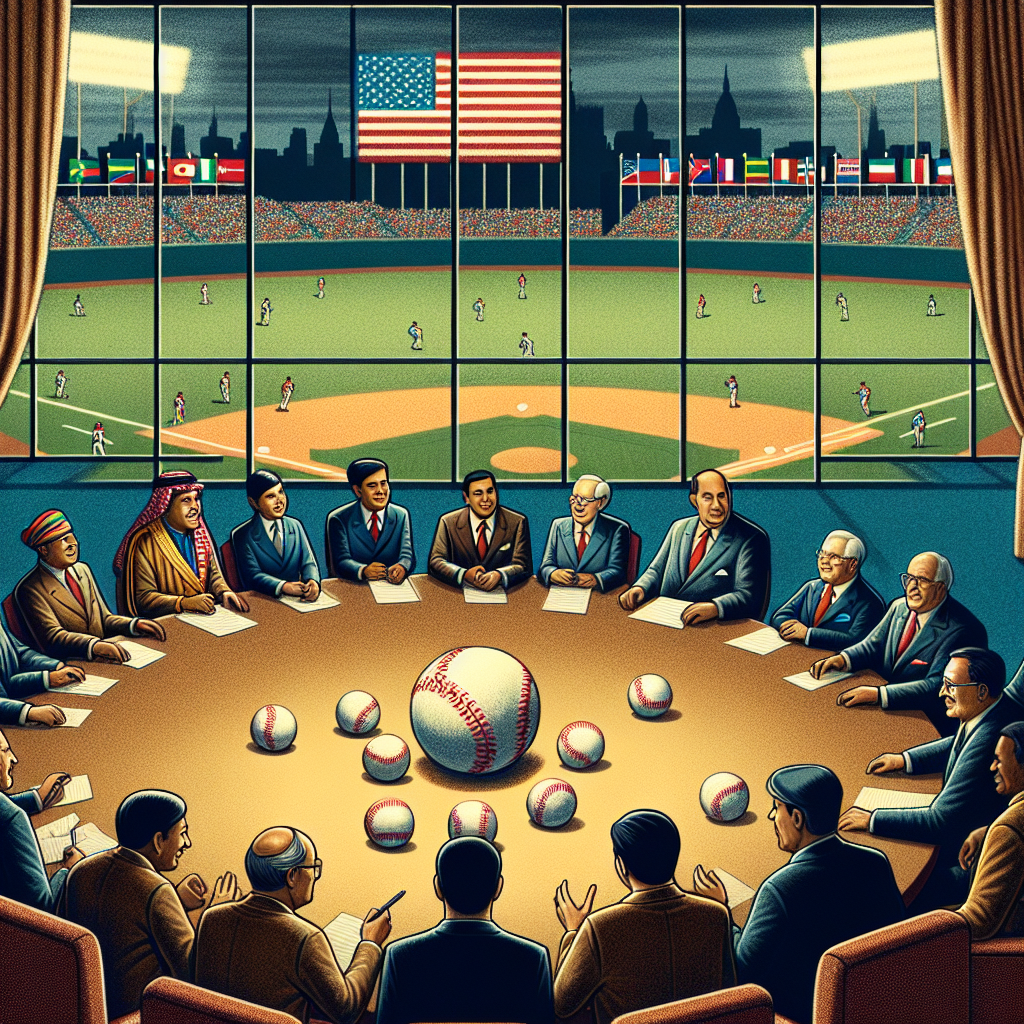
Modern Connections: Baseball Diplomacy in Asia and Latin America
In recent years, baseball has continued to play a substantial diplomatic role in both Asia and Latin America. The historical roots planted in Japan, South Korea, and various Latin American countries have grown deep, with baseball serving as a shared cultural touchstone. In Japan, for instance, baseball is not merely a sport but a national passion, and it has fostered numerous cultural and economic exchanges between Japan and the United States.
Latin American countries, too, have developed a profound connection with baseball, producing many of the world’s most talented players. The game provides a conduit for diplomatic relations, promoting collaboration in areas such as trade and tourism. Baseball diplomacy manifests itself through exchange programs and tournaments that bring together players and fans from around the world, underscoring a shared love for the game that transcends national boundaries and fosters goodwill.
The Cuba Connection: Baseball as an Instrument of Political Dialogue
When it comes to baseball and diplomacy, Cuba stands as a remarkable example. Despite the embargo and decades of political tension between the United States and Cuba, baseball has remained a constant, much-loved presence in both countries. The two nations share a mutual reverence for the sport, and it has often been at the forefront of thawing diplomatic relations.
In 2016, President Barack Obama’s visit to Cuba included attending a historic baseball game between the Tampa Bay Rays and the Cuban national team. This visit marked a significant moment in baseball diplomacy, capturing global attention and highlighting the potential of sports to open doors for dialogue. The game symbolized a connection that continued to unite people, even when geopolitical climates were less than favorable. Baseball proved once again to be a vehicle for peace and understanding, reinforcing the emotional ties that bind the fans and players from both nations.
Baseball in Contemporary Diplomacy: A Continuing Story
The role of baseball in American diplomacy is far from static; it is ever-evolving. In today’s environment, sports diplomacy continues to be a strategic tool in fostering international relations, addressing global challenges, and promoting cultural understanding. International teams’ visits, collaborative sports initiatives, and baseball-specific non-governmental organizations are just a few examples of how baseball diplomacy remains highly relevant.
The World Baseball Classic, inaugurated in 2006, is a contemporary incarnation of global baseball relations. This international tournament showcases talent from around the globe, demonstrating the unifying power of sports. Through such events, baseball continues to promote dialogue and mutual respect among nations, offering a reminder of our shared humanity.
Conclusion: The Enduring Legacy of Baseball Diplomacy
Reflecting on the multifaceted history of baseball as a diplomatic tool unveils an enduring legacy of cultural exchange and international cooperation. From the earliest days of baseball spreading across borders, through tumultuous global conflicts, and into periods of political tension and modern diplomacy, baseball has been an ambassador of goodwill and understanding. It has played a vital role in bridging divides, fostering dialogue, and providing common ground amid the complexities of global relations.
As the world continues to navigate the challenges of international and cultural exchanges, baseball remains a potent reminder of the power embedded in sports diplomacy. It is a testament to the ability of a simple game to transcend vast cultural divides, offering a platform for peace, collaboration, and enduring international friendships. The story of baseball diplomacy, deeply embedded in history, continues to unfold with each new generation of players, fans, and diplomats who share a commitment to building bridges and fostering a more connected global community.
Frequently Asked Questions
1. How did baseball become part of American diplomatic efforts?
Baseball’s journey from a quintessentially American pastime to a diplomatic tool is fascinating. It all started with the sport’s global spread, establishing it as a cultural export that represented American values and ideals. During the Cold War, baseball was leveraged as a means to foster goodwill, build bridges, and create shared experiences between Americans and people in nations with differing ideologies. These informal exchanges occurred through exhibition matches, professional leagues expanding overseas, and initiatives like baseball clinics hosted by American players abroad. This engagement goes beyond mere entertainment, showcasing a side of America that speaks of fair play, teamwork, and healthy competition, hence aiding diplomatic relations by creating relatable connections through sports.
2. What are some significant instances where baseball was used as a diplomatic tool?
There have been several notable instances where baseball was prominently featured in the realm of diplomacy. One early example is the tour by the New York Giants and the Chicago Cubs to Japan in the 1930s, which was an attempt to build goodwill. More poignantly, in 1971 and 1972, baseball itself played a role in the thawing relations between the United States and China, complementing “ping-pong diplomacy.” More recently, sporting events, including Major League Baseball (MLB) outreach efforts and international showcases, such as the bilateral games between Cuban and American teams post normalization of relations in the 2010s, have played significant roles in fostering dialogue and developing mutual respect between nations through this shared love of sport.
3. What challenges has baseball faced in its role in diplomacy?
While baseball has often served as a unifying force, it has not been without challenges in its role as a diplomatic tool. Political climates can shift, impacting cross-cultural sporting ventures; historical tension, such as that during the Cold War, created an environment where sports was as much about projecting power as building relationships. Furthermore, the intricacies of globalization mean that expanding leagues internationally involves navigating legal, economic, and social systems that can be at odds with those typical within America. Cultural misunderstandings can also pose challenges; not every nation places the same emphasis on baseball that Americans do, which can affect its diplomatic utility. Even logistics, such as coordinating international travel and accommodating differences in climatic conditions, can be daunting. Despite these hurdles, baseball continues to adapt and evolve as a medium of cultural and diplomatic exchange.
4. In what ways does baseball promote cross-cultural understanding and exchange?
Baseball provides a platform for direct engagement and cultural exchange, which is perhaps its most substantial contribution to diplomacy. It offers a shared language and platform that can transcend linguistic barriers, allowing players and fans from different cultural backgrounds to connect. International matches, where American teams play abroad or host international teams, generate dialogue and facilitate the appreciation of other cultures. These events often highlight unique local customs, fostering an environment of mutual respect. Additionally, baseball academies and training programs have often included education in cultural sensitivity, encouraging young athletes to appreciate the diversity and richness of other cultures they are exposed to. This kind of organic cultural exchange is invaluable in creating lasting ties and breaking down stereotypes, ultimately promoting global harmony.
5. How does baseball influence American diplomatic relations in the modern age?
In today’s interconnected world, diplomacy is increasingly characterized by soft power rather than hard force, and baseball comfortably fits within this new paradigm. The global reach of the sport provides a common ground for dialogue and relationship-building, especially in regions where political relations might be strained. Today, baseball’s influence is most apparent in its role as a cultural ambassador through programs that aim at youth exchange, talent scouting, and international leagues. The MLB actively contributes to this process by reaching out to younger athletes worldwide, inviting them to train in the United States, thus fostering a deeper understanding of American culture, values, and friendliness. Such initiatives help to build a positive image of the United States abroad, enhancing diplomatic relations and opening doors for dialogue on broader geopolitical issues. As the sport continues to grow internationally, it brings with it opportunities for diplomatic engagement through a shared passion for the game, highlighting the universality of sports as a tool for peace and cooperation.