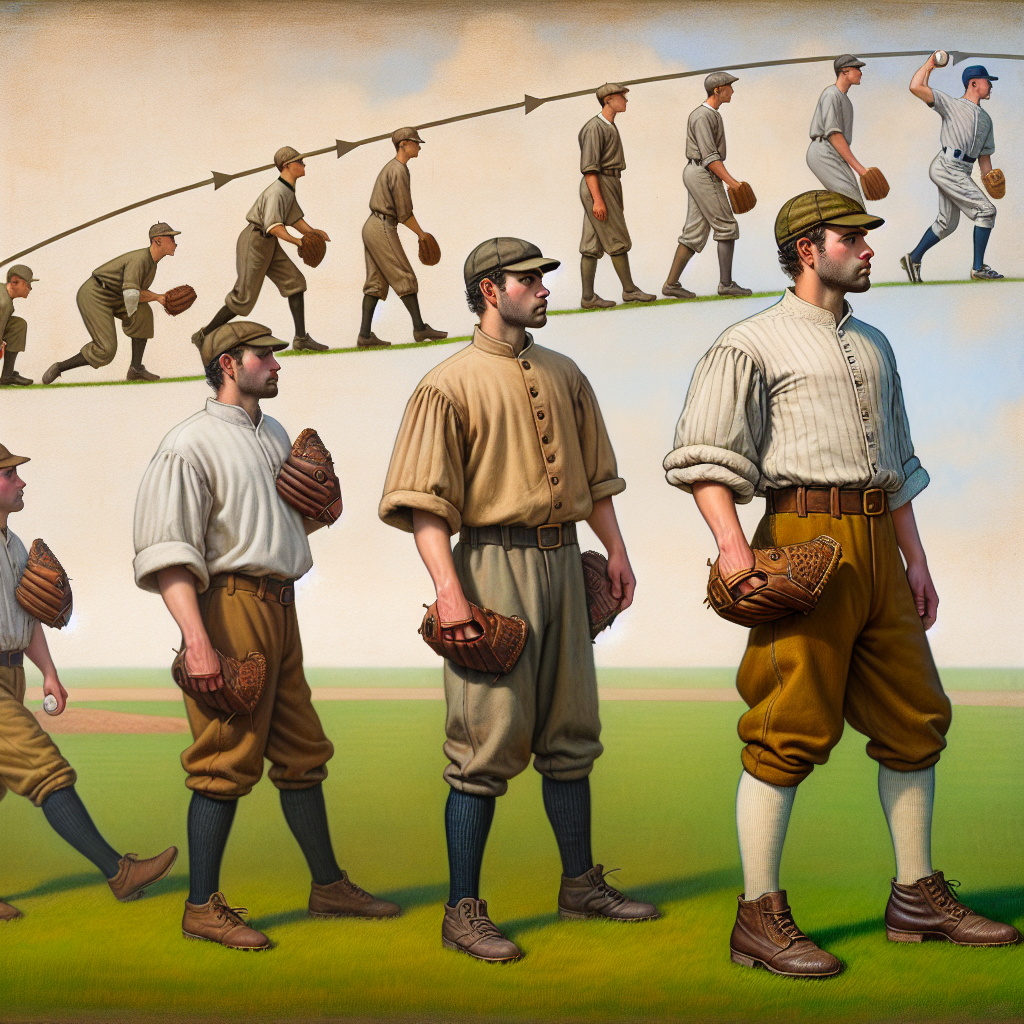
The history of baseball is rich with iconic figures and transformational changes. Among these legends, Cy Young stands out as a monumental figure in the evolution of pitching. Born in 1867 in Gilmore, Ohio, Denton True “Cy” Young became synonymous with excellence in pitching, setting records that still stand today. As baseball evolved from a loosely organized pastime into America’s beloved national sport, Young’s career reflected and influenced this development. His long-lasting legacy is more than just statistics; it represents the changing dynamics of pitching and its strategic importance in the game. Throughout his career, which spanned from 1890 to 1911, Cy Young was at the forefront of a transformational period in baseball, adapting to changes and setting standards that define the position of pitcher even today.
Young started his career in a time when baseball was vastly different from today. The role of the pitcher had not yet assumed the central importance it does now. Pitchers were expected to simply throw the ball in a way that allowed their fielders to make plays. However, as the sport became more competitive, the role of the pitcher began to evolve. Young’s career is emblematic of this transformation. Known for his extraordinary durability and control, Young’s innovations and adaptations led to changes in pitching dynamics that are still studied and respected across baseball fields today. He helped transition the idea of a pitcher as merely a game facilitator to being a strategic cornerstone of the team.
Cy Young’s Early Career and Rise to Prominence
Cy Young began his professional baseball career in 1890 with the Cleveland Spiders. At a time when the game was still developing its professional roots, Young’s performance on the field highlighted qualities that were ahead of his time. His debut was notable for its ease; he was a formidable pitcher, not because of overwhelming speed, but because of precise control and strategic pitching—traits that would anchor his career. During these early years, the influence of Young’s pitching was not just in his win-loss record or his strikeouts; rather, it was in how he approached the art of pitching as a discipline, combining physical prowess with mental acuity.
As the sport expanded and the competitive nature of teams intensified, Young’s abilities began to shine brightly. He was a towering figure in a transitional era where pitchers began to acquire more strategic importance. From 1894 through 1898, Young’s career solidified as he led the league in wins multiple times, showing consistent excellence on the mound. His control and poise set benchmarks, illustrating the benefits of pitching as not only a physical challenge but a mental duel with hitters. Young also served as an inspiration for developing pitchers across the nascent leagues, advocating for pitching styles that emphasized sustainability and technique over mere power.
The Evolution of Pitching Techniques
In the late 19th and early 20th centuries, the art of pitching underwent significant evolution. This period saw the introduction of new pitches such as the curveball, changeup, and later the knuckleball, which were becoming effective tools for pitchers striving to outthink batters. Young was at the forefront of these developments. Regularly experimenting and honing new techniques, Cy Young helped to popularize the strategic use of different pitches to outwit hitters. His mastery of a wide array of pitches allowed him to maintain his edge over the competition even as they adjusted to his style.
Young’s exploration of pitching techniques went beyond mechanics; he understood the importance of varying speed and placement to keep batters off balance. This light-footed strategic approach laid the groundwork for other pitchers who recognized the power of subtler, more intelligent play. Young’s focus on a diversified pitching repertoire contributed greatly to the strategic depth and complexity of baseball, transforming the pitch from a mere delivery into a pivotal, varied chess move within the game. His efforts in diversifying pitches were instrumental in increasing the strategic scope of the baseball game, greatly influencing both his contemporaries and successors.

Cy Young’s Influence on Modern Pitching
Cy Young’s career bridged an era between the informal beginnings of professional baseball and the establishment of organized, strategic league play. His contributions to pitching techniques have left an indelible mark on the game. As baseball matured, Young’s methods became the building blocks upon which pitching theories and practices were developed. His approach was revolutionary for focusing on mental strength, stamina, and adaptability, aspects that remain integral to the legacy left by his immense career. His achievements, such as throwing three no-hitters and a perfect game, underscored the extent to which he had mastered the pitcher’s art by balancing power and precision.
Young’s influence extends beyond his lifetime through the Cy Young Award, introduced in 1956 to honor the best pitchers in Major League Baseball annually. This award symbolizes excellence in pitching and carries the legacy of Cy Young’s contributions far beyond his playing days. Through this award, Young’s influence is permanently etched into the baseball world, constantly reminding new generations of the standard for pitching excellence he set more than a century ago. His legacy inspires pitchers to strive for greatness, encouraging the push for innovation and enduring excellence on the mound.
The Changing Role of Pitchers in Baseball
The initial conception of baseball pitching was quite different from today’s nuanced roles. Originally, pitchers were more like facilitators who kept the game going, not necessarily strategists. Cy Young’s career can be seen as a defining period that helped recast this view, emphasizing the pitcher’s strategic importance in a team’s success. Over the years, the role of pitchers has undergone a profound transformation, influenced by Cy Young’s strategies and performance. With durability, precision, and strategic adaptability, modern pitchers now operate in a complex environment balancing physical endurance and tactical effectiveness.
The ongoing expansion of pitching techniques, the advent of relief pitching, and specialized roles like closers and setup men reflect the intricate legacy that started during Cy Young’s era. Young’s time in baseball helped shape the foundational shifts in how teams use pitching as a strategic advantage. This historical evolution continues to impact modern baseball strategies, with pitchers utilizing heightened data analysis, biomechanical assessments, and advanced training techniques to enhance their effectiveness on the mound. Cy Young’s career, therefore, signifies the beginning of the pitcher as a game strategist, a critical force in any baseball encounter.
Cy Young’s Legacy and its Enduring Impact on Baseball
Reflecting on Cy Young’s career offers insights not only into the evolution of pitching but also into the development of baseball as a whole. Young’s pioneering approach and his impeccable record established a new standard for pitchers. His perseverance and adaptation to the changing demands of the game demonstrate how one player can influence and shape the evolution of a sport. The fact that Cy Young’s name is still synonymous with pitching excellence, evidenced by the eponymous award given annually, underscores the pivotal role he played in shaping baseball history.
Young’s achievements and innovations laid the groundwork for aspiring pitchers who followed. His emphasis on endurance, strategy, and mental acuity remains relevant, echoing through generations of pitchers aiming for greatness on the mound. Cy Young’s legacy serves as a bridge from baseball’s modest beginnings to its current status as America’s pastime, continually inspiring players, fans, and sports historians alike. His impact on the game endures, a testament to how one player’s contributions can transcend his era and influence the fabric of a sport for years to come.
Conclusion:
Cy Young’s life and career encapsulate a significant era in the history of baseball, marking the evolution of pitching from a simple task to a sophisticated aspect of the game. His adaptations, strategies, and resilience not only highlighted the necessary complexity of modern pitching but also underscored its importance. The testimony of time has proven Young’s methods and accomplishments to be benchmarks of excellence in baseball. His impact extends beyond his career, with the Cy Young Award annually commemorating his excellence and serving as a goal post for pitching success in the major leagues. Young’s legacy bridges the past and the present, serving as a continuous reminder of baseball’s rich history. The transformation he pioneered in the role of a pitcher is reflected in today’s game—a game of precision, versatility, and strategy. Current pitchers, while armed with advanced technology and data, still owe much to the groundwork laid by Young, whose vision and abilities first advanced the art of pitching into the scientifically strategized domain it is today. Thus, examining Cy Young’s journey is not just observing history but celebrating an achiever who redefined what it meant to be an integral part of the baseball community. His story is a testament to the power of perseverance, adaptability, and excellence in athletics, inspiring countless in their pursuit of greatness on the pitcher’s mound.
Frequently Asked Questions
1. Who was Cy Young and why is he considered a pivotal figure in baseball pitching history?
Cy Young, born Denton True Young in 1867 in Gilmore, Ohio, is one of the most iconic figures in baseball history. Known for his incredible durability and skill on the mound, Young’s career spanned from 1890 to 1911, during which he became synonymous with excellence in pitching. Despite playing in an era where pitching strategies were still being developed, Young set numerous records, many of which still stand today. His resilience and consistency redefined the role of a pitcher, inspiring future generations to aspire towards his level of performance and work ethic. His influence was so profound that the Cy Young Award, given annually to the best pitcher in Major League Baseball, was named in his honor to commemorate his outstanding contributions to the sport.
2. What records did Cy Young set and why do they still hold significance?
Cy Young’s list of records is extensive and impressive. He holds the record for the most career wins by a pitcher, with 511 victories—an achievement that seems improbable to break with the modern structure of baseball seasons and player management. Young also pitched the most complete games, totaling 749, and holds records for innings pitched (7,356) as well as game appearances (815): all testaments to his durability and consistency. His ability to routinely pitch entire games in an era that predated modern relief pitching strategies is particularly remarkable. These records have set a high bar for excellence in pitching, showcasing not just skill but a formidable level of endurance and mental fortitude that continues to inspire pitchers today.
3. How did Cy Young influence the evolution of pitching techniques during his career?
During Cy Young’s era, baseball was transitioning from being a pastime sport to America’s national activity, and pitching was evolving along with it. Young’s approach to pitching showcased how strategic control and physic can overpower sheer speed. Known for his precise control and ability to adapt his style based on the hitters he faced, Young was instrumental in developing a thought-out approach to pitching that placed a greater emphasis on technique rather than raw power. He utilized a variety of pitches and altered his delivery to keep hitters off balance, a precursor to modern pitching strategies which emphasize command, deception, and finesse. His strategic mind on the mound laid the groundwork for future pitchers to adapt and refine their art.
4. In what ways did Cy Young’s career reflect the overall development of baseball during his time?
Cy Young’s career mirrored the growth of baseball from a loosely organized activity to a more structured and widely adopted professional sport. As Major League Baseball began standardizing rules and expanding in scope, Young exemplified the changing demands placed on players, especially pitchers. His endurance through entire games, often with little rest, demonstrated the grueling nature of the sport during its formative years. With the growth of baseball’s fanbase and increased media attention, players like Young became national celebrities, helping to elevate the sport’s status. His long, successful career bore witness to a transformative era in baseball, where pitchers began to take on a more prominent and celebrated role in games, aligning with the sport’s evolving dynamics.
5. What is the legacy of Cy Young, and how is it celebrated in modern times?
Cy Young’s legacy is monumental and multifaceted. His name symbolizes excellence in the art of pitching, remembered as a pioneer of the game who set abnormally high standards for those who followed. His legacy lives on through the Cy Young Award, established in 1956, which honors the best pitchers in the American and National Leagues each year. This award serves as a continuous reminder of Young’s contributions to baseball and represents a benchmark of achievement for current and future pitchers. Furthermore, Young’s career is frequently cited as an archetype of sportsmanship and dedication, encapsulating the evolution of the role of a pitcher as the game has developed over the decades. His name is enshrined not only in record books but also in the ethos of modern baseball, as an enduring figure who helped define and elevate the sport.