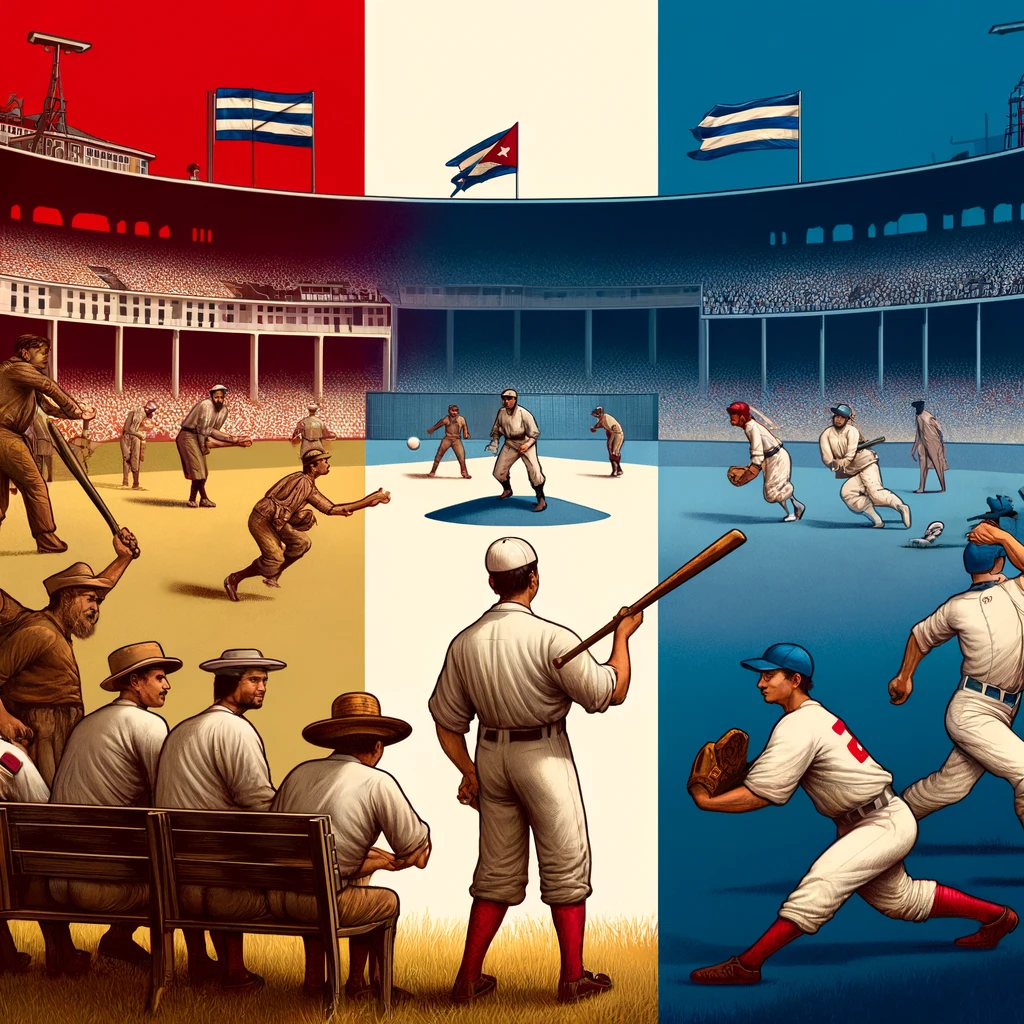
The story of baseball in Cuba is a captivating saga of passion, talent, and transformation. This narrative traces its journey from humble beginnings to a powerhouse on the international stage, reflecting not only a love for the game but also the socio-political dynamics within Cuba. The evolution of baseball in this Caribbean nation is not just a sporting tale but a reflection of its struggle and triumph in searching for a national identity and international recognition.
The Early Innings: Baseball’s Introduction to Cuba
The introduction of baseball to Cuba in the 1860s is a story of cultural exchange and adaptation. Brought to the island by Cuban students returning from the United States and by American sailors docking in Cuban ports, baseball quickly took root as a popular pastime, challenging the European-dominated sports such as bullfighting and fencing.
The Amateur Era
By the late 19th century, baseball had become a symbol of Cuban national identity and an act of cultural defiance against Spanish colonial rule. The first recorded baseball game in Cuba was played in 1864, and in 1878, the Cuban League was formed, marking the start of organized baseball in Cuba. These early games and leagues were strictly amateur, as professionalism in sports was frowned upon, reflecting the purity and passion Cubans felt for the game. During this period, the sport was not just a game but a political statement, with the baseball diamond becoming a venue for expressing anti-colonial sentiment. Clubs like Habana and Almendares became more than sports teams; they were symbols of Cuban resilience and pride.
Transition to Professionalism
The turn of the century brought significant changes to Cuban baseball, propelled by increasing connections with the professional leagues in the United States. The introduction of professionalism in 1899 marked a pivotal moment, blending the passion of the amateur era with the skills and tactics of professional play.
The Negro Leagues Connection
The early 20th century also saw the emergence of a powerful bond between Cuban baseball and the Negro Leagues in the United States. With racial segregation barring black players from Major League Baseball (MLB), many African American and Afro-Cuban players found opportunities in each other’s territories. This exchange significantly elevated the level of play and competition in Cuban baseball, with legends like Martín Dihigo, José Méndez, and Cristóbal Torriente becoming stars both in Cuba and in the Negro Leagues.
The Golden Age
The 1940s to the early 1960s are often referred to as the “Golden Age” of Cuban baseball. This era saw the Cuban League reach its zenith, with a level of play that rivaled the Major Leagues. The integration of professional Cuban players into MLB began to blur the lines between American and Cuban baseball, highlighting the global nature of the sport. However, this golden age was not without its challenges, as the rise of professional baseball also led to commercialization, raising concerns about the loss of the amateur ethos that had defined Cuban baseball’s early days.
A Revolution Beyond the Fields
The Cuban Revolution of 1959 had a profound impact on baseball, reflecting Fidel Castro’s vision of amateurism as an ideal form of sportsmanship, devoid of commercial corruption. The professional Cuban League was disbanded, and a new system was introduced, emphasizing baseball as a symbol of national pride and social unity rather than a professional endeavor.
The National Series
In 1961, the Cuban National Series was established, an amateur league that continues to serve as the backbone of Cuban baseball. The series has produced many talented players who have achieved international fame, despite the restrictions on professional play. This era also saw Cuba dominating amateur international competitions, including the Olympic Games and the World Baseball Classic, showcasing the high level of talent and competitive spirit that thrived under the amateur model.
The Defection Dilemma
The success of Cuban baseball on the international stage was tempered by the political and economic realities of Cuba. The restrictions on professional play and the desire for greater opportunities led to an increasing number of Cuban players defecting to play in MLB and other professional leagues worldwide. These defections raised complex issues about identity, nationality, and the global business of baseball.
Legacy and the Future
The history of Cuban baseball is a testament to the island’s enduring love of the game, navigating through periods of amateur enthusiasm and professional excellence. As Cuba faces the future, there is a growing dialogue about reintegrating Cuban baseball into the global professional community while preserving the unique cultural and historical significance of its baseball tradition. The Cuban baseball revolution, from its amateur roots to its professional aspirations, continues to evolve. This journey is not merely about a sport but a reflection of Cuba’s quest for identity, sovereignty, and excellence on and off the baseball diamond. As we look forward, the legacy of Cuban baseball remains a vibrant chapter in the international story of baseball, promising new tales of triumph, transformation, and an undying love for the game. The connection between Cuban baseball and its broader socio-political context is integral to understanding the revolution from amateur to the professional era. This relationship underscores how cultural shifts, political changes, and economic challenges have shaped, constrained, and propelled the development of Cuban baseball over time.

International Ties and Influence
The influence of international baseball, particularly Major League Baseball (MLB), on Cuban baseball cannot be overstated. Throughout the 20th century, as MLB became a global juggernaut, its impact was felt on the island, both in terms of playing style and the aspirations of Cuban players. The advent of broadcasting and later, digital media, brought MLB games into Cuban homes, inspiring a generation of players who aspired to compete at the highest levels of the sport.
MLB and Cuban Player Integration
The gradual integration of Cuban players into MLB, despite the political estrangement between Cuba and the United States, marked a significant phase in the professionalization of Cuban baseball. Players like Minnie Miñoso, Tony Pérez, and Luis Tiant paved the way for future generations, demonstrating that Cuban talent could shine on the world’s largest baseball stage. This transition also highlighted the complexities of Cuban athletes playing professionally amidst the United States’ embargo and the Cuban government’s stance on professional sports.
Impact of the Cuban National Series
The Cuban National Series, established as the pinnacle of Cuba’s amateur baseball system, has been instrumental in nurturing baseball talent on the island. Its structure—emphasizing team loyalty, national pride, and the development of skills in a competitive, yet distinctly Cuban framework—has produced players who have succeeded internationally, both in amateur competitions and, more recently, in MLB.
Role in International Baseball
Cuba’s dominance in international baseball competitions, such as the IBAF World Cup and the Olympic Games, during the late 20th and early 21st centuries, further solidified its status as a baseball powerhouse. These successes were significant for Cuban national pride and demonstrated the effectiveness of the Cuban sports system in developing world-class talent under the amateur model.
Economic Challenges and the Future
The economic challenges faced by Cuba in the post-Soviet era have had a profound impact on baseball within the country. The scarcity of resources has affected the quality of facilities, equipment, and the ability to retain top talent. Furthermore, the allure of lucrative contracts offered by MLB and other professional leagues has led to an unprecedented wave of defections, posing challenges to the sustainability of Cuba’s baseball talent pipeline.
The Cuban Baseball Agreement (CBA) Attempt
Efforts to formalize the movement of Cuban players to MLB, such as the proposed Cuban Baseball Agreement (CBA) in 2019 (which was later nullified), highlight the ongoing dialogue about finding a balance between the amateur ethos of Cuban baseball and the realities of professional opportunities abroad. Such initiatives represented potential pathways for Cuban players to participate in MLB without defecting, preserving their ties to Cuba while elevating the global status of Cuban baseball.
Preserving the Cuban Baseball Legacy
As Cuban baseball navigates the 21st century, preserving its rich legacy while adapting to the global professional baseball landscape poses unique challenges and opportunities. The interplay between maintaining strong national sports programs and embracing the benefits of professional engagement is at the forefront of discussions about the future of Cuban baseball.
A New Era of Cuban Baseball
The potential for Cuban baseball players to participate more freely in international professional leagues, along with efforts to revitalize domestic baseball infrastructure and training, suggests a new era for Cuban baseball. This era promises to respect the deep historical roots of the sport in Cuba while embracing the realities and opportunities of the global sports environment.
Future Prospects
Looking ahead, the evolution of Cuban baseball will likely focus on several key areas: improving domestic baseball infrastructure, establishing clear pathways for Cuban players to participate in international leagues, and fostering a renewed spirit of national pride and achievement in baseball. As Cuba seeks to balance tradition with modernity, the legacy of its baseball revolution remains a beacon for aspiring players and fans alike, signaling a future that honors its past while boldly stepping onto the global stage.
Conclusion
Cuban baseball has always been deeply intertwined with the nation’s culture and politics, reflecting a blend of sport, identity, and national pride. From its amateur beginnings to aspirations for professional play, the influence of major leagues like MLB has shaped its landscape, creating a mix of admiration and rivalry, peppered with political tension. Cuba’s own leagues and its performance in international competitions showcase its dedication to fostering top-tier talent within an amateur framework, emphasizing national pride rather than professional profit. Economic challenges and the lure of the professional leagues, however, have made it hard to keep talent and maintain local baseball infrastructure. Proposals like the Cuban Baseball Agreement suggest ways to allow players more freedom while keeping their ties to Cuba. Despite political hurdles, such efforts help Cuban baseball evolve amid global sporting trends. Moving forward, Cuban baseball must balance embracing global opportunities and preserving the cultural values that define it, striving to remain a vibrant part of both national heritage and the global sports scene.
Frequently Asked Questions
1. How did baseball become popular in Cuba?
The love affair between Cuba and baseball began in the late 19th century when the game was introduced by Cuban students who studied in the United States. It quickly took root, captivating the nation with its thrilling gameplay and team spirit. The sport became a symbol of national pride and identity, fostering community and cultural cohesion across the island. This widespread popularity is reflected in how baseball became an integral part of Cuba’s social fabric, resonating with its quest for cultural recognition and uniting people under a shared passion irrespective of social classes. Teams were formed in cities and rural areas alike, turning baseball not just into a pastime but a national obsession.
2. What was the impact of the Cuban Baseball Revolution on the sport?
The Cuban Baseball Revolution was a seismic shift that changed the trajectory of the sport in the country. Prior to this revolution, Cuban baseball was heavily influenced by the U.S. professional leagues, with many talented players emigrating to play in the States. However, after the 1959 revolution and Fidel Castro’s rise to power, the focus shifted towards preserving the sport as an amateur pursuit free of capitalist influences. As a result, the Cuban government invested heavily in baseball infrastructure and development programs, leading to a surge in talent and skill level. This strategic emphasis on amateurism was also a cornerstone of Cuba’s international sports diplomacy, helping to position Cuba as a formidable force in global baseball tournaments.
3. Did Cuban players still have opportunities to play professionally during the pro era?
During the professional era, Cuban players had limited opportunities to play professionally outside the country due to the political climate. Government policies after the revolution restricted players from freely leaving the country to play in foreign professional leagues, especially in the U.S. This was part of a broader ideological movement against professional sports, promoting amateurism instead. Despite these restrictions, some players did defect from the nation during international games, seeking to capitalize on their talents in more lucrative professional leagues abroad. These defections were high-profile incidents, underscoring the tensions between Cuba’s desire to maintain amateurism and the allure of professional opportunities abroad.
4. How has the socio-political context in Cuba influenced its baseball legacy?
The socio-political context in Cuba has played a pivotal role in shaping its baseball legacy. The sport has often mirrored the broader socio-political dynamics, serving as a stage for national pride and political expression. Under Fidel Castro, baseball was leveraged as a tool of the state to showcase the strengths of socialism, and successes in the international arena were portrayed as victories of the Cuban ideology over capitalist societies. The political climate dictated strict adherence to amateurism, emphasizing the communist values of equality and collective achievement over individual success. Yet, this also created challenges, with the Cuban baseball community frequently navigating the difficult waters of maintaining sporting excellence under the constraints of political ideology.
5. How did Cuba become a powerhouse in international baseball tournaments?
Cuba’s ascension to a powerhouse in international baseball tournaments can be attributed to several factors. The rigorous player development programs and state-run sports academies honed the skills of Cuban athletes to excellence. The emphasis on teamwork, discipline, and strategic play further polished their ability to compete at the highest levels. Cuban players are renowned for their passion and competitive spirit, often outperforming competitors from more resource-rich nations. Politics aside, Cuba’s commitment to developing top-tier baseball talent has consistently paid dividends in international competitions, with the country frequently capturing gold medals at the Olympics, World Baseball Classic, and other prestigious events, solidifying Cuba’s reputation as one of the most formidable teams in the sport globally.