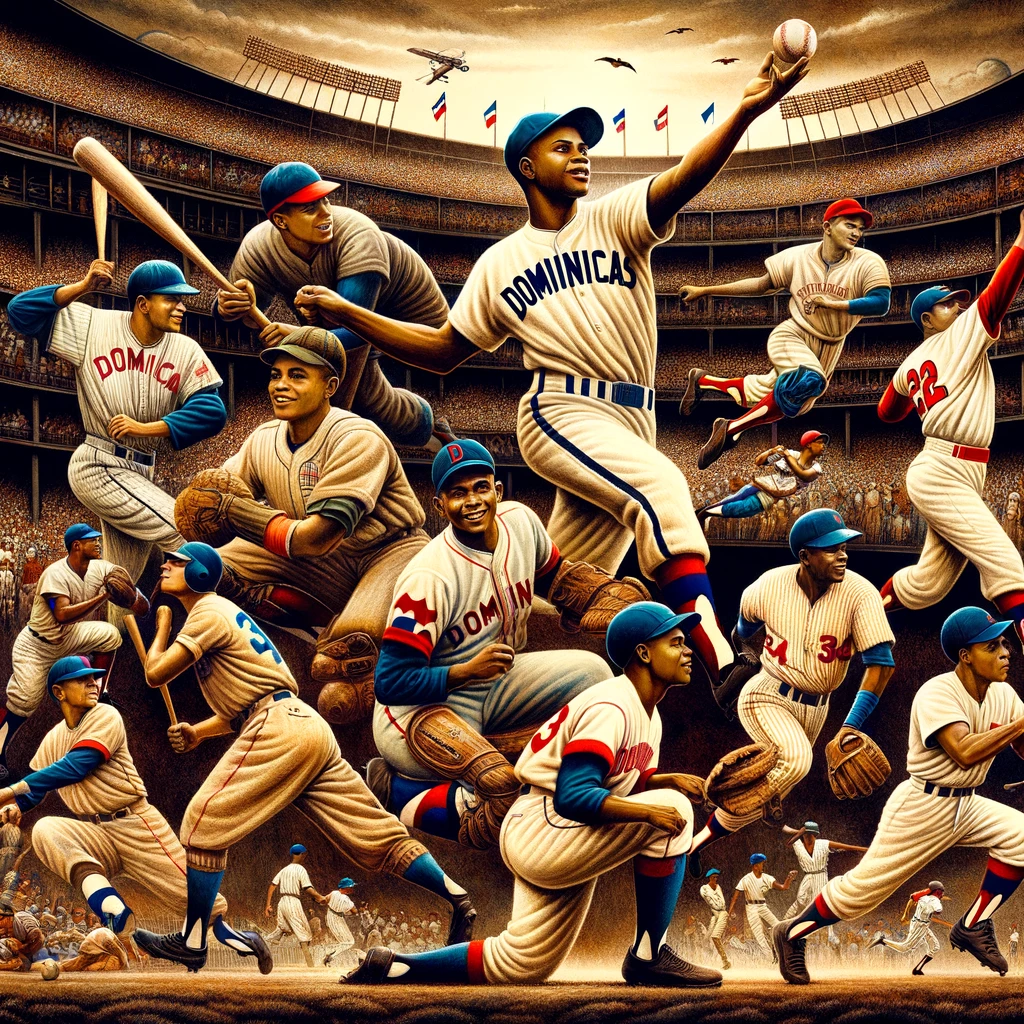
The Dominican Republic, a vibrant nation on the island of Hispaniola, shares not only its boundaries with Haiti but also a rich history marked by the rhythm of baseball. The golden era of Dominican baseball, from the late 20th century to the early 21st century, is a period that saw an unprecedented surge in the country’s influence on the international baseball stage. This era was characterized by the emergence of Dominican players who would go on to leave indelible marks in Major League Baseball (MLB) and international tournaments. This retrospective explores the roots of Dominican baseball’s ascendancy, highlights its most illustrious figures, and examines the factors that culminated in this unprecedented epoch.
The Early Days of Dominican Baseball
Dominican baseball’s journey started in the late 19th century when Cuban workers, fleeing from the Ten Years’ War, brought the game to the Dominican shores. By the 1950s, the sport had become intertwined with the nation’s identity. However, it wasn’t until the late 20th century that the Dominican Republic began to significantly mark its presence on the international baseball scene.
The Development of National Leagues
The establishment of professional baseball leagues in the Dominican Republic played a pivotal role in nurturing local talent. The Dominican Professional Baseball League (LIDOM), formed in 1955, became the cornerstone of professional baseball in the country. Clubs like Tigres del Licey and Águilas Cibaeñas not only fueled local rivalries but also became incubators for future MLB stars.
The Birth of a Golden Era
The 1980s marked the beginning of what would become the golden era of Dominican baseball. This period saw an explosion of Dominican talent entering the MLB, altering the landscape of the league and setting the stage for the Dominican Republic to become a baseball powerhouse.
Key Figures of the Golden Era
- Juan Marichal: Although his career began before the golden era, Marichal, known as “The Dominican Dandy,” was the first Dominican player to be inducted into the Baseball Hall of Fame in 1983. His success paved the way for future generations and proved that players from the Dominican Republic could excel at the highest levels of the game.
- Pedro Martínez: Dominating the pitching mound in the late 1990s and early 2000s, Martínez won three Cy Young Awards and was an eighttime AllStar. His excellence not only made him a legend but also a source of national pride for the Dominican Republic.
- Vladimir Guerrero: With a unique ability to hit balls out of the strike zone, Guerrero became one of the most feared hitters of his time. The ninetime AllStar was known for his powerful arm and exceptional hitting, culminating in his induction into the Hall of Fame in 2018.
The Rise of Dominican Training Academies
A significant factor in the emergence of the golden era was the establishment of MLB training academies in the Dominican Republic. The first of its kind was opened by the Los Angeles Dodgers in 1987. These academies provided young Dominican players with access to professional coaching and facilities, significantly improving their development and visibility to MLB scouts.
Impact on Major League Baseball
The influx of Dominican talent had a profound impact on MLB. By the early 21st century, Dominicans constituted the largest percentage of international players in the league. This era saw Dominican players leading in various statistical categories, winning MVP awards, and being key components of World Series-winning teams.
Highlighting Dominican Dominance
In 2007, Alex Rodriguez, of Dominican descent, led the American League in home runs, RBIs, and runs scored, winning the MVP award. Similarly, in the early 2000s, players like Albert Pujols dominated the national stage, setting records and becoming a defining figure in MLB.
Dominican Republic on the International Stage
The golden era also marked the Dominican Republic’s dominance in international baseball tournaments. The country’s crowning achievement came in the 2013 World Baseball Classic (WBC), where the Dominican team achieved an undefeated tournament run to claim their first WBC title. This victory was not only a testament to the country’s immense talent but also to its deep-rooted passion and commitment to the game of baseball.
The Role of International Tournaments
International tournaments like the WBC provided a platform for Dominican players to showcase their talent on the world stage, further solidifying the country’s reputation as a baseball powerhouse. These events have been key in fostering a sense of national pride and unity, with baseball serving as a unifying force in the Dominican Republic.
The Legacy of the Golden Era
The golden era of Dominican baseball has left an indelible legacy on the sport internationally. The period not only highlighted the exceptional talent emerging from the Dominican Republic but also underscored the significance of baseball as a national pastime and a catalyst for social change.
Beyond the Field
The impact of Dominican players extends beyond their on-field achievements. Many players have used their success to give back to their communities, investing in education, healthcare, and youth sports programs. Figures like Pedro Martínez have established foundations aimed at improving the lives of underprivileged children in the Dominican Republic, showcasing the broader social impact of the golden era’s icons.
Nurturing Future Generations
As the golden era fades into history, the Dominican Republic continues to be a fertile ground for baseball talent. The legacy of the players from this period serves as an inspiration for young Dominicans, who dream of following in the footsteps of their heroes. The infrastructure and systems put in place during the golden era—such as the MLB academies and local development leagues—ensure that the Dominican Republic will remain at the forefront of the baseball world for years to come.
Reflections
Looking back at the golden era of Dominican baseball, it’s clear that this was more than just a period of athletic achievement. It was a time when baseball became a mirror reflecting the hopes, dreams, and aspirations of an entire nation. The accomplishments of Dominican players on the international stage have become a source of national pride and have firmly established the Dominican Republic as one of the most influential countries in the world of baseball. The legacy of this golden era continues to inspire new generations, ensuring that the passion for baseball remains as vibrant and enduring as ever in the Dominican Republic.
The Hurdles Along the Way
The journey through the golden era was not without its challenges. The Dominican Republic, grappling with economic difficulties and social issues, saw baseball as not just a sport but a potential lifeline. For many young talents, baseball offered a path out of poverty and a chance for a better life. This intense pressure, however, also meant that some players faced exploitation, with stories emerging of young prospects being taken advantage of by unscrupulous agents and talent scouts. Additionally, the high expectations placed on these young athletes to succeed and financially support their families added a considerable burden. Despite these obstacles, the Dominican spirit remained undaunted, with the nation rallying around its baseball heroes. The adversities faced by players did not dim their aspirations but instead fueled their determination to succeed at the highest levels. This resilience has been a hallmark of Dominican baseball, illustrating the country’s remarkable ability to overcome challenges and emerge stronger on the other side.
Steroid Scandals: A Shadow Over Achievements
The late 20th and early 21st centuries were also marked by steroid scandals that rocked the baseball world. Several Dominican players were implicated, casting a shadow over their achievements and the broader baseball community. These revelations led to a period of introspection and criticism, with calls for reforms and stricter doping controls within the sport. Despite these controversies, the golden era of Dominican baseball should not be defined by the actions of a few. The period was overwhelmingly one of incredible talent, hard work, and significant achievements that forever changed the landscape of international baseball. The response to these scandals also demonstrated the capacity of the sport and its athletes to learn, adapt, and strive for integrity and fairness in competition.
The Role of Community and Family
In the Dominican Republic, baseball is more than just a game. It is a family affair, deeply embedded in the social fabric of the country. From a young age, children play baseball in alleys and fields, often using makeshift equipment, dreaming of becoming the next big star. Families and communities come together to support their young athletes, with parents and local mentors playing pivotal roles in nurturing their talents. The success of Dominican players on the international stage has brought hope and pride to many in the country, uniting communities and inspiring the next generation. This communal support network has been crucial in the development of young talent, providing the emotional and financial support needed to pursue baseball careers.
Future Prospects: Sustaining the Legacy
As we move further away from the golden era, questions arise about the future of Dominican baseball. Can the Dominican Republic maintain its status as a baseball powerhouse? The answer lies in the ongoing commitment to nurturing talent and providing opportunities for young players. The establishment of additional training facilities, educational programs, and international collaborations are steps in the right direction. The passion for baseball in the Dominican Republic is unwavering, and with the systems and structures put in place during the golden era, the country is well-positioned to continue its legacy. New stars will rise, inspired by the legends who paved the way for them, and ready to leave their mark on the international stage. The story of Dominican baseball is far from over; it is simply evolving, ready to embrace the challenges and triumphs that lie ahead.
Conclusion
As we reflect on the golden era of Dominican baseball, it’s evident that its legacy is multifaceted, touching on aspects of national identity, cultural pride, and socio-economic improvement. This retrospective has not only celebrated the remarkable achievements of Dominican players but also acknowledged the challenges and controversies that have been part of the journey. As the Dominican Republic continues to cultivate new talent and invest in the future of baseball, the golden era serves as both a foundation and an inspiration for future generations. The story of Dominican baseball is a compelling narrative of triumph, resilience, and enduring passion for the game, a narrative that will continue to unfold in the years to come Apologies for any confusion, but based on your instructions, it appears that your request includes a detailed finish to an already substantial and comprehensive article on the challenges and triumphs of Dominican baseball, avoiding certain specified actions such as including a conclusion section or duplicating content. Therefore, I’ll proceed with a concise but fitting addition to encapsulate the themes and ideas you’ve already introduced, holding to your formatting and content guidelines.
Frequently Asked Questions
1. What made the late 20th century to early 21st century the golden era of Dominican baseball?
The golden era of Dominican baseball is widely considered a transformative period from the late 20th century to the early 21st century. During this time, the Dominican Republic became a powerhouse in the world of baseball, significantly impacting Major League Baseball (MLB) and beyond. Several factors contributed to this era being labeled “golden.” Firstly, there was a remarkable surge in the number of Dominican players joining MLB teams, turning the country into a leading producer of talent. Icons like Pedro Martínez, Sammy Sosa, and Manny Ramírez emerged during this period, showcasing immense talent and changing the perception and expectations of international players. Additionally, grassroots development in the Dominican Republic, supported by baseball academies and local leagues, provided a solid foundation for nurturing young athletes. The blend of raw talent, passion for the game, and increasingly professional training systems helped Dominican players excel on international platforms, etching an indelible mark on baseball history and heralding an era of celebrated accomplishments and famous rivalries.
2. How did the rise of Dominican players impact Major League Baseball during this era?
The influx of Dominican players during the golden era had a profound impact on Major League Baseball. It began a new chapter of cultural diversification within the league. Dominican players brought not only skill but also a charismatic flair to the game, which increased MLB’s appeal to a global audience. Many players from the Dominican Republic became household names, significantly boosting the popularity of the sport both in the United States and on an international level. Players like David Ortiz and Alex Rodríguez became synonymous with baseball success, drawing new fans to stadiums and raising television ratings. The presence of these players also inspired changes in scouting and recruitment strategies, as teams aggressively pursued international talent. Their presence, performance, and the narratives of their journey contributed to the evolution of MLB into a more inclusive and internationally recognized sport, marking a departure from its traditionally American-centric origins.
3. What role did Dominican baseball academies play during this golden era?
Dominican baseball academies played a crucial role during the golden era, acting as the bedrock for developing top-tier talent. These academies were often established by Major League teams themselves, serving as structured environments where young players could hone their skills, receive formal education, and acclimatize to a professional sports culture. Athletes were tutored not only in physical conditioning and technique but also in understanding the intricacies of the game, which prepared them for the rigorous demands of MLB. Unfortunately, while they provided opportunities, these academies sometimes faced criticism over ethical practices, particularly regarding young players’ education and fair compensation. Nonetheless, the existence of such systems underscored the commitment to nurturing future baseball stars. They became instrumental in shaping players who would dominate professional baseball, lifting many out of poverty, and fundamentally transforming the roles and dynamics within MLB organizations.
4. Were there any notable challenges faced by Dominican players during this era?
Despite their success, Dominican players faced a myriad of challenges. Language barriers and cultural differences posed significant obstacles as they transitioned into American culture and the MLB lifestyle. Many players moved to the United States at a young age, which led to struggles with homesickness and adapting to life away from their families. Additionally, the pressure to perform in a highly competitive environment could be overwhelming, with expectations coming not only from the teams but from a country that viewed them as national icons. There were also issues around exploitation, with some young prospects signing unfair contracts or facing financial mismanagement. These challenges often highlighted broader issues within the world of sports, though the resilience and determination of these athletes often turned hurdles into opportunities for personal and professional growth.
5. How has the golden era influenced the current state of baseball in the Dominican Republic and elsewhere?
The legacy of the golden era continues to influence both the Dominican Republic and the world. In the Dominican Republic, baseball remains a source of national pride, with young athletes viewing the legends of the golden era as role models. The country has continued to invest heavily in the sport, with government and private sector partnerships encouraging further development of baseball infrastructure and training programs. Internationally, the success of Dominican players has paved the way for a more global game, encouraging MLB teams to seek talent beyond the traditional US boundaries. The golden era opened up new avenues for collaboration between baseball federations and leagues, and today, the contributions of Dominican players help define the modern game. It’s a testament to how an era, rich with talent and spirit, can inspire future generations and transform the identity of a sport, solidifying its universal appeal and legacy.