
Baseball is not just America’s pastime; it’s a chronicle of triumph, heartbreak, and, in the case of the Chicago Cubs, a tale of a legendary curse and its eventual shattering. The story of the Chicago Cubs is a unique blend of myth, passion, and perseverance, a narrative that not only resonates with sports enthusiasts but also with anyone who appreciates the power of belief and determination.
Early Beginnings and the Birth of a Dynasty
The Chicago Cubs’ journey began in 1876, making them one of the founding members of the National League. Initially known as the Chicago White Stockings, the team experienced early success, clinching their first National League title in their inaugural season. This early triumph set the stage for a franchise that would become synonymous with baseball greatness.
In the early 20th century, the Cubs were a powerhouse in the baseball world. They claimed back-to-back World Series titles in 1907 and 1908, showcasing a team brimming with talent and grit. These victories not only cemented their status as one of the premier teams in baseball but also etched their names in the annals of sports history. However, what followed this golden era was a drought so prolonged and fraught with disappointment that it gave birth to one of the most infamous legends in sports: the Curse of the Billy Goat.
The Curse of the Billy Goat
The year 1945 marked a pivotal moment in the Cubs’ history. As the team marched towards what seemed like another World Series title, an unusual incident occurred. A local tavern owner, William Sianis, was ejected from Wrigley Field during Game 4 of the World Series because his pet goat’s odor was bothering other fans. Outraged, Sianis allegedly declared, “Them Cubs, they ain’t gonna win no more,” which fans and superstitious believers interpreted as the inception of the “Curse of the Billy Goat.”
For the next decades, the Cubs experienced a series of near-misses and heartbreaks that seemed to lend credence to the curse’s existence. From the 1969 collapse in the face of the New York Mets to the infamous 2003 incident involving a fan named Steve Bartman, who accidentally interfered with a foul ball, each event only added to the legend of the curse.
Turning the Tide
Despite the mythical overhang of the curse, the Cubs continued to push forward, building a team that combined young talent with experienced leadership. The arrival of Theo Epstein in 2011 as president of baseball operations marked a turning point. Epstein, known for breaking another long-standing curse with the Boston Red Sox, set about rebuilding the Cubs with a focus on analytics, player development, and a positive clubhouse culture.
This approach bore fruit, and by 2015, the Cubs were once again contenders, reaching the National League Championship Series (NLCS). However, it was the 2016 season that would forever change the narrative of the Chicago Cubs.
The 2016 Season: A Dream Realized
The 2016 Chicago Cubs team was a blend of youthful exuberance and veteran savvy. Players like Kris Bryant, Anthony Rizzo, and Jake Arrieta became household names, embodying the team’s fighting spirit. The regular season was a showcase of dominance, with the Cubs finishing with a league-best 103 wins.
In the postseason, the Cubs battled past the San Francisco Giants and the Los Angeles Dodgers, setting up a World Series showdown against the Cleveland Indians. The World Series itself was a rollercoaster, with the Cubs falling behind 3-1 in the series. But in true Cubs fashion, the team rallied, forcing a Game 7 that would go down as one of the greatest games in baseball history.
Game 7 was a microcosm of the Cubs’ season – a mix of drama, resilience, and ultimately, triumph. The game saw lead changes, a rain delay, and extra innings. But in the 10th inning, the Cubs scored two runs, which would be enough to secure an 8-7 victory and end the 108-year World Series drought.
Legacy and Impact
The Cubs’ 2016 World Series victory was more than just a championship win; it was a cultural and historical moment. It represented the breaking of a perceived curse, a testament to the power of hope and perseverance. The victory parade in Chicago attracted an estimated 5 million people, one of the largest gatherings in human history, underscoring the deep emotional connection between the team and its fans.
In the annals of sports history, the Cubs’ triumph stands out not just for the length of their drought but for the way they overcame it. It was a victory shaped by strategic planning, team chemistry, and a bit of magic – a combination that turned a century-old narrative of despair into one of the most heartwarming success stories.
The Chicago Cubs’ story is a reminder that in sports, as in life, no challenge is too great, no drought too long, and no curse unbreakable. It’s a story of belief, resilience, and the enduring spirit of a team and its loyal fans.
The Aftermath: A New Era for the Cubs
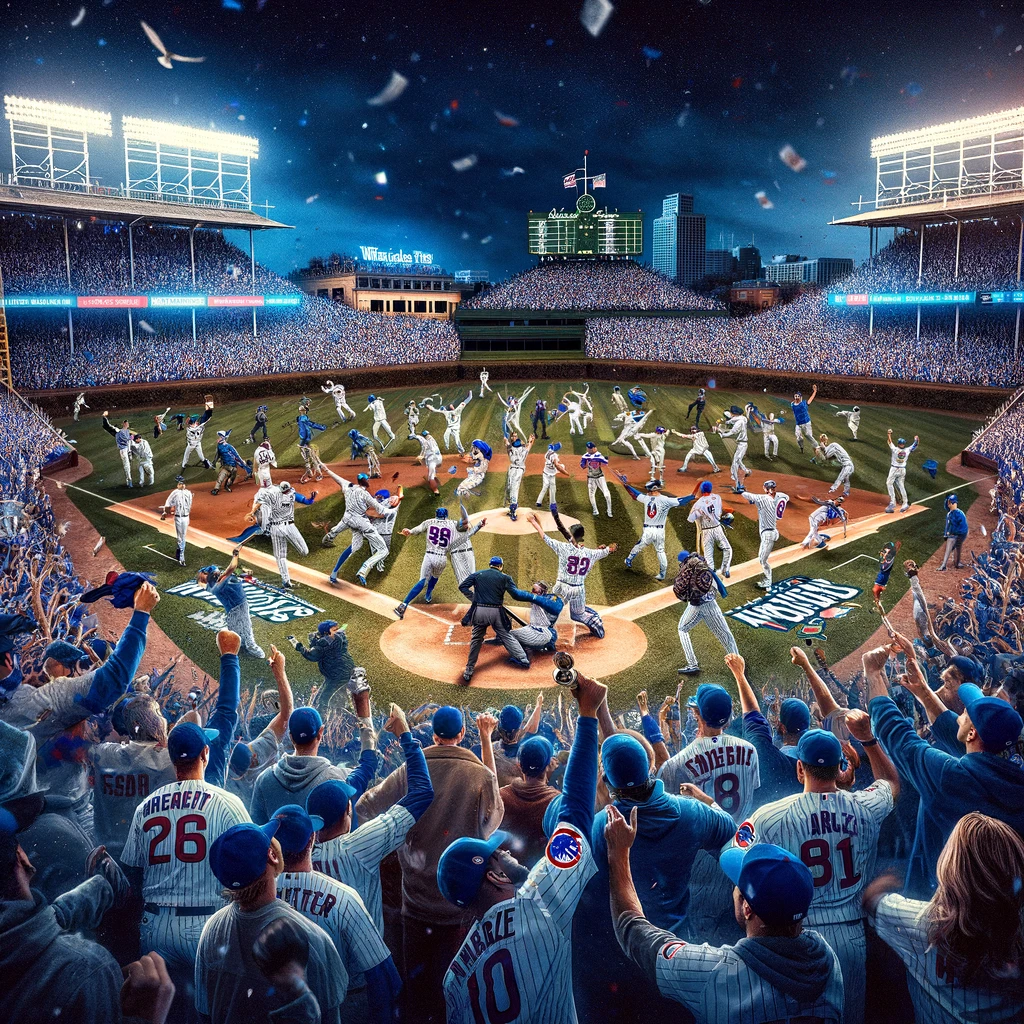
The euphoria of the 2016 victory ushered in a new era for the Chicago Cubs. The team, once synonymous with misfortune and near-misses, had rewritten its story from cursed underdogs to champions. This triumph was not just a momentary blaze of glory but a testament to a changed organization, characterized by a winning culture and a steadfast commitment to excellence.
Building on Success
Post-2016, the Cubs continued to be a force in Major League Baseball. With the core of their championship team intact, they remained competitive, reaching the playoffs in subsequent seasons. This era reflected a significant shift in the team’s identity, from lovable losers to perennial contenders, altering the perception of the Cubs in the eyes of fans and rivals alike.
Impact on the Fan Base
The victory had a profound impact on the Cubs’ fan base. Generations of fans who had known only tales of near-wins and heartaches finally witnessed the ultimate triumph. The win was a shared victory, erasing decades of frustration and replacing them with pride and a renewed sense of loyalty to the team. For many, it was more than just a game; it was a family heirloom passed down, a story of faith finally rewarded.
Cultural and Economic Impact
The Cubs’ success story transcended the realms of sports, impacting Chicago’s culture and economy. Wrigley Field, the iconic home of the Cubs, witnessed a surge in visitors, becoming more than just a ballpark but a symbol of resilience and triumph. The surrounding neighborhood, Wrigleyville, experienced economic growth, benefiting from increased tourism and the renewed interest in the Cubs’ legacy.
A Global Phenomenon
The story of the Cubs breaking their century-long curse resonated globally, capturing the imaginations of people beyond baseball. It became a narrative of overcoming seemingly insurmountable odds, a tale that inspired not only sports fans but anyone facing their own personal ‘curses’ or challenges.
Reflecting on the Journey
As we look back on the history of the Chicago Cubs, it’s a narrative rich with ups and downs, legends and facts, despair and joy. The journey from the early dominance in the 1900s to the drought and eventual curse-breaking victory is a mosaic of moments that define the essence of sports and human perseverance.
Lessons Learned
The Cubs’ story teaches valuable lessons about resilience, patience, and the power of belief. It reminds us that history is not just about the destination but also about the journey, filled with struggles and triumphs that shape the narrative.
A Blueprint for Success
The way the Cubs rebuilt their team and redefined their culture serves as a blueprint for success, not just in baseball but in any team endeavor. It highlights the importance of strategic planning, embracing change, and fostering a positive environment that encourages growth and success.
Conclusion: A Legacy Redefined
The Chicago Cubs’ journey from the early 20th-century champions to the breaking of the 108-year-old curse is a story that will be told for generations. It’s a saga that captures the essence of sports – the unyielding quest for victory, the highs and lows, and the unbreakable bond between a team and its fans. The Chicago Cubs did not just win a World Series; they redefined their legacy, turning a tale of perpetual despair into a timeless story of triumph and hope.
As we celebrate the history of this remarkable team, we are reminded that in the face of adversity, there is always the potential for greatness. The Chicago Cubs, once defined by a curse, are now forever enshrined as symbols of perseverance, unity, and the enduring spirit of baseball.
Frequently Asked Questions
1. What is the “Curse of the Billy Goat” that haunted the Chicago Cubs for so long?
The “Curse of the Billy Goat” is a famous sports legend that plagued the Chicago Cubs for decades. The tale originates from the 1945 World Series. William Sianis, owner of the Billy Goat Tavern, was allegedly asked to leave Wrigley Field during Game 4 because his pet goat’s odor was bothering other fans. As he was being ejected, Sianis supposedly declared, “Them Cubs, they ain’t gonna win no more.” This was perceived as a curse and the Cubs did not appear in a World Series for the rest of the 20th century. Despite varied attempts to break the curse, involving everything from exorcisms to reconciliations with Sianis’s family, it became a part of Cubs lore, a symbol of misfortune and heartbreak that lingered with the team until their breathtaking victory in 2016.
2. What key factors contributed to the Chicago Cubs finally breaking the curse and winning the World Series in 2016?
Breaking the curse required a perfect storm of talent, new leadership, and strategic decision making. Firstly, the Cubs hired Theo Epstein as president of baseball operations in 2011, bringing with him a proven track record of breaking curses, having led the Boston Red Sox to a World Series win in 2004 after an 86-year drought. Epstein, alongside newly appointed manager Joe Maddon and General Manager Jed Hoyer, cultivated a dynamic team that blended seasoned players and rising stars. Notable talent included Kris Bryant, Anthony Rizzo, and Javier Baez, whose youthful energy and talent on the field brought fresh hope. Veteran players like Jon Lester and John Lackey brought experience and a winning mindset to the team. This powerful roster, proficient coaching, and strategic acquisitions culminated in the magical 2016 season where they won the World Series in a thrilling Game 7 that captivated audiences around the globe.
3. How did the Cubs’ victory in 2016 impact their fans and the city of Chicago?
The Cubs’ 2016 World Series win was far more than a sports victory; it was a cultural phenomenon that brought a wave of emotion and celebration to Chicago and its fans worldwide. The victory was a cathartic moment for generations of Cubs fans who had lived through decades of near-misses and heartbreak. The city of Chicago exploded with joy, with millions of people turning out for the victory parade, which is considered one of the largest in U.S. history. It bonded the community and served as a testament to enduring hope and loyalty. The win boosted the local economy, as fans celebrated in bars, invested in memorabilia, and generally contributed to a heightened sense of city pride. It unified fans from all walks of life under a shared history and triumph, rejuvenating a fanbase that had been defined by patience and perseverance.
4. Did the Cubs’ win have any significant influence on baseball as a sport?
Yes, the Cubs’ triumph in 2016 had a sizeable impact on baseball. It underscored the importance of intelligent player development and strategic front-office leadership. Other teams began to mimic the Cubs’ approach of data-driven decision-making and building teams with a mix of youthful talent and experienced players. Additionally, it revitalized interest in baseball narratives of redemption and perseverance. The Cubs’ victory served as a reminder of baseball’s ability to transcend sports, engaging fans emotionally and reaffirming the unpredictable and captivating nature of the game. It also spurred a broader resurgence in baseball’s popularity, attracting new fans to the sport through the dramatic nature of the Cubs’ momentous win.
5. How do fans now perceive the Cubs in the post-curse era?
In the post-curse era, Chicago Cubs fans carry a renewed sense of optimism and pride. The stigma of failure has been replaced with a genuine belief in the potential of their team to compete for championships regularly. This historic victory has redefined their mindset from longing and patience to expectation and passion. While the narrative of the curse was a significant part of their identity, the elimination of that stigma has forged a new chapter for the team and its supporters. Cubs fans now relish their team’s status as world champions and anticipate future successes with a collective hope that reflects both the resilience forged over decades and a refreshed optimism. They continue to celebrate their legendary history while eagerly looking forward to achieving more milestones in their beloved Wrigley Field.