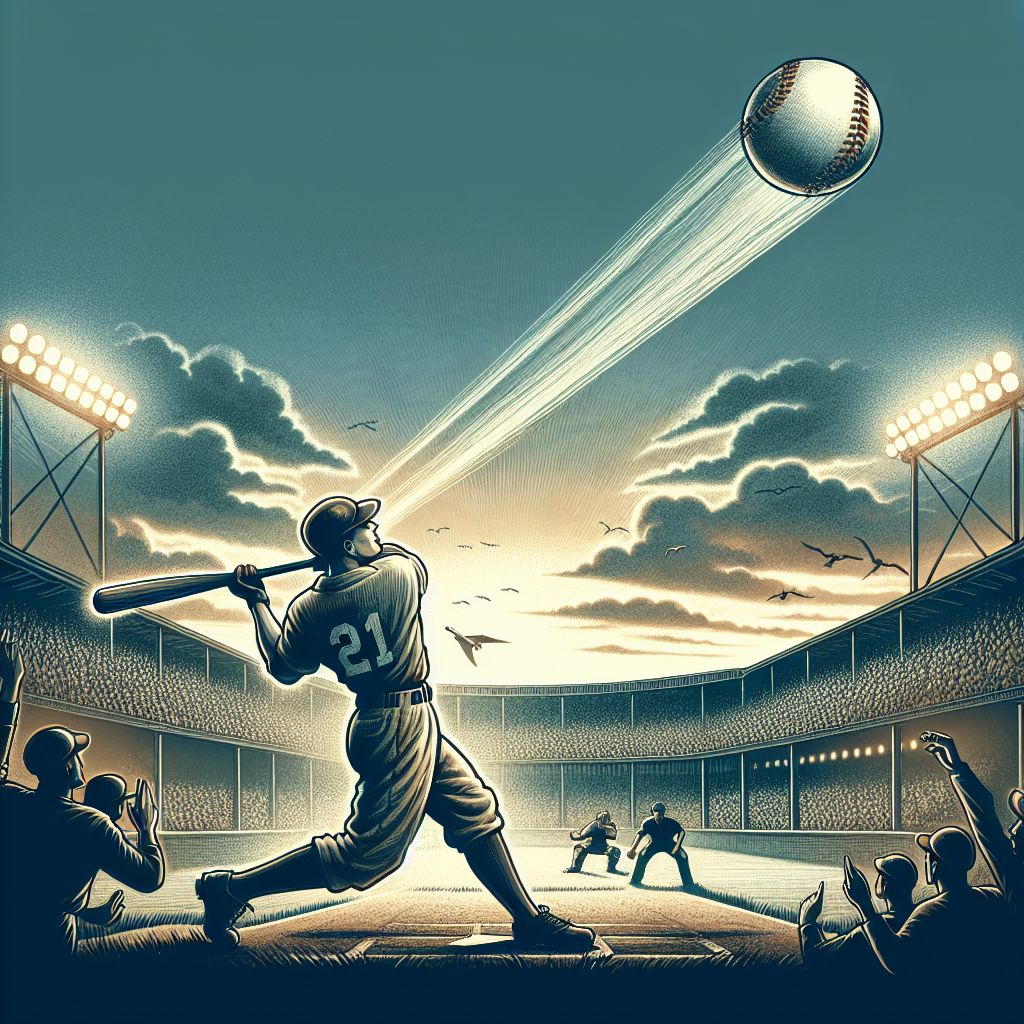
Baseball, often described as America’s favorite pastime, has seen numerous legendary figures over its storied history. Among these legends, George Herman “Babe” Ruth stands out as one of the most iconic players to ever grace the game. Born on February 6, 1895, in Baltimore, Maryland, Ruth’s rise to stardom was anything but typical. His exceptional talent, larger-than-life personality, and unparalleled achievements helped him transform the game of baseball and elevate it to new heights. In this article, we delve into the journey of Babe Ruth’s home run record-breaking moments and the lasting impact they had on baseball.
Babe Ruth’s journey to becoming a home run king is a narrative filled with perseverance, talent, and a profound love for the game. Ruth began his Major League career as a pitcher for the Boston Red Sox, showcasing extraordinary skill on the mound. However, his true destiny awaited him in the batter’s box. Ruth’s transition to hitting full-time was a remarkable shift that not only changed his career but also redefined the sport of baseball.
The focus of this article is on the significant milestones that marked Babe Ruth’s home run journey. From his early years with the Red Sox to his record-breaking days with the New York Yankees, Ruth’s ability to hit home runs captivated fans and left an indelible mark on the sport. We will explore the statistics that highlight Ruth’s legendary status, the records he shattered, and the historical context that made each achievement even more extraordinary. Join us as we embark on a comprehensive exploration of Babe Ruth’s remarkable home run record journey and the legacy he left behind.
The Early Years: Boston Red Sox and the Rise of Ruth
Babe Ruth’s entry into Major League Baseball came through his prowess as a pitcher. Signed by the Boston Red Sox in 1914, Ruth quickly established himself as one of the premier pitchers of the era. His left-handed pitching was marked by a powerful fastball and a devastating curveball, earning him a 2.19 ERA over his five seasons with the Red Sox. However, it was his batting skills that began to attract attention. Ruth’s transformation from pitcher to hitter was a turning point in his career and for the sport.
In 1919, Ruth’s last season with the Red Sox, he made a significant impact as a hitter by smashing 29 home runs, setting a new single-season record at the time. This impressive feat showcased his burgeoning potential as a home run hitter and hinted at the greatness that was yet to come. Despite his success with the Red Sox, financial difficulties within the team led to Ruth being sold to the New York Yankees in 1920.
The move to New York marked the beginning of a new chapter in Ruth’s career. It was with the Yankees that Ruth would truly establish himself as a home run legend. The transition from pitcher to full-time outfielder allowed Ruth to focus exclusively on hitting, and he did not disappoint. In his first season with the Yankees, Ruth hit an astounding 54 home runs, shattering his own previous record and solidifying his reputation as a power hitter.
The success of Babe Ruth with the Yankees not only highlighted his individual talent but also coincided with the rise of the Yankees as a dominant force in baseball. Ruth’s ability to draw crowds and generate excitement helped to elevate the Yankees’ profile and contributed to the construction of Yankee Stadium, known as “The House That Ruth Built.” The early years of Ruth’s career set the stage for the monumental achievements that would follow, establishing him as a transformative figure in the sport.
Record-Breaking Seasons with the New York Yankees
Babe Ruth’s tenure with the New York Yankees from 1920 to 1934 was characterized by unprecedented home run records and remarkable performances. One of the most iconic moments came in 1921 when Ruth smashed 59 home runs, setting yet another single-season record and cementing his status as the premier power hitter of his generation. This achievement was a testament to Ruth’s raw power, exceptional hand-eye coordination, and ability to perform under pressure.
Perhaps the most historic season of Ruth’s career came in 1927, a year often referred to as his “magical season.” During this time, Babe Ruth hit 60 home runs, breaking his own previous record and becoming the first player in Major League Baseball history to reach that milestone. The significance of this achievement cannot be overstated; it represented a new standard for power hitting and was a major contributing factor to the Yankees’ dominance that season.
The legendary “Murderers’ Row” lineup of the 1927 Yankees, which included Lou Gehrig and Tony Lazzeri, benefited greatly from Ruth’s offensive prowess. Ruth’s ability to consistently deliver home runs not only contributed to his individual accolades but also played a crucial role in the Yankees’ success as a team. The 1927 Yankees finished the season with a record of 110-44 and went on to sweep the Pittsburgh Pirates in the World Series, solidifying their place in baseball history.
These record-breaking seasons were hallmarked by Ruth’s uncanny ability to read pitchers and adjust his batting strategy accordingly. His larger-than-life presence at the plate intimidated pitchers and thrilled fans, creating an atmosphere of anticipation and excitement each time he stepped into the batter’s box. Babe Ruth’s record-breaking journey with the Yankees not only highlighted his extraordinary talent but also underscored his impact on the sport, inspiring future generations of players to strive for greatness.

Memorable Moments: Key Home Runs and Matches
Throughout his career, Babe Ruth delivered numerous unforgettable moments that have become part of baseball lore. One of the most famous occurred during the 1932 World Series, often referred to as the “Called Shot” game. During Game 3 against the Chicago Cubs, Ruth allegedly pointed to the center-field bleachers before hitting a home run to that exact spot. Whether the gesture was intentional or not, the moment has become legendary, symbolizing Ruth’s confidence and showmanship.
Another significant home run came on July 18, 1921, when Ruth hit his 139th career home run, breaking the all-time home run record previously held by Roger Connor. This milestone was particularly meaningful as it solidified Ruth’s place in history and marked the beginning of his reign as the home run king. Ruth continued to add to his total, setting the bar higher with each passing season.
Ruth’s 60th home run of the 1927 season was another watershed moment. Hit on September 30, 1927, against Washington Senators pitcher Tom Zachary, the home run not only passed his previous record of 59 but also resonated as a monumental achievement in the annals of baseball history. Fans and players alike recognized the significance of reaching such an unprecedented milestone, further cementing Ruth’s legacy.
In addition to these headline-grabbing home runs, Ruth’s performances in key matches often elevated his legend. His contributions to the Yankees’ multiple World Series victories showcased his ability to perform on the biggest stages. Ruth’s three home runs in a single World Series game in 1926 and his consistent clutch hitting were crucial to the Yankees’ success and added layers to his mythos. Each of these moments contributed to the enduring image of Babe Ruth as not just a great player, but a larger-than-life figure in the history of baseball.
The Impact on Baseball: Changes and Legacy
Babe Ruth’s impact on baseball extended far beyond his home run records. His influence was so profound that it altered the way the game was played and perceived. Prior to Ruth’s emergence as a power hitter, baseball was often characterized by a “small ball” strategy focused on bunting, base-stealing, and singles. Ruth’s prodigious home run hitting introduced a new style of play, emphasizing power and run production, which came to define the modern era of baseball.
Ruth’s ability to hit home runs at an unprecedented rate also had a significant effect on the popularity of baseball. His larger-than-life personality, combined with his on-field achievements, captivated the American public and helped elevate baseball to new heights of popularity. As a result, attendance at games soared, and Ruth became a national hero. His influence extended beyond the sport, making him one of the most recognizable and celebrated figures in American culture.
The financial impact of Ruth’s presence on the Yankees was substantial as well. His drawing power contributed to the financial success of the team and was a key factor in the construction of Yankee Stadium in 1923. Dubbed “The House That Ruth Built,” the stadium symbolized Ruth’s importance to the Yankees and his role in transforming the team into a powerhouse. The stadium became an iconic venue in sports, hosting countless memorable moments and serving as a testament to Ruth’s legacy.
Beyond his tangible impact on the game, Ruth inspired future generations of players to push the boundaries of what was possible. His record-breaking accomplishments set new benchmarks for excellence and challenged players to strive for greatness. Ruth’s legacy is evident in the achievements of later home run kings, such as Hank Aaron and Barry Bonds, who pursued and surpassed his records. The influence of Babe Ruth continues to be felt in baseball today, with his name synonymous with the pinnacle of athletic excellence and the spirit of the game.
Comparisons and Subsequent Record-Breakers
Babe Ruth’s home run records stood as benchmarks for several decades until subsequent players began to challenge and eventually surpass his achievements. One of the most notable comparisons comes with Hank Aaron, whose pursuit of Ruth’s all-time home run record captivated the baseball world. On April 8, 1974, Aaron hit his 715th career home run, breaking Ruth’s long-standing record and setting a new standard for future generations.
Barry Bonds is another player who entered the conversation of home run kings. On August 7, 2007, Bonds hit his 756th career home run, surpassing Aaron and becoming the all-time home run leader. While Bonds’ accomplishment is significant, it has been marred by controversy due to allegations of performance-enhancing drug use, which has sparked debates about the legitimacy of his record compared to Ruth’s.
Despite these subsequent achievements, Babe Ruth’s legacy as a trailblazer and pioneer in home run hitting remains intact. He was the first to demonstrate the possibilities of power hitting, and his records set a benchmark that players aspired to reach. Ruth’s ability to consistently deliver home runs in an era before advanced training methods and modern equipment makes his achievements even more remarkable.
When comparing Ruth to later record-breakers, it is essential to consider the context of his time. Ruth played in an era with fewer games per season, different pitching styles, and without the benefits of modern training regimens. His accomplishments, therefore, carry a unique weight and highlight his extraordinary talent and adaptability. While subsequent players have surpassed his numbers, Babe Ruth’s influence and pioneering spirit continue to resonate, preserving his status as one of the greatest players in baseball history.
Conclusion
Babe Ruth’s journey to becoming baseball’s home run king is a remarkable story of talent, determination, and transformative impact. From his early years as a pitcher with the Boston Red Sox to his legendary tenure with the New York Yankees, Ruth’s ability to hit home runs redefined the sport and captivated fans worldwide. His record-breaking achievements set new standards for excellence and inspired future generations to push the boundaries of the game.
Ruth’s impact on baseball extended far beyond his home run records. His influence changed the way the game was played, introducing a new emphasis on power hitting that continues to define modern baseball. Ruth’s larger-than-life personality and extraordinary talent helped elevate the sport to new heights of popularity, making him a national hero and cultural icon. The construction of Yankee Stadium, “The House That Ruth Built,” stands as a testament to his enduring legacy and contributions to the game.
Subsequent record-breakers like Hank Aaron and Barry Bonds have added to the home run narrative, but Babe Ruth’s pioneering achievements remain a cornerstone of baseball history. His ability to deliver under pressure, his showmanship, and his transformative impact on the sport ensure that his legacy endures. Babe Ruth’s journey is not just a story of records and statistics; it is a testament to the power of talent, perseverance, and the enduring spirit of baseball.
As we reflect on Babe Ruth’s home run record journey, it is clear that his contributions to baseball were monumental. He set a new standard for power hitting, captivated fans, and left an indelible mark on the sport. Ruth’s legacy continues to inspire players and fans alike, reminding us of the magic that can happen when extraordinary talent meets unyielding determination. Babe Ruth’s home run record journey is a timeless tale that will forever be celebrated in the annals of baseball history.
Frequently Asked Questions
1. What is Babe Ruth’s significance in the history of baseball?
Babe Ruth is a towering figure when it comes to the history of baseball, an absolute institution within America’s favorite pastime. His significance is rooted not just in his unprecedented achievements but also in the vibrant personality and charisma he brought both to the field and to the broader public eye. Born on February 6, 1895, in Baltimore, Maryland, Ruth naturally rose through the ranks due to his extraordinary talent. He wasn’t just another player; he revolutionized the way baseball was played. He is renowned for shifting the focus from the ‘small ball’ game that revolved around bunting and stealing bases to a power-driven spectacle hinged on home runs. At a time when strategic plays and meticulous tactics dominated the scene, Ruth’s penchant for dramatic, towering home runs electrified crowds and changed the very fabric of the game. His presence elevated baseball to new heights, drawing massive crowds and sparking public fascination. The impact of Babe Ruth doesn’t just reflect in the scores and statistics of his era but also in the emotional and cultural attachment people have to him. Ruth scored a mind-boggling 714 home runs in his career, a record that stood for decades, and it was these home runs that were a beacon of the evolving nature of the tactical landscape of baseball. His ability to hit these homers with almost uncanny regularity turned him into not just a sports figure but a national icon who captured the hearts of fans far and wide.
2. How did Babe Ruth break the home run record, and what made his journey unique?
Babe Ruth’s journey to break the home run record is a saga rich with determination, skill, and an unparalleled love for the game of baseball. Prior to Ruth, home runs weren’t typically the focus or the expectation for players, but Ruth was different. He broke the mold and redefined the boundaries of the sport. His ascent began in a prodigious fashion, honing his skills in a reform school, where he was surrounded by a formal structure that nurtured his raw talent. Once Ruth entered the major leagues, he quickly gained attention for his prodigious power and ability to deliver on the field. Unlike players before him, Babe Ruth possessed an exceptional eye for the ball and the brawn to back it with powerful swings that sent the balls soaring beyond the field’s fences regularly. His audacity and aggressive style were almost theatrical. What truly defined his journey was his ability to continue performing across a span of years, with each season underscoring his unmatched talent. He broke the single-season home run record multiple times, famously hitting 60 home runs during the 1927 season, a record that would stand until 1961. Reflecting on the many twists and turns of his career, from the rough beginnings in Baltimore to becoming the face of the New York Yankees, Babe Ruth’s journey was one marked by passionate reinvention and unwavering determination. It was these qualities that made his journey not only unique but legendary.
3. What obstacles did Babe Ruth face while on his way to breaking the home run record?
Babe Ruth faced a series of significant obstacles on his path to breaking the home run record, each a testament to his remarkable resolve and passion for the game. In the early years, Ruth dealt with the challenges typical of a young man from humble beginnings. Growing up in the rough neighborhood of Baltimore, Ruth’s time at St. Mary’s Industrial School for Boys wasn’t just a formative setting but also a place where he learned discipline and channeled his energy into baseball. As he transitioned to the major leagues, there was societal skepticism. Baseball was then less formalized than today, and he had to prove himself consistently on the field while also facing societal expectations. Many critics believed his aggressive playing style and his focus on home runs were not conducive to traditional baseball tactics, making his style of play initially unpopular among some purists. Further complicating his journey were his personal challenges. Off-field, Ruth was known for his extravagant lifestyle, often plagued by rumors about his nightlife, which some critics believed could derail his career. However, through a combination of raw talent, on-field performance, and eventually adapting to more focused personal regimens, Ruth overcame these obstacles. These hurdles only reinforced his reputation as a larger-than-life figure who was unwavering in breaking down barriers, not just in the game of baseball but also in public perception. Breaking the home run record was a tangible manifestation of his tenacity and sheer determination to defy all odds.
4. How did Babe Ruth’s home run achievements impact the sport of baseball?
Babe Ruth’s home run achievements profoundly transformed baseball, leaving a lasting legacy that continues to influence how the game is played and perceived today. Before Ruth’s era, baseball teams predominantly relied on strategy and contained plays designed to manufacture runs through stolen bases and bunts. This ‘small ball’ model of play was the norm. However, Ruth’s prowess at hitting home runs changed the spectator’s experience and strategy for teams dramatically. With each massive swing and corresponding loud crack of the bat sending the ball into the stands, he brought a new excitement and spectacle to the game. This change didn’t just reflect in games, but also in the stands – Ruth’s playing style brought in crowds at an unprecedented rate, boosting the sport’s popularity immensely. Stadiums began to fill to capacity as people were eager to witness one of Ruth’s iconic home runs firsthand. His influence encouraged managers and players to embrace power-hitting, eventually leading to a strategic shift in how teams were structured and how players were evaluated. Moreover, Ruth’s presence increased the media’s interest in baseball, putting the sport under the national spotlight regularly. In essence, Ruth not only broke the home run record but also broke the old conventions that held baseball in its traditional confines, paving the way for modern baseball, where thrilling home runs are as much about entertainment as they are about skill. Baseball evolved into more than a sport of tactical decisions; it became a grand showpiece event centered around iconic moments, many forged by Ruth himself.
5. What legacy did Babe Ruth leave behind for future generations of baseball players?
Babe Ruth left an indelible legacy in the world of baseball, serving as an inspiration for countless future generations of players. First and foremost, Ruth embodied the notion that players could transcend the sport and become cultural icons in their own right. He set a precedent that sports figures could hold a broader influence, not just on the field but in society at large. Ruth’s extraordinary feats and his showmanship instilled a belief in aspiring athletes that perseverance and talent could propel them beyond expected norms and towards greatness. He was among the first to embody the dual role of an athlete and a personality, showing the public that athletes could be larger-than-life figures. Statistically, his records stood as benchmarks for future players who set out to emulate or surpass his level of achievement. This enduring aspiration drove many to push their limits, continually raising the bar of excellence in the game. The narrative of his life also offered a blueprint of personal redemption and triumph over difficulties, carrying an implicit message of never giving up. His iconic number ‘3’, the grandeur of his home runs, and the energy he brought to the game continue to be celebrated through decorations and memorabilias in stadiums everywhere. Babe Ruth didn’t just leave a series of records; he left a philosophy—one grounded in the joy of play, the thrill of competition, and the belief that sports are as much about breaking barriers as they are about breaking records. He inspired generations to not just play the game, but to transform it.