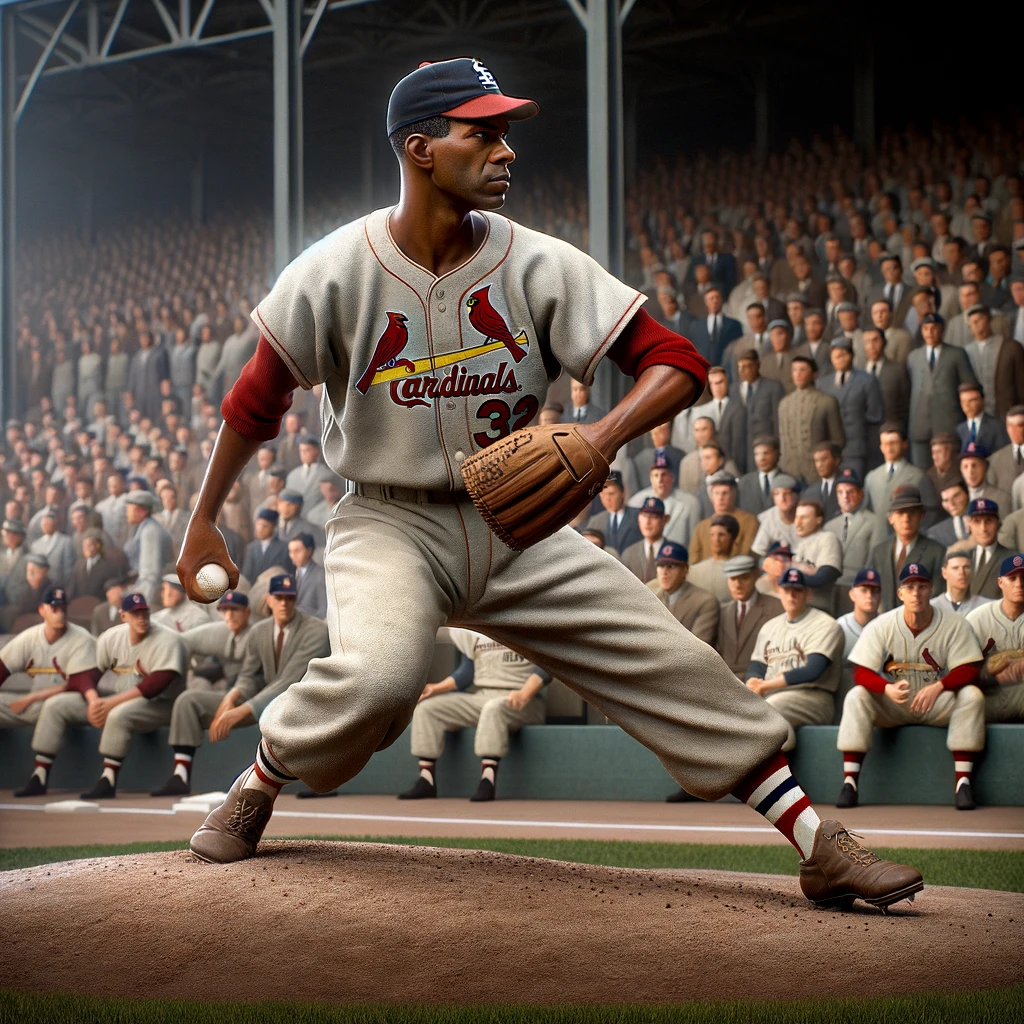
A Fierce Competitor Emerges
In the annals of baseball history, few names evoke the sense of awe and respect as that of Bob Gibson. Born Pack Robert Gibson on November 9, 1935, in Omaha, Nebraska, Gibson rose from humble beginnings to become one of the most dominant and intimidating pitchers in Major League Baseball (MLB) history.
Early Years and Entry into MLB
Gibson’s journey to baseball greatness began in the streets of Omaha, where he honed his athletic skills, not only in baseball but also in basketball. His dual-sport prowess led him to Creighton University, where he starred in both sports. Gibson’s entry into professional baseball was with the St. Louis Cardinals in 1959, marking the start of a storied 17-year career.
A Pitching Style Born of Grit and Fire
From the beginning, Gibson’s pitching style was a blend of raw power and tactical finesse. Standing 6-foot-1 and weighing 189 pounds, he wasn’t the most physically imposing figure on the mound. Yet, what he lacked in size, he more than compensated for with his competitive spirit and sheer determination.
The Height of Dominance: The 1960s
The 1960s saw Gibson emerge as one of the most fearsome pitchers in baseball. His fastball, slider, and curveball were not only exceptionally well-controlled but delivered with a ferocity that left batters uneasy.
1964: A Breakout Year
Gibson’s breakout year came in 1964. He led the Cardinals to a World Series victory over the New York Yankees, earning the World Series MVP. This triumph was a testament to his resilience and ability to perform under pressure.
The Unforgettable 1968 Season
1968 remains etched in baseball lore as “The Year of the Pitcher,” and at the forefront of this era was Bob Gibson. His performance that season was nothing short of phenomenal. He posted a record-breaking 1.12 ERA, the lowest in the modern era, and won both the National League (NL) MVP and Cy Young awards. His dominance in this season led to a significant rule change, the lowering of the pitcher’s mound, a testament to his impact on the game.
A Reputation for Intimidation
Gibson’s reputation as an intimidator was not unwarranted. He was known for his aggressive inside pitching, often brushing back hitters with his fastball. This approach was not meant to injure but to establish dominance and control over the plate. It was a psychological edge that Gibson used to his advantage.
Leadership and Legacy
Beyond his pitching prowess, Gibson was a leader on and off the field. He played during a transformative period in American history, including the civil rights movement, and was a key figure in breaking down racial barriers in the sport.
A Career of Accolades
Over his career, Gibson amassed an impressive list of accolades:
- 2x World Series champion (1964, 1967)
- 2x World Series MVP (1964, 1967)
- 9x All-Star
- 2x Cy Young Award winner
- NL MVP (1968)
- Gold Glove winner for nine consecutive years
Impact on Teammates and Rivals
Gibson’s influence extended beyond his statistics. Teammates and rivals alike revered him for his competitiveness and work ethic. His presence elevated the performance of those around him, and his rivalry with opposing hitters was marked by mutual respect.
The End of an Era
Gibson’s career with the Cardinals came to an end in 1975. His final career statistics were a testament to his skill and longevity in the league:
- 251 Wins
- 3,117 Strikeouts
- 2.91 ERA
Post-Retirement and Legacy
After retirement, Gibson’s legacy continued to grow. He was inducted into the Baseball Hall of Fame in 1981, his first year of eligibility. His impact on the game is still felt today, as he set the standard for pitching excellence and competitive spirit.
A Lasting Influence on Baseball
Bob Gibson’s era of dominance in the 1960s changed the landscape of baseball. His approach to pitching, marked by a blend of power, precision, and intimidation, has influenced generations of pitchers. His legacy is not just in the records he set, but in the intangible qualities he brought to the game: resilience, determination, and a fierce competitive spirit.
A Mentor and Inspiration
Gibson’s role as a mentor and inspiration to younger players was an integral part of his legacy. He was known for his willingness to share his knowledge and experience, not only with his teammates but with players across the league. His insights into pitching mechanics, game strategy, and mental toughness were invaluable to many who followed in his footsteps.
The Psychological Edge
What truly set Gibson apart was his psychological approach to the game. He understood that baseball, particularly pitching, was as much a mental battle as it was a physical one. His ability to intimidate batters was not just about throwing hard or inside; it was about owning the mound, controlling the game, and outthinking his opponents. This mental edge made him one of the most dominant pitchers of his era.
Gibson and the Civil Rights Movement
Gibson’s career coincided with a critical period in American history, the civil rights movement. As an African American player in a predominantly white sport, Gibson faced challenges and prejudices both on and off the field. He navigated these with dignity and grace, becoming a symbol of strength and resilience for many. His success helped pave the way for future generations of African American athletes in baseball and other sports.
The 1967 World Series: A Defining Moment
Another defining moment in Gibson’s career was the 1967 World Series. Once again, he led the Cardinals to victory, winning his second World Series MVP award. His performance in this series, particularly in Games 1, 4, and 7, where he pitched complete games, solidified his reputation as one of the greatest postseason pitchers of all time.
Adaptation and Longevity
Gibson’s ability to adapt and evolve as a pitcher was key to his longevity in the sport. As he aged, he relied less on velocity and more on precision, control, and his deep understanding of hitters’ weaknesses. This adaptability allowed him to remain effective and competitive throughout his career, even as the game of baseball underwent changes.
Retirement and Beyond
After retiring from baseball, Gibson remained active in the sport, serving in various roles including coaching and broadcasting. His insights and experiences were highly valued, and he remained a respected figure in the baseball community.
The Legacy Lives On
Bob Gibson’s influence on the game of baseball is everlasting. His approach to pitching, marked by dominance, mental toughness, and an unyielding competitive spirit, set a standard for future generations. His legacy lives on not only in the records and accolades he achieved but in the way he played the game — with passion, determination, and an unwavering commitment to excellence.
Reflections on a Legend
As we reflect on the career of Bob Gibson, several key themes emerge:
- Excellence in Adversity: Gibson’s rise to the top of his sport, despite facing significant challenges, is a testament to his character and resilience.
- Innovation and Adaptation: His ability to adapt his pitching style over the years demonstrates his deep understanding of the game and his commitment to excellence.
- Mental Toughness: Gibson’s psychological edge was as important as his physical skills, setting him apart as a true master of the game.
- Impact Beyond the Field: His influence extended beyond the baseball diamond, impacting society and paving the way for future generations of athletes.
A Timeless Icon
In the world of baseball, icons come and go, but legends like Bob Gibson remain timeless. His story is not just about baseball; it’s about determination, resilience, and the pursuit of excellence. Bob Gibson, “The Intimidator,” will forever be remembered as one of the most dominant and inspiring figures in the history of sports.
Conclusion: The Enduring Legacy of Bob Gibson
In conclusion, Bob Gibson’s era of dominance in baseball was about more than just impressive statistics and World Series victories. It was about the impact he had on the game, his teammates, and generations of fans and players. His legacy as “The Intimidator” is a testament to his unparalleled skill, his fierce competitive spirit, and his profound influence on the game of baseball. Bob Gibson’s story is one of greatness, resilience, and enduring legacy, making him a true legend of the sport.