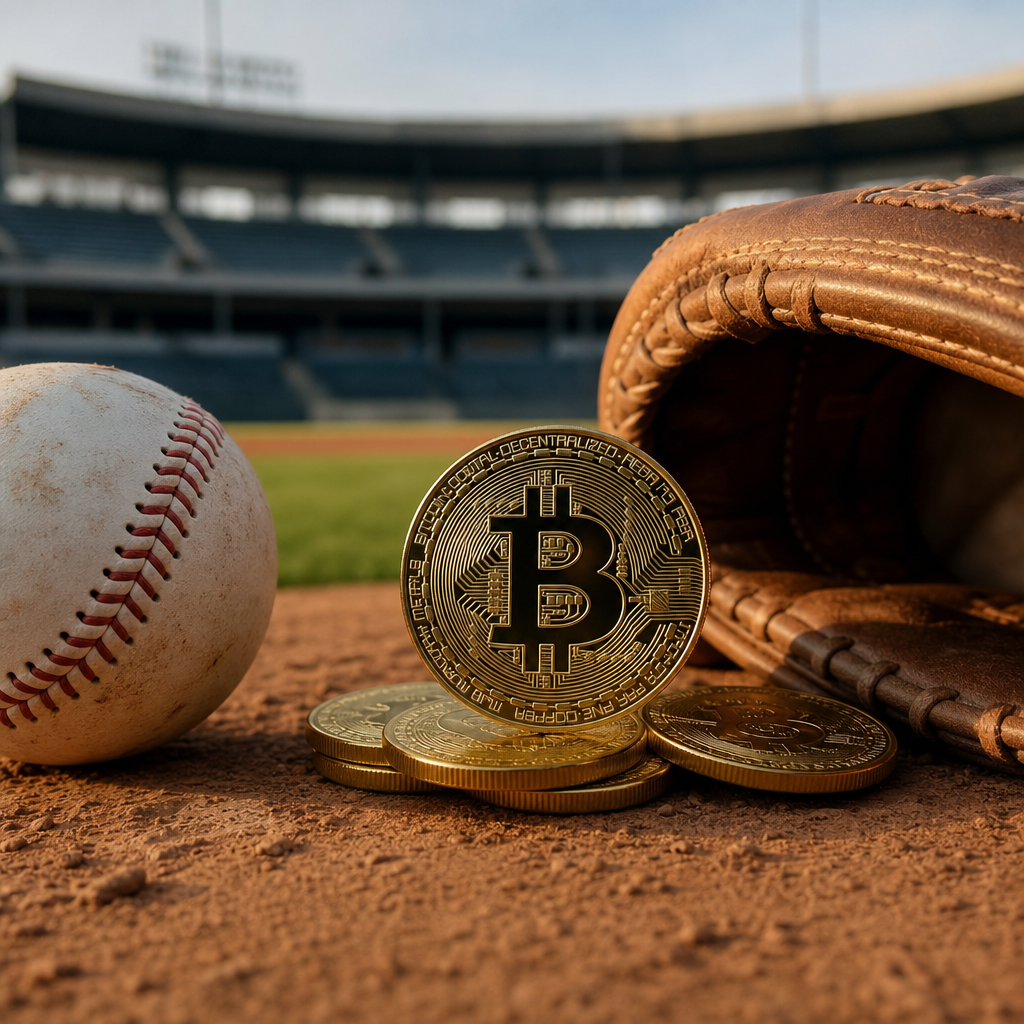
Blockchain technology is moving from finance headlines into front-office discussions, and baseball is a natural place to examine its practical value. At its core, blockchain is a shared digital ledger: a database distributed across multiple computers, where transactions are recorded in time-stamped blocks and protected by cryptographic verification. In baseball transactions, that could mean more transparent player payments, authenticated memorabilia records, automated contract triggers, and tamper-resistant tracking of ticketing, licensing, and international signing documentation. When people ask how blockchain technology and its potential in baseball transactions should be understood, the best answer is simple: it is not a replacement for baseball operations, but a trust layer that can reduce disputes, improve traceability, and speed verification across a fragmented ecosystem.
I have worked on sports data and transaction workflows long enough to know that baseball rarely suffers from a lack of information. It suffers from information living in too many places. Clubs maintain internal systems, league offices use centralized databases, agencies keep parallel records, payment processors maintain separate ledgers, and downstream partners such as ticketing vendors, memorabilia authenticators, and licensing groups each preserve their own version of events. That fragmentation creates friction. It slows approvals, increases reconciliation work, and leaves room for costly disagreements over rights, provenance, and timing. As baseball continues modernizing scouting, player development, fan engagement, and commercial operations, the broader intersection of baseball and technology increasingly centers on systems that create confidence across many parties rather than just generating more raw data.
This article serves as a hub for that wider conversation. The intersection of baseball and technology includes analytics platforms, optical tracking, biomechanical assessment, video systems, automated ticketing, wearable sensors, digital payments, and increasingly, verifiable ledgers. Blockchain matters in this mix because transactions sit beneath nearly every modern baseball activity. A trade is a transaction. A contract extension is a transaction. A revenue-sharing distribution is a transaction. The sale of a game-used bat, a digital collectible, or a postseason ticket is a transaction. Understanding where blockchain helps, where traditional databases remain better, and how clubs can test limited use cases without overcommitting is essential for executives, analysts, agents, vendors, and fans following how innovation is reshaping the game.
Why baseball transactions are complex enough to benefit from verifiable ledgers
Baseball transactions look straightforward from the outside, but the operational reality is layered. Every major move touches legal review, labor rules, financial controls, identity verification, compliance, and historical recordkeeping. Consider an international amateur signing. A club may need to verify age and identity documents, bonus pool allocations, agent involvement, currency conversions, tax treatment, and league approval timelines. Each checkpoint creates a handoff. In traditional workflows, handoffs depend on emails, PDFs, portal uploads, and manual reconciliation. A distributed ledger can store a validated chain of approvals, hashes of source documents, and timestamps that all authorized parties can trust without endlessly comparing versions.
The same principle applies to player compensation. Salary payments, signing bonuses, deferred money, award bonuses, and revenue-linked incentives can span years and multiple entities. If a club, player representative, league office, and payment processor each rely on different records, exceptions become expensive. Blockchain systems can create a single auditable history of obligations and fulfillment events. That does not eliminate accounting systems; it gives them a common verification source. In practice, that matters most in high-value, multi-stage arrangements where the cost of proving what happened is nontrivial.
Baseball also depends heavily on provenance. Teams and fans care whether a jersey was game-worn in a specific inning, whether a baseball came from a milestone home run, and whether a limited digital collectible was issued in a controlled quantity. Fraud in memorabilia and secondary ticketing thrives when trust is weak. A tamper-resistant ledger tied to item-level identifiers can make chain-of-custody clearer. The technology is useful not because it is fashionable, but because baseball has many assets whose value depends on verifiable history.
Where blockchain can be applied across the baseball ecosystem
The strongest use cases are operational, not speculative. One category is contract administration. Smart contracts, meaning self-executing code tied to predefined terms, can automate straightforward triggers such as release of a payment after league approval or milestone bonuses after validated statistical thresholds are met. A club should not encode every legal nuance into software, but repeatable clauses with objective data inputs can be automated safely if governance is clear.
A second category is ticketing. Blockchain-based ticketing can create traceable ownership records, limit counterfeit duplication, and enforce resale conditions. European soccer and concert promoters have already tested similar systems to curb unauthorized resale and improve transfer visibility. In baseball, where secondary markets are large and postseason demand spikes, authenticated digital tickets could reduce fraud and provide clubs better insight into circulation patterns.
Third is memorabilia authentication. MLB already uses sophisticated authentication processes for game-used items, including hologram-based verification. Blockchain could complement, not replace, that framework by preserving immutable digital records attached to authenticated items. For example, a game-used ball logged by an authenticator at the stadium could receive a digital token linked to inning, pitcher, batter, and event metadata. When that item changes hands, the ledger would maintain provenance without relying solely on paper certificates.
Fourth is licensing and royalties. Baseball intellectual property generates revenue across merchandise, media, collectibles, and gaming. Rights management often involves multiple stakeholders with different participation percentages. A ledger-based system can document entitlement rules and payment distributions with less reconciliation. Finally, there is player identity and credential verification, especially in international markets where document validation can be difficult and where clean audit trails can protect both clubs and players.
| Use case | Primary problem | How blockchain helps | Key limitation |
|---|---|---|---|
| Player contracts | Multiple approval steps and payment triggers | Creates auditable records and automates objective clauses | Legal terms are often too nuanced for full automation |
| Ticketing | Counterfeits and opaque resale chains | Tracks issuance, transfer, and resale conditions | Fan adoption fails if wallets are cumbersome |
| Memorabilia | Forgery and weak provenance | Preserves item history linked to authentication data | Physical-digital links must be secured carefully |
| Royalties | Complex revenue splits and reconciliation | Logs entitlements and payment distributions transparently | Requires standard data models across partners |
| International signings | Identity verification and compliance documentation | Stores timestamps, document hashes, and approvals | Bad source data remains bad data if verified poorly |
What blockchain does better than a traditional database, and what it does not
This is the question baseball executives should ask first. A traditional database is usually faster, cheaper, and easier to govern when one trusted party controls the system and everyone accepts that authority. If MLB or a club can run a centralized platform with clear permissions and limited dispute risk, blockchain may add unnecessary complexity. I have seen organizations reach for blockchain when they really needed cleaner APIs, better master data management, and stricter audit logging.
Blockchain is preferable when several parties need a shared record but no single participant should unilaterally alter history. Its strengths are immutability, distributed verification, and programmable transaction logic. Those features are valuable in cross-organization workflows, especially where records may be challenged later. For baseball, that usually means league-club-agent-vendor interactions, not purely internal baseball operations.
It is also important to separate public blockchains from permissioned blockchains. Public chains such as Ethereum allow broad participation and strong decentralization, but they can raise privacy, cost, and throughput concerns. Permissioned platforms, often built with enterprise frameworks such as Hyperledger Fabric, allow tighter access control and are more realistic for sports business operations. They sacrifice some openness in exchange for compliance, confidentiality, and predictable governance. That tradeoff is appropriate in baseball, where labor, medical, and financial records require strict access rules.
The biggest misconception is that blockchain guarantees truth. It guarantees that recorded entries are hard to change after the fact. If false information enters the system, the ledger preserves falsehood efficiently. That is why source verification, identity controls, and trusted oracles matter more than buzzwords. A player milestone bonus can be automated only if the statistical feed is authoritative. A memorabilia token has value only if the physical item was authenticated correctly at origin.
Real-world models from sports, finance, and collectibles
Baseball does not need to invent every application from scratch. Useful models already exist. In ticketing, several event operators have experimented with blockchain to reduce counterfeit sales and improve transfer tracking. The lesson from those pilots is clear: invisible infrastructure works better than fan-facing complexity. If users must manage private keys or navigate crypto jargon, adoption drops. The right design hides the ledger behind familiar mobile ticket experiences.
In collectibles, platforms such as NBA Top Shot demonstrated that fans will buy digitally scarce sports assets when authenticity and ownership are easy to understand. The speculative excess around some digital collectibles also showed the downside of treating every tokenized asset as an investment product. For baseball, the sustainable lesson is not to chase hype. It is to use verifiable ownership where authenticity, licensing, and transfer records genuinely matter, especially when paired with physical items or exclusive experiences.
Finance offers perhaps the strongest operating model. Banks and settlement networks have explored distributed ledgers for clearing, reconciliation, and auditability because these are multi-party trust problems. Baseball transactions share that characteristic. A league-approved ledger for bonus disbursements, transfer fees in international arrangements, or revenue-sharing allocations would resemble enterprise finance more than consumer crypto trading. That distinction matters because it points clubs toward stable, governed deployments rather than volatile token ecosystems.
There are also cautionary examples. Some blockchain sports ventures failed because they looked for a problem after choosing the technology. Others underestimated integration effort with legacy systems like CRM platforms, accounting software, and league databases. In my experience, the projects that survive are narrowly scoped. They start with one costly verification problem, define the authorized participants, establish a data standard, and measure whether the ledger reduces dispute time or administrative labor.
Implementation challenges baseball organizations must address
Any serious deployment begins with governance. Who can write to the ledger? Who can read sensitive records? Who resolves disputes when off-chain facts conflict with on-chain entries? In baseball, these questions are not academic. Clubs, the commissioner’s office, unions, agencies, payment providers, authenticators, and commercial partners all have different incentives. Without a governance charter, a ledger becomes a shared database with no shared operating rules.
Privacy is the next hurdle. Baseball transactions often include personal and financial information protected by law and contract. Sensitive documents should not live directly on-chain. A better pattern is to store document hashes and event proofs on-chain while keeping actual files in secure off-chain storage. That approach preserves integrity checks without exposing confidential content. It also supports deletion or access restriction where regulations require it.
Integration costs are often underestimated. Clubs already use enterprise systems for finance, legal workflow, ticketing, merchandise, identity management, and analytics. A blockchain layer must connect to those systems through reliable APIs and clear data schemas. Otherwise staff will duplicate work, which destroys the business case. Performance matters too. Baseball does not need high-frequency public-chain settlement for most uses, but it does need dependable transaction finality and clean recovery procedures.
Finally, there is culture. Baseball front offices adopt technology when it demonstrably improves decisions or operations. They reject it when it sounds theoretical. To win internal support, a blockchain project must show measurable outcomes: fewer ticket fraud claims, faster royalty reconciliation, lower memorabilia dispute rates, or reduced contract administration time. If the value cannot be explained in one sentence to legal, finance, and operations leaders, the scope is too broad.
How blockchain fits into the broader intersection of baseball and technology
This subtopic is bigger than ledgers, and that is exactly why blockchain should be evaluated as part of a larger technology stack. Baseball’s current transformation is driven by data capture and system connectivity. Hawk-Eye tracking feeds pitch and batted-ball analysis. Biomechanics labs help clubs understand movement efficiency and injury risk. Wearables monitor workload. Video platforms accelerate player development. Customer data platforms personalize ticket offers. All of these systems produce information that triggers actions, payments, rights decisions, and fan transactions.
Blockchain is most useful at the moment those actions require trusted coordination across organizations. Think of it as the connective tissue for high-value records rather than the engine generating baseball insight. Statcast-derived milestones could trigger verified bonus payments. Authentication records from stadium operations could feed memorabilia marketplaces. Ticket ownership logs could connect with CRM systems and fraud monitoring tools. Licensing data could reconcile with commerce platforms and royalty accounting.
That broader view also helps organizations prioritize internal linking between innovation topics. A hub on the intersection of baseball and technology should connect blockchain to analytics, wearable tech, automated officiating, digital fan engagement, cybersecurity, and sports business operations. These are not isolated trends. They are overlapping systems changing how clubs evaluate talent, protect assets, engage fans, and document value. Blockchain deserves attention not because it is universal, but because it can solve trust and verification problems created by this increasingly digital environment.
Blockchain technology has real potential in baseball transactions, but only when the use case is specific and the governance is disciplined. The best opportunities are not abstract promises of decentralization. They are practical workflows where several parties need a shared, tamper-resistant record: contract administration, ticketing, memorabilia provenance, royalty distribution, and international compliance. In those settings, blockchain can reduce reconciliation work, strengthen audit trails, and make high-value records easier to trust.
It is equally important to recognize the limits. A traditional database remains the better choice when one trusted authority controls the process and no cross-party verification problem exists. Blockchain does not fix poor source data, weak authentication, or unclear business rules. It also should not expose confidential information carelessly or force fans and staff into clumsy user experiences. The right approach is measured adoption built on permissioned access, off-chain storage for sensitive documents, and integration with the systems clubs already use.
As part of the broader intersection of baseball and technology, blockchain belongs in the conversation because the sport is becoming more digital, more connected, and more dependent on trustworthy records. Teams and leagues that evaluate it carefully can modernize transactions without chasing hype. Start with one operational pain point, define success metrics, and build from there. If you are mapping how innovation is changing baseball, use this hub as your starting point and then explore each connected technology with the same practical lens.
Frequently Asked Questions
What does blockchain technology actually mean in the context of baseball transactions?
In baseball, blockchain refers to using a shared, tamper-resistant digital ledger to record and verify transaction-related information across multiple authorized parties rather than relying on a single internal database. Instead of one club, league office, agent, vendor, or authentication company maintaining its own isolated records, a blockchain-based system can allow approved participants to view the same time-stamped transaction history. That matters because baseball transactions often involve complex layers of documentation, including contract terms, signing bonuses, deferred compensation, revenue-sharing obligations, licensing rights, performance incentives, and authentication records tied to physical assets such as game-used memorabilia.
Applied practically, blockchain would not replace baseball operations overnight, but it could improve how records are created, shared, and trusted. For example, when a player contract is amended, when bonus conditions are met, or when a piece of memorabilia changes hands, each event could be recorded as a verified entry on a ledger that is extremely difficult to alter retroactively without detection. That creates a stronger audit trail, reduces disputes over version control, and gives stakeholders more confidence that the information they are relying on is authentic and complete. In short, blockchain in baseball is less about hype and more about improving transparency, traceability, and record integrity in the transactions that shape the sport.
How could blockchain improve player contracts, payments, and bonus structures in Major League Baseball?
One of the clearest use cases for blockchain in baseball is contract administration. Player agreements can be highly detailed, with guaranteed money, option years, buyouts, no-trade provisions, roster bonuses, milestone incentives, playoff shares, endorsement-related clauses, and deferred compensation. Managing those provisions accurately requires coordination among clubs, league offices, player representatives, finance departments, and sometimes third-party administrators. A blockchain-based system could create a single verified record of the executed contract and any subsequent amendments, reducing confusion over which version is current and ensuring that authorized parties are working from the same source of truth.
Blockchain could also support automated payment workflows through smart contracts, which are self-executing code-based agreements tied to defined conditions. For example, if a player reaches a negotiated plate appearance threshold, earns an All-Star selection bonus, or triggers a vesting option based on innings pitched, the system could automatically register that event and initiate the agreed process for payment approval. That does not mean clubs would surrender control to software without oversight; rather, the technology could streamline execution while preserving review mechanisms and compliance checks. The result could be fewer administrative errors, faster reconciliation, and clearer visibility into how and when specific compensation obligations are triggered.
There is also value in long-term payment tracking. Baseball contracts often include deferred money paid over many years, and blockchain could help create an immutable schedule of obligations, payments made, and balances remaining. That would be particularly useful in situations involving club ownership changes, financial audits, or disputes about whether a condition was satisfied. While labor law, league rules, and collective bargaining requirements would still govern the legal framework, blockchain could provide the reliable infrastructure needed to manage those obligations with greater precision and transparency.
Can blockchain help with authenticated memorabilia, ticketing, and the prevention of fraud in baseball?
Yes, and this may be one of the most immediately understandable applications for fans and collectors. Baseball has a long history of memorabilia collecting, from signed bats and jerseys to game-used balls and milestone artifacts. The challenge is authentication. Even when an item is genuine, proving its chain of custody can be difficult if records are fragmented, paper-based, or maintained by separate organizations. Blockchain can help by attaching a verifiable digital record to a physical item at the moment it is authenticated. That record can document when the item was used, who authenticated it, where it was stored, and when ownership changed hands.
For example, if a ball used in a historic game is entered into a blockchain-backed registry, future buyers could review a permanent transaction history rather than relying solely on paper certificates or verbal assurances. This can reduce the risk of counterfeit goods entering the market and improve buyer confidence in auctions, private sales, and team-operated retail channels. The same principle applies to autographed merchandise, limited-edition collectibles, and even digital assets tied to baseball experiences. A stronger provenance system helps preserve value because rarity and authenticity become easier to verify.
Ticketing is another area where blockchain may reduce fraud. Tickets can be duplicated, resold in unauthorized ways, or manipulated through opaque secondary-market practices. A blockchain-based ticketing system could create unique, traceable digital tickets that update ownership records securely each time a transfer occurs. That would make counterfeiting more difficult, improve visibility into resale activity, and potentially allow teams or leagues to enforce transfer rules more effectively. While no technology eliminates fraud entirely, blockchain can make fraudulent conduct easier to detect and legitimate ownership easier to confirm.
What are smart contracts, and could they automate parts of trades, options, and other baseball transaction rules?
Smart contracts are programmable agreements that automatically carry out specific actions when predetermined conditions are met. In baseball, they could be useful for handling administrative tasks tied to contractual language or transaction rules, especially when those tasks depend on objective data points. If a player reaches a statistical benchmark that activates a bonus, if a club option must be exercised by a particular deadline, or if a trade agreement includes conditional compensation based on roster status or playing time, a smart contract could monitor those terms and initiate the appropriate workflow once the triggering event is verified.
That said, the baseball world is filled with nuance, and not every decision can or should be automated. Trades can involve subjective medical reviews, league approvals, grievance risks, and negotiated exceptions that require human judgment. Smart contracts are best suited to clearly defined, measurable conditions rather than ambiguous legal language or discretionary determinations. Their strength lies in reducing manual follow-up, improving deadline management, and creating reliable records of when a condition was met and what action followed.
Used carefully, smart contracts could support a more efficient transaction environment. Front offices could spend less time reconciling routine triggers and more time on strategic analysis. Agents and players could gain clearer visibility into when earned compensation becomes payable. League administrators could benefit from standardized reporting and auditability. The key is to treat smart contracts as tools for execution and compliance support, not as substitutes for legal review, negotiation, or governance. In baseball transactions, that balance is essential.
What are the biggest limitations, risks, and adoption challenges for blockchain in baseball operations?
The biggest challenge is that blockchain is not a magic fix for every transactional problem. For it to work well in baseball, participating organizations need agreed standards for data entry, permissions, governance, privacy, and interoperability. A ledger is only as useful as the quality of the information recorded on it. If inaccurate, delayed, or incomplete data is entered, blockchain simply preserves those problems in a more permanent format. That is why implementation matters just as much as the technology itself. Clubs, league offices, player associations, authentication partners, and vendors would all need aligned policies for how records are created and maintained.
Privacy is another major concern. Baseball transactions frequently involve confidential medical information, financial details, negotiation history, and legally sensitive personnel data. Not every stakeholder should be able to see every record. That means any blockchain solution in baseball would likely need to be permissioned rather than fully public, with strict controls over who can access what information. Designing those controls properly is complex, especially when legal compliance, labor agreements, and cybersecurity obligations are involved. Teams and leagues would also need to determine how blockchain systems integrate with existing databases, payroll software, contract management tools, and compliance platforms.
There is also the reality of cost, training, and resistance to change. Front offices do not adopt new infrastructure simply because it sounds innovative; they adopt it if it is reliable, secure, practical, and worth the investment. Baseball institutions are built on process, precedent, and risk management, so any blockchain rollout would need a clear business case. The most likely path is incremental adoption in targeted areas such as memorabilia authentication, payment tracking, audit trails, or ticketing rather than a full system-wide overhaul. In other words, blockchain has real potential in baseball transactions, but success will depend less on buzzwords and more on disciplined implementation, stakeholder trust, and carefully defined use cases.