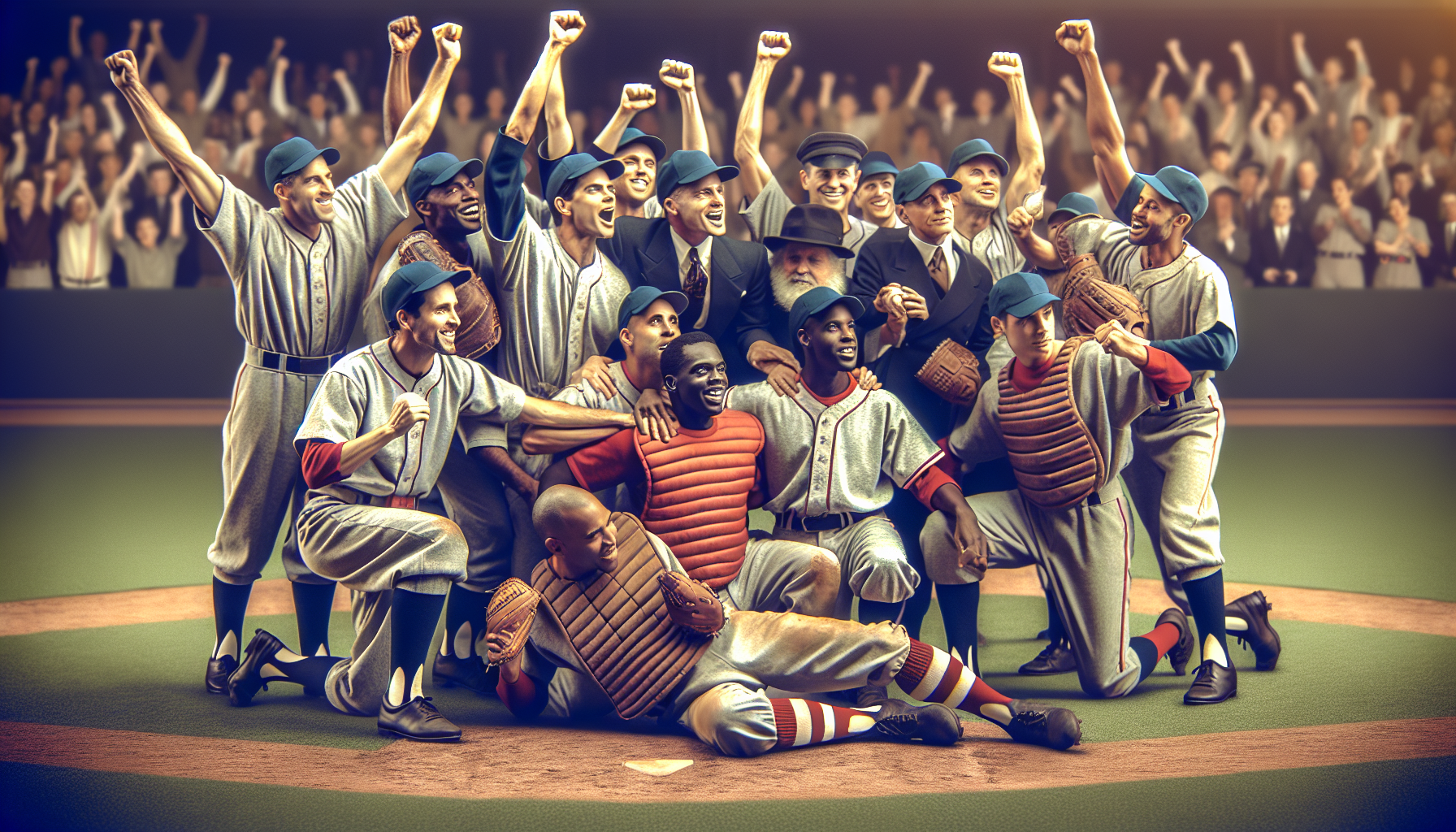
Baseball’s integration era reshaped the Hall of Fame as decisively as it transformed the game itself. In this context, integration means the dismantling of Major League Baseball’s color line after decades of exclusion that forced many of the best Black players into the Negro Leagues, independent barnstorming clubs, and winter circuits. The era is usually anchored to Jackie Robinson’s debut with the Brooklyn Dodgers on April 15, 1947, but the story is broader, earlier, and more complicated. Owners, executives, scouts, writers, and players all influenced how baseball integrated, who got opportunities first, and which pioneers are now honored in Cooperstown. Understanding that process matters because the Hall of Fame is not only a museum of statistics; it is a record of who changed the sport’s structure, standards, and moral direction.
When I have researched Hall of Fame voting debates and visited museums and archives tied to baseball history, one theme always stands out: barrier breaking in baseball was never a single achievement by one player. Robinson is the central figure, and rightly so, yet the integration era also includes Larry Doby integrating the American League in 1947, Satchel Paige crossing into the majors in his forties after becoming a legend elsewhere, Roy Campanella and Monte Irvin proving Negro League stars belonged immediately, and Willie Mays, Hank Aaron, and Ernie Banks redefining what an integrated major league could look like at its peak. The Hall of Fame reflects these overlapping stories of access, excellence, resistance, and delayed recognition.
This hub article covers that miscellaneous landscape comprehensively. It explains who the key Hall of Famers were, what barriers they faced, how Negro League history fits into Cooperstown, why some pioneers arrived in the Hall long after retirement, and where readers can explore related topics next. If you want a clear guide to baseball’s integration era and the Hall of Famers who broke barriers, this page provides the essential framework and the names that shaped it.
The Color Line, the Negro Leagues, and Why Integration Changed the Hall of Fame
Before integration, organized baseball operated under an unwritten but rigid exclusion policy that kept Black players out of the major leagues from the late nineteenth century until 1947. That exclusion did not eliminate elite Black baseball; it redirected it. The Negro National League, founded in 1920 under Rube Foster, and later leagues such as the Negro American League created a parallel professional system with stars, pennant races, and enormous cultural significance. Players such as Josh Gibson, Cool Papa Bell, Buck Leonard, and Oscar Charleston built Hall of Fame careers outside MLB because MLB denied them entry, not because they lacked major league ability.
This matters for Hall of Fame history because Cooperstown originally reflected the segregated major leagues more than the full history of professional baseball. Over time, special committees and deeper scholarship corrected that imbalance. The Hall now recognizes numerous Negro League greats, and Major League Baseball formally elevated several Negro Leagues to major league status in 2020 after research by historians and the Negro Leagues Researchers and Authors Group strengthened the historical record. That decision did not erase the damage of exclusion, but it clarified a basic truth: many Hall of Famers were major league caliber long before MLB admitted them.
Integration also changed Hall of Fame standards in practice. Once Black stars entered MLB, the level of competition rose, roster construction changed, scouting networks expanded into Black communities and Latin America, and pennant races became more merit based. The Hall of Fame’s integrated wing is therefore not a side story. It is central to explaining why post-1947 baseball looked faster, deeper, and more competitive than what came before.
Jackie Robinson: The Defining Pioneer
No Hall of Famer symbolizes baseball’s integration era more than Jackie Robinson. Signed by Dodgers executive Branch Rickey from the Kansas City Monarchs organization and first assigned to Montreal in 1946, Robinson was chosen not simply because he could play, although he could do everything on a field. Rickey believed Robinson had the competitive discipline to withstand racist abuse without retaliating during the most volatile early phase of integration. That demand was enormous, unfair, and historically consequential.
Robinson debuted in 1947, won the inaugural Rookie of the Year Award, earned the National League Most Valuable Player Award in 1949, made six All-Star teams, and helped Brooklyn win six pennants and the 1955 World Series. His statistical record alone is Hall worthy: a .311 batting average, .409 on-base percentage, 197 stolen bases in an era when steals were not pursued as aggressively, and elite value on both sides of the ball. Baseball Reference credits him with 61.7 WAR despite a shortened career caused partly by the late start segregation imposed on him.
Yet Robinson’s Hall of Fame case rests on more than production. He transformed clubhouse culture, fan expectations, and front-office strategy. After Robinson succeeded, every team had evidence that exclusion was self-inflicted competitive weakness. His election to the Hall in 1962 confirmed that greatness in baseball can never be separated from context. His retired number, 42, remains the only number retired across all MLB teams, and April 15 is observed throughout the sport because Robinson’s breakthrough altered American sports history, not merely Dodgers history.
The First Wave of Integrated Hall of Famers
Robinson opened the door, but the first wave through it proved integration was sustainable and overdue. Larry Doby debuted with the Cleveland Indians on July 5, 1947, becoming the American League’s first Black player only weeks after Robinson entered the National League. Doby faced many of the same hostilities but received less national attention, which for years led to underappreciation. He later became a seven-time All-Star, hit 253 home runs, and starred on Cleveland’s 1948 World Series championship team. His Hall plaque correctly frames him as both pioneer and star.
Roy Campanella, another Dodgers cornerstone, became one of the best catchers in baseball almost immediately. He won three National League MVP awards, in 1951, 1953, and 1955, blending power, defense, and game management at a premium position. Monte Irvin, who had been a superstar with the Newark Eagles, joined the New York Giants and helped validate Negro League talent in direct competition against the majors. Satchel Paige, already a mythic pitcher by the time Bill Veeck brought him to Cleveland in 1948, demonstrated that his fame was rooted in genuine excellence. Even in limited major league time, he posted a 3.29 ERA and drew crowds wherever he pitched.
| Hall of Famer | Barrier Broken | Key Achievement | Why It Matters |
|---|---|---|---|
| Jackie Robinson | Integrated modern National League MLB | 1949 NL MVP | Made integration irreversible |
| Larry Doby | Integrated American League | 1948 World Series champion | Proved change extended beyond Brooklyn |
| Roy Campanella | Black superstar at catcher on a contender | Three NL MVP awards | Showed elite leadership at a demanding position |
| Satchel Paige | Negro League legend validated in MLB | 1948 pennant race contributor | Linked segregated and integrated baseball history |
This group established a pattern the Hall of Fame now preserves clearly: the first integrated stars were not symbolic roster pieces. They were championship players, MVP candidates, gate attractions, and tactical advantages. Once clubs with integrated rosters started winning, the baseball argument against integration collapsed completely.
Negro League Legends in Cooperstown
Any hub on this subject must emphasize that barrier breaking happened before 1947 as well. Negro League owners, managers, and players sustained Black professional baseball under hostile conditions, often with poor facilities, unstable schedules, and financial exploitation by white booking interests. Hall of Famers such as Rube Foster, the architect of organized Black baseball, did foundational work that made later integration possible. Without the Negro Leagues, there would have been no proven pipeline of elite Black talent for scouts like Branch Rickey to pursue.
Josh Gibson and Buck Leonard of the Homestead Grays, Oscar Charleston of multiple clubs, Turkey Stearnes of the Detroit Stars, and Pop Lloyd from the Deadball Era are among the Hall of Famers whose careers demonstrate how much greatness occurred outside MLB’s segregated structure. Modern statistical reconstruction through Seamheads, Baseball Reference’s Negro League data integration, and work by historians including Larry Lester and James Riley has given the public a much stronger factual basis for comparing these players to major leaguers. The records remain incomplete, and responsible historians say so openly, but the evidence is overwhelming that many Negro League Hall of Famers were inner-circle talents.
Satchel Paige offers the clearest bridge between worlds because fans saw him dominate exhibitions against white major leaguers long before his official MLB debut. But he was hardly unique. Integration-era Hall of Fame study is incomplete unless readers place Negro League enshrinees alongside MLB pioneers, not beneath them. Cooperstown now does this better than it once did, and any serious baseball history should follow that lead.
Stars Who Expanded Integration Into the Mainstream
After the first pioneers survived the sport’s most openly hostile stage, another class of Hall of Famers turned integration from experiment into norm. Willie Mays, called up by the New York Giants in 1951 after starring for the Birmingham Black Barons, became perhaps the most complete player in baseball history. His 660 home runs, 12 Gold Gloves, 156 OPS+, and iconic over-the-shoulder catch in the 1954 World Series made excellence by a Black superstar impossible to frame as exceptional in the old patronizing sense. Mays became the standard.
Hank Aaron expanded that standard further. Signing with the Boston Braves organization after playing for the Indianapolis Clowns, Aaron developed into one of the most consistent hitters ever, finishing with 755 home runs and 3,771 hits. When he approached Babe Ruth’s home run record, he endured racist abuse on a national scale, a reminder that integration did not end prejudice. His dignity and sustained greatness under pressure are central to why his Hall of Fame legacy is so powerful.
Ernie Banks became the Chicago Cubs’ first Black player in 1953 and one of the franchise’s enduring icons. Roberto Clemente, while primarily discussed through race and Latin American identity rather than the Black-white color line alone, also belongs in this broader barrier-breaking conversation because he challenged assumptions about language, dignity, and how minority stars were covered by U.S. media. Frank Robinson then made history as MLB’s first Black manager in 1975 after a Hall of Fame playing career that already included two MVP awards and a Triple Crown.
These players mattered because they normalized Black superstardom across markets, positions, and generations. Integration succeeded fully only when fans in New York, Milwaukee, Chicago, Pittsburgh, Cincinnati, and beyond could no longer imagine baseball greatness in segregated terms.
How the Hall of Fame Has Recognized Integration-Era Greatness
The Hall of Fame has honored integration-era figures through BBWAA elections, Veterans Committee processes, Negro League committee selections, exhibits, and permanent educational programming. That layered approach is necessary because standard voting systems often struggled with context. Some players lost prime years to segregation. Others, like Doby and Irvin, had major league counting stats that looked lighter than those of white peers because MLB admitted them late. Committees were needed to judge full careers rather than only MLB totals.
Branch Rickey is in the Hall as an executive, and his role deserves clear explanation. He did not integrate baseball alone, and his motives blended moral conviction with competitive strategy, but he made the decisive organizational commitment that forced the issue. Hall recognition also extends beyond players to people who built the conditions for change, including Negro League founders and executives. That is appropriate because systems, not just individuals, create barriers.
For readers exploring this subtopic as a hub, the best way to navigate Cooperstown’s integration story is by category: pioneers who entered first, Negro League stars later recognized, superstars who expanded acceptance, and executives who changed policy. That framework helps explain why Hall of Fame plaques can look different while belonging to the same historical arc. Together, they show that baseball’s integration era was not a single milestone but a chain of breakthroughs.
Lasting Lessons for Baseball History Fans
The clearest takeaway from baseball’s integration era is that the Hall of Fame becomes more accurate when it confronts exclusion directly instead of treating it as background. Robinson, Doby, Campanella, Paige, Mays, Aaron, Banks, Clemente, Frank Robinson, and Negro League greats such as Gibson and Charleston are not separate chapters competing for attention. They are connected figures in the same transformation of the sport. Their careers show how talent survived injustice, how institutions changed slowly, and how recognition often lagged behind achievement.
For anyone building a deeper understanding of the Baseball Hall of Fame, this miscellaneous hub should serve as the starting point for related articles on Jackie Robinson, Negro League Hall of Famers, Black pioneers by franchise, integration-era executives, and Hall voting controversies involving segregated-era careers. The main benefit of studying this subject is perspective: baseball history looks different, and far more truthful, when the color line and its collapse are treated as central facts rather than side notes.
Explore the linked topics in this sub-pillar, compare the careers of these Hall of Famers, and revisit Cooperstown’s plaques with integration in mind. When you do, the Hall of Fame stops being just a gallery of great players and becomes a fuller record of who changed baseball forever.
Frequently Asked Questions
What does “integration era” mean in baseball history, and why is it so important to the Hall of Fame story?
The integration era refers to the period when Major League Baseball finally began dismantling its long-standing color line, the unwritten but rigorously enforced system that excluded Black players from the major leagues for decades. While many people date the beginning of this era to Jackie Robinson’s debut with the Brooklyn Dodgers on April 15, 1947, the story reaches further back. Before Robinson ever stepped onto Ebbets Field, Black players had already built extraordinary careers in the Negro Leagues, on independent barnstorming teams, and in winter leagues across the Americas because organized baseball denied them access to the majors. Integration was not simply the signing of one player or one symbolic moment; it was a profound structural change that altered who could compete at the highest level and who could eventually be recognized by institutions like the National Baseball Hall of Fame.
That matters tremendously to the Hall of Fame because the Hall is, in theory, baseball’s highest record of greatness. For many years, however, the Hall reflected the same exclusions that shaped the sport itself. If elite Black players were barred from Major League Baseball during their prime, then traditional measures of achievement, major league statistics, awards, and postseason visibility could not fully capture their excellence. Integration forced baseball, and eventually the Hall of Fame, to confront that injustice. It broadened the definition of greatness beyond segregated major league records and made room for a more honest account of baseball history. In other words, the integration era did not just diversify the game on the field; it transformed the Hall’s understanding of who belonged in the game’s official memory.
Why is Jackie Robinson the central figure in this era, and were there other barrier-breaking Hall of Famers who were just as important?
Jackie Robinson is the central figure because his debut with the Brooklyn Dodgers marked the formal end of Major League Baseball’s color line. He was the first Black player in the modern major leagues, and he carried an almost unimaginable burden. Robinson was expected to perform at an elite level while facing open hostility from opposing players, abusive crowds, discriminatory hotels and restaurants, and even resistance from within the game itself. He succeeded under conditions that would have overwhelmed most athletes. He won Rookie of the Year, became a National League MVP, helped the Dodgers become a perennial contender, and changed the sport permanently. His Hall of Fame legacy rests not only on his talent but also on his courage, restraint, intelligence, and historic significance.
At the same time, focusing only on Robinson can oversimplify the integration story. Several other Hall of Famers were crucial barrier-breakers in their own right. Larry Doby integrated the American League in 1947 with Cleveland, only weeks after Robinson debuted in the National League, and his pioneering role deserves far more attention than it often receives. Satchel Paige brought Negro League stardom into the majors and challenged assumptions about age, talent, and legitimacy. Roy Campanella, Monte Irvin, Willie Mays, Hank Aaron, Ernie Banks, and Roberto Clemente each expanded what integration meant by excelling not just as participants, but as superstars and cultural icons. Their careers showed that Black and Afro-Latino players were not merely capable of playing in the majors; they were among the very best players in the sport. The integration era is best understood not as a one-man achievement, but as a chain of breakthroughs made by multiple Hall of Famers who opened doors, endured backlash, and then redefined baseball excellence.
How did the Negro Leagues shape the Hall of Fame careers of players from the integration era?
The Negro Leagues were essential to the development, visibility, and legacy of many Hall of Famers associated with the integration era. Because Black players were barred from the major leagues, the Negro Leagues became the primary stage for elite Black baseball talent in the United States. These leagues featured outstanding competition, innovative styles of play, passionate fan support, and a deep reservoir of stars who would later prove, once given the chance, that they belonged among the best in baseball history. For players like Satchel Paige, Monte Irvin, Willie Mays, Hank Aaron, and Ernie Banks, the Negro Leagues or Black baseball more broadly served as a proving ground before, during, or alongside the integration process.
This history is important because it changes how we evaluate Hall of Fame credentials. Traditional Hall of Fame arguments often lean heavily on Major League Baseball statistics, but that approach can unfairly minimize players whose best years were spent outside the majors through no fault of their own. Satchel Paige is the clearest example: by the time he reached the American League, he was already a legend. His major league record captures only a fragment of his true greatness. The same principle applies more broadly to many players whose careers were interrupted, delayed, or redirected by segregation. Recognizing Negro League achievements helps restore context that major league box scores alone cannot provide. It also acknowledges that baseball excellence existed outside the white major leagues long before integration officially began. For the Hall of Fame, that means honoring not just what these players did after the color line fell, but what they accomplished while that line still stood.
Which Hall of Famers best represent the broader impact of baseball’s integration beyond Robinson himself?
Several Hall of Famers illustrate how integration reshaped the sport in stages. Larry Doby is one of the most important because he followed Jackie Robinson into the majors in 1947 and integrated the American League with the Cleveland Indians. His path was, in some ways, even more isolating because he entered midseason, without the same level of preparation or public support, and still developed into a star center fielder and power hitter. Roy Campanella, Robinson’s teammate with Brooklyn, became one of the game’s premier catchers and won three National League MVP Awards, proving that integration was not a symbolic gesture but a competitive revolution. Monte Irvin helped demonstrate that Negro League stars could immediately contribute at the highest level and also served as a bridge between pre-integration Black baseball and the post-integration majors.
Then there are players whose superstardom made integration irreversible. Willie Mays became one of the greatest all-around players in baseball history, dazzling fans with his hitting, fielding, speed, and flair. Hank Aaron not only became one of the game’s most consistent and powerful hitters, but also endured racial hatred while chasing Babe Ruth’s home run record, revealing that integration’s social battles did not end once players were admitted to the majors. Ernie Banks became the first Black player for the Chicago Cubs and a beloved face of the franchise, while Roberto Clemente expanded the conversation by highlighting the experiences of Afro-Latino and Latin American players navigating race, language, and identity in the major leagues. Together, these Hall of Famers show that integration was not a single breakthrough frozen in 1947. It was an ongoing transformation that changed clubhouses, scouting networks, fan culture, player development, and the very image of baseball’s heroes.
How has the Hall of Fame worked to recognize the players and pioneers of the integration era more fully over time?
The Hall of Fame’s recognition of the integration era has evolved gradually, and that evolution reflects a larger reckoning within baseball history. Early Hall of Fame voting tended to favor players whose careers fit the familiar major league statistical mold, which put many Black pioneers and Negro League legends at a disadvantage. Over time, however, historians, journalists, former players, and special committees pushed for a broader and more accurate understanding of greatness. That led to the induction of major integration figures such as Jackie Robinson, Larry Doby, Roy Campanella, and others, but it also helped open the door for the inclusion of Negro League stars whose impact had long been underappreciated by mainstream baseball institutions.
Special committees played a major role in this process by reevaluating players, managers, executives, and pioneers whose contributions were not fully reflected in standard major league records. The Hall’s growing acknowledgment of Negro League excellence has been one of the most important corrective efforts in baseball memory. This matters because the integration era was shaped not only by the players who crossed the line first, but also by those who built the baseball world that sustained Black excellence before integration and those who pushed ownership, scouting, and public opinion toward change. A fuller Hall of Fame story includes stars on the field, but also recognizes the systems that excluded them and the people who challenged those systems. In that sense, the Hall’s work is still ongoing. Every new generation of research and interpretation helps deepen the public’s understanding that baseball’s integration era is not a side chapter in Hall of Fame history; it is one of the central stories that defines what the Hall is supposed to preserve.