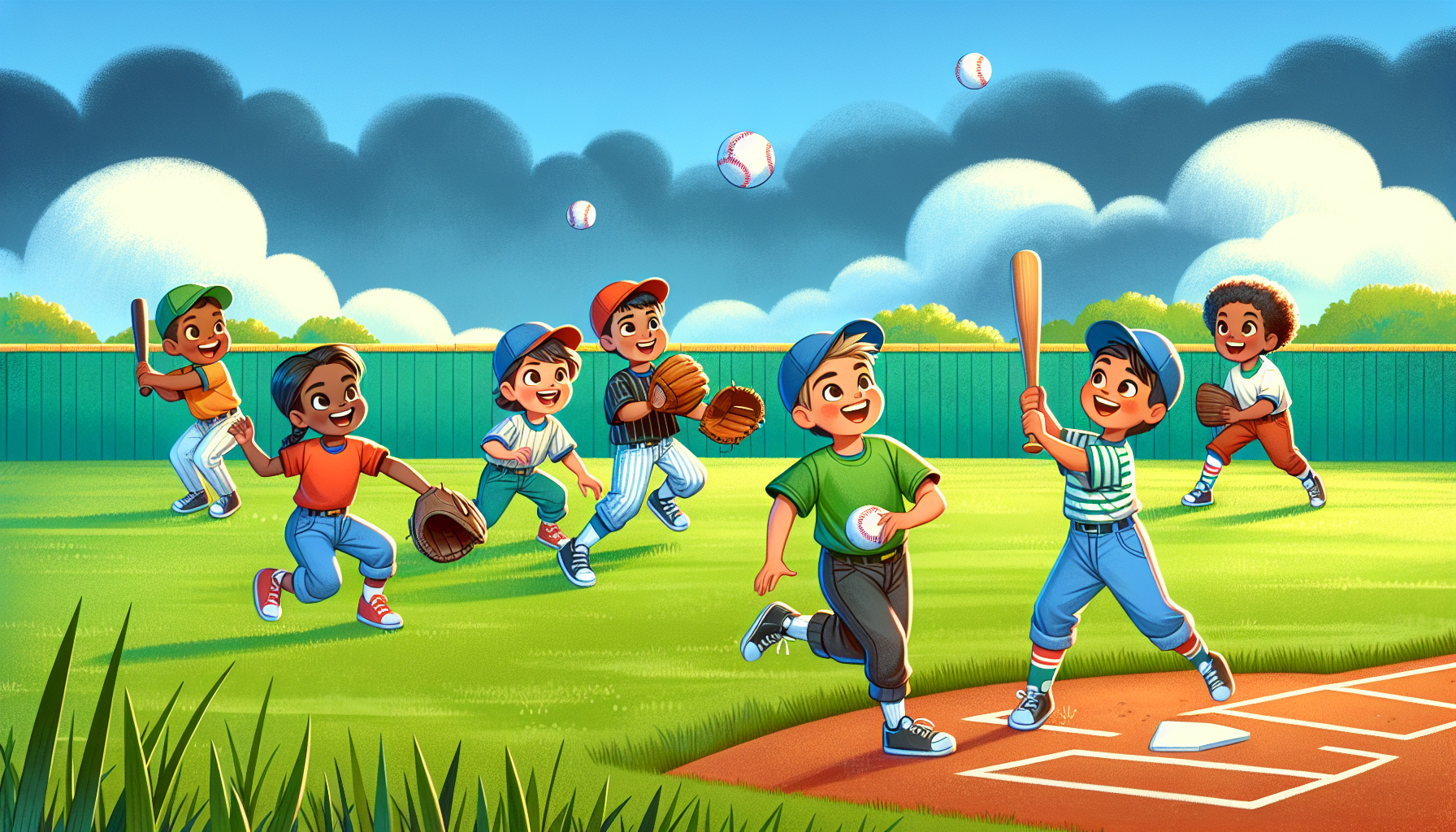
Baseball in children’s literature gives young readers a way to enter the game long before they can track a box score, grip a four-seam fastball, or understand a double switch. In books written for kids, baseball becomes more than a sport: it is a language for friendship, patience, family tradition, teamwork, fairness, and hope. That is why this corner of publishing matters within the broader topic of baseball in literature and film. It introduces the game through stories, pictures, and memorable characters, then connects children to history, culture, and reading itself.
When educators, librarians, and parents talk about children’s baseball books, they usually mean a wide range of formats. Picture books use illustrations and concise text to explain the sights and emotions of a first game, a neighborhood catch, or a big at-bat. Early readers simplify vocabulary for children building confidence. Middle grade novels use baseball plots to explore identity, competition, injury, belonging, race, gender, and community. Biographies for young readers introduce real figures such as Jackie Robinson, Roberto Clemente, Babe Ruth, Mo’ne Davis, and Hank Aaron. Poetry collections, graphic novels, and nonfiction guides also belong in this category.
I have seen these books work in classrooms, library displays, and family reading routines because baseball gives writers a built-in structure children instantly understand. There is a beginning, a middle, and a final inning. There are rules, but also surprise. There are individual moments under pressure and shared goals that require trust. For reluctant readers especially, sports narratives often provide momentum. A child who resists a general realistic novel may eagerly read about a shortstop trying to make a team, a sibling attending opening day, or a young fan learning why a hero stood for something larger than the game.
This hub article covers the miscellaneous landscape of baseball in children’s literature comprehensively. It explains the major types of books, the recurring themes that make them effective, the educational value they offer, and the practical ways adults can choose the right title. It also points toward the wider subtopic by showing how these books connect to baseball history, cultural representation, biography, film adaptations, and reading development. For anyone building a reading list or planning related articles, this is the foundation.
Why Baseball Works So Well in Children’s Books
Baseball suits children’s literature because its pace creates room for thought. Unlike sports that move continuously, baseball pauses between pitches, innings, and plays. In fiction, those pauses become opportunities for interior reflection, dialogue, and suspense. A writer can slow down the moment before a swing, the walk to the mound, or the silence after an error. Young readers can process what a character feels, fears, and decides. That makes baseball unusually adaptable to stories about courage, self-control, and resilience.
The game also offers clear symbols children grasp quickly. Home represents safety and belonging. The journey around the bases suggests progress earned step by step. Strikeouts teach disappointment without final defeat. A long season shows that growth takes time. Because these metaphors are intuitive, authors can introduce emotional complexity without becoming abstract. A child does not need advanced literary training to understand why getting back up after an error matters or why sharing the last out with teammates feels meaningful.
Another strength is accessibility across reading levels. The same subject can support a simple picture book about playing catch and a layered middle grade novel about segregation, immigration, or parental pressure. Publishers have long recognized this flexibility. Award-winning creators such as Matt de la Peña, Christopher Paul Curtis, Audrey Vernick, Jonah Winter, and Kadir Nelson have all contributed sports-related works for younger audiences, often using baseball as an anchor for broader social themes.
Baseball stories also travel well beyond the field. Many children’s books are really about neighborhoods, siblings, school life, summer routines, and intergenerational memory. A grandparent teaching scorekeeping, a parent recalling a sandlot, or a child wearing a hand-me-down glove can carry as much narrative weight as the game itself. That blend of action and everyday life helps baseball books reach readers who love sports and readers who care more about character than competition.
Major Categories Within Baseball in Children’s Literature
The baseball bookshelf for young readers is broader than many adults expect. Understanding the categories helps parents, teachers, and site editors organize the subtopic clearly. Picture books usually focus on a single emotional moment or concept. Examples include game-day anticipation, sharing equipment, learning rules, or admiring a historical player. Illustration carries much of the storytelling, making these books ideal for read-aloud settings and early baseball exposure.
Early readers and chapter books move toward independence. They typically use short sentences, controlled vocabulary, and straightforward plots such as joining a team, improving a skill, or solving a clubhouse conflict. Series fiction performs especially well here because recurring characters let young readers build familiarity. A child who finishes one baseball title in a series is likely to seek the next, which is valuable for reading stamina.
Middle grade novels add depth. These books often examine social issues, family expectations, injury recovery, gender barriers, disability, race, and local identity through baseball narratives. Historical fiction is particularly important because it can place a young protagonist near real events like the integration of Major League Baseball, Japanese American baseball communities, Negro Leagues history, or wartime changes in the sport. Good middle grade baseball fiction respects the game’s details while keeping the human stakes primary.
Biographies and narrative nonfiction form another essential branch. Young readers respond strongly to true stories of perseverance and principle. Jackie Robinson titles for children frequently introduce both baseball excellence and civil rights courage. Roberto Clemente books combine athletic achievement with humanitarian service. Books on players like Jim Abbott can open conversations about adaptation and disability. These titles are often used in schools because they support both literacy and social studies goals.
| Category | Typical Age Range | Main Strength | Common Examples |
|---|---|---|---|
| Picture books | Ages 4–8 | Visual storytelling and emotional clarity | First game, playing catch, famous player introductions |
| Early readers | Ages 5–8 | Reading confidence through simple sports plots | Practice day, team friendship, learning positions |
| Chapter books | Ages 7–10 | Series momentum and independent reading habits | Season arcs, rival teams, clubhouse problems |
| Middle grade novels | Ages 8–12 | Character growth and social themes | Historical fiction, family conflict, identity stories |
| Biography/nonfiction | Ages 7–12 | History, role models, curriculum fit | Jackie Robinson, Clemente, Aaron, Mo’ne Davis |
Recurring Themes That Inspire Young Fans
The most effective baseball books for children inspire not by glorifying winning but by showing meaningful effort. Perseverance is the dominant theme. Young characters strike out, sit on the bench, miss easy catches, or feel overshadowed by stronger players. The story becomes compelling when they return to practice, learn mechanics, and rebuild confidence. This matters because children recognize the emotional truth immediately. Failure in sports feels public, and books can normalize that experience without diminishing it.
Belonging is another central theme. Baseball books often start with a child wondering whether there is a place for them on a team, in a family tradition, or in a new town. The answer is not always easy. Some stories involve language barriers, economic limits, or social exclusion. Others address girls who love baseball in settings that expect them to choose softball, or children who feel physically different from teammates. When handled well, these narratives make fandom inclusive rather than narrow.
Fairness and integrity also appear repeatedly. Baseball has a rich vocabulary for rules, sportsmanship, cheating, and respect for opponents. Children’s books use these moments to ask clear ethical questions: Do you admit the ball hit the line? Do you support a teammate after a costly mistake? Do you copy a star’s swagger without copying discipline? These are manageable moral situations, which is one reason baseball works so well in elementary and middle grade literature.
Finally, many memorable titles tie baseball to memory and heritage. A glove passed down through generations, a radio broadcast shared with a grandparent, or a story about a Negro Leagues star can make young readers feel part of something older and larger. That historical thread is powerful because it converts fandom into curiosity. Once a child reads an engaging story, they often want to know which players were real, what stadiums looked like, and why certain barriers existed.
Representation, History, and the Broader Cultural Story
Any serious hub on baseball in children’s literature must stress representation. For decades, children’s sports publishing often centered a narrow image of who played, who watched, and who mattered. That has improved, though unevenly. Today, the strongest baseball books for young readers include Black history, Latino communities, girls’ experiences, immigrant families, and disabled athletes, not as token additions but as central stories. This shift reflects baseball’s actual history far more accurately.
Jackie Robinson remains foundational in youth literature because his story combines elite athletic skill with extraordinary restraint and bravery under racist abuse. But the field should not stop there. Books about the Negro Leagues can introduce Satchel Paige, Josh Gibson, Cool Papa Bell, and the business, travel, and community networks surrounding Black baseball. Roberto Clemente titles help children see a star whose legacy includes Puerto Rican identity and humanitarian action. Stories related to Japanese American baseball communities can illuminate resilience during exclusion and incarceration.
Gender representation is equally important. Young readers need books that show girls not merely as supporters in the stands but as players, strategists, historians, and devoted fans. Recent interest in women’s sports has widened opportunities, yet baseball-specific stories featuring girls still deserve stronger visibility. When a child sees someone like themselves in the dugout or on the page, the sport feels available. That effect is practical, not symbolic. It influences what children choose to read, play, and imagine for themselves.
These books also connect naturally to film and other media. A child who reads an accessible biography of Jackie Robinson may later be ready for a family discussion about more advanced biographies or baseball films. A picture book about attending a game may lead to documentaries, museum visits, or scorekeeping. As a sub-pillar hub, this topic links outward to baseball biography, baseball history for young readers, Negro Leagues literature, women in baseball narratives, and family-friendly baseball film adaptations.
How Adults Can Choose the Right Baseball Book
Selecting the right baseball book depends on reading level, emotional maturity, and the child’s relationship to the sport. Adults often make the mistake of choosing only by topic. A baseball-obsessed seven-year-old may still need controlled vocabulary and strong visual cues. A ten-year-old who rarely watches games may prefer a character-driven novel where baseball is the setting rather than the entire point. Matching format to reader matters more than choosing the most famous title.
I recommend starting with three questions. First, does the child want action, facts, or feelings? Some readers want game scenes and dramatic plays. Others want true stories of famous players. Others connect most strongly to family stories where baseball sits in the background. Second, how much baseball knowledge does the book assume? Strong children’s titles explain terms naturally, so a newcomer is not lost. Third, what conversation should the book open? Confidence, history, inclusion, grief, teamwork, and identity can all emerge through this subject.
Quality markers are usually easy to spot. The best books get the small details right, whether that means dugout routines, field positions, clubhouse nerves, or era-specific clothing and language in historical fiction. In nonfiction, look for an author’s note, timeline, glossary, or source list. Established review outlets such as School Library Journal, Kirkus Reviews, and The Horn Book remain useful filters, especially for school and library collection building. Awards from the American Library Association and notable state reading lists can also guide selection.
For this hub, the practical takeaway is simple: baseball in children’s literature is not a niche novelty. It is a rich gateway into reading, history, empathy, and lifelong fandom. Explore picture books, novels, and biographies together, then follow the threads into related articles across the wider baseball in literature and film topic. Build a reading list, share a title with a young fan, and let the next story lead them onto the field and beyond.
Frequently Asked Questions
Why does baseball work so well in children’s literature?
Baseball works especially well in children’s literature because the game naturally supports storytelling. Unlike faster sports, baseball unfolds in clear moments: a pitch, a swing, a catch, a stolen base, a final out. That rhythm gives writers and illustrators room to build suspense, emotion, and meaning in ways young readers can easily follow. A child does not need to understand advanced rules to connect with the feeling of standing at the plate, waiting for a chance, or hoping a teammate will come through in a big moment.
Just as important, baseball carries themes that fit childhood experiences remarkably well. Stories about the game often explore patience, practice, courage, fairness, disappointment, belonging, and perseverance. For young readers, these are not abstract ideas; they are everyday challenges. A baseball story can show a child learning how to lose graciously, support a friend, or keep trying after failure. In that sense, baseball becomes more than a backdrop. It becomes a familiar, accessible way to teach values and emotional resilience.
There is also a strong sense of tradition in baseball that lends warmth and depth to children’s books. The game is often linked with parents, grandparents, neighborhood fields, summer evenings, and community memories. That makes baseball stories ideal for exploring family bonds and shared rituals across generations. In children’s literature, this combination of simple dramatic structure and rich emotional symbolism helps baseball feel both exciting and meaningful, which is exactly why it has remained such a powerful subject for young readers.
What can children learn from baseball-themed books beyond the rules of the game?
Children can learn a great deal from baseball-themed books that has little to do with scorekeeping or mechanics. At their best, these stories teach life lessons through situations that feel concrete and relatable. A young reader may see a character strike out and feel embarrassed, then discover how that character recovers with encouragement, effort, and self-belief. That kind of narrative can help children understand that setbacks are part of learning, not proof of failure. The lesson is subtle but powerful: growth often comes through persistence.
Baseball books also frequently model teamwork in a way children can understand. Unlike stories centered on a single hero, baseball often depends on cooperation. One player gets on base, another advances the runner, another makes the key defensive play. In children’s literature, this helps reinforce the idea that everyone has a role and that success is often shared. Young readers can begin to appreciate responsibility, trust, and the importance of contributing even when they are not the star.
Many baseball stories for children also address empathy, inclusion, and fairness. They may feature kids from different backgrounds joining the same team, siblings learning to support one another, or communities rallying around a shared love of the game. These books can open conversations about sportsmanship, respect, gender expectations, confidence, and access to opportunity. In this way, baseball serves as a gentle entry point into broader personal and social themes, making the books educational in the fullest sense: they teach children how to understand themselves and others.
How do baseball books help inspire young fans who are new to the sport?
Baseball books can be one of the most effective ways to inspire new young fans because they remove the pressure of needing to understand everything at once. For a child who has never played organized baseball or watched a full game, the sport can seem full of unfamiliar language and traditions. Literature makes it approachable. Through characters, pictures, and storylines, children encounter baseball in human terms first. They learn what it feels like to wear a glove, wait in the dugout, cheer for a teammate, or dream about hitting the ball cleanly. That emotional connection often comes before technical understanding, and that is exactly what creates lasting interest.
Books also allow children to experience baseball at their own pace. They can reread favorite scenes, absorb vocabulary naturally, and become comfortable with the culture of the game without being overwhelmed. Picture books, early readers, chapter books, and middle-grade novels each offer different entry points depending on age and reading level. Some focus on the fun and excitement of first experiences, while others explore deeper themes like confidence, discipline, or family tradition. Together, these formats help baseball feel welcoming rather than exclusive.
Perhaps most importantly, baseball books often frame the sport as a place where many kinds of children can belong. Not every young reader will identify with the star pitcher or cleanup hitter. Some will connect with the quiet kid who keeps score, the nervous beginner, the determined bench player, or the child learning the game from a parent or grandparent. By showing a range of experiences, children’s literature broadens the idea of what it means to be a baseball fan. It tells young readers that they do not have to be experts or elite athletes to love the game; they simply need curiosity, imagination, and heart.
What makes a great baseball book for children?
A great baseball book for children balances authenticity with accessibility. It should feel true to the spirit of the game while remaining understandable and engaging for its intended age group. The strongest books do not overload readers with technical detail. Instead, they use a few well-chosen baseball elements to support a compelling story. The game should matter, but the characters should matter more. Young readers respond most strongly when the baseball action is tied to emotions they recognize, such as nervousness, excitement, jealousy, pride, or hope.
Strong characterization is essential. Whether the story follows a child joining a team for the first time, a family attending games together, or a young player overcoming self-doubt, the emotional journey should be clear and believable. Memorable baseball books also tend to capture sensory details that bring the experience to life: the crack of the bat, dusty infields, bright summer light, the weight of a glove, the hush before a pitch. These details help children feel immersed in the story, even if they have never set foot on a field.
For younger readers, effective illustrations can make an enormous difference. Pictures can communicate movement, joy, tension, and community in ways that deepen understanding and sustain interest. For older readers, a thoughtful plot and meaningful themes are especially important. Books that stand out often go beyond winning and losing to examine perseverance, identity, family relationships, and love of the game. Ultimately, a great baseball book for children should leave readers with more than sports knowledge. It should leave them inspired, emotionally engaged, and eager to return to both stories and baseball itself.
Why is baseball in children’s literature important within the larger world of baseball stories in literature and film?
Baseball in children’s literature is important because it often forms a reader’s first encounter with the game as a story, symbol, and cultural tradition. Long before many children can follow statistics, understand strategy, or appreciate the historical mythology of baseball in adult novels and films, they can understand a story about trying their best, helping a teammate, or sharing a game with family. Children’s books create that first emotional foundation. They introduce baseball not as a complicated institution, but as a lived experience filled with meaning.
Within the broader landscape of baseball in literature and film, children’s books play a uniquely formative role. They shape the attitudes, memories, and values that young audiences may carry into later reading and viewing. When children first meet baseball through stories of kindness, resilience, tradition, and hope, they learn to see the sport as more than competition. That perspective enriches their future engagement with baseball narratives of all kinds, including historical fiction, memoir, documentaries, and movies. In other words, children’s literature helps build the interpretive lens through which later baseball stories are understood.
These books also help preserve and renew baseball’s cultural presence across generations. They keep the game alive in imagination, not just in stadiums or broadcasts. By inviting children into baseball through age-appropriate, emotionally resonant stories, literature ensures that the sport remains connected to family life, moral learning, and shared memory. That is why this category matters so much. It is not a minor offshoot of baseball storytelling; it is one of the foundations. Children’s literature helps create lifelong fans, thoughtful readers, and future audiences for the larger tradition of baseball in literature and film.