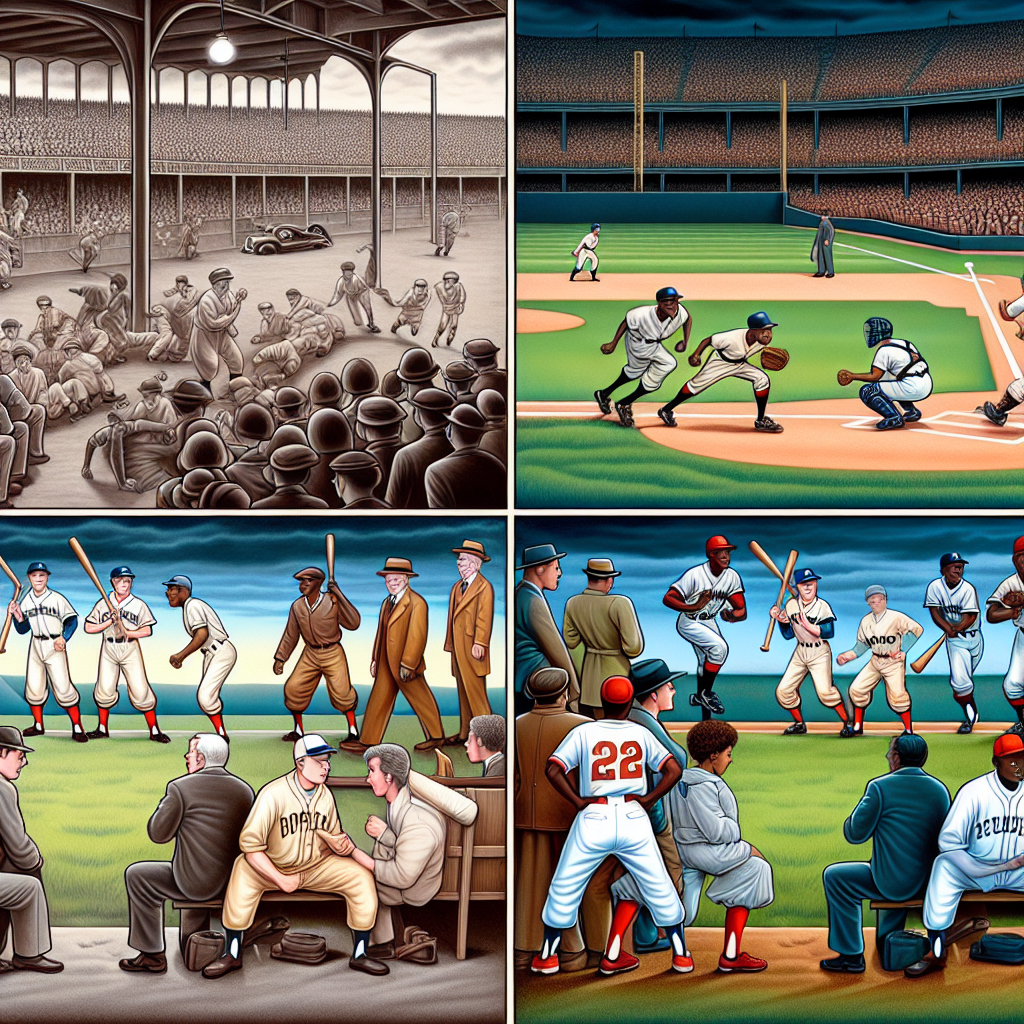
The mid-twentieth century was a transformative period in American society, and sports played an undeniable role in the cultural shifts that reverberated throughout the nation. Baseball, often regarded as America’s pastime, was no exception. As societal tensions heightened during the Civil Rights Era, baseball emerged not only as a sport but as a symbol of progress and equality. In this exploration, we uncover how baseball evolved amidst the Civil Rights Movement, reflecting broader societal changes and becoming a catalyst for integration.
The Dawn of Social Change in Baseball: Breaking the Color Barrier
The journey of baseball through the Civil Rights Era officially began with one monumental day on April 15, 1947, when Jackie Robinson broke the color barrier by taking the field for the Brooklyn Dodgers. Robinson wasn’t just stepping onto the field; he was stepping into history, challenged to exhibit performance and poise amidst extreme pressure and prejudice. His debut marked the beginning of a shift in the narrative of baseball from one of exclusion to an inclusive arena, albeit somewhat reluctantly at times.
Robinson’s courage and success paved the way for other African-American players and set a precedent for racial integration in professional sports. He transcended baseball stardom, becoming an enduring symbol of resilience and equality. Stan Musial once said, “He (Robinson) really was the first black athlete who made an impact in our sport.” With clubs initially hesitant to integrate due to the prevailing segregation laws and social norms, Robinson’s prominence placed pressure on them, contributing to a wider societal conversation around civil rights and equality.
Integration and Its Challenges: African-American Leagues and MLB
While Robinson’s integration into Major League Baseball was groundbreaking, it was just the beginning of a long road towards equality. Prior to integration, African-American athletes had established their own professional leagues: the Negro Leagues. These leagues were a testament to the talents of players who were barred from participating in the MLB due to racial discrimination. Many players in the Negro Leagues were on par, if not superior, to their major league counterparts, exhibiting exceptional skill and passion for the game.
The integration of baseball meant not only breaking through MLB’s racial barriers but also dealt a significant blow to the existence of those very Negro Leagues. As African-American players began joining major league teams, the Negro Leagues saw their talent pool diminish, eventually leading to their decline. Teams like the Kansas City Monarchs and players such as Satchel Paige, Josh Gibson, and others had greatly influenced and contributed to the sport, yet their legacies were often overshadowed as integration unfolded.
The incorporation into MLB presented several challenges—racial discrimination persisted, both on and off the field. Players faced hostilities in the form of unfair treatment, racial slurs, and isolation. Yet, they continued to play with determination and were instrumental in pushing the boundaries beyond the baseball diamonds.
Baseball as a Reflection of American Society: The 1950s and 60s
Throughout the 1950s and 60s, as the Civil Rights Movement gained momentum, professional baseball served as a mirror reflecting the tensions, struggles, and triumphs of American society. Within this context, baseball was far from immune to the social unrest stretching across the nation. In fact, it was often a battleground where players like Hank Aaron and Willie Mays faced racism while continuing to excel and break records.
The tumult of the Civil Rights Era extended into the lives of baseball players, who were sometimes seen as cultural emissaries. As civil rights leaders like Martin Luther King Jr. championed equality, players who faced racial prejudices used their platforms to raise awareness, albeit subtly due to the pervasive risk surrounding activism. Many players integrated their activism into their lives cautiously, contributing financially or participating quietly in rallies and discussions.
Baseball games themselves became arenas where social injustices and demands for equality came to a head. Quite literally, as crowds gathered, player struggles and successes were viewed on national platforms, narratively intertwining the political with the sports world.
Significant Milestones and Players: Redefining Perceptions
Throughout this era, numerous players emerged not just as athletic giants but as cultural icons who helped redefine perceptions around race and sports. The likes of Curt Flood, known for challenging the reserve clause, helped pave the way for free agency, furthering players’ rights across all racial backgrounds.
Willie Mays, who emerged during this time, not only dazzled with extraordinary performances on the field, including his legendary over-the-shoulder catch but also became a symbol of excellence for African Americans seeking role models beyond the political sphere. His agility, skill, and sportsmanship transcended racial barriers and made him a beloved figure in the community and across the nation.
Another substantial figure, Hank Aaron, endured countless racial threats and discrimination as he neared Babe Ruth’s home run record. Despite these challenges, Aaron’s accomplishment of breaking the record in 1974 marked a monumental point in racial progress, symbolizing the breaking down of racial myths and stereotypes prevalent in society at the time.
The Role of Teams and Management in Promoting Integration
The path towards integration wasn’t solely a player’s endeavor; team management and city politics played integral roles in advancing or hindering the cause. The Brooklyn Dodgers, with Branch Rickey’s groundbreaking decision to sign Robinson, are often highlighted as pioneers in promoting integration within baseball.
Rickey’s progressive stance, however, was uniquely advancement-minded, setting a precedent for other teams, albeit slowly and with resistance. Over the years, as more teams began integrating, some city and team executives played critical roles in fostering environments conducive to integration, like moving African-American players into leadership positions or celebrating diverse cultural customs.
Teams that embraced diversity often faced fiscal benefits—drawing in larger, more diverse audiences and enhancing performance on the field with the infusion of talent from previous Negro League stars. Yet, not all moves were made without financial motivations or societal pressure, reflecting a mixed legacy of moral fortitude and opportunism.
Media’s Impact on Baseball and Civil Rights
The role of media cannot be understated in chronicling and, indeed, shaping the story of baseball’s evolution during the Civil Rights Era. In television’s golden age, sports broadcasts began reaching millions, highlighting baseball as a national phenomenon. The visual media brought games into the living rooms of Americans nationwide, showcasing integrated teams and stirring both solidarity and discomfort among audiences.
Players’ struggles and achievements were widely documented in newspapers, radio broadcasts, and burgeoning sports networks. Figures like Jackie Robinson transitioned seamlessly from local heroes to national figures, their stories re-enforced by coverage that told both sides of a racially divided nation. Nonetheless, media also reinforced the existing societal myths and racial stereotypes, with commentators and writers sometimes perpetuating prejudices under the guise of sports journalism.
The media played a dual role—serving as a platform that illuminated racial challenges and victories while also, at times, exacerbating tensions. The lens through which these stories were told significantly influenced public perceptions and conversations about race, equality, and sportsmanship in America.
Conclusion: Baseball’s Legacy in the Civil Rights Era
As we reflect on the Evolution of Baseball during the Civil Rights Era, its legacy extends beyond wins and losses. This period symbolized growth and change in which the sport became a reflection of societal expectations, ambitions, and injustices. It facilitated a dialogue around race that transcended stadium seats and moved into living rooms, cafés, and halls of government.
Today, the narrative of baseball and its heroes during this era remains a testament to the enduring power of sports as a vehicle for social progress. The courage of trailblazers like Jackie Robinson, Hank Aaron, and others paved the way for countless athletes who walked bravely into arenas, knowing the significance of their participation extended well beyond the confines of a game.
Baseball continues to bear the responsibility of fostering equality and diversity, shaped by its history and ongoing societal discourse around race and justice. The echoes of this transformative era remind us of the power and responsibility sports hold in shaping cultural changes and aspiring towards a more inclusive society.