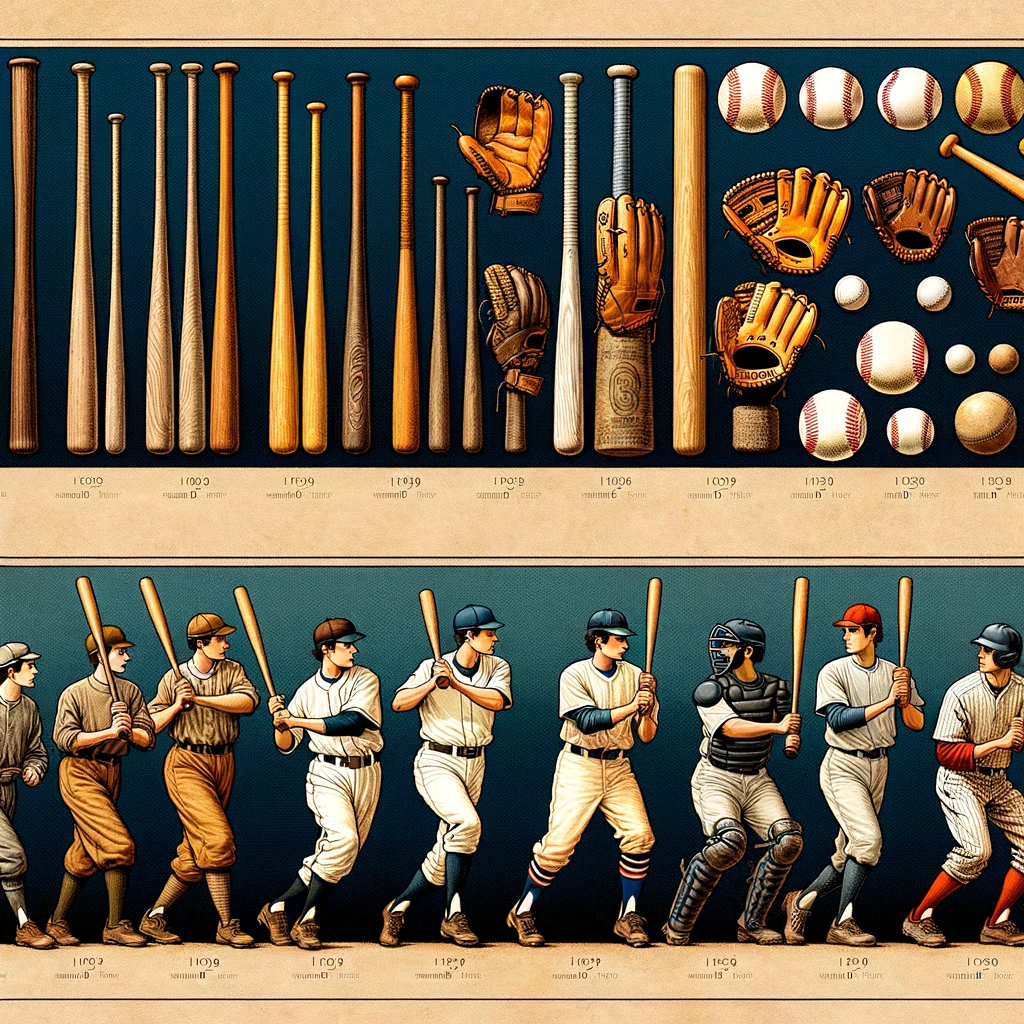
Baseball, known as America’s pastime, has a rich and storied history. From its humble beginnings in the 19th century, the sport has evolved significantly, not just in rules and popularity but also in the equipment used by players. This article traces the journey of baseball equipment from its simplest forms to the sophisticated gear of the modern era.
Early Days: Basic and Handmade
The Birth of Baseball
The origins of baseball date back to the 18th century, with games like rounders and cricket influencing its formation. The early version of baseball, often played in informal settings, required minimal equipment. Players typically used whatever was available – sticks served as bats, and rags or rocks wrapped in leather acted as balls.
Bats and Balls
In the 1840s, when baseball began to gain structure, bats were often handmade from wood. Players chose bats based on personal preference, leading to significant variations in size and shape. Similarly, the balls were made from rubber cores wrapped in yarn and leather, with each one unique in weight and bounce.
Gloves: A Novelty
Gloves were not initially part of the game. Fielders caught balls with their bare hands, leading to frequent injuries. It wasn’t until the 1870s that players began using gloves, which were simple leather gloves, similar to those worn in winter.
Transition Era: Standardization Begins
The National League’s Influence
With the founding of the National League in 1876, baseball started moving towards standardization. This era marked the beginning of rules governing the size and weight of bats and balls, leading to a more uniform playing experience.
Evolution of the Baseball
The baseball underwent significant changes. In 1872, the introduction of the figure-8 stitching, still used today, provided better grip and durability. The ball’s core also evolved, from rubber to cork, which significantly altered its dynamics.
Gloves Get an Upgrade
Gloves evolved from mere hand protection to a tool enhancing player performance. By the 1890s, padding was introduced, and gloves became more specialized for different positions. Catchers and first basemen used larger, more padded gloves, while infielders preferred smaller, more maneuverable ones.
Early 20th Century: The Rise of Professional Equipment
Bats Become a Science
In the early 1900s, bat manufacturing became a precise craft. Companies like Louisville Slugger began mass-producing bats, offering players a variety of models with specific weights and lengths. This era also saw the introduction of the iconic “bottle bat,” a design that provided better balance and power.
Protective Gear
As the game’s pace increased, so did the need for protective gear. Catchers started wearing masks, chest protectors, and shin guards, resembling the modern catcher’s gear. Helmets, however, were not mandatory until much later in the century.
Ball Development
The ball saw further evolution, with a cork center wrapped in rubber, making it livelier. This change led to the “live-ball” era, characterized by an increase in home runs and overall scoring.
Mid-20th Century: Technological Integration
Introduction of Plastic and Synthetic Materials
The mid-20th century introduced plastic and synthetic materials into baseball equipment. Helmets, now mandatory, were made of harder, more durable materials. Glove design also advanced, with new synthetic materials making them lighter and more flexible.
The Modern Baseball
By the 1950s, the baseball reached its modern form. The introduction of a cushioned cork center wrapped in tight yarn and covered with high-quality leather provided consistency in performance, crucial for the professional level of play.
Uniform Evolution
Uniforms underwent changes as well. Originally made from heavy wool, they transitioned to lighter, more breathable fabrics like polyester, significantly improving player comfort.
Late 20th Century to Present: High-Tech Era
The Age of Customization
The late 20th century and early 21st century ushered in an era of customization and high technology. Bats and gloves are now tailored to individual players’ preferences, with advancements in technology allowing for precise measurements and adjustments.
Advanced Protective Gear
Protective gear has seen substantial advancements. Helmets are now designed to absorb high-impact collisions, and modern gloves use advanced cushioning materials for better protection and performance. Catcher’s gear is now lighter, yet offers more protection.
The Ball Controversy
The baseball itself has not been immune to controversy, with periodic changes in its composition leading to debates about its impact on the game’s offensive statistics. Despite these debates, the ball continues to be a focus of technological refinement.

The Future of Baseball Equipment: Embracing Innovation and Safety
Technological Integration in Equipment Design
As we move further into the 21st century, the integration of technology in baseball equipment design is becoming increasingly prevalent. Smart bats equipped with sensors provide players and coaches with data on swing speed, angle, and impact. Similarly, wearable technology like smart fabrics in uniforms can monitor a player’s physiological data, enhancing training and performance.
Enhanced Safety Measures
Player safety continues to be a priority. The development of more advanced helmets capable of reducing the risk of concussions is ongoing. Additionally, protective gear, such as elbow and shin guards, are becoming lighter and more effective, made with materials that absorb impact more efficiently.
Sustainability in Equipment Manufacturing
An emerging trend in baseball equipment is the focus on sustainability. Manufacturers are exploring eco-friendly materials for bats, balls, and uniforms, reducing the environmental impact of the sport. This shift not only contributes to the health of the planet but also resonates with the growing eco-consciousness of players and fans.
The Ball: An Ongoing Evolution
The baseball itself remains at the center of technological advancement. Efforts to create a more uniformly performing ball continue, with research focusing on materials that can maintain consistency in different weather conditions. This consistency is crucial for ensuring fairness and predictability in the game.
Virtual Reality and Training
Virtual reality (VR) technology is beginning to revolutionize how players train and prepare for games. VR allows batters to experience a pitcher’s throws in a simulated environment, providing a new level of preparation and strategy. This technology can also be used for defensive training, allowing players to simulate game situations without the physical stress of a real game.
The Role of Analytics
Analytics has become an integral part of baseball, and equipment plays a role in this data-driven approach. The incorporation of sensors in equipment provides teams with valuable data that can be used to enhance player performance, strategy, and injury prevention.
Customization and Personalization
The trend towards customization and personalization continues to grow. Players can now have equipment tailored not just to their physical measurements but also to their playing style. This level of customization helps maximize performance and comfort, offering a competitive edge.
Reflecting on the Journey
Looking back at the history of baseball equipment, it’s clear that each era brought its own set of innovations and changes. From the basic, handmade gear of the early days to the sophisticated, technology-infused equipment of the present, the evolution of baseball gear reflects the sport’s dynamic nature.
Conclusion
The evolution of baseball equipment from simple to sophisticated is a story of innovation, safety, and performance enhancement. As technology continues to advance, we can expect to see even more impressive changes in the equipment used in America’s favorite pastime. This ongoing evolution not only enhances the game but also ensures its relevance and appeal to future generations of players and fans alike.
The journey of baseball equipment is a fascinating part of the sport’s history, reflecting both the changes in the game itself and the advancements in technology and materials. From humble beginnings to today’s high-tech gear, the evolution of baseball equipment continues to play a vital role in the development and enjoyment of this beloved sport.
Frequently Asked Questions
1. How did baseball equipment originate, and what was the gear like in the early days?
The origins of baseball gear are as rooted in creativity and necessity as the sport itself. In the early 19th century, before baseball was the structured sport we know today, players commonly used their own homemade equipment. Balls were often crafted from leather strips wound meticulously around a rubber core or other materials, making each one unique and inconsistent in performance. Players adapted gloves from other sports or made rudimentary versions with fingerless mittens to protect their hands better. Bats were crafted from solid wood, often by the players themselves, leading to a variety of sizes and weights, as there were no standard regulations at that time. Uniforms were simple, often consisting of sturdy wool, offering minimal comfort or flexibility. As the sport gained popularity, the need for more standardized and effective equipment became apparent, paving the way for significant changes in the design and functionality of baseball gear.
2. What significant advances in baseball equipment occurred during the late 19th and early 20th centuries?
The late 19th and early 20th centuries were a period of significant change in baseball equipment, driven by a growing understanding of the sport’s demands and technological advancements. One major development was the introduction of the catcher’s mitt, which significantly reduced hand injuries and improved performance. This evolution was a response to the challenging and demanding role of catchers in the game. Helmets became increasingly common, motivated by the need for player safety, although they initially met with resistance from players who felt they were cumbersome. Bats saw a refinement in shape and weight, moving towards a more uniform size that balanced power with control. Uniforms began to incorporate lighter, more breathable materials like cotton, improving player comfort on the field. Overall, this period marked the beginning stages of equipment standardization, beginning with rules established by the National League for the ball’s size and weight and the bat’s dimensions.
3. How did World War II impact baseball gear innovation?
World War II had a profound impact on many aspects of daily life, baseball included. The war effort necessitated the rationing of critical resources, which affected the materials available for making baseball equipment. During this time, aluminum was redirected for military use, so bats remained wood, primarily ash or hickory, as these materials were abundant and not critical to the war effort. Gloves, however, saw innovation driven by necessity; manufacturers began experimenting with different tanning techniques to produce more durable leather with limited resources. This period also saw the inception of synthetic covers for baseballs, as rubber was highly rationed. Post-war, as industries refocused on peacetime production, advances made in materials science during the war paved the way for more resilient and sophisticated gear. This period also set the stage for the rapid technological advances that followed in the latter half of the 20th century.
4. What are some of the technological advancements in modern baseball gear?
In today’s game, technology and innovation have transformed baseball equipment into sophisticated tools designed for performance and safety. One area of significant evolution is the baseball bat. Modern bats crafted from advanced materials like composite or metal alloys are engineered to enhance swing dynamics and power. Bat manufacturers employ techniques such as computer-aided design to optimize weight distribution and improve aerodynamics. Gloves now come in various styles tailored for specific fielding positions and incorporate high-grade leather, cushioning, and advanced lacing systems for fit and control. Baseball helmets have become safety marvels, featuring impact-dissipating materials and designs that protect against fast pitches while remaining lightweight. Even uniforms have embraced high-tech fabrics that wick moisture, offer UV protection, and allow for maximum range of motion. Equipment continues to evolve, driven by both technological advancements and the ongoing pursuit of enhancing player performance and safety.
5. How has the evolution of baseball gear influenced the way the game is played?
The evolution of baseball gear has had a profound impact on the game’s dynamics and the way players approach each aspect of it. Modern equipment has allowed players to perform at their highest level, reducing physical strain and minimizing injury risks, thereby extending careers and enhancing the overall quality of play. With technologically advanced bats, players can hit farther and more accurately, which, in turn, has affected offensive strategies and emphasized power hitting. The refinement of gloves has improved fielding accuracy, responsiveness, and confidence, changing defensive tactics. Helmets and protective gear have increased player confidence at the plate and on the base paths, leading to more aggressive and dynamic playstyles. The change in uniforms allows for greater comfort and flexibility, ensuring that players can maintain high levels of energy and focus throughout long games and grueling seasons. Ultimately, each innovation in baseball gear not only reflects but also propels the evolution and modernization of the game itself, shaping the way it’s played and enjoyed by millions worldwide.