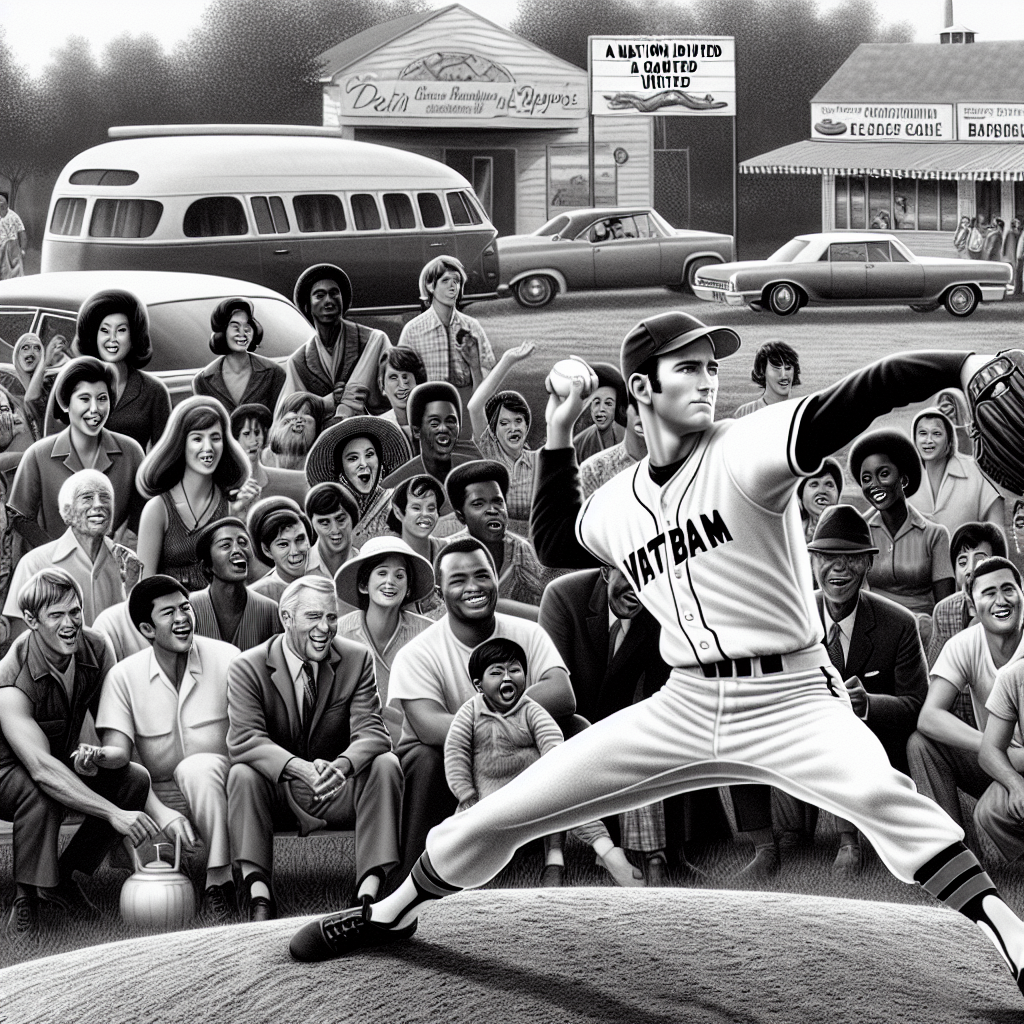
The Vietnam War was a period of great turmoil and division within the United States. While the war raged on, so did debates among Americans about the nation’s involvement in Vietnam. Families, friendships, and communities were often divided in their opinions about the war, fostering an atmosphere of uncertainty and conflict. Amidst this turbulence, baseball emerged as a source of unity and solace. It provided a shared experience and a brief escape from the realities of war. As a perennial fixture in American culture, baseball during the Vietnam era played a unique role in reflecting and influencing public sentiment.
The game of baseball, with its ritualistic precision and timeless beauty, offered people a connection to a simpler and happier time. It served as a constant in a rapidly changing world. Through the game, fans were able to find a sense of normalcy and continuity, as they came together, whether at stadiums or in front of televisions, to cheer on their favorite teams and players. Baseball did not shy away from the issues of the day; instead, it became a platform for discussion and representation of the evolving social climate.
Throughout this era, baseball responded to and reflected the nation’s broader struggles over issues such as civil rights, political protest, and shifting cultural values. Players and teams became involved in the national conversation in ways that were previously unseen. They contributed to the discourse surrounding the war effort and the broader social transformations reshaping the landscape of American life. Baseball’s historical role as an integrative force came into sharp focus, offering reconciliation and shared diversion to a nation in search of common ground.
The Impact of the Vietnam War on American Society
The Vietnam War profoundly altered American society during the 1960s and ’70s. This conflict, unlike any previous war, was broadcast directly into living rooms across the nation. This led to a heightened sense of reality and urgency about the issues at hand, provoking protests and a growing anti-war sentiment. The country was deeply divided, with significant portions of the population calling for peace, and others maintaining staunch support for the government’s actions overseas.
Amid this backdrop of social unrest and political division, many traditional institutions were called into question. As the civil rights movement gained momentum, the war also played a part in highlighting inequalities within the United States. Social norms were shifting rapidly, and the country’s participation in Vietnam was increasingly viewed through the lens of justice and morality, prompting discussions that resonated in homes, schools, streets, and even baseball stadiums.
As young Americans were drafted and sent off to war, the disruption extended into every aspect of daily life. Families anxiously awaited news of their loved ones, and communities grappled with loss and uncertainty. The impact of the war permeated the culture and sensibilities of the nation, affecting popular music, literature, film, and sports. In this climate, baseball offered one of the few unifying narratives, linking disparate communities through its enduring tradition and its ability to serve as a respite from daily concerns.
Baseball’s Response to Social Change
As society struggled with these issues, baseball, too, was in transition. The major leagues were fully integrated only a decade earlier, and racial tensions remained high, both outside and inside the sport. Jackie Robinson had famously broken baseball’s color barrier in 1947, setting the stage for future progress in the game and the country. Yet by the Vietnam era, the struggle for equality and justice was still ongoing.
Baseball players began to use their influence to speak out about broader societal concerns. Some players chose to publicly oppose the Vietnam War, voicing the sentiments of many who questioned the United States’ presence in Southeast Asia. Baseball icons such as Tom Seaver and Bill “Spaceman” Lee used their popularity to bring attention to these issues, aligning them with a growing anti-war sentiment.
This period also saw the emergence of outspoken athletes who identified with the civil rights movement, challenging the status quo and advocating for systemic change both within and beyond the baseball industry. Their contributions were part of a larger dialogue about race, equality, and justice in an America that was increasingly divided politically and culturally.

Baseball as a Unifying Tradition
Despite these challenges, baseball remained a beloved pastime, offering a sense of unity amidst the division. It served as a common language that transcended race, class, and political beliefs. Stadiums were filled with fans of all backgrounds, eager to revel in the competition and camaraderie of the game. This provided communities with spaces where differences could be set aside, even if only for a few hours.
For soldiers in Vietnam, baseball games aired on Armed Forces Radio and sporadic broadcasts brought a taste of home. The familiar sounds of the game provided a comforting link to their country, reminding them of life beyond the battlefield. Baseball, in a way, helped maintain the morale of troops stationed overseas, generating hope and nostalgia for the country they were fighting for.
Local leagues and youth programs also played a fundamental role in this period, fostering connections across communities. Baseball parks became community hubs where children could learn the sport and practice sportsmanship, teamwork, and resilience—qualities that were vital during such a tumultuous time.
High-Profile Games and Events During the Vietnam Era
During the Vietnam era, several memorable games and events captured the attention of the nation. The 1969 New York Mets’ improbable World Series victory, often dubbed the “Miracle Mets,” provided an uplifting narrative in a year filled with political and social challenges. Fans across the country embraced this underdog story, reminding them that dreams could be achieved regardless of the obstacles.
The revitalizing effect of baseball was also evident during the 1971 All-Star Game at Tiger Stadium in Detroit. This game showcased a diversity of baseball talent with the starting players being entirely composed of African American and Latino stars. This historic lineup was indicative of the sport’s ongoing evolution and could be seen as parallel to the societal shifts challenging traditional barriers and prejudices.
These events were not only significant sports achievements but also poignant moments that reflected a broader movement toward inclusivity and achievement amidst adversity. Baseball reinforced its role as a source of national pride and symbolized the potential for unity and progress.
Baseball’s Legacy from the Vietnam Era
The impact of baseball during the Vietnam era extended beyond the diamond. Its legacy is multifaceted, serving as a mirror for the cultural and political transformations of the time. It is remembered not just for the escapism and entertainment it offered but also for the way it embraced cultural changes, engaged in important dialogues, and encouraged collective healing for a polarized nation.
As population dynamics shifted and the culture became more diverse, baseball also evolved to reflect this dynamism. It continued to break new ground with respect to the inclusion of players of different backgrounds, and unified fans by allowing a shared space for storytelling, camaraderie, and reflection of the American Spirit.
This period set lasting precedents for athletes speaking out on social issues, heralding a new era in sports where players are recognized not just for their prowess on the field, but for their voices off it. Baseball became an important platform for influencing public opinion, taking a stand on issues like peace, equality, and justice, and in doing so, helped pave the way for future generations of athletes and fans to embrace social advocacy.
Conclusion: Enduring Lessons and Modern Reflections
The Vietnam era remains one of the most complex and tumultuous periods in American history. While the country faced its internal battles, baseball did what it does best—it brought people together, weaving individual stories into the fabric of a shared national identity. Its role as both a diversion and a platform for expressing societal concerns allowed it to transcend the traditional boundaries of sports.
The lessons learned from baseball during this era continue to resonate today. The ability of the sport to foster dialogue, unite fans across divides, and highlight social issues has inspired modern players who use their influence to advocate for change. This legacy underscores the idea that sports, while games at their core, possess an unparalleled capacity to evoke reflection and social progress.
Baseball’s influence during the Vietnam era extends into the present, continuing to be a source of nostalgia, inspiration, and unity. It serves as a reminder that even in times of discord, there exist elements within society that can serve to bridge divides and promote collective healing. Baseball remains a testament to the quintessential American spirit—a reminder of resilience, camaraderie, and the enduring pursuit of perfection and integrity both on and off the field.
Frequently Asked Questions
1. How did Baseball serve as a unifying force during the Vietnam War?
During the Vietnam War, the United States was steeped in a deep national divide, with fierce debates and differing opinions on foreign policy decisions surrounding the war effort. Baseball, with its long-standing history and popularity in America, played a critical role in bridging these divides. As a sport synonymous with American culture, baseball provided a sense of normalcy and tradition, acting as a balm for communities torn by differing political views and the strain of the war. It was a shared pastime that transcended political affiliations, serving as a neutral arena where people could come together to enjoy the game. Ballparks became a sanctuary where fans from all walks of life could forget their differences and immerse themselves in the excitement of the sport, cheering on their favorite teams and experiencing moments of joy and collective celebration. The baseball diamond became a place where the ongoing turmoil was temporarily set aside, allowing individuals and families to unite in their love of the game, thus reinforcing the social fabric during a deeply divisive era.
2. What impact did Major League Baseball (MLB) have on soldiers serving in Vietnam?
For the soldiers deployed in Vietnam, Major League Baseball represented a cherished connection to home. Despite being thousands of miles away, many soldiers found solace in the familiar sounds and thrills of baseball games. Radios often transmitted broadcasts of games to eager listeners, offering a respite from the constant stress of war. The recordings of baseball games or even occasional live feeds provided a distraction from the harsh conditions faced daily by the troops. Knowing that back home, thousands of fans were simultaneously tuning into the same events fostered a sense of unity and involvement with American society despite the physical distance. Soldiers would often gather to listen to game broadcasts, discuss their favorite players, and even replicate games in makeshift fields, fostering camaraderie and teamwork. Additionally, efforts from MLB teams and individual players, who conducted tours to support the troops or sent memorabilia and messages, reinforced this connection, reminding soldiers of the support and appreciation they had from their fellow countrymen back home.
3. Were baseball players involved in the Vietnam War effort in any direct way?
Baseball players were indeed involved in various ways during the Vietnam War. Some players enlisted or were drafted into the military, serving their country while putting their baseball careers on hold. These players later became symbols of patriotism and sacrifice, representing the dual roles of athlete and soldier. Furthermore, many players contributed by participating in morale-boosting activities, visiting troops overseas, and engaging in charitable efforts to support war veterans and military families. Baseball teams organized exhibition games to raise funds for war-related causes, and players often appeared in public service announcements to promote national unity and support for the troops. While on the field, they maintained a visible presence of solidarity and patriotism by observing moments of silence or dedicating games to fallen soldiers. Through their actions and symbolic gestures, baseball players demonstrated how sports figures could play an influential role in supporting a country during tumultuous times, extending their impact beyond the sports arena.
4. How did baseball maintain its popularity during such a volatile time in American history?
Baseball managed to sustain its popularity during the Vietnam War era by remaining a steadfast constant in the lives of many Americans. Despite the chaos and uncertainty of the period, the baseball season progressed with predictable continuity, offering fans regularity amidst the chaos. America’s love for the sport, combined with its deep historical roots, cemented its status as an invaluable pastime that could not be overshadowed by political unrest. The game itself encapsulated the ideals of teamwork, meritocracy, and fair play, providing a stark contrast to the divisive social climate. Additionally, baseball organizations adapted to the changing landscape by introducing night games, which allowed working individuals and even soldiers stationed overseas to tune into live broadcasts, further reinforcing its accessibility. Coverage of baseball games during this time also consistently highlighted themes of hope and determination, narratives that resonated deeply with a populace yearning for stability. The collaborative engagement and community experiences fostered by baseball were crucial in preserving its popularity throughout an era marked by profound national challenges.
5. In what ways did the Vietnam War influence the culture around baseball in the United States?
The Vietnam War’s profound influence permeated various aspects of American culture, including baseball. During this time, patriotic displays, such as the singing of the national anthem and flying the American flag, became more prominent and pronounced during games, as they served to reinforce unity and national pride. Baseball’s narrative often intertwined with themes of sacrifice and duty, epitomizing the virtues valued during war times. The sport saw a rise in tributes and commemorations, with games and championships frequently dedicated to honoring troops and their families, enhancing the emotional significance of many events. Moreover, the discourse around baseball began incorporating more discussions on social responsibility, with players increasingly taking public stances on various issues from war to civil rights. This era marked a shift in how athletes were perceived, as they were no longer just entertainers but also influential public figures with a voice in societal issues. The cultural influences of the Vietnam era thus extended into the ethos of baseball, affecting both its presentation and significance as an emblem of American identity and resilience.