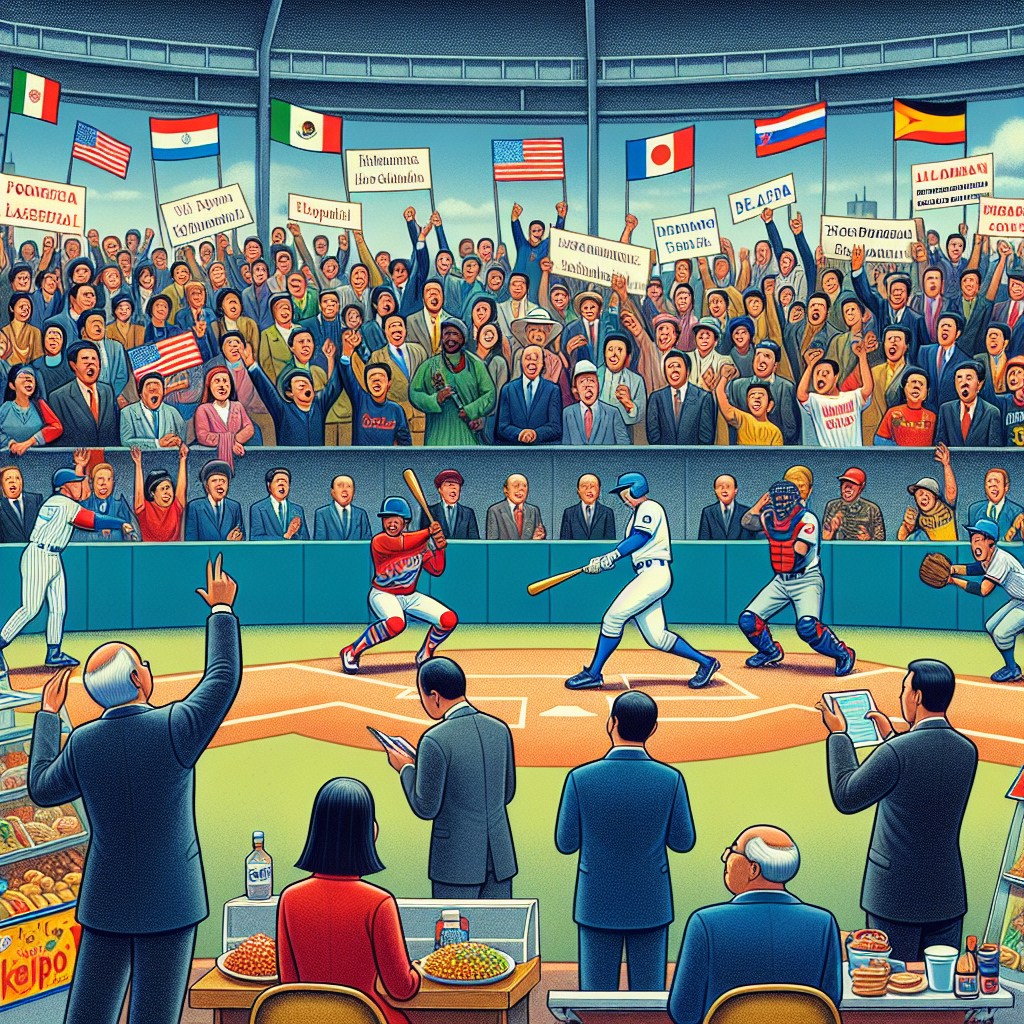
Baseball is far more than just another sport; it transcends borders, ignites passions, and bridges cultures worldwide. Its roots stretch deeply into the fabric of American society, defining the country’s sports culture for over a century. Yet, beyond the borders of the United States, baseball has served as a critical tool for cultural exchange and international relations. The batting, pitching, and fielding might appear as mere athletic endeavors, but the sport’s influence reaches beyond. It provides insights into different societies, their challenges, and their successes. Baseball’s history, from the narrative of Jackie Robinson breaking the color barrier to recent international events, offers a unique understanding of how sports can catalyze change and understanding among diverse nations.
The journey of baseball as a cultural exchange medium began more than a century ago. As players and coaches traveled through various countries, they inadvertently became cultural ambassadors. This seemingly simple act of playing baseball introduced countries to American culture and vice-versa. For example, when Major League Baseball (MLB) teams started playing in countries like Japan, the Dominican Republic, and Cuba, they weren’t merely playing a game—they were participating in a subtle, ongoing exchange of cultures, ideas, and traditions. These interactions allowed countries to bond and understand each other, disregarding political differences and focusing on mutual respect and admiration.
Baseball’s Introduction and Influence in Japan
Baseball’s history with Japan is one of the most prominent examples of the sport’s role in cross-cultural exchanges. Introduced to Japan in the late 19th century by American educator Horace Wilson, baseball quickly captivated the nation. It became a conduit for shared cultural values between Japan and the United States. The integration of baseball into Japanese culture helped to mend political tensions, particularly after World War II.
In 1934, Babe Ruth and other Major League Baseball stars toured Japan, significantly enhancing the game’s popularity. Japanese baseball quickly evolved, leading to the formation of the Nippon Professional Baseball (NPB) league. This relationship between MLB and NPB created a powerful link that transcended cultural and linguistic barriers. Post-war, baseball tours and exchanges helped foster goodwill and understanding, allowing for a smoother path to diplomatic relations.
More recently, Japanese players like Ichiro Suzuki and Shohei Ohtani, who have excelled in Major League Baseball, continue to build on this legacy. Their success in the United States has not only fostered admiration for Japanese athleticism but also respect for their cultural dedication and integrity. These players have become icons in both countries, illustrating the role of baseball as a bridge connecting disparate cultures.
Baseball’s Impact in the Caribbean and Central America
Baseball’s introduction to the Caribbean and Central America marked another significant cultural exchange. In countries like the Dominican Republic, Puerto Rico, and Cuba, baseball became more than a sport; it transformed into a way of life. Initially introduced through American influence in the late 19th and early 20th centuries, baseball rapidly became intertwined with these nations’ identities.
The establishment of Dominican baseball academies by Major League Baseball further illustrates baseball’s cultural impact. These academies have helped many young athletes achieve their dreams of playing professionally, highlighting the social mobility and opportunities sports can provide. Players from these regions, such as Roberto Clemente or David Ortiz, not only excelled in their craft but became cultural icons who raised awareness of their nations’ cultures on the international stage.
Baseball’s presence in these areas has also facilitated diplomatic relations. Games and tournaments often serve as neutral grounds, allowing countries to engage in discussions and negotiations outside the realm of politics, fostering better relationships.

The Role of Baseball in Cuban-American Relations
Few international relationships are as complex and storied as that of Cuba and the United States. Baseball has played a pivotal role in softening the often-tense relations between these two nations. Introduced to Cuba in the late 19th century by American sailors and Cuban students who studied in the U.S., baseball quickly became Cuba’s national pastime.
Despite political tensions, baseball has remained a common passion, providing a platform for dialogue and mutual understanding. High-profile events, such as the Baltimore Orioles’ visit to Cuba in 1999 and the Tampa Bay Rays’ game there in 2016, signified steps towards improved relations. The presence of Cuban players in Major League Baseball, such as Yasiel Puig and Aroldis Chapman, has further emblemized the potential for sports to transcend political boundaries.
Baseball’s inclusion in these diplomatic advancements demonstrates its strength in fostering international camaraderie, even amid political discord. It exemplifies the sport’s ability to act as a neutral platform, encouraging peace and collaboration between vastly different governments.
The Rise of Baseball in South Korea and Taiwan
Baseball’s expansion into East Asia, notably in South Korea and Taiwan, showcases another dimension of its cultural influence. American educators and missionaries introduced baseball to these countries in the early 20th century. Over time, it became deeply embedded within their cultures.
In South Korea, the inception of the Korea Baseball Organization (KBO) league in 1982 marked a significant milestone, demonstrating baseball’s place in Korean society. Notable players such as Hyun-jin Ryu and Kim Ha-seong have made their names on the international stage, acting as cultural representatives of South Korea.
Taiwan’s baseball history is equally rich, with the country regularly competing at a high level internationally. Players like Chien-Ming Wang, who enjoyed a successful Major League career, symbolize Taiwan’s strong baseball tradition. The U.S. and Taiwan hold a special relationship strengthened through baseball, offering economic and cultural exchanges that surpass mere diplomatic connections.
The rise of baseball in these regions exemplifies how the sport continues to promote cultural exchange and international understanding, emphasizing the shared love and respect for the game.
Latin America’s Growing Influence in Baseball
The love for baseball in Latin America is impossible to overlook. Countries such as Venezuela, Mexico, and Colombia have not only embraced the sport but have also contributed significantly to its international narrative. The sport has fostered a sense of unity and national pride, becoming an important aspect of their cultural identities.
In Venezuela, baseball rivals soccer in popularity. The country’s players, such as José Altuve and Miguel Cabrera, have left enduring legacies both on and off the field, using their platforms to bring attention to national issues and represent their culture positively. Baseball academies in Venezuela help nurture young talents aspiring to join the ranks of Major League Baseball, underscoring the vital role of the sport in shaping lives.
Similarly, Mexico’s contribution to baseball cannot be overstated. The country’s leagues consistently produce talented athletes who succeed at the international level. Events like the Caribbean Series highlight Mexico’s competitive spirit and commitment to baseball, building stronger cultural ties with neighboring nations.
Colombia, too, has a burgeoning baseball scene, with players like Édgar Rentería achieving significant feats in Major League Baseball. These players serve as links, drawing international attention to Latin America and deepening cultural exchanges with the United States and other baseball-loving nations.
Conclusion: Baseball as a Catalyst for Change
Baseball’s global reach demonstrates its powerful role in cultural exchange and international relations. It provides a unique platform for countries to come together, not just for competition, but for mutual understanding and respect. The sport thrives on its ability to bridge cultural gaps, transcend political barriers, and create a shared language of passion and teamwork.
From Japan’s reverence for the sport, which helped mend post-war relations, to the Dominican Republic’s love for baseball, which has provided countless opportunities for economic and social advancement, baseball’s impact is monumental. In many ways, baseball mirrors the complexity of international relations—full of challenges yet brimming with potential for connection and harmony.
As baseball continues to evolve, it remains a testament to the power of sport as a catalyst for change. Its influence extends beyond borders, fostering international camaraderie and understanding. Through baseball, nations not only find common ground but also celebrate their diversity, uniting under the universal passion for the sport.
Frequently Asked Questions
What role does baseball play in cultural exchange around the world?
Baseball plays an incredibly significant role in cultural exchange by bridging cultural gaps and fostering international understanding. For starters, it offers a universal language where players, regardless of their native tongues or backgrounds, come together with a shared aim and passion. The sport’s simple essentials—batting, pitching, and fielding—are easy to grasp, making it an accessible gateway to connecting people from diverse cultures. This union of efforts can be observed through international competitions such as the World Baseball Classic and the Olympics, where athletes from various countries celebrate their love for the game while promoting national pride. The ease with which baseball can be learned also means it’s easily integrated into different cultures, evolving as it meets unique regional customs and traditions. Players journey across seas, joining foreign leagues, learning new languages, and embracing host countries’ cultures, which enriches the bonds between differing nations. This transcultural sharing catalyzes not only sports knowledge exchange, but also stimulates understanding amid diverse societal practices and values, forging deeper global relationships.
How has baseball influenced countries outside the United States?
Baseball’s journey outside the United States exemplifies its global influence, tightly woven into different countries’ cultural fabrics. In Japan, for instance, baseball is not just another sport but a significant staple of Japanese culture and identity, mirroring their dedicated work ethic and team harmony. It’s the infusion of the sport in an educational setting, forged through history from American teachers and missionaries, that rooted baseball deeply into Japanese society. In the Caribbean, particularly the Dominican Republic, Cuba, and Puerto Rico, baseball has grown into a national pastime, producing some of the world’s top talent, thanks to rich, year-round playing opportunities, and a passion that spans generations. Latin American countries have adopted baseball, making it their own and a vital economic pillar, from attracting international scouts to nurturing future professional players. Even European and other Asian nations are witnessing a steady rise in baseball’s popularity as organizations like the World Baseball Softball Confederation promote the sport’s reach, nurturing local infrastructure, and leagues to embed the game in even more corners of the globe. Ultimately, baseball’s adaptability and appeal continue to impact societies, offering a platform where new generations elevate shared histories and cultural affinities.
What are some notable historical moments that highlight baseball’s international impact?
In examining baseball’s international footprint, a treasure trove of historical milestones emerges, illustrating its societal impact. Perhaps none are more significant than Jackie Robinson’s breaking of the color barrier in 1947, a moment that resonated globally as a profound stride toward racial equality, offering hope and inspiration to marginalized communities needing representation. Internationally, the influx of Japanese players in Major League Baseball, heralded by pioneers like Hideo Nomo in the 1990s, emphasized baseball’s transcendence across cultures, showcasing talent emanating from a nation once isolated from American sports leagues. Another pivotal moment occurred in the 1990s with the reintroduction of baseball in the Olympics, providing an esteemed international stage where countries like Cuba continuously thrived, demonstrating proficiency and passion on a grand scale. Furthermore, the Dominican Republic’s and Venezuela’s steady contributions, witnessing numerous players reach the major leagues and shine brightly, have elevated baseball to new cultural heights, sparking national pride and youth ambitions. Sports diplomacy also gains credit for facilitating deeper camaraderies among previously disconnected nations, demonstrating baseball’s potential to thaw political cautions and encourage cooperative engagement across borders.
How have globalization and technology affected the international growth of baseball?
In the digital age, baseball’s ascent within the international sports spectrum benefits immensely from technological advancements and globalization. Firstly, technology, particularly the internet and broadcasting innovations, ensures that fans access games from anywhere, creating global narratives and fan bases. Platforms like MLB.tv have enabled overseas enthusiasts to connect with their favorite teams, deepening appreciation and viewership across borders. Social media further contributes by allowing fans, players, and organizations to engage meaningfully, providing a sense of community that transcends geography. On a player-development side, technology in analytics and training methods spurs talent refinement worldwide, providing emerging prospects from all corners of the earth opportunities to hone skills and grasp attention from scouts and franchises. Additionally, globalization ensures a freer flow of talent as leagues emerge and relations ease; players transition more seamlessly into foreign markets, bringing their distinct styles and skills while absorbing new ones, creating an interchange of cultural experiences both on and off the field. With interactive and immersive tools continuously evolving, baseball’s global momentum shows no signs of waning, intensifying prospects for cultural enrichment and international participation.
What challenges does baseball face in expanding its global presence?
Though baseball boasts a widespread following, it confronts several hurdles in achieving deeper global penetration. One prominent challenge is the dominance of other sports in certain regions, particularly soccer in Europe, Africa, and South America, which poses stiff competition for the heart and minds of young athletes, who may opt for globally recognized sports over baseball. Creating an emotional connection through effective marketing and powerful narratives remains crucial in these areas to foster genuine interest that transcends mere novelty. Additionally, infrastructure and financial constraints in developing nations create barriers to nurturing baseball at a grassroots level, often restricting organized play to limited demographics with established facilities and resources. Cultural differences and a lack of historical ties to the sport can also hinder its adaptation and community integration. Furthermore, regulations in some areas and logistical challenges can complicate international talent identification and acquisition processes, potentially stymying growth ambitions. Addressing these challenges necessitates strategic collaborations with local entities, robust youth programs, investment in facilities, and outreach initiatives so that baseball’s true potential can unfold within new territories, cultivating a thriving, globally inclusive ecosystem.