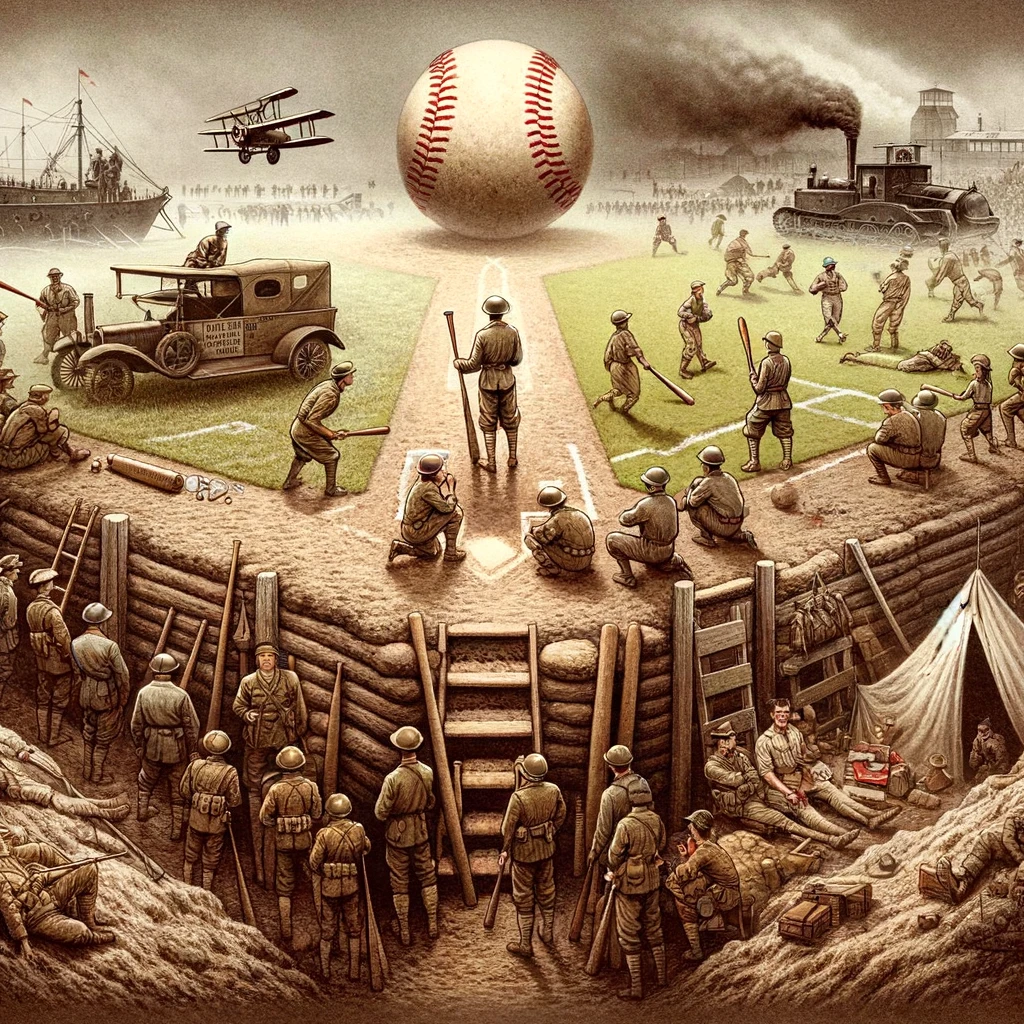
Baseball, often dubbed America’s pastime, has not only been a source of entertainment but also a significant cultural and social phenomenon. During World War I, the role of baseball expanded beyond the fields and bleachers, intertwining with the war effort and reflecting broader societal changes. This period marked a crucial chapter in the sport’s history, illustrating its impact on soldiers’ morale and its role in the home front war efforts.
Baseball Before the War
Before the war, baseball was already a well-established sport in the United States, with professional leagues and a growing base of fans. The game was seen as a unifying American activity, bridging social and economic gaps. It was during this pre-war era that stars like Ty Cobb and Babe Ruth began their rise, captivating fans and boosting the sport’s popularity.
The Outbreak of World War I
As Europe plunged into conflict in 1914, the United States initially remained neutral. Baseball continued to flourish, but as the war progressed and the U.S. entered the fray in 1917, the sport faced new challenges and responsibilities. The government, military, and civilian organizations saw baseball as a useful tool for promoting patriotism and unity.
Baseball Joins the War Effort
When the U.S. declared war on Germany, many players traded their baseball uniforms for military ones. Over 200 major and minor league players enlisted, including stars like Christy Mathewson and Grover Cleveland Alexander, who served with distinction. Their involvement helped bridge the gap between the public and the military, making the war effort feel more personal and urgent to fans back home.
Baseball games were frequently organized in military camps to boost morale. The sport provided a much-needed distraction from the rigors of military life and a reminder of home. In addition to games, baseball equipment was sent overseas to American troops, and exhibition games were played in Europe, sometimes in front of soldiers from multiple nations, spreading the sport’s appeal.
Impact on the Home Front
Back on the home front, baseball continued to play a crucial role. The government promoted “Baseball Sundays,” where games were played to raise funds for military and charitable causes related to the war effort. These events not only raised significant funds but also kept public morale high. Women, too, took on a more prominent role in the sport, both as players in women’s teams and as part of the workforce in baseball manufacturing jobs, reflecting broader shifts in American society.
During this time, baseball also faced its challenges. The so-called “Work or Fight” rule of 1918 threatened the continuation of professional baseball. This government order required able-bodied men to contribute to the war effort directly or face conscription. As a result, the baseball season ended early, and some players joined “war industries” teams that combined playing baseball with jobs deemed essential for the war.
Baseball’s Cultural Impact During the War
The intersection of baseball and war had a significant cultural impact. It helped maintain public interest in the war and supported recruitment efforts. Patriotic themes became common in team promotions and player interviews, reinforcing baseball’s role in American identity. The sport also mirrored changes in American society, including the shifting roles of women and increased racial tensions, as African American teams played more frequently in northern cities.
Post-War Era
After the war, returning soldiers and a renewed American spirit helped rejuvenate baseball. The 1919 season, despite being marred by the Black Sox Scandal, saw a surge in attendance, reflecting a society eager to return to normalcy and indulge in its favorite pastime. The sport had survived the war, adapting and growing in the face of adversity.
World War I was a defining moment for baseball, shaping the sport in ways that had lasting effects on American culture. It was during this time that baseball truly solidified its place as more than just a game, becoming a symbol of resilience and unity. By supporting the war effort, boosting morale, and reflecting societal changes, baseball played a crucial role during one of the most challenging periods in modern history. Its legacy from this era continues to influence the sport and American society to this day.

Baseball’s Legacy and Its Ties to Military Tradition
The relationship between baseball and the military did not end with World War I. The traditions and bonds formed during this period set a precedent for baseball’s role in subsequent conflicts, such as World War II, where the sport once again played a significant part in the nation’s morale and military efforts. The integration of baseball into military life during World War I paved the way for these future interactions.
The Spread of Baseball Internationally
World War I also played a role in spreading baseball beyond American borders. American soldiers stationed overseas brought the game to Europe and other parts of the world. This not only helped to internationalize the sport but also fostered a sense of camaraderie and cultural exchange between the U.S. troops and local populations. Countries like Great Britain, France, and even Italy saw organized baseball games during the war, often involving local spectators who were introduced to the game for the first time.
Technological Innovations and Baseball
The war also influenced baseball through technological advancements. For instance, radio technology, which saw significant development during WWI, became a crucial medium for broadcasting baseball games in the post-war years. This expanded the sport’s reach and helped cultivate a broader national audience, making baseball truly America’s national pastime.
The Role of Baseball in Promoting Peace and Recovery
After the armistice, baseball games were among the first organized public events that helped in healing the wounds of war. The sport provided communities with a means to gather, celebrate peace, and return to normalcy. The victory gardens that sprang up in ballparks across the country during the war were transformed back into playing fields, symbolizing a return to peace and leisure.
Racial Integration and the War’s Impact
While the war did not immediately lead to the integration of Major League Baseball, it did highlight the exceptional contributions of African American soldiers and athletes. Black baseball teams gained more recognition during and after the war, playing in larger venues and attracting diverse audiences. This set the stage for the eventual breaking of the color barrier in Major League Baseball, a process influenced by the broader social changes initiated during the war years.
Women in Baseball
The involvement of women in baseball during World War I also foreshadowed their later, more significant involvement in the sport, particularly during World War II when the All-American Girls Professional Baseball League was founded. The war years encouraged a rethinking of traditional gender roles, and women’s continued participation in baseball was part of this broader shift in societal norms.
Baseball Literature and Art
The war also influenced baseball literature and art, inspiring a genre of poetry, songs, and artworks that highlighted the role of baseball in wartime. These works often depicted the heroics of players who served and celebrated baseball’s contribution to the war effort, reinforcing the cultural connection between the sport and American identity.
Conclusion
The impact of World War I on baseball was profound, shaping the sport’s role in American society and its international presence. By fostering morale during the war, supporting the troops, and serving as a tool for social and cultural integration, baseball proved its significance beyond mere entertainment. The legacy of this era established patterns that would influence the sport and its cultural relevance for decades to come. Baseball’s role during World War I is a testament to its enduring place in the heart of American culture and its ability to adapt and thrive in the face of global challenges.