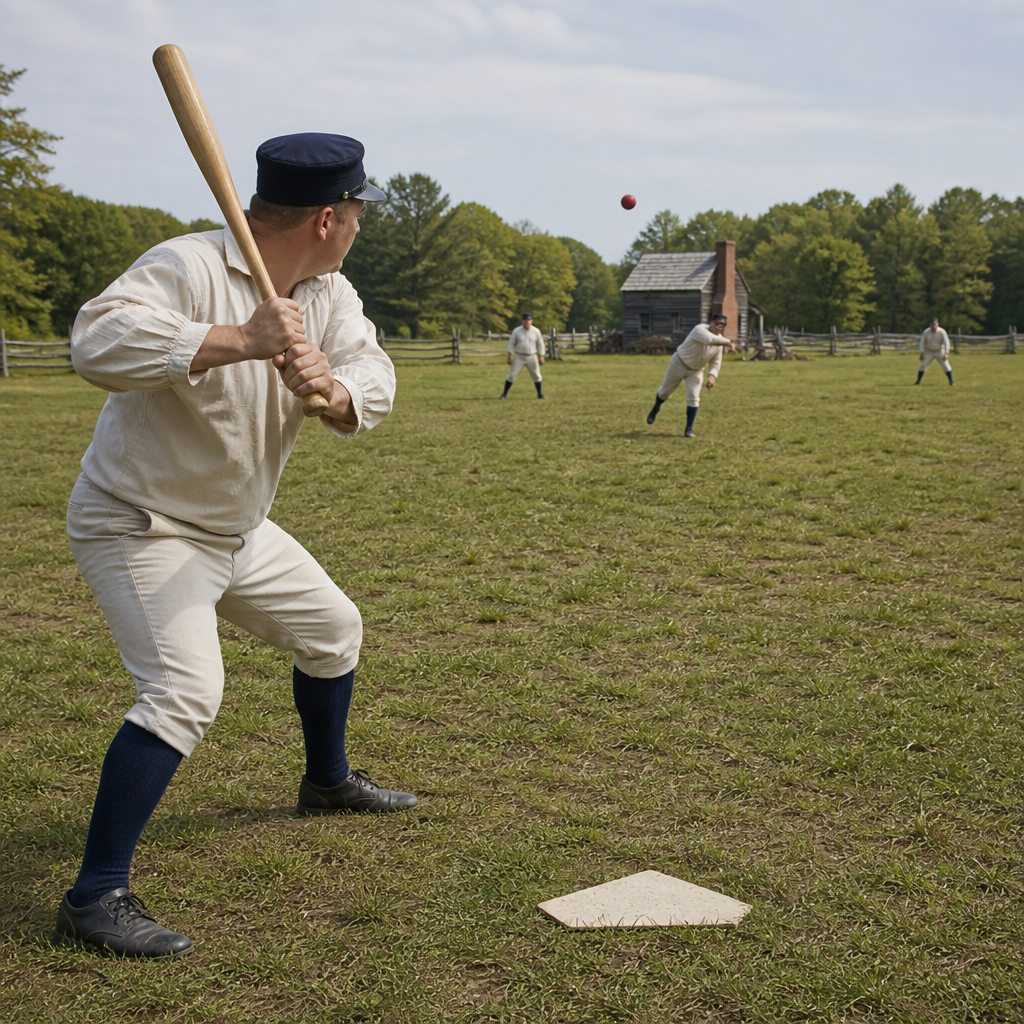
Base ball before 1800 occupies a murky but fascinating place in American cultural history, where scattered references, family memories, court records, and imported play traditions reveal a recognizable bat-and-ball game long before the modern sport took shape. Historians use the phrase “base ball” carefully here, because eighteenth-century Americans did not mean one fixed, codified game with nine innings, ninety-foot basepaths, and universal rules. Instead, they referred to a family of related pastimes descended from older English bat-and-ball traditions such as stoolball, rounders-like running games, trap ball, and cricket-adjacent contests. What matters is that early Americans already knew games involving a ball struck by hand, bat, or paddle; a running course marked by goals or bases; and some method of retiring runners. In my own work reviewing early newspapers, town regulations, and sporting histories, the pattern is consistent: the game existed before 1800, but as a local folk practice rather than a standardized national sport.
This distinction matters because the early history of baseball is often flattened into myths. The best-known myth once credited Abner Doubleday with inventing baseball in 1839, a story historians have thoroughly rejected. The more accurate view is evolutionary. Base ball developed gradually from British and American play customs, then accelerated in the early nineteenth century as urban clubs wrote rules and spread them through print. Understanding base ball before 1800 helps explain why later rule-makers had so much to organize. They were not inventing play from nothing. They were disciplining a loose, flexible recreational culture into a modern game. That makes this period the essential hub for anyone studying bat-and-ball origins, because every later development—from the Knickerbocker rules to professional leagues—rests on these earlier, less formal practices.
What, then, do historians actually know? They know that children and adults in colonial and revolutionary America played multiple striking-and-running games; that terminology varied widely; that surviving evidence is fragmentary; and that caution is necessary when connecting one early reference directly to modern baseball. At the same time, the cumulative record is too substantial to dismiss. Diaries, legal testimony, educational writings, and recollections point to games called “base,” “base ball,” or close variants being played in North America before 1800. The challenge is not proving that bat-and-ball games existed. The challenge is defining what kind of game each source describes, what features resemble later baseball, and where the historical record remains silent.
What “base ball” meant in early America
Before 1800, “base ball” was a descriptive label, not a universal rulebook. In most cases, the name signaled a game built around bases or goals that runners advanced after a struck or thrown ball. That sounds familiar, but many details could change from town to town. The number of bases might differ. Batting implements ranged from simple sticks to shaped bats. Outs might be recorded by tagging, by catching the ball, or by “soaking” or “plugging” a runner with a thrown ball, a practice common in many early bat-and-ball games. Team size was fluid, innings were not standardized, and fields were adapted to available commons, schoolyards, or roadsides.
That local variability is one reason historians avoid forcing modern categories onto early sources. A reference to “base” in one diary might describe something closer to rounders. Another might indicate a game much nearer to nineteenth-century town ball. A third could reflect children’s play with only a few participants and improvised rules. Yet these are not unrelated curiosities. They belong to the same broad bat-and-ball environment. When early Americans spoke of base ball, they usually recognized the basic logic of strike, run, retire, and score. The exact mechanics remained negotiable.
For researchers, the terminology question is central. Eighteenth-century spelling was inconsistent, and printed references were sparse. “Base ball,” “bass ball,” and “base” can all appear in sources. Historians compare wording, context, geography, and date to judge whether a reference points to a true striking-and-running game rather than another activity. This method is standard historical practice: no single line proves everything, but clusters of evidence establish probability. That is why the strongest scholarship treats pre-1800 base ball as a documented folk game family rather than a single inventor’s creation.
British bat-and-ball roots carried into the colonies
Early America did not invent bat-and-ball play in isolation. Colonists brought recreational habits from England, Scotland, and Ireland, and those habits mixed in North American settlements. Stoolball, for example, was an old English game with deep roots, involving striking a ball and protecting a target. Cricket had already become prominent in the British world by the eighteenth century. Children’s running games resembling rounders also circulated informally. Colonists adapted these traditions to local conditions, just as they adapted foodways, farming methods, and holiday customs.
In practical terms, that meant games needed little equipment and could be played almost anywhere. A handmade ball of yarn, leather, or stuffed material; a stick or simple bat; and a few marked points were enough. In rural communities, such games fit seasonal rhythms, especially around planting, harvest, militia musters, and school breaks. In port towns, they spread through constant movement of people and ideas. I have found that when a game requires minimal gear, no formal club, and no dedicated field, it leaves fewer records but travels faster. That is exactly what the evidence suggests for colonial bat-and-ball games.
The relationship to cricket is important but often overstated. Cricket definitely influenced American sport before the Revolution, especially in urban and elite circles. However, base ball’s ancestry is broader than cricket alone. Running between safe places after striking a ball appears in several British folk traditions. Historians therefore speak of shared ancestry rather than one direct parent. The American game that emerged later borrowed from this larger repertoire, then separated itself by favoring diamond-like running patterns, side-out structures, and eventually standardized clubs and rules.
What the documentary record actually shows before 1800
The surviving evidence before 1800 is thin but meaningful. Historians place weight on explicit references to “base ball” and on descriptive passages that clearly indicate a bat-and-ball running game. One of the most discussed pieces of evidence is a 1791 bylaw from Pittsfield, Massachusetts, which prohibited the playing of baseball near the town meeting house. The regulation matters because communities do not ban imaginary activities. It shows that baseball or a closely related game was common enough, public enough, and potentially disruptive enough to require civic attention.
Other evidence is more indirect. Recollections from the early nineteenth century often remembered childhood games played in the late eighteenth century. These retrospective sources must be handled carefully because memory is selective. Still, when independent recollections from different regions describe base-running bat-and-ball play, they reinforce the broader picture. Educational literature also helps. Moralists and school writers sometimes mentioned acceptable or unacceptable recreations, and these references show that running games with bats and balls were familiar to readers.
Historians test such sources against each other instead of relying on one famous citation. The result is not a precise rulebook but a reliable conclusion: by the 1790s, and likely earlier, Americans were playing games specifically called baseball or understood as baseball-like. The table below summarizes the main kinds of evidence and what each can support.
| Source type | Example | What historians can conclude | Main limitation |
|---|---|---|---|
| Town bylaws | Pittsfield, 1791 | The game was publicly played and common enough to regulate | Rules of play are not described |
| Diaries and letters | Personal references to base or ball games | Individuals recognized the activity as ordinary recreation | Descriptions are often brief |
| Memoirs and recollections | Adults recalling youth before 1800 | Bat-and-ball customs likely predated formal clubs | Memory can distort dates and details |
| Educational and moral writings | Mentions of schoolyard amusements | The game had cultural visibility beyond one town | Writers rarely explained mechanics |
| Comparative British sources | Rounders and stoolball traditions | American games fit a wider Anglo bat-and-ball lineage | Similarity does not prove identical rules |
How early games were probably played
Although no full American baseball rulebook survives from before 1800, historians can reconstruct likely features from later folk games and contemporary descriptions. The batter probably struck a pitched, tossed, or served ball with a stick, club, or bat. After contact, the runner advanced to one or more safe spots called bases, goals, or homes. Fielders retrieved the ball and attempted to retire runners by force, tag, catch, or body hit, depending on local custom. Scoring usually rewarded completed circuits or successful reaches to designated points.
This style of play favored adaptability over precision. If twelve children showed up, teams adjusted. If a village green was crowded, bases moved closer. If players lacked a shaped bat, they used whatever wood was available. That flexibility made the game durable. It also explains why standardization came late. Folk games survive through participation, not paperwork. They are governed by shared expectation, argument, and repetition. Anyone who has studied schoolyard sport recognizes this pattern immediately.
One feature that separates many early American forms from modern baseball is plugging the runner with the ball. To modern readers, this sounds harsh, but with softer handmade balls it was practical. Plugging reduced the need for a fielder to chase down and tag a fast runner. The practice persisted into some nineteenth-century town-ball variants before being eliminated as equipment hardened and organized clubs sought more orderly play. That transition marks a larger trend in sports history: informal folk recreation gradually giving way to codified, safer, and more spectator-friendly rules.
Where historians disagree and why the myths persist
Serious historians agree on the broad conclusion that baseball has deep pre-1800 roots, yet they still debate specifics. The disagreements usually concern interpretation, not existence. Was a particular reference definitely baseball rather than rounders? Did one region preserve a more direct line to the New York game than another? How much weight should be given to memories recorded decades later? These are normal disputes in early American cultural history, where sources are uneven and language is unstable.
Myths persist because simple origin stories are easy to remember. A single inventor, a single date, and a single birthplace fit popular memory better than a gradual evolution across the Atlantic world. The Doubleday story endured for decades partly because it gave the United States a neat, patriotic creation myth disconnected from British influence. But the documentary record does not support that version. Baseball emerged from older bat-and-ball customs, then crystallized through local experimentation and club standardization in the nineteenth century.
Another reason myths survive is that people expect the word “baseball” to refer to one stable object. Historians know better. Names often outlast rules. Games can share a label while differing substantially in practice, just as football once referred to many local kicking and carrying contests before codification. Early American base ball should be understood the same way: as a recognizable tradition with family resemblance, not as a finished major league product waiting to be discovered in colonial clothing.
Why base ball before 1800 matters to baseball history
This early period matters because it clarifies how the modern game became possible. By the time clubs in New York and elsewhere began writing formal rules in the 1840s, they were building on habits players already knew: batting in turn, advancing among safe stations, recording outs, and keeping score. Standardization did not invent those concepts. It selected among older alternatives and rejected others. The New York game, for example, moved away from plugging runners and toward tagging and force plays, choices that favored consistency and adult competition in organized club settings.
Studying the pre-1800 record also broadens the geography of baseball’s past. The game did not spring only from one city. Its roots lie in village greens, schoolyards, farms, commons, and small towns across the British Atlantic world and early republic. That perspective supports better research across the larger Early History of Baseball topic: colonial recreation, cricket in America, town ball, rounders comparisons, the Pittsfield bylaw, the Knickerbocker rules, and the decline of the Doubleday myth all connect back to this bat-and-ball hub.
For readers, the main benefit is accuracy. When you understand base ball before 1800 as a flexible folk tradition documented in fragments, later developments make more sense. The sport’s history becomes richer, not less. You can see continuity without forcing certainty, acknowledge British roots without denying American innovation, and appreciate how ordinary play eventually became one of the most organized and studied games in the world. If you are exploring early baseball history, use this bat-and-ball origins hub as your starting point, then follow the evidence outward into local games, rule changes, and the clubs that transformed tradition into modern baseball.
Frequently Asked Questions
Did base ball really exist in America before 1800?
Yes—although historians define that claim carefully. There is strong evidence that recognizable bat-and-ball games called “base ball” or closely related names were known in early America before 1800. What did not yet exist was the standardized sport later associated with the nineteenth-century New York game: no universally accepted rulebook, no fixed number of players, no settled field dimensions, and no agreement on how outs, innings, or scoring had to work. Instead, the surviving record points to a looser family of games that shared core features such as a ball put into play by striking it, runners moving between goals or bases, and fielders attempting to retire those runners.
The evidence comes from several kinds of sources rather than one dramatic “first game” document. Historians look at diaries, local recollections, educational writings, court records, and references embedded in everyday language. Taken together, these scattered pieces suggest that Americans in the eighteenth century already knew games that fit within the broader base ball tradition. That is why serious historians avoid sweeping claims that modern baseball suddenly appeared at a single moment. Before 1800, the game existed, but it existed in a fluid, local, evolving form rather than as the codified national pastime people know today.
What kinds of historical evidence do historians use to study early base ball?
Because the eighteenth century left no neat archive of official baseball organizations or published rulebooks, historians reconstruct the story from fragmentary evidence. They rely on references in letters and memoirs, children’s literature, school and moral instruction texts, legal and court records, newspaper notices, and later recollections by families or communities. They also compare American evidence with British bat-and-ball traditions, since many early American games likely grew out of games brought across the Atlantic and then adapted locally.
This work requires caution. A single mention of “base ball” does not automatically prove that everyone was playing the same game, and a later memory of childhood play may blend real experience with nostalgia. Historians therefore weigh each source by date, context, and reliability. A court record may be more secure than an oral tradition repeated generations later, but even a casual diary note can be valuable if it uses the term in a familiar, matter-of-fact way. The larger picture emerges not from one perfect piece of evidence, but from many imperfect pieces that point in the same direction. That is why the history of base ball before 1800 is often described as murky but persuasive: the record is incomplete, yet the cumulative case is substantial.
Was early “base ball” the same as modern baseball?
No, and that distinction is essential. When historians say “base ball” in an eighteenth-century context, they are not claiming that early Americans played the exact game now seen in Major League Baseball. Modern baseball is the product of nineteenth-century standardization, especially the gradual fixing of rules, positions, club structures, field layout, and competitive norms. Before 1800, “base ball” referred more broadly to related games that varied from place to place and from group to group.
Many likely differences separated those early games from the modern sport. The number of bases may have varied. Team sizes were not necessarily fixed. Methods of retiring runners could differ, including older practices such as putting a runner out by hitting them with the ball rather than tagging or forcing them in the modern sense. Pitching, batting order, and scoring conventions were not standardized. Some games may have resembled English rounders, stoolball, or other folk bat-and-ball traditions more than later organized baseball. In short, early base ball was recognizable in outline but not identical in structure. Historians emphasize continuity without collapsing all versions into one timeless game.
How did British and European play traditions influence base ball in early America?
They influenced it profoundly. Colonial and early national America inherited a wide range of recreational practices from Britain, including several bat-and-ball games. Immigrants, settlers, soldiers, schoolchildren, and families carried informal play traditions with them, and these traditions often changed once they took root in American communities. Rather than imagining base ball as a game invented from nothing on American soil, historians generally see it as part of a larger Atlantic world of popular recreation.
That does not mean early American base ball was merely copied from England and left untouched. Folk games routinely evolved through local custom. Rules were negotiated on the spot, adapted to available space, and shaped by the ages and abilities of the players. Over time, Americans preserved some older features while modifying others. The result was not one clean line from a single British game to modern baseball, but a process of mixing, borrowing, and regional development. This is one reason the pre-1800 record can be so hard to pin down: the game’s ancestry is plural, and its early American forms were still in motion.
Why is there so much debate about the origins of baseball before 1800?
The debate persists because people often ask a question the sources cannot answer in a simple way: “Who invented baseball?” Historians generally reject the idea of a lone inventor or a single founding event for the game’s deeper origins. Early base ball emerged gradually from overlapping play traditions, and the documentary record is too scattered to support neat origin stories. That is especially true for the period before 1800, when informal recreation was common but not consistently documented in the way later organized sport would be.
Another reason for debate is that baseball has long been tied to national identity. For generations, Americans wanted a clear, distinctly American beginning for the sport, which encouraged myths, oversimplified claims, and retrospective storytelling. Modern scholarship tends to be more careful. It asks not for a ceremonial “birth date,” but for the best evidence of how bat-and-ball games were actually played, named, and remembered in early America. From that perspective, the most responsible conclusion is also the most interesting one: before 1800, Americans almost certainly played recognizable forms of base ball, but they played them as flexible local games, not as the fully formed modern sport.