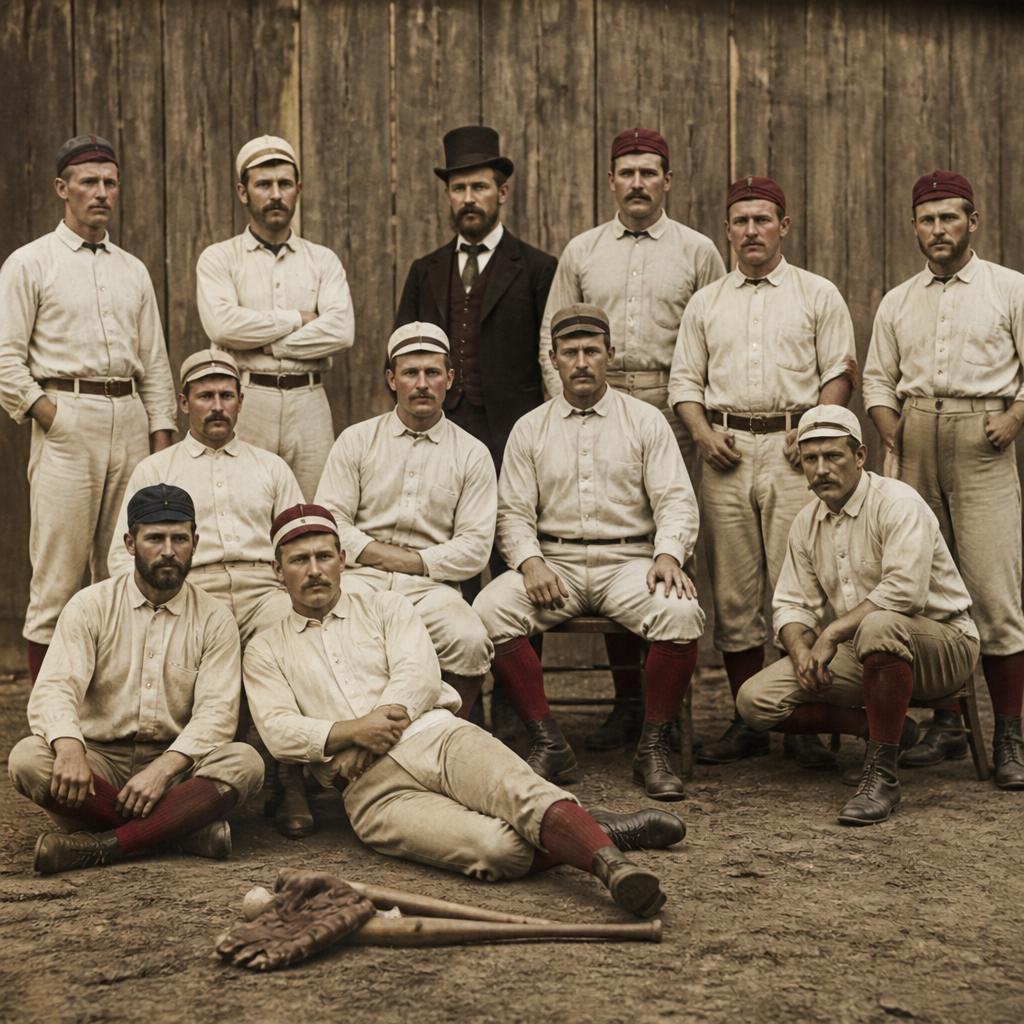
The Eckford Base Ball Club stood at the center of amateur baseball’s first great competitive age, turning a neighborhood team from Brooklyn into one of the most formidable clubs of the 1860s and helping define how the game was organized, played, and followed. In early baseball, “base ball” referred to a fast-evolving bat-and-ball sport governed not by professional leagues but by local clubs, mutual challenge matches, and the rules codified by the National Association of Base Ball Players. Within that world, amateur clubs were not casual weekend teams. They were civic institutions, social networks, training grounds, and public representatives of their neighborhoods. Eckford mattered because it embodied all of those roles at once. From my work tracing nineteenth-century match reports, club records, and rule changes, Eckford consistently appears wherever the story turns from informal recreation toward structured competition. Understanding the club explains not only Brooklyn baseball, but also how amateur competition created the foundation for the modern sport. This hub article surveys that landscape: who the Eckfords were, why Brooklyn became a baseball stronghold, how amateur clubs functioned, how matches were arranged, which rivalries shaped the era, and why Eckford’s rise still matters to anyone studying the early history of baseball.
Brooklyn, club culture, and the making of a baseball powerhouse
The Eckford Base Ball Club was organized in Brooklyn in 1848 and took its name from shipbuilder Henry Eckford, a fitting choice in a city defined by industry, craft, and local pride. That date alone makes the club significant. It places Eckford among the oldest enduring baseball organizations in the United States, active during the decades when New York game rules displaced regional variants and club competition became increasingly formal. Brooklyn in the 1850s and 1860s was ideal terrain for baseball growth. The city had dense neighborhoods, improving transportation, a large population of skilled workers and clerks, and enough open ground for clubs to stage matches that drew both members and spectators.
Club baseball in this period was rooted in association life. Men joined for fellowship as much as sport, paid dues, elected officers, adopted constitutions, and enforced membership standards. A ball club often reflected the social aspirations of its members: orderly conduct, punctuality, and reputation mattered. Eckford developed a reputation for seriousness and strength. Unlike loosely assembled nines, strong clubs drilled together, maintained stable lineups, and challenged respected opponents. That consistency helped separate true powers from fashionable teams that appeared briefly and faded.
Brooklyn became the era’s deepest baseball center. Eckford shared the city with clubs such as Atlantic, Excelsior, Putnam, and Enterprise, creating an unusually competitive local environment. Facing strong opponents nearby improved play and intensified public interest. This local density worked like a proving ground. A club that could dominate in Brooklyn could compete with anyone. In practical terms, Brooklyn clubs also benefited from ferry connections to Manhattan and rail access to other towns, making intercity competition easier to arrange. Baseball history often highlights New York City because the Knickerbocker rules emerged there, yet by the late 1850s Brooklyn clubs were regularly setting the performance standard.
Eckford’s rise was built on disciplined amateurism rather than financial professionalism, at least in formal terms. Clubs insisted their players were gentlemen amateurs, even when top teams quietly offered jobs or other inducements to retain talent. That tension between stated amateur ideals and competitive reality is central to the 1860s. Eckford succeeded because it mastered the club system as it actually worked: stable membership, careful scheduling, tactical sophistication, and enough organizational strength to survive seasons of intense rivalry.
How amateur clubs operated in the 1850s and 1860s
To understand Eckford, it helps to understand the mechanics of amateur clubs and early competition. A leading club was an institution with bylaws, officers, committees, scheduled practices, and match etiquette. The president oversaw public affairs, the secretary managed correspondence and reports, and match committees arranged games. Players were generally members first and athletes second. Admission procedures could include nomination, voting, and dues. Some clubs limited membership by neighborhood or social ties; others expanded as success increased prestige.
Matches were usually challenge games rather than league fixtures. One club formally invited another, and the receiving club accepted, declined, or postponed. Home-and-home arrangements were common, though weather, travel, and field conditions often disrupted plans. Before enclosed professional parks, clubs played on open grounds such as the Capitoline Grounds or earlier public fields. Crowds could gather close to the action, and newspapers described not only the score but the quality of fielding, the behavior of spectators, and even the hospitality shown to visiting teams.
The rules differed sharply from modern baseball. The standard game was nine innings by the late 1850s, but pitching was underhand and intended to initiate action rather than overpower the striker. Called balls and strikes developed gradually. Fielders initially could record an out by catching a batted or thrown ball on one bound, though the bound rule was later narrowed and then eliminated for fair catches. Gloves were not yet standard, so clean handling mattered enormously. Scores were high because fields were rough, bats varied, and errors were common by modern standards, though contemporaries prized sharp fielding and strategic hitting.
Newspapers were essential to competition. The New York Clipper, Wilkes’ Spirit of the Times, and local Brooklyn papers published box scores, arranged public reputations, and helped clubs claim status. If a team beat a respected rival, the result traveled quickly through print. That media ecosystem made baseball a regional conversation long before formal leagues controlled scheduling. It also explains why clubs like Eckford became famous beyond their immediate neighborhoods.
| Feature | Amateur club era reality | Why it mattered to Eckford |
|---|---|---|
| Organization | Member-run clubs with officers, dues, and constitutions | Stability supported long-term competitiveness |
| Scheduling | Challenge matches instead of league calendars | Prestige depended on beating strong named rivals |
| Rules | Underhand pitching, evolving strike zone, bound catches early on | Favored balanced teams with strong fielding and placement hitting |
| Publicity | Newspaper reports and printed box scores shaped reputation | Eckford’s victories carried influence beyond Brooklyn |
| Player status | Formally amateur, informally competitive for talent | Helped explain the club’s sustained elite level |
Eckford’s competitive peak and the championship question
Eckford became a genuine powerhouse at the end of the 1850s and the start of the 1860s. In the loose championship culture of the era, the leading club was often recognized through challenge succession rather than a centralized standings table. If a club defeated the acknowledged champion in a match carrying that status, it could claim the title until beaten. This arrangement could be messy, because not all clubs accepted every interpretation, but it reflected the period’s decentralized governance.
Eckford’s breakthrough came in 1862, when it defeated the Atlantic Club of Brooklyn, a dominant rival that had built one of the strongest reputations in the game. That result mattered because Atlantic was not simply another team; it was a benchmark. Beating Atlantic announced that Eckford had reached the summit. Eckford then defended its standing against prominent clubs, reinforcing that its success was not a one-day upset but the product of sustained quality.
Several factors explain Eckford’s strength. First, it fielded balanced nines rather than relying on one celebrated striker. Contemporary reports often praised complete play: sure catching, quick throwing, smart base running, and the ability to avoid collapses in high-scoring innings. Second, Eckford was tactically adaptable. Early baseball rewarded placement hitting, taking extra bases on misplays, and capitalizing on fatigue or disorder. Third, the club operated in a competitive environment that sharpened performance. Repeated contests against Brooklyn and New York elites produced experienced players used to pressure.
It is important not to project modern pennant races backward onto this era. There was no major league office, no universal schedule, and no playoff bracket. Recognition depended on custom, press consensus, and club-to-club legitimacy. Yet that does not make championships meaningless. In practice, informed observers knew which clubs had beaten whom, and prestige tracked those outcomes closely. Eckford’s place among the top teams of the early 1860s is well established because its record against premier opposition was strong and well documented.
Rivalries, notable opponents, and how status was earned
No club became powerful in isolation, and Eckford’s story is inseparable from its rivals. The Atlantic Club was the most obvious measuring stick, but it was hardly the only one. The Excelsior Club of Brooklyn, associated with stars such as Jim Creighton for a time, helped elevate the standard of play and public attention. Manhattan-area clubs including Mutual and the Knickerbockers also mattered, though the Knickerbockers were eventually more important as early rule-makers and social pioneers than as the strongest competitive side.
What made a rivalry meaningful in this era was not branding or league scheduling; it was repeated public proof. Clubs earned status by arranging difficult matches and then winning them under scrutiny. Newspapers reported innings in detail, noting rallies, muffed catches, disputed calls, and standout performances. If Eckford defeated Atlantic, Excelsior, or another leading nine, that victory did more than improve a record. It altered the hierarchy of metropolitan baseball.
These contests also reveal how broad the amateur network had become. Strong Brooklyn clubs traveled to face opponents from other cities, and visiting teams came to Brooklyn knowing that success there carried national significance. Before professional circuits standardized travel, such matches were logistically demanding. Teams coordinated dates by letter, traveled by rail or ferry, and depended on weather and field availability. Winning despite those variables added to a club’s reputation for discipline.
For readers exploring amateur clubs and early competition as a broader subject, Eckford serves as the ideal hub because its history intersects nearly every major theme: urban identity, challenge culture, newspaper publicity, evolving rules, elite rivalry, and the gradual erosion of purely local amateurism. If you continue into deeper studies of Atlantic, Excelsior, the NABBP, or pre-professional championship customs, you are still moving through the world Eckford helped define.
Rules, playing style, and what an Eckford match looked like
An Eckford match in the 1860s did not resemble a modern low-scoring professional game. Pitchers delivered the ball underhand, often with speed and movement but within restrictions that emphasized fairness to the striker. Because batsmen could often wait for a favorable pitch and fielders played barehanded, rallies could become explosive. Double-digit scores were common, and a single poor defensive inning could swing a match.
Still, early baseball was not crude slugging. Skilled clubs separated themselves with precision. Fielding was the clearest marker of class. On uneven grounds, a sure-handed third baseman or short fielder prevented multiple runs per game. Catchers worked without modern masks or mitts, absorbing repeated impacts while trying to keep runners close. Base running was aggressive, because an overthrow or muffed return could open extra bases immediately. Strong clubs practiced coordinated relays and quick infield communication, even if the vocabulary of modern coaching had not yet fully formed.
Eckford thrived in that environment because it combined athletic reliability with tactical awareness. Contemporary baseball strategy included directing hits into space, bunting in primitive forms, advancing runners through well-judged striking, and pressing fielders with daring turns. The absence of specialized relief pitching or deep benches meant endurance and composure mattered. A club that stayed organized through long innings often outlasted more spectacular opponents.
Rule evolution during Eckford’s era also shaped competition. The NABBP gradually standardized dimensions, innings, and procedures, reducing local variation. Changes to the bound rule and the treatment of balls and strikes slowly moved the game toward cleaner, more demanding defense and a stronger duel between pitcher and striker. Eckford competed successfully during this transitional period, which is one reason historians treat the club as more than a local curiosity. It excelled while baseball itself was hardening into a national sport.
From amateur ideal to professional future
The 1860s were the last decade in which elite baseball could plausibly present itself as fully amateur. The Civil War helped spread the New York game, as soldiers carried rules and habits between regions. After the war, competition intensified, travel expanded, and the pressure to recruit or compensate top players grew stronger. Clubs still used amateur language, but the distinction between expense reimbursement, patronage employment, and direct pay became increasingly thin.
Eckford’s later history reflects that transition. The club remained prominent and eventually entered the first professional circuits after the National Association permitted openly professional clubs in 1869. By then, however, the environment had changed. New organizational demands, commercial pressures, enclosed grounds, and formal professionalism favored clubs with different financial structures. Eckford’s greatest historical importance therefore lies in the amateur powerhouse phase, when club prestige rested on member organization and challenge supremacy rather than franchise economics.
This transition matters because it clarifies what early competition actually contributed to baseball history. Amateur clubs created the competitive habits that professional baseball inherited: scheduled prestige contests, public statistical reporting, recognized champions, codified rules, and urban fan loyalty. The sport did not leap from sandlots to major leagues. It passed through clubs like Eckford, where administration, rivalry, and repeated high-level play built the framework.
Why the Eckford Base Ball Club still matters
The Eckford Base Ball Club matters because it shows how baseball became organized, competitive, and culturally important before professionalism took over. It illustrates that Brooklyn was not merely a supporting setting in early baseball history but one of the game’s principal laboratories. It demonstrates that amateur clubs were disciplined institutions, not informal pastimes. And it gives historians a concrete case through which to explain challenge matches, championship customs, evolving rules, and the social prestige attached to elite nines.
For anyone studying the early history of baseball, Eckford is a practical starting point for the entire subject of amateur clubs and early competition. Follow Eckford outward and you reach Atlantic, Excelsior, the National Association of Base Ball Players, Civil War-era diffusion, and the uneasy birth of professionalism. That is why this club belongs at the center of a sub-pillar hub. Its story connects the people, places, rules, and rivalries that made baseball durable. If you want to understand how the national game was built, start with Eckford, then explore the clubs and competitions that surrounded it.
Frequently Asked Questions
What made the Eckford Base Ball Club such an important force in 1860s baseball?
The Eckford Base Ball Club mattered because it rose to prominence at exactly the moment organized baseball was taking shape in the United States. Based in Brooklyn, Eckford began as a neighborhood club but quickly became one of the elite teams of the amateur era, competing in the sport’s first truly competitive age. In the 1860s, there were no modern major leagues, no postseason structure, and no permanent national championship system. Instead, leading clubs built their reputations through challenge matches, return games, tournament-style gatherings, and their standing among peers in the National Association of Base Ball Players, the organization that helped standardize the rules of the game. Eckford thrived in that environment.
What set the club apart was its combination of sustained excellence, organizational seriousness, and visibility. Eckford was not simply a good local team; it became one of the benchmark clubs by which others were measured. Its success reflected the growing sophistication of top amateur baseball in New York and Brooklyn, where clubs practiced regularly, scheduled important contests, and developed reputations that extended far beyond their immediate neighborhoods. When people in the 1860s talked about leading baseball powers, Eckford belonged in that conversation alongside the era’s most celebrated names.
The club’s importance also comes from timing. Eckford helped define what high-level baseball looked like before professionalism fully took over. It stood at the intersection of local civic pride, amateur sporting culture, and the push toward more formal competition. In that sense, Eckford was more than a strong team; it was part of the foundation on which later organized baseball was built.
How did baseball operate during the Eckford era, before professional leagues existed?
Baseball in the Eckford era was organized very differently from the modern game. During the 1850s and 1860s, “base ball” referred to a rapidly developing sport played primarily by clubs rather than franchises. Teams were generally social and athletic organizations formed by groups of men from the same neighborhood, trade, or community. There was no centralized league schedule in the modern sense. Instead, clubs arranged matches directly with one another, often through formal written challenges, and the most important games could attract significant public attention.
The National Association of Base Ball Players played a central role in bringing order to this landscape. It was not a professional league, but rather a governing body made up of clubs that agreed upon common rules and practices. That mattered enormously because early baseball had previously existed in multiple local forms. Standardized rules helped transform scattered bat-and-ball traditions into a recognizable national sport. Eckford competed within this emerging framework, which meant its contests were not isolated local amusements but part of a wider, increasingly coordinated baseball culture.
Prestige came from results, but also from whom a club played and defeated. Strong clubs sought out other strong clubs, and a team’s reputation was built through challenge matches, return engagements, and championship claims recognized by the baseball press and fellow clubs. Newspapers were essential in spreading scores, reporting on play, and shaping public opinion. In that world, a club like Eckford could become famous not because of a league table or television exposure, but because it repeatedly proved itself in the most watched and discussed contests of the day. That system may seem informal by modern standards, but it was a crucial stage in baseball’s evolution from a local pastime into a nationally organized sport.
Why was Brooklyn so central to early baseball, and how did that help Eckford?
Brooklyn was one of the great centers of early baseball, and that environment was a major reason Eckford could flourish. In the mid-19th century, Brooklyn and nearby New York City were crowded with ambitious clubs, active players, available grounds, and a growing reading public eager for sports news. Baseball developed there not on the margins, but in a highly competitive urban setting where clubs could find worthy opponents close at hand. That concentration of talent and interest made the region the sport’s early proving ground.
For Eckford, being based in Brooklyn offered several advantages. First, the club had access to frequent high-quality competition. A strong local baseball scene meant there was always another respected club to play, and that constant testing helped sharpen performance and build prestige. Second, Brooklyn clubs benefited from civic identity. Neighborhood and city pride mattered deeply, and baseball quickly became one way communities expressed status and energy. When Eckford succeeded, it was not just a win for a roster of players; it was a source of pride for Brooklyn baseball as a whole.
Brooklyn also had the infrastructure that helped turn baseball into a public spectacle. Newspapers covered important games, spectators followed major results, and leading clubs developed recognizable reputations. In that setting, Eckford could rise from a local organization to a widely known power. The club’s story reflects how baseball’s early growth depended on strong urban networks, and Brooklyn was one of the strongest of all. Without that rich local baseball culture, Eckford might have remained a respectable neighborhood club. Within Brooklyn’s competitive world, it had the chance to become one of the defining teams of the decade.
What kind of playing style and competitive identity did the Eckford club represent?
Eckford represented the serious, disciplined side of top-level amateur baseball in the 1860s. Although the sport was still evolving, the best clubs were already expected to show organization, consistency, and tactical awareness. Games in that era could be high-scoring by modern standards, and field conditions, equipment, and rules differed significantly from what fans know today. Even so, strong clubs distinguished themselves through clean fielding, alert baserunning, dependable batting, and the ability to perform under pressure in prominent challenge matches. Eckford earned its standing by excelling in precisely that demanding competitive environment.
The club’s identity was tied to reliability and stature. Early baseball powerhouses did not become feared simply by winning once or twice; they had to maintain form over time against clubs that were often eager to claim supremacy for themselves. Eckford’s reputation suggests a team that combined local cohesion with high-level skill, a group capable of handling the social and athletic pressures that came with major amateur contests. In the 1860s, the leading clubs were effectively setting standards for everyone else, and Eckford was among those standard-bearers.
It is also important to remember that amateur did not mean casual. By the time Eckford reached prominence, elite clubs approached baseball with great seriousness, even if the sport had not yet fully embraced open professionalism. Matches drew attention, reputations were on the line, and strong performances could define a club’s place in the game’s hierarchy. Eckford’s competitive identity reflects that transition period perfectly: a club rooted in amateur ideals, but operating with the intensity, ambition, and public profile that pointed toward baseball’s professional future.
What is the lasting legacy of the Eckford Base Ball Club in baseball history?
The lasting legacy of the Eckford Base Ball Club lies in its role as one of the teams that helped turn baseball from a local pastime into a structured, widely followed competitive sport. Eckford was not merely present during an important era; it was one of the clubs actively shaping what that era became. By succeeding within the rules and customs established by the National Association of Base Ball Players, the club helped give credibility to the idea that baseball could be governed consistently across many organizations and communities. That was a major step toward the national game baseball would soon become.
Eckford’s story also preserves the memory of baseball before the dominance of modern professional leagues. The club represents the age when challenge matches, club honor, civic pride, and newspaper reputation formed the backbone of competition. Understanding Eckford helps readers see that baseball’s history did not begin with fully formed professional structures. It emerged from club culture, negotiated rules, and intense amateur rivalry, and Eckford stood near the center of that process.
Perhaps most importantly, the club reminds us that early greatness in baseball was not accidental. Teams like Eckford built traditions of organization, seriousness, and public engagement that later generations would inherit and expand. Even if the club is less familiar to casual fans today than later professional dynasties, its influence belongs to the foundational chapter of the sport. In any serious account of 1860s baseball, Eckford deserves recognition as a Brooklyn powerhouse and as one of the clubs that helped define how baseball was organized, contested, and celebrated.