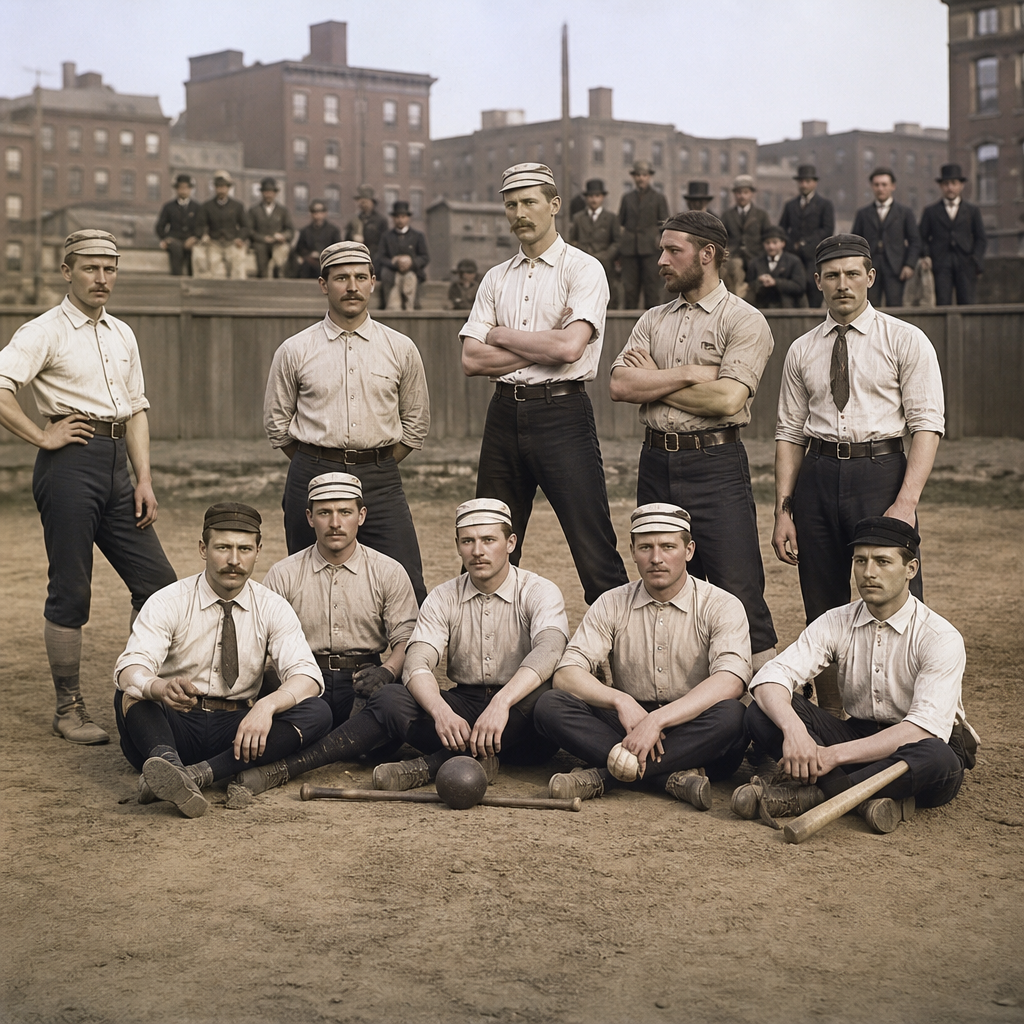
The Brooklyn Atlantics of 1860 stand at the center of early baseball history because their championship season captures the moment when amateur clubs turned a loose pastime into organized competition. In that single year, the Atlantics embodied the rules, rivalries, travel demands, and civic pride that defined baseball before professionalism. For readers exploring amateur clubs and early competition, this season works as a practical hub: it explains how clubs were structured, how matches were arranged, why championships were disputed, and how local bragging rights helped build a national game.
To understand the significance of the 1860 Brooklyn Atlantics, it helps to define the baseball world they inhabited. Clubs were voluntary associations, usually formed by merchants, craftsmen, clerks, or skilled workers who met regularly for exercise and fellowship. The leading rules came from the National Association of Base Ball Players, founded in 1857, which standardized essentials such as nine-man sides, ninety-foot basepaths, and the convention of recording outs rather than counting runs against a fixed target. A championship season in 1860 did not resemble a modern league schedule. Instead, elite clubs challenged one another in arranged match games, often contested as best-of-three series for prestige rather than prize money.
That structure matters because it explains why the Atlantics became famous. They were not simply one strong Brooklyn team among many. They were a model amateur club that mastered scheduling, developed disciplined players, and beat respected rivals under rules still taking shape. Their rise also shows how New York and Brooklyn dominated the sport’s formative years. Manhattan clubs like the Knickerbockers helped codify baseball, but Brooklyn clubs, especially the Atlantics, Excelsiors, and Eckfords, pushed competitive standards higher through frequent serious play.
I keep coming back to the Atlantics when explaining early competition because their season reveals several enduring truths about baseball. Winning required depth, not just one star. Club reputation mattered almost as much as results. Home grounds, scorers, and agreed rules could influence outcomes. Travel by ferry or rail was part of the contest. Most important, the line between recreation and high-level competition had already become thin. The players called themselves amateurs, yet they trained, organized, and defended honor with remarkable intensity.
Who the Brooklyn Atlantics Were and Why They Mattered
The Atlantic Base Ball Club of Brooklyn was founded in 1855 and quickly became one of the strongest nines in the metropolitan game. By 1860, the club had established a reputation for steadiness, teamwork, and competitive seriousness. Unlike some clubs remembered mainly for a celebrated player or a single innovation, the Atlantics mattered because they represented sustained excellence. They were fixtures in the top rank of amateur baseball at a time when the sport still depended on club credibility and reciprocal respect.
Brooklyn offered ideal conditions for that rise. It had a growing population, strong neighborhood identity, and enough open grounds to support regular play. Club baseball there was social, but it was also a public performance. Newspapers reported match scores, clubs hosted dignitaries, and crowds tracked rivalries closely. In that environment, a leading club had to be both athletically strong and organizationally competent. The Atlantics excelled at both. They attracted serious players, arranged meaningful matches, and maintained a public image of discipline.
Their prominence also reflected the competitive ecosystem of the era. Clubs challenged each other directly, so status depended on being willing to meet strong opponents and then defend victories in return matches. The Atlantics did not inherit a title from a league table. They earned it through a chain of victories recognized by peers and the press. That process gave their 1860 season unusual authority in the amateur era.
How Amateur Clubs Operated in 1860
Early baseball clubs were member-run institutions. Officers typically included a president, vice president, secretary, treasurer, and sometimes a committee on grounds or membership. Rules governed attendance, dues, uniforms, and conduct. A player who missed practice or failed to appear for a match could be fined. Those details are easy to overlook, but they were essential to competitive success. In the amateur era, reliability won games because clubs often struggled simply to field their best nine on the appointed day.
The Atlantics benefited from this structure. Strong clubs were not random gatherings at a vacant lot. They held regular practice, maintained internal order, and cultivated a stable roster. Membership itself conferred social standing. Joining a leading club signaled respectability, physical vigor, and local attachment. Many clubs also sponsored junior or second nines, creating a pipeline of talent and giving less experienced members competitive opportunities without weakening the first team.
Matchmaking followed etiquette as much as strategy. A formal written challenge would be issued, accepted, and published. Clubs agreed on date, ground, and stake in honor, not cash. Because there was no postseason bracket, the championship emerged through custom. If a recognized leading club lost, the victor could claim superiority, but only after defending that claim against further challenges. This made continuity important. One upset did not settle everything; a champion had to prove its standing repeatedly.
The Rules and Playing Style of the Championship Season
Baseball in 1860 looked familiar in outline and different in texture. The nine-inning structure was not yet universal in the modern sense; games were often played to a set number of innings unless weather or darkness intervened. Pitchers delivered the ball underhand, primarily to initiate action rather than overpower batters. Fielders often played barehanded or with minimal protection, and errors were common by modern standards because gloves had not become standard equipment. Most striking to modern fans, a ball caught on one bound still recorded an out under prevailing rules, though the clean catch was gaining prestige and would eventually become mandatory.
These rules shaped tactics. Low, skidding hits were dangerous because rough grounds and uncertain hands turned routine chances into baserunners. Speed mattered greatly. So did placement hitting rather than uppercut power. Clubs practiced relay throws, backing up bases, and coordinated infield movement because games frequently swung on extra bases taken after misplays. In my work studying nineteenth-century box scores and newspaper reports, the best clubs consistently show the same profile: fewer missed chances, better positional awareness, and a calmer response when innings got messy. The Atlantics fit that pattern.
| Feature | Typical 1860 Practice | Competitive Effect |
|---|---|---|
| Pitching | Underhand delivery meant to start play | Put emphasis on batting skill and fielding execution |
| Catching outs | One-bound catches still counted | Encouraged lower line drives and aggressive placement hitting |
| Equipment | Little or no glove use | Raised error rates and rewarded sure-handed clubs |
| Ground conditions | Uneven, lightly maintained fields | Made speed, adaptability, and backup play essential |
| Club organization | Member-run with fines and attendance rules | Favored disciplined teams with reliable rosters |
The Road to the 1860 Championship
The Atlantics entered 1860 already respected, but respect alone did not confer a championship. They had to defeat prominent opposition and sustain their claim. Their season included key wins over first-rate clubs, and contemporary accounts treated those results as evidence that Brooklyn had produced the game’s strongest side. Historians often highlight their contests with the Excelsiors of Brooklyn, another powerhouse, because those matches carried enormous symbolic weight. Beating a nearby rival mattered more than routing a lesser club. It showed supremacy within baseball’s hardest district.
One reason the Atlantics’ title resonates is that it emerged in a dense network of strong teams rather than a thin field. Brooklyn and New York clubs played often enough to expose weakness. Newspapers such as the New York Clipper and local dailies documented scores, notable plays, and crowd response, giving us a richer record than for many earlier seasons. Through that record, the Atlantics appear not as accidental winners but as a club that combined talent and steadiness better than its rivals.
They were also helped by continuity. In an era before contracts, elite amateur clubs still depended on keeping a core together. Familiarity improved communication on pop flies, force plays, and rundowns, all of which were harder on rough grounds with less formal coaching. The Atlantics’ championship season was therefore a case study in roster stability before the professional age made continuity easier to enforce.
Key Rivals, Public Attention, and the Culture of Challenge Matches
No hub on amateur clubs and early competition is complete without the culture of challenge matches. These games were social events, newspaper content, and tests of local honor all at once. Clubs issued challenges publicly, and acceptance itself signaled confidence. A match between top nines could draw substantial crowds for the time, including spectators who followed not just the final tally but the club politics around whether a title claim was legitimate.
The Atlantics thrived in that environment. Their main rivals included the Excelsiors and Eckfords of Brooklyn and major New York clubs such as the Mutuals and Knickerbockers. Each rivalry illustrated a different dimension of early competition. Games with neighboring Brooklyn clubs were about borough supremacy. Matches with Manhattan clubs tested whether Brooklyn’s rise represented a lasting transfer of baseball power. Because no central office seeded opponents or standardized schedules, prestige attached to whom a club was willing to face.
Press coverage amplified everything. Match reports often named standout fielding plays, controversial calls, and moments when momentum shifted. That reporting trained fans to read baseball as a contest of tactics and nerve, not merely exercise. It also created accountability. A club claiming championship honors without facing worthy challengers would be criticized. The Atlantics won admiration partly because their record stood up under public scrutiny.
What the Atlantics Reveal About the Amateur Era
The 1860 Atlantics show that amateur baseball was never casual in the modern sense of the word. Players did not draw salaries, but clubs still invested heavily in time, travel, organization, and reputation. That is the central lesson for anyone studying amateur clubs and early competition. The amateur label described compensation, not effort. On the field, top clubs behaved like serious sporting institutions.
This season also reveals the transitional nature of baseball before the Civil War. Standard rules existed, yet interpretation still varied. Clubs shared a national framework through the National Association, but local conditions shaped actual play. Championship recognition depended on custom and consensus, yet consensus could be strong when a club repeatedly beat first-rate opponents. The Atlantics therefore bridge the gap between baseball’s informal beginnings and the later professional system.
For a broader early history of baseball, the Atlantics’ season points readers toward several connected themes worth exploring in linked articles: the rise of the National Association of Base Ball Players, the rivalry between Brooklyn and Manhattan clubs, the evolution of the one-bound catch rule, the role of newspapers in building baseball culture, and the gradual erosion of strict amateur ideals in the 1860s. If you want one team that ties those threads together, the 1860 Atlantics are the clearest example.
They also left a competitive legacy. The club’s later unbeaten streak across the early 1860s reinforced what the championship season had already established: Brooklyn set the benchmark. By proving that disciplined amateur organization could produce repeatable success, the Atlantics helped create expectations that later clubs, including openly professional ones, would inherit.
Why This Championship Season Still Matters
The Brooklyn Atlantics of 1860 matter because they show how baseball became a competitive institution before it became a business. Their championship season explains the mechanics of amateur club life, the rules that shaped early strategy, and the challenge-match system that determined supremacy. It also demonstrates that the roots of modern baseball culture, roster continuity, public debate, tactical analysis, and rivalry-driven attention, were already firmly planted by 1860.
As a hub for amateur clubs and early competition, this season offers the clearest entry point into the subtopic. Through the Atlantics, you can see how clubs governed themselves, how championships were recognized, why Brooklyn emerged as a baseball stronghold, and how newspapers turned local matches into enduring history. The details may belong to a preprofessional age, but the competitive logic is unmistakably baseball.
If you are building a deeper understanding of the early history of baseball, start with the Atlantics and follow the paths outward: their rivals, their rules, their grounds, and the governing association that shaped the sport. That approach will give you a sharper picture of how amateur baseball created the competitive DNA that the professional game still carries.
Frequently Asked Questions
Why is the Brooklyn Atlantics’ 1860 season considered so important in early baseball history?
The Brooklyn Atlantics’ 1860 season matters because it sits at a turning point in the development of baseball from a loosely organized recreational activity into a recognizable competitive sport. By 1860, baseball was still officially amateur, but clubs like the Atlantics were already operating with a seriousness that looked very much like the foundation of modern team competition. Their season brings together nearly every defining feature of early baseball: standardized rules under the New York game, formal club organization, scheduled challenges, regional prestige, and a growing public audience that cared deeply about results.
What makes the Atlantics especially useful as a historical lens is that their success did not happen in isolation. They were part of a dense network of clubs, particularly in Brooklyn and New York, where baseball culture was becoming more structured every year. Their championship reputation reflected more than simply winning games. It reflected how clubs measured status, defended honor, and built civic identity through sport. In other words, the Atlantics’ season helps explain not just who was best, but how “being the best” was defined before leagues, playoffs, and professional contracts existed.
For modern readers, the 1860 Atlantics offer a practical entry point into the era because their season demonstrates how early baseball functioned on the ground. It shows how clubs arranged matches, how they traveled, how local supporters followed outcomes, and how emerging rivalries gave baseball emotional force. That is why the season remains central in baseball history: it captures the sport during the exact period when competition became organized enough to produce something that contemporaries understood as a championship campaign.
How were the Brooklyn Atlantics organized, and what did an amateur baseball club look like in 1860?
An amateur baseball club in 1860 was far more organized than the word “amateur” might suggest. The Brooklyn Atlantics were not a casual neighborhood team that gathered only when convenient. Like leading clubs of the period, they had officers, regular members, club procedures, and a shared identity that was maintained through meetings, match arrangements, and public reputation. Clubs often included a president and other elected officials, and membership carried expectations about conduct, participation, and loyalty to the organization.
The players themselves were technically unpaid, which is what made the club amateur in the formal sense. However, that should not be confused with a lack of commitment. Elite amateur clubs trained, selected strong players, and approached important contests with considerable discipline. The best clubs understood that match results shaped prestige not only for the team but also for the city or neighborhood it represented. In Brooklyn’s case, the Atlantics became symbols of local excellence, and that gave every contest added meaning.
Club life also extended beyond the playing field. Baseball organizations in this period were social institutions as much as athletic ones. Members attended meetings, wore club colors or insignia, and took pride in orderly conduct. Matches were public expressions of that internal structure. When the Atlantics took the field, they represented a club culture built on association, civic belonging, and competitive honor. This is one reason early baseball history can feel so rich: the clubs were not simply teams in the modern sense, but community institutions participating in a sport that was still defining itself.
What did a championship season mean in 1860, before modern leagues and the World Series existed?
In 1860, a championship season did not mean winning a league table, surviving a playoff bracket, or lifting a trophy after a formally scheduled postseason. Early baseball used a challenge-based culture in which strong clubs built their reputations through matches against other respected opponents. A championship claim rested on recognized superiority, often maintained by defeating prominent rivals and sustaining that standing over time. In that environment, the Brooklyn Atlantics’ 1860 season represented dominance within the most competitive amateur baseball world then in existence.
This system could seem informal by modern standards, but it was not meaningless or random. Clubs and spectators paid close attention to who defeated whom, under what circumstances, and with what consistency. Certain cities and clubs carried more weight because they played at a higher level and had established reputations. The Atlantics’ place at the top therefore reflected a broad contemporary understanding that they had proven themselves against serious opposition. Their standing was reinforced by repeated success, not by mere local boasting.
The concept of a championship in 1860 also involved honor and public recognition. Newspapers, club circles, and baseball followers all contributed to shaping consensus around elite status. Because formal national systems had not yet fully developed, reputation functioned as a powerful mechanism of ranking. The Atlantics’ season is important precisely because it shows how Americans were beginning to think of baseball in competitive, hierarchical terms. A club could be seen as champion even without a modern league structure, because the sport had already developed enough shared standards for excellence to be recognized across the baseball community.
What were games, rules, and rivalries like during the Brooklyn Atlantics’ 1860 season?
Games in 1860 were played under the evolving rules of early baseball, especially the New York game that became the dominant code. Even so, the sport looked noticeably different from the modern version. Teams scored in bursts, fielding conditions were rougher, equipment was simpler, and strategic play reflected a game still in transition. Pitching, for example, was not yet the overpowering weapon it would become later, and fielders typically played without the sophisticated gloves associated with later eras. That meant clean handling, positioning, and endurance were all especially important.
Matches were often long, physically demanding, and highly social events. They drew attention not only because of the action on the field but because they represented public contests between respected clubs. Rules mattered greatly because they created the framework that allowed meaningful comparison between teams. The Atlantics’ success therefore illustrates more than talent; it also shows their ability to master the organized form of baseball that was emerging from earlier, less standardized play.
Rivalries gave the season much of its energy. Clubs from Brooklyn, New York, and nearby areas competed for more than victories. They competed for status, legitimacy, and local pride. In that setting, a match between leading clubs could feel like a referendum on which community possessed the stronger baseball culture. The Atlantics thrived in this atmosphere. Their season reflected the intensity of a baseball world where every prominent contest carried reputational consequences, and where rivalries helped transform the sport into a public spectacle worth following from one match to the next.
How did travel, public interest, and civic pride shape the Brooklyn Atlantics’ championship run?
Travel, public attention, and civic identity were essential parts of the Atlantics’ 1860 story because early baseball competition was never just about what happened between the foul lines. As clubs sought stronger opponents, travel became more common and more important. Reaching another city or region for a match required planning, expense, and coordination that underscored how serious leading clubs had become. A successful traveling club demonstrated not only skill but also discipline, organization, and a willingness to carry its reputation beyond its home grounds.
Public interest amplified the importance of these matches. Newspapers reported results, readers discussed major contests, and club reputations spread through word of mouth and print culture. This growing visibility helped turn baseball into a shared civic conversation. When the Atlantics won, Brooklyn supporters had reason to see those victories as evidence of their city’s vitality, sophistication, and competitive strength. In an era when urban identity was becoming more pronounced, a baseball club could serve as a highly visible symbol of communal pride.
That is one of the clearest reasons the 1860 season remains so compelling. It reveals baseball as an early form of civic theater. The Atlantics did not simply represent themselves as athletes; they represented Brooklyn in contests that audiences understood as meaningful public events. Their championship standing was therefore built through performance, mobility, and reputation all at once. Studying that season shows how early baseball became woven into local identity long before the professional era, and why clubs like the Atlantics helped make the sport a lasting part of American urban culture.