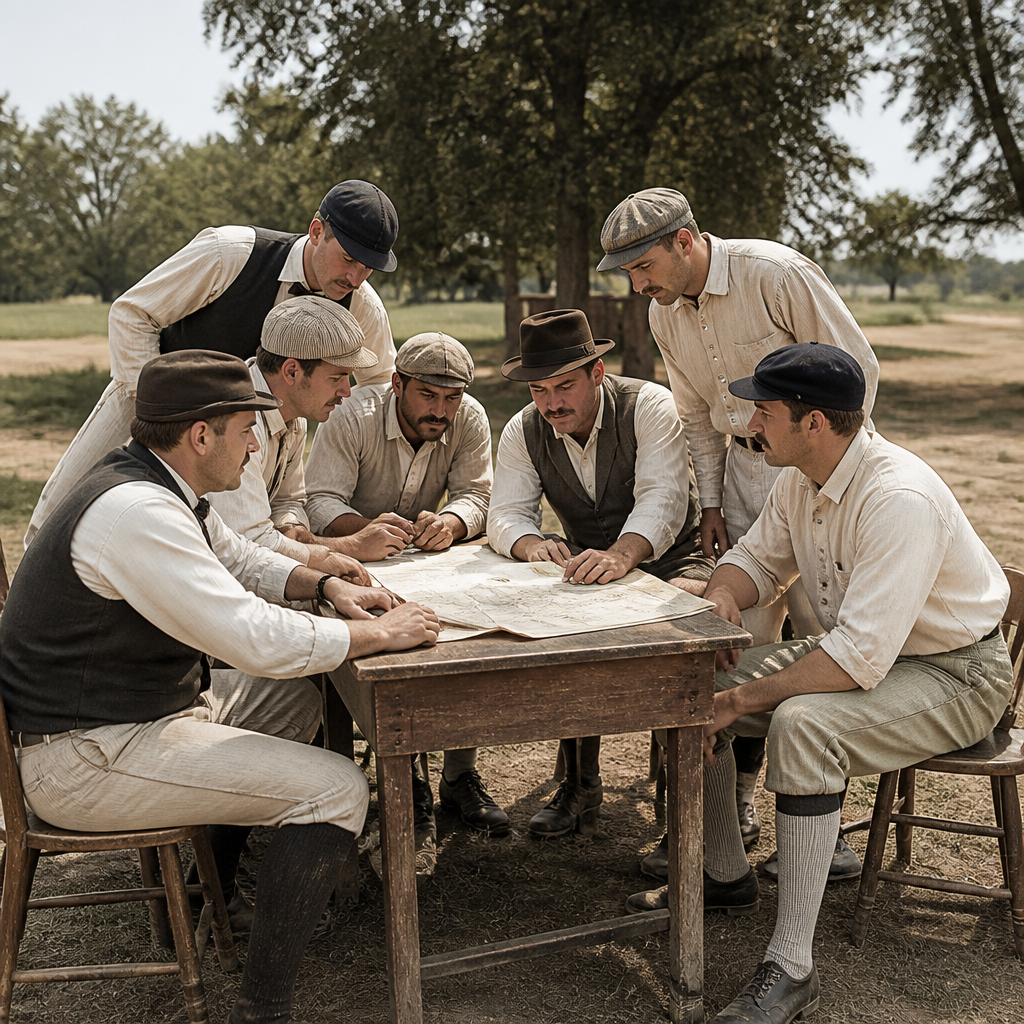
Before formal leagues standardized calendars, schedules, and standings, early baseball clubs arranged games through a loose web of personal letters, newspaper notices, club secretaries, and local custom. In the context of the early history of baseball, “amateur clubs” were member-run organizations composed largely of middle-class players who competed for honor rather than salary, while “early competition” refers to the period when clubs challenged one another independently, negotiated dates one game at a time, and built reputations without a central governing office. This system shaped how baseball spread across American cities from the 1840s through the Civil War and into the years just before league play became routine. Understanding how those games were scheduled explains not only who played whom, but also why some clubs became powerful, why rivalries mattered, and how baseball moved from a social pastime into an organized sport.
I have spent years working through nineteenth-century club records, sporting papers, and rulebooks, and one lesson appears again and again: scheduling was never a minor clerical task. It was the machinery behind competition. A club with an energetic secretary, reliable grounds, and strong social connections could secure attractive opponents and regular fixtures. A club without those assets often faded, regardless of playing talent. Long before league offices published season slates, the calendar emerged from negotiation. Clubs wrote challenge letters, debated home-and-home terms, looked at rail connections, checked for open grounds, and considered whether a match would attract respectable spectators. If weather ruined a date or another civic event claimed the field, the whole arrangement had to be rebuilt. That reality makes amateur clubs and early competition a crucial hub topic for anyone studying early baseball history.
The subject also matters because later league structures did not appear from nowhere. They solved practical problems that amateur clubs had been managing imperfectly for decades: missed appointments, disputed rules, uneven quality of opponents, gate uncertainty, and arguments over travel burdens. Looking closely at pre-league scheduling reveals the foundations of modern sports administration. It also shows how baseball’s earliest networks overlapped with urban growth, print culture, transportation, and associational life. Clubs belonged to more than sport; they were part of volunteer culture, civic identity, and masculine sociability. Every arranged match therefore carried logistical, social, and symbolic weight. For readers exploring amateur clubs and early competition, this article serves as the central guide to the people, methods, constraints, and consequences that determined when early baseball games actually happened.
The club secretary was the scheduler, diplomat, and operations manager
In the amateur era, the club secretary was usually the most important scheduling figure. Modern teams rely on league offices and software, but early clubs relied on one officer to maintain correspondence, issue and answer challenges, reserve grounds, and record results. Secretaries sent formal notes proposing dates, confirmed whether a club would travel or host, and clarified whether the game would be a one-off contest, a return match, or part of a continuing series. Surviving records from leading clubs such as the New York Knickerbockers, the Brooklyn Atlantics, and the Eckfords show that secretaries were expected to be prompt, literate, and tactful. A badly phrased refusal could insult another club; a delayed response could cost a prime Saturday date.
Because amateur clubs were social organizations as much as athletic ones, scheduling involved etiquette. Challenges were often issued in writing and read at club meetings. Acceptance was likewise formal. If Club A defeated Club B, custom often encouraged a return game, especially if the loser believed conditions had been unfavorable. Secretaries had to balance pride with practicality. A strong club wanted worthy opponents because easy victories carried little prestige, but it also did not want to damage its record against an elite rival. In practice, schedules reflected relationships. Clubs that shared social circles, newspaper coverage, and transportation links played one another more frequently. What looks random from a distance was often structured by reputation and trust.
The secretary’s work extended beyond arranging the date. He might coordinate use of a pavilion, secure scorers, communicate the expected start time, and notify papers such as the New York Clipper or local dailies. If a match was canceled because of rain or poor field conditions, he reopened negotiations. In that sense, scheduling before formal leagues was a continuous process, not a published list. It evolved week by week based on conditions, correspondence, and club politics.
How clubs challenged one another and agreed on terms
The basic mechanism for creating a game was the challenge. One club invited another to meet at a specified ground on a proposed day, usually with mention of whether the contest would follow the accepted rules of the time. By the 1850s and 1860s, the rules associated with the National Association of Base Ball Players created a common framework, but even then details mattered. Clubs sometimes negotiated innings, start times, eligibility of players, or whether refreshments and changing spaces would be available. The strongest clubs learned to protect their interests by fixing terms in advance.
Challenges were strategic. A club might target a famous opponent to gain notice in the sporting press. Another might choose a nearby but beatable rival to build confidence and public standing. Some challenges were open and public, especially when newspapers printed them; others were private, sent by letter to avoid embarrassment if declined. A declined challenge did not always mean cowardice. Clubs had work obligations, travel limits, religious objections to certain days, or previous commitments for their grounds. Since most players were amateurs with weekday jobs, Saturdays and holidays were premium scheduling windows. That made competition for dates intense.
Return matches were especially important in early competition. If a club lost narrowly, it often sought another game to restore standing. This helped create rivalries and quasi-series before leagues existed. In practice, these repeated meetings gave baseball a structure that resembled a season even without one. Newspaper readers followed not only isolated results but also continuing contests for local supremacy. That pattern is essential to understanding amateur clubs: scheduling was a form of narrative construction, and clubs used it to build public identity.
Grounds, travel, and calendars set hard limits on the schedule
Early baseball scheduling was constrained by physical realities more than modern fans might expect. First among them was the availability of grounds. Many clubs did not own enclosed parks. They used public commons, fairgrounds, parade fields, or rented open spaces shared with cricket clubs and civic events. If militia drills, holiday celebrations, or other sports occupied the site, baseball had to yield. Even clubs with regular grounds faced maintenance problems. Uneven surfaces, muddy baselines, and poor drainage could cancel a match with little notice.
Travel imposed another limit. Before professional league systems coordinated road swings, amateur clubs usually favored opponents reachable within a day. Railroads broadened those possibilities dramatically in the 1850s and 1860s, but cost and time still mattered. A club traveling from New York to Philadelphia or Newark had to consider fare, departure times, and whether players could return without missing work. Multi-club excursions happened, and they were often celebrated in the press, but they required far more planning than a local challenge. Geography therefore shaped competition. Dense corridors with rail access produced more frequent, better organized intercity play than isolated towns.
Seasonality mattered too. Baseball schedules were tied to weather, daylight, and the rhythms of work. Spring brought wet grounds; autumn brought shorter days. Because games began in the afternoon and could run long under older rules, start times were critical. Clubs also avoided conflicts with elections, major parades, and prominent holidays unless those days promised strong attendance. The resulting calendar was patchwork but not chaotic. Experienced clubs learned to work around predictable bottlenecks.
| Scheduling factor | Practical effect on early clubs | Example |
|---|---|---|
| Ground availability | Forced clubs to negotiate around shared fields and public events | A Saturday match moved because a fair occupied the grounds |
| Rail access | Expanded intercity competition but raised cost and timing issues | A Brooklyn club could arrange a Philadelphia trip only with same-day return service |
| Player employment | Limited games largely to Saturdays and holidays | Weekday fixtures failed because members worked in offices or shops |
| Weather and drainage | Created frequent postponements and rescheduling | Rain turned an open field unplayable for several days |
| Club reputation | Affected which challenges were accepted or ignored | A leading club preferred strong rivals that enhanced prestige |
Newspapers and sporting papers acted as the public scheduling board
Print culture gave early baseball scheduling visibility and accountability. Newspapers announced upcoming matches, reported final scores, and sometimes criticized clubs that failed to honor engagements. In effect, the sporting press became a semi-public bulletin board. The New York Clipper was particularly important in the 1850s and 1860s because it circulated baseball information across city lines, helping clubs monitor rivals and identify possible opponents. Local papers did similar work on a smaller scale, especially in Brooklyn, New York, Philadelphia, Boston, and Newark.
These publications did more than advertise games. They validated them. A reported match entered the historical record and contributed to a club’s standing. As a result, clubs sought coverage for significant fixtures and timed announcements to maximize interest. If a well-known club planned a holiday contest, advance notice could draw spectators and elevate the event from a private athletic meeting to a civic attraction. Newspapers also spread etiquette: they printed correspondence, summarized annual meetings, and reinforced accepted practices around challenges and return games.
From my work with period reports, one recurring pattern stands out: press coverage reduced uncertainty but did not eliminate it. A newspaper might print a scheduled match several days ahead, yet rain, transportation trouble, or a late disagreement could still derail it. That fluidity is why reading early schedules requires caution. A notice of an intended game is not the same as evidence the game was played. Historians of amateur clubs and early competition must cross-check announcements against box scores, match reports, and club minutes whenever possible.
Association rules created order before leagues controlled the season
Formal leagues were late solutions, but baseball was not lawless before them. The National Association of Base Ball Players, founded in 1857, helped regularize competition by promoting common rules, annual conventions, and recognized club relationships. It did not publish a league schedule in the modern sense, yet it reduced friction by giving clubs shared expectations. When two clubs arranged a match, they increasingly understood the dimensions of play, the number of innings, player eligibility norms, and accepted procedures for scoring and umpiring.
This distinction is important. Association governance standardized the framework, while clubs still scheduled independently. That hybrid system explains why baseball could expand quickly before leagues fully matured. Clubs did not need a central office to tell them whom to play; they needed enough institutional agreement to make those games meaningful. Conventions, published rules, and recognized officers supplied that agreement. In modern terms, the association set protocols, while the clubs created inventory.
The limitations were obvious. Strong clubs could avoid inconvenient opponents. Records were uneven because schedules were uneven. “Championship” claims could become contentious when clubs played different numbers of games against rivals of varying strength. Those weaknesses encouraged later reforms, but they also pushed clubs to seek more deliberate competition. The path from amateur clubs and early competition to formal league play ran directly through these scheduling disputes.
What pre-league scheduling tells us about baseball’s growth
Studying how early baseball clubs scheduled games reveals the sport’s transition from local recreation to organized competition. The clubs that mastered scheduling were often the ones that became durable institutions. They built predictable relationships, attracted stronger opponents, and cultivated public followings. Scheduling, in other words, was a growth engine. It connected club administration to competitive ambition, transportation infrastructure, and media attention.
It also reveals baseball’s social character. Early clubs were not merely teams waiting for professionalism to arrive. They were voluntary associations shaped by membership rules, civic pride, and codes of respectability. A scheduled match represented a negotiated social event as much as an athletic contest. That is why challenge letters, annual dinners, return games, and published notices all mattered. They tied baseball to the broader culture of nineteenth-century American cities.
For readers using this page as a hub within the early history of baseball, the key takeaway is simple: before leagues existed, clubs themselves built the season. They did so through correspondence, custom, newspapers, transportation planning, and shared rules. Those methods explain rivalries, travel patterns, club prestige, and the eventual demand for stronger governing structures. If you are exploring amateur clubs and early competition more deeply, follow that thread into club governance, early rule adoption, baseball grounds, sporting newspapers, and the rise of intercity rivalry. Those connected topics complete the picture and show how a game arranged by letter became a national sport.
Frequently Asked Questions
How did early baseball clubs actually arrange games before formal leagues existed?
Before leagues imposed official calendars, early baseball clubs scheduled games through a highly personal and decentralized process. Most arrangements were handled by club secretaries or other designated officers who exchanged letters with rival clubs, proposed dates, confirmed locations, and settled basic terms. These communications could take days or weeks, which meant scheduling required advance planning and a good deal of flexibility. In many cases, clubs also used newspaper notices to issue challenges, announce accepted matches, or inform the public when a game had been postponed or relocated.
Because there was no central office overseeing competition, everything depended on relationships, reputation, and local custom. Amateur clubs, which were typically member-run organizations made up largely of middle-class players, often relied on established social networks as much as athletic ambition. A club known for honoring commitments, responding promptly, and hosting opponents properly was more likely to secure future matches. In that sense, scheduling was not just administrative work; it was part of how clubs built standing within the early baseball world.
Who was responsible for setting dates and communicating with opposing clubs?
In most early clubs, the responsibility usually fell to the club secretary, though presidents, captains, or specially appointed match committees could also play an important role. The secretary was often the key point of contact because amateur clubs were organized in a formal, member-run style, with officers handling correspondence, records, and public notices. When one club wanted a game, its secretary might write directly to the secretary of another club, propose a date, and negotiate practical details such as the time of day, the ground to be used, and whether the match would be a return game.
This officer-based system reflected the broader structure of early competition. Since clubs challenged one another independently rather than operating inside a league framework, the people running club affairs had to be diplomats, planners, and public representatives all at once. Their work affected not only whether games happened, but also how a club was perceived by others. A well-organized secretary could help a club build a full and respectable schedule, while poor communication could lead to confusion, cancellations, or damaged relationships with rival teams.
What role did newspapers play in early baseball scheduling?
Newspapers were one of the most important public tools for arranging and confirming games in the era before formal leagues. Clubs used them to publish challenges, report accepted matches, announce upcoming contests, and notify readers of changes caused by weather or travel problems. Since newspapers reached both club officials and the wider local audience, they functioned as a kind of shared bulletin board for the baseball community. A printed notice could alert an opponent, inform spectators, and strengthen a club’s public identity all at once.
Just as importantly, newspaper coverage helped create accountability. Once a match was announced publicly, clubs had greater incentive to honor the arrangement, because backing out without good reason could harm their reputation. Reports after the game also mattered, since they preserved a record of who played, where, and with what result. In a period of early competition defined by independent challenges and negotiated dates, newspapers helped transform informal agreements into visible public events. They did not replace private correspondence, but they amplified it and gave the scheduling process a wider civic presence.
Were early baseball schedules fixed in advance, or were they more flexible?
Early baseball schedules were generally much more flexible than the structured calendars fans associate with later league play. Clubs often arranged games one at a time or in small clusters, depending on availability, travel limits, field access, and the willingness of another club to accept a challenge. Without a league office to create a season-long slate, there was no universal expectation that every club would play the same number of games or meet the same opponents on a balanced schedule. Each season could unfold differently based on local circumstances and club initiative.
That flexibility had advantages and disadvantages. On one hand, it allowed clubs to respond quickly to opportunities, build rivalries, and schedule according to their own preferences. On the other hand, it made consistency difficult. Rain, transportation issues, civic events, and misunderstandings in correspondence could easily disrupt plans. This is one reason formal leagues eventually became so important: they replaced an improvised system with standardized calendars, standings, and procedures. But in the earlier period, that looser arrangement was normal, and clubs treated scheduling as an ongoing negotiation rather than a fixed blueprint.
Why does the way early clubs scheduled games matter in baseball history?
It matters because the scheduling practices of early clubs reveal how baseball developed before it became a fully regulated organized sport. The game did not begin with league offices, master schedules, and official standings. Instead, it grew out of voluntary associations of amateur players who coordinated competition through letters, newspaper notices, and personal trust. Understanding that system helps explain the culture of early baseball: it was social as well as athletic, rooted in civic identity, club honor, and the ability of member-run organizations to sustain regular competition on their own.
This history also shows why formal leagues represented such a major shift. Once leagues emerged, they standardized not only who played whom, but also when games happened, how results were recorded, and how champions were recognized. Before that transition, early competition was shaped by negotiation and local custom, which gave clubs more independence but also created uncertainty. Studying how games were scheduled in this earlier era offers a clearer picture of how baseball moved from loosely connected amateur clubs to a more centralized and modern sporting system.