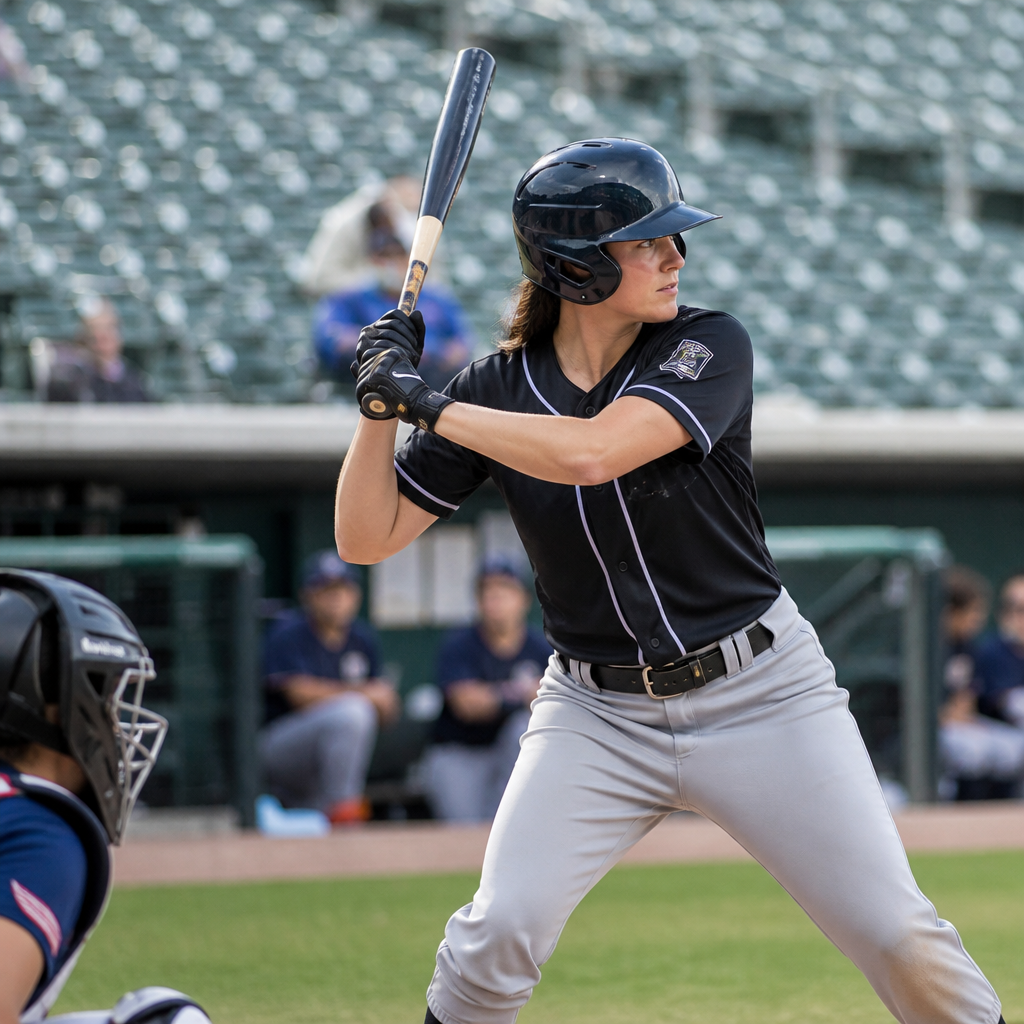
Women at bat are no longer a novelty in professional baseball; they are a visible, growing force challenging assumptions about who belongs on the field, in the dugout, and in the front office. In this hub article on women in baseball, “miscellaneous” does not mean scattered trivia. It means the wide range of roles, milestones, policies, and cultural shifts that shape how women enter, stay in, and influence professional baseball. The subject covers players, coaches, umpires, executives, scouts, broadcasters, strength specialists, and development staff. It also includes the systems around them: hiring pipelines, media narratives, labor conditions, youth participation, and international competition.
After years working around baseball operations and player development conversations, I have seen one pattern repeatedly: progress happens when opportunity becomes routine rather than symbolic. A single viral story can inspire people, but sustainable change comes from tryouts, coaching certifications, internship access, anti-harassment protocols, and leaders willing to judge performance instead of stereotypes. That is why this topic matters. Professional baseball remains one of the most tradition-bound sports businesses in the world. When barriers fall here, the effect reaches youth leagues, college programs, broadcasting booths, and boardrooms. The game gains more talent, better decision-making, and a broader fan connection.
Breaking down barriers in professional baseball also requires precision about terms. “Professional baseball” includes Major League Baseball, Minor League Baseball, independent leagues, overseas professional circuits, and affiliated development systems. “Women in baseball” does not only mean women’s baseball teams, though those matter deeply. It also means women working inside men’s leagues and mixed-gender environments. “Barriers” are not limited to formal exclusion. They include access to coaching, assumptions about physical capability, lack of facilities, uneven pay, limited scouting attention, and the quiet gatekeeping that keeps qualified candidates from being seen. Understanding those layers is essential to understanding where progress is real and where it is still fragile.
This article serves as a hub because readers usually arrive with practical questions. Have women played professional baseball? Which women have held major roles in MLB organizations? What paths exist today for players, coaches, and baseball staff? Where are the remaining obstacles? The answers are connected. History explains the present, current examples show what works, and policy reveals what still needs improvement. Taken together, they show that women at bat in professional baseball are not asking for exceptions. They are claiming space in a sport that is stronger when opportunity is based on skill, preparation, and resilience.
Historic Firsts That Changed the Game
Any serious discussion of women in professional baseball starts with history because the myth that women are “new” to the game is simply wrong. Women have been playing organized baseball since the nineteenth century, often in barnstorming clubs, industrial leagues, and regional circuits that received little formal recognition. The most widely known professional breakthrough came through the All-American Girls Professional Baseball League, founded in 1943. That league, created during World War II when male players were leaving for military service, was not a gimmick. It featured paid athletes, structured competition, travel demands, and sustained public interest. More than 600 women played in it across twelve seasons.
The league’s legacy matters because it proved two enduring points. First, there was a paying audience for women’s baseball when ownership invested in promotion and infrastructure. Second, women athletes could handle professional expectations: schedules, skill development, team dynamics, and public scrutiny. The league eventually folded in 1954, but its disappearance said more about business priorities and social norms than athletic potential. In later decades, women kept playing, often outside the media spotlight, through amateur national teams and international tournaments. Every generation had to rebuild visibility that should never have been lost.
Modern milestones expanded the conversation beyond players. Kim Ng became MLB’s first female general manager when the Miami Marlins hired her in 2020, after decades of highly respected work in the White Sox, Yankees, and Dodgers organizations and in the Commissioner’s Office. Alyssa Nakken became the first female on-field coach in Major League Baseball and, in 2022, the first woman to coach on the field in a regular-season MLB game with the San Francisco Giants. Rachel Balkovec became the first woman to manage an affiliated Minor League team when the New York Yankees named her manager of the Tampa Tarpons in 2022. These were not ceremonial appointments. They were operational jobs with performance consequences.
Women have also broken barriers as umpires, analysts, and development staff. Ria Cortesio became one of the first women to umpire in affiliated professional baseball. Bianca Smith joined the Boston Red Sox organization as a professional coach, bringing strength and conditioning expertise into a player-facing role. Each first matters because baseball is a copycat industry. Once one club demonstrates competence, other clubs become more willing to evaluate talent without defaulting to old assumptions.
Where Women Work in Professional Baseball Today
Women in professional baseball now contribute across nearly every department, and that breadth is one of the clearest signs of structural change. In baseball operations, women work as general managers, assistant general managers, analysts, coordinators, and player development directors. In performance departments, they serve as athletic trainers, physical therapists, dietitians, mental skills coordinators, and strength coaches. On the field, they are coaches, instructors, and managers. Off the field, they shape communications, sponsorship, legal compliance, ticketing, and community programming. The point is not symbolic diversity. It is that baseball organizations are complex businesses requiring multiple forms of expertise.
Front office work is often where change accelerates fastest because it relies heavily on decision quality, organization, and analytical skill. Clubs now depend on video systems, biomechanics data, TrackMan, Hawk-Eye, Rapsodo, force plates, and scouting databases. The staff who interpret that information can come from many educational and playing backgrounds. In practice, I have seen the best departments reward clarity of thought, pattern recognition, and communication more than any single demographic profile. That creates openings for women who can demonstrate command of player evaluation, roster construction, and development planning.
On-field roles can be more visibly contested because they challenge long-standing cultural expectations. Yet they are expanding for practical reasons. Good coaching is built on trust, instruction design, and adaptability. A hitting coach who can simplify swing decisions, a manager who can run game plans, or a base coach who can communicate reads under pressure provides value regardless of gender. Players ultimately respond to people who help them improve. When organizations back women with real authority rather than token titles, most clubhouse skepticism fades once competence becomes routine.
The pipeline is also becoming more formal. MLB’s developmental programs, university sports science programs, and independent baseball jobs create entry points that did not exist at scale twenty years ago. Progress remains uneven, but the scope of opportunity is wider than many fans realize.
The Biggest Barriers Still Standing
Despite visible progress, barriers in professional baseball remain substantial and often predictable. The first is access. Many women do not receive the same volume of early reps, coaching, and competitive exposure that boys receive in youth baseball. By the time scouting and recruiting intensify, the talent gap often reflects investment history rather than inherent ability. The second barrier is legitimacy bias: the assumption that women must over-prove themselves before being judged as standard hires. Men are often assessed on potential; women are assessed on certainty.
A third barrier is the network effect. Baseball hiring still runs heavily through recommendations, former teammates, internship funnels, and informal trust circles. Those channels can exclude qualified candidates who were never invited into traditional playing pipelines. A fourth barrier is workplace culture. Travel schedules, clubhouse logistics, inadequate facilities, and inconsistent harassment reporting structures can make professional environments harder to navigate than they should be. None of these issues are unsolvable, but they require intentional operations, not inspirational slogans.
| Barrier | How It Shows Up | What Effective Organizations Do |
|---|---|---|
| Limited early access | Fewer teams, coaching reps, and showcase chances | Create girls’ development academies, open tryouts, and scout broader events |
| Legitimacy bias | Women must repeatedly prove baseline competence | Use standardized hiring criteria and measurable job evaluations |
| Closed networks | Jobs circulate through narrow personal contacts | Post roles publicly and build internship-to-employment pathways |
| Workplace culture gaps | Poor facilities, isolation, or weak reporting systems | Set conduct policies, travel standards, and independent HR channels |
Another barrier is media framing. Coverage still too often treats women in baseball as inspirational exceptions instead of professionals doing demanding jobs. That seems harmless, but it distorts public understanding. If every story focuses on novelty, audiences never learn the strategic, technical, and leadership substance of the work. A coach becomes “the first woman coach” instead of a coach who improved swing decisions, defensive positioning, or player confidence. Better coverage changes expectations, and expectations influence hiring.
What Development Pathways Actually Work
The most effective pathway for women in professional baseball is not one single route; it is a layered system that combines playing opportunities, technical education, mentorship, and visible decision-makers willing to hire. For players, regular high-level competition matters most. National team programs, elite travel clubs, college club baseball, and international tournaments provide reps that cannot be replaced by occasional showcases. Baseball skill is highly specific. Hitting velocity, reading spin, controlling the running game, and managing defensive pace all improve through volume and quality of competition.
For coaches and baseball operations staff, credentials matter, but demonstrated baseball fluency matters more. A candidate who can use video, translate data into training plans, and communicate clearly with players has a real edge. I have watched organizations respond strongly to applicants who can connect biomechanics to practice design. For example, using bat speed metrics or vertical approach angle is useful only if the coach can turn numbers into drills and decisions. That practical bridge is where careers are built.
Mentorship also has outsized value. Because women are still underrepresented in many baseball departments, early-career staff often need sponsors who do more than offer advice. Effective sponsors recommend people for stretch assignments, put them in rooms where decisions happen, and attach their own credibility to a candidate. Programs that pair women with experienced executives, scouts, or coordinators can accelerate growth dramatically if the relationship includes actual opportunity.
International baseball offers another important route. Women’s baseball is stronger institutionally in some countries than many American fans realize. Japan, Canada, Australia, Mexico, and several Latin American and European baseball communities have contributed to the sport’s competitive depth. The Women’s Baseball World Cup, organized under the World Baseball Softball Confederation, gives players a high-level stage and offers coaches, scouts, and administrators a shared global benchmark. For many women, international play has been the clearest proof that elite baseball standards are achievable when the structure exists.
Why Representation Improves the Sport Itself
Representation in professional baseball is not only an equity issue. It improves baseball performance and business outcomes. Teams make better decisions when they widen the range of informed perspectives without lowering standards. In player development, different coaches notice different patterns. In the front office, broader life experience can sharpen communication, reduce blind spots, and challenge stale assumptions that survive simply because nobody questions them. Baseball is famous for tradition, but tradition is not automatically accuracy.
There is also a fan and market dimension. Girls who see women coaching, analyzing games on broadcasts, or running baseball departments are more likely to stay connected to the sport. That affects participation, ticket buyers, merchandise, local sponsorships, and long-term audience growth. MLB and clubs invest heavily in youth engagement because they know fandom is built early. Expanding who feels welcomed by baseball is not charity; it is sound market development.
Inside organizations, representation can improve retention. Talented employees stay longer when they can see a future for themselves. That matters in baseball because institutional knowledge is valuable. Organizations lose efficiency when promising staff leave because advancement appears blocked or workplace culture feels exclusionary. The clubs that treat inclusion as an operating standard, not a press release, are better positioned to recruit and keep top talent across departments.
The practical takeaway is simple. When women at bat in professional baseball receive real opportunities, the sport does not become less competitive. It becomes better at identifying competence, developing talent, and serving its audience.
The Road Ahead for Women in Baseball
The future of women in professional baseball will be shaped by repeatable systems, not isolated headlines. The next stage is straightforward: expand youth access, fund women’s baseball consistently, normalize women in mixed-gender baseball jobs, and measure advancement with the same discipline used for player development. Organizations should track hiring pools, promotions, retention, and workplace conditions. Federations and clubs should support girls’ baseball separately from softball rather than treating the two as interchangeable. They are different sports with different skill demands and cultural ecosystems.
Readers exploring this women in baseball hub should remember that progress is already visible, but it is not self-sustaining. History shows that gains can disappear when institutions stop investing. The strongest signal of real change is not one famous first. It is a second, third, and twentieth hire that no longer requires explanation. That is when a barrier has actually been broken.
Women at bat are reshaping professional baseball as players, coaches, executives, and experts whose work stands on merit. The game benefits when more talent can enter it, develop in it, and lead it. If you want to support that future, follow women’s baseball, share credible reporting, attend games, and push your local programs to create real baseball opportunities for girls and women. Baseball grows stronger when the door stays open.
Frequently Asked Questions
Why is women’s growing presence in professional baseball such an important milestone for the sport?
Women’s increased visibility in professional baseball matters because it challenges one of the sport’s oldest assumptions: that baseball at the professional level is naturally a male-only space. For decades, women contributed to the game in meaningful ways, but their roles were often minimized, treated as exceptions, or left out of mainstream baseball history altogether. As more women step into roles as players, coaches, executives, scouts, trainers, analysts, broadcasters, and umpires, the sport becomes more honest about who has always belonged in it and more open about who can shape its future.
This shift is important on both a symbolic and practical level. Symbolically, it expands the public image of baseball. Young girls, aspiring professionals, and longtime fans can now see women occupying positions of authority and expertise throughout the game. That representation matters because it changes expectations. Once women are seen making roster decisions, leading player development, running front-office operations, or taking the field in professional environments, it becomes harder to argue that they do not belong there.
Practically, baseball benefits from a broader talent pool. Organizations that welcome women into meaningful baseball roles gain access to more perspectives, more ideas, and more qualified people. Better scouting, stronger communication, more effective player development, and more innovative leadership can all result from opening the sport to talent that was previously overlooked. In that sense, women breaking barriers is not just a social milestone; it is a competitive advantage for the game itself.
What kinds of roles do women hold in professional baseball today?
Women now serve in a far wider range of professional baseball roles than many fans realize. While public attention often focuses on players, the modern baseball landscape includes women working across nearly every part of the sport’s structure. In front offices, women hold positions in baseball operations, player development, analytics, scouting, contract administration, and executive leadership. On the field, women have worked as coaches, instructors, strength and conditioning specialists, athletic trainers, and developmental staff members. They have also earned visibility as umpires, a role that places women directly in one of the game’s most scrutinized positions of authority.
There is also growing recognition of women’s influence in support and decision-making roles that shape the sport behind the scenes. Women contribute to performance science, medical care, communications, media strategy, community relations, and ownership-level decision processes. These are not secondary roles in a modern baseball organization. They are essential to how teams identify talent, build systems, manage culture, and compete over a long season.
What makes this moment especially significant is that women are no longer discussed only as pioneers in isolated cases. They are increasingly part of a larger pattern of participation. Some are entering through formal baseball development pipelines, others through data and analytics, and others through experience gained in softball, collegiate athletics, sports medicine, law, business, or media. The result is a more complete picture of baseball as an ecosystem, one in which women are influencing the sport from the dugout to the boardroom.
What barriers have women historically faced in professional baseball, and which ones still remain?
Historically, women in professional baseball have faced structural, cultural, and institutional barriers. One of the biggest obstacles was simple exclusion. For much of baseball’s history, women were denied equal access to the developmental pathways that lead to professional opportunities. If girls are not encouraged to stay in baseball, cannot find teams willing to roster them, or are pushed toward separate sports systems at a young age, the pipeline narrows long before professional opportunities even come into view. That early separation has had long-term effects on participation and advancement.
Cultural bias has been another major challenge. Women have often had to prove their legitimacy in ways men do not. Instead of being evaluated solely on skill, knowledge, or performance, they may face assumptions about physical ability, leadership, baseball intelligence, or authority. These doubts can appear in subtle ways, such as lower expectations, reduced mentorship, or limited advancement opportunities, and in more overt ways, such as harassment, dismissiveness, or public skepticism about whether they belong.
Many of those barriers still exist, even as conditions improve. Women in baseball may continue to encounter unequal access to networking, fewer role models in senior positions, and heightened scrutiny once they are hired. In some cases, the challenge is not just getting in the door but being allowed to stay, develop, and lead without being treated as a novelty. Progress is real, but sustained inclusion requires strong hiring practices, institutional accountability, safe workplace standards, and a commitment to evaluating baseball talent and leadership on merit rather than tradition.
How are policies, culture, and leadership helping women build lasting careers in baseball?
Real progress happens when opportunity is supported by structure. Policies matter because they turn inclusion from a slogan into a working standard. Hiring practices that cast a wider net, mentorship programs that connect emerging professionals with experienced leaders, anti-harassment protections, family-friendly workplace policies, and transparent advancement pathways all make it more realistic for women to enter and remain in baseball careers. Without these systems, individual breakthroughs can happen, but they are harder to sustain and replicate.
Culture matters just as much as policy. A baseball organization can technically open roles to women while still maintaining an environment that isolates them or treats them as symbolic hires. Lasting change requires clubhouses, front offices, and development systems where expertise is respected, communication is professional, and leadership is judged by results. When women are included in meaningful decision-making rather than token appearances, they gain the authority needed to grow, influence outcomes, and mentor others coming behind them.
Leadership is the final piece. Owners, league officials, general managers, field staff, and department heads set the tone for what inclusion looks like day to day. When leadership publicly supports women in baseball and backs that support with resources, accountability, and promotion opportunities, the message reaches every level of the organization. Over time, that changes not only who gets hired but who is seen as normal in baseball leadership. That normalization is critical, because the ultimate goal is not just barrier-breaking moments, but long-term careers in which women are fully integrated into the fabric of the sport.
What does the future look like for women in professional baseball?
The future for women in professional baseball looks broader, more visible, and more influential than at any point in the sport’s history, but it will depend on whether current momentum turns into durable opportunity. The most promising sign is that women are now part of the conversation in multiple baseball spheres at once. They are not entering only through one lane or one exceptional story. They are appearing in operations, coaching, officiating, performance, media, and executive leadership, which suggests that change is becoming systemic rather than symbolic.
Another reason for optimism is the expanding pipeline. As more girls stay connected to baseball, as development opportunities become more accessible, and as organizations recognize transferable expertise from related fields, the number of women prepared for baseball careers should continue to grow. Increased visibility also creates a multiplying effect. Every woman who succeeds in a baseball role becomes proof of concept for teams, inspiration for younger participants, and a potential mentor for the next generation.
At the same time, the future is not guaranteed by visibility alone. Baseball will need continued investment in access, development, hiring, retention, and workplace culture if it wants this progress to last. The real measure of success will be when women in baseball are no longer framed primarily as surprises, but as expected and valued contributors throughout the sport. That is the direction professional baseball is moving toward, and if the game continues to widen its definition of who belongs, it stands to become stronger, smarter, and more representative in the process.