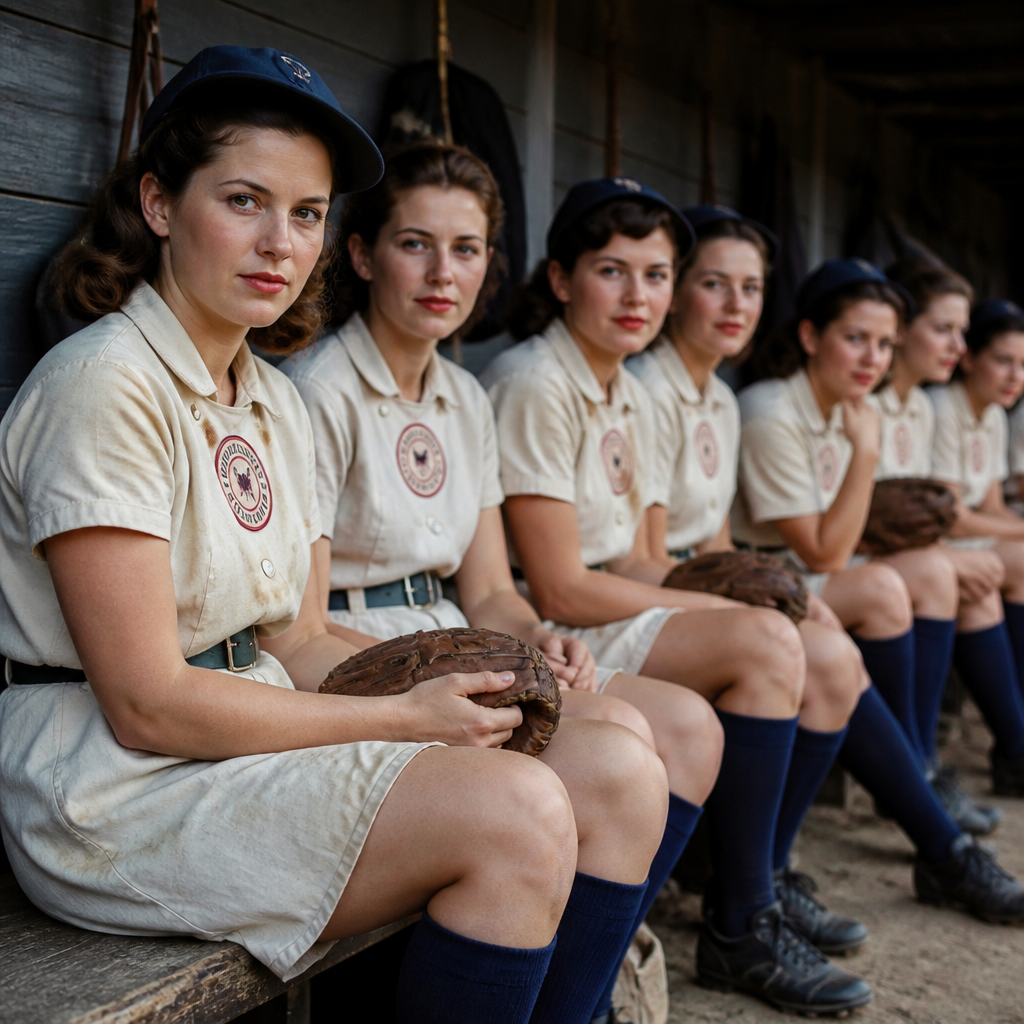
Curveball: The Story of Women in Baseball’s Early Days begins with a simple truth: women have been part of baseball far longer than most fans realize. Long before modern debates about representation, girls and women were playing ball in schoolyards, touring with novelty teams, appearing in newspaper box scores, and building local followings in cities that considered the game a civic ritual. In baseball history, the phrase early days usually refers to the period from the mid nineteenth century through the years before and during the Second World War, when the sport hardened into a male professional institution yet still left openings at the margins. Those margins matter because they reveal how women entered the game, how the public reacted, and how baseball culture absorbed their labor, talent, and popularity while often denying them equal status.
To understand women in baseball’s early days, it helps to define three overlapping categories. First were amateur players: school teams, factory clubs, town nines, and college women who played organized games for recreation, competition, or community pride. Second were barnstormers and independent professionals, who traveled, charged admission, and played men, women, or mixed competition depending on what sold tickets. Third were league players, especially those in wartime organizations that offered salaries, contracts, coaching, and standardized schedules. Each group faced different constraints, but all shared a common challenge: proving legitimacy in a sport that newspapers, owners, and even some fans treated as naturally masculine.
I have spent years studying old clippings, scorebooks, and league records, and one pattern appears again and again. Women were rarely absent from baseball; they were overlooked, reframed, or trivialized. Reporters often described uniforms before batting averages, and promoters sometimes sold games with language borrowed from vaudeville. Yet beneath the spectacle sat real skill. Players had to throw overhand, turn double plays on rough fields, manage train travel, and perform in front of skeptical crowds. Their stories matter because they widen baseball’s timeline, challenge myths about who belonged on the diamond, and connect directly to later milestones, from the All-American Girls Professional Baseball League to women coaching, umpiring, scouting, and playing the game today.
As a hub for the broader Women in Baseball topic, this article maps the miscellaneous ground that often slips between famous names and familiar milestones. It covers the earliest documented games, the rise of Bloomer Girls clubs, Black women and segregated baseball, the wartime professional boom, media treatment, and the long afterlife of these pioneers in museums, archives, and public memory. If you want one clear answer to the question, were women really playing baseball in the early days, the answer is yes: consistently, competitively, and in many different forms.
Before the Leagues: The First Recorded Women’s Teams and Games
The earliest widely cited women’s baseball game took place at Vassar College in 1866, though the players called it baseball at a time when rules still varied regionally. Colleges, seminaries, and girls’ schools became crucial entry points because physical education reform was expanding, and administrators increasingly accepted exercise for women so long as it was framed as healthful and orderly. These games were often intramural rather than public spectacles, but they created habits of practice, scorekeeping, and team identity. By the 1870s and 1880s, newspapers in New York, Massachusetts, Ohio, and Illinois were printing notices about women’s clubs, exhibition games, and local contests. That matters historically because documented repetition turns isolated anecdotes into a pattern.
Equipment and rules also shaped the early experience. Many women played in long skirts or modified bloomers, which restricted running and fielding. Gloves were inconsistent, fields were uneven, and coaching was improvised. Even so, the structure of baseball made participation possible. Unlike sports that required elite facilities, baseball could be organized on vacant lots or commons with a few bats and a shared understanding of outs, innings, and bases. As public schools and civic clubs multiplied, women gained more opportunities to learn the game’s rhythms. In town after town, they played for church festivals, charity days, school celebrations, and summer entertainment, building a grassroots baseball culture long before any national narrative acknowledged it.
Bloomer Girls Baseball and the Business of Touring
Bloomer Girls teams were the most visible expression of women in baseball before the 1940s. The term referred less to one league than to a style of commercial barnstorming built around women wearing bloomers instead of full skirts, a practical and mildly controversial uniform choice associated with reform dress. From the 1890s through the 1930s, Bloomer Girls clubs toured the United States, playing semipro men’s teams, local nines, and occasionally other women’s teams. Promoters understood exactly how to package them: novelty drew the first crowd, but competent baseball brought people back. Some rosters even included male ringers under women’s names or costumes, a reminder that commercial survival often depended on blurring authenticity and showmanship.
The best Bloomer Girls teams were not sideshows in the dismissive sense. They traveled hard, played frequently, and faced genuine competition. Pitchers needed command because exhibition schedules left little recovery time. Infielders had to adapt to unfamiliar parks almost daily. Clubs such as the Boston Bloomer Girls and teams associated with promoters like J. H. “Sandy” Sanders became known regionally, while standout players built reputations through repeated appearances rather than centralized statistics. The touring model also gave women a rare route to paid athletic work. Earnings were uneven and often modest, but for many players it was one of the few ways to turn baseball skill into income in an era when respectable employment options for women were tightly constrained.
Bloomer Girls baseball also reveals a key truth about early sports marketing: attention and respect were not the same thing. Crowds came partly out of curiosity, sometimes expecting comedy, but they still watched line drives, strikeouts, and close plays. In surviving reports, skeptical language often shifts after the first inning into grudging praise. That pattern shows how performance could break through prejudice, even if only temporarily. It also explains why Bloomer Girls teams remained important for decades. They filled ballparks in small industrial towns, entertained communities between minor league dates, and kept women visibly attached to baseball during years when organized male baseball was consolidating power elsewhere.
Black Women, Segregated Baseball, and Hidden Histories
Any honest account of women’s early baseball must address race. Black women played baseball from the nineteenth century onward, but segregation, weak archival preservation, and racist coverage kept many of their stories from entering mainstream history. In Black communities, baseball was central recreation and business, and women participated as players, organizers, and attractions within that ecosystem. Newspapers such as the Pittsburgh Courier and Chicago Defender occasionally covered women’s teams and exhibitions, though not with the consistency historians would want. The challenge today is not proving that Black women played; it is reconstructing details from scattered sources, family memory, and local records that were never treated as nationally important at the time.
Toni Stone is the best-known example, though her most famous achievements came slightly later, in the Negro Leagues of the 1950s. Her career matters to the early story because it did not emerge from nowhere. Stone developed in a baseball culture where girls had already been playing in neighborhoods, on informal teams, and in semipro settings for years. Mamie “Peanut” Johnson and Connie Morgan similarly demonstrated that women could handle professional-level competition against men, but their visibility also highlights how many predecessors remain unnamed. Segregation narrowed access to facilities, travel networks, stable pay, and publicity. As a result, Black women often had to be extraordinary just to leave a historical trace, while white counterparts were more likely to appear in civic records and local papers.
Wartime Change and the All-American Girls Professional Baseball League
The most famous chapter in women in baseball’s early days began in 1943 with the All-American Girls Professional Baseball League, founded as male major leaguers left for military service during World War II. Chicago Cubs owner Philip K. Wrigley backed the league to keep ballparks active and public interest high. It started as a hybrid game, using underhand pitching and some softball features before evolving closer to baseball with overhand pitching, smaller balls, and longer base paths. That evolution is essential. The league was not a novelty frozen in one format; it was a professional sports enterprise that adjusted rules, training, and presentation in pursuit of stronger baseball and broader credibility.
Players were scouted across the United States, Canada, and Latin America. They signed contracts, received salaries, lived with host families in some cities, and followed strict behavioral codes that reflected the era’s gender expectations. Charm school, lipstick, and skirted uniforms were not incidental details; they were management’s strategy for making athletic women marketable to a public thought to be uneasy about female competitiveness. Yet on the field, the demands were serious. Athletes played long schedules, endured bus travel, practiced fundamentals relentlessly, and developed elite defensive range and situational awareness. Stars such as Dottie Kamenshek, Sophie Kurys, and Connie Wisniewski were not symbolic placeholders. They were high-level players whose records stand up under close analysis.
| Era or model | Typical setting | Main obstacle | What it proved |
|---|---|---|---|
| School and town teams | Colleges, clubs, local fields | Limited publicity and resources | Women built sustained amateur baseball cultures |
| Bloomer Girls touring clubs | Barnstorming circuits and semipro parks | Novelty branding and unstable pay | Women could attract crowds and compete regularly |
| Wartime professional league | Midwestern and eastern league cities | Strict image control and postwar competition | Women could succeed in a structured pro system |
The league’s attendance peaked in the late 1940s, with some seasons drawing hundreds of thousands of fans across the circuit. It thrived in cities like Rockford, Racine, South Bend, and Grand Rapids, where civic identity, local press support, and affordable entertainment helped sustain crowds. After the war, however, men returned to organized baseball, television changed leisure habits, and ownership support weakened. The league folded in 1954. Its end did not prove women lacked an audience. It showed how fragile any sports institution becomes when capital, media, and development pathways flow elsewhere. Even so, the league left something durable: extensive records, living memory, and undeniable evidence that women had succeeded in professional baseball when given structure and visibility.
How Newspapers, Promoters, and Fans Shaped the Story
Media treatment was one of the biggest forces shaping public understanding of early women in baseball. Headlines often used diminutives, puns, or surprise framing, as if female athletic competence required an exclamation point. Reporters frequently measured players against femininity standards instead of baseball standards, discussing hair, posture, or marriage prospects beside stolen bases and earned run averages. Promoters leaned into this because newspapers rewarded novelty. Yet this same coverage preserved evidence. Box scores, travel notices, injury reports, and photographs now allow historians to rebuild schedules and careers. In archival work, even patronizing articles can be useful when read critically against scorebooks, league guides, and census data.
Fans were more complex than stereotypes suggest. Some attended to mock, some to support local teams, and many simply wanted a good game. When a pitcher dominated or an outfielder made a running catch, the crowd response described in local papers sounds familiar to any modern baseball reader: applause, argument, loyalty, and repeat attendance. That consistency matters because it grounds these women not in abstraction but in baseball’s everyday emotional life. They were part of the sport’s normal texture. The enduring lesson is that public resistance was real, but so was public appreciation. Once women had room to perform repeatedly, many communities accepted them as legitimate ballplayers.
Why These Early Stories Still Matter
The early history of women in baseball matters because it changes the baseline. Instead of asking whether women belong in baseball, the record shows that they always have. They played before modern development systems, before large sponsorships, and before broad legal protections in sport. They created opportunity through schools, touring teams, wartime leagues, and community networks. Their legacy survives in the National Baseball Hall of Fame’s recognition of the All-American Girls Professional Baseball League, in the work of SABR researchers, in digitized newspaper archives, and in new scholarship that treats women’s baseball as central rather than incidental. For readers exploring this sub-pillar hub, the main takeaway is simple: the miscellaneous corners of the story are not side notes; they are the connective tissue that explains how women kept baseball open, visible, and possible across generations.
If you want to go deeper, use this page as your starting point for the broader Women in Baseball topic. Follow the threads into profiles of individual pioneers, league histories, Black baseball archives, wartime sports culture, and the evolution of uniforms, rules, and media coverage. The curveball in this history is not that women appeared unexpectedly. It is that the sport repeatedly benefited from their presence while pretending they were exceptions. Read further, compare sources, and bring these players back into the center of baseball history where they belong.
Frequently Asked Questions
When did women first begin playing baseball in the United States?
Women began playing baseball in the United States much earlier than many people assume, with documented participation reaching back to the mid-nineteenth century. By the 1860s and 1870s, newspapers were already reporting on women’s ball clubs, school teams, and exhibition games. In some communities, young women played in organized settings connected to schools, colleges, or local social clubs, while in others they took the field in more informal community matchups. These appearances were not isolated curiosities. They reflected a broader reality that baseball had spread so widely through American life that women and girls were drawn into the game as naturally as men and boys.
What makes this early history especially important is that it challenges the idea that women in baseball are a recent development. The record shows that women were present during baseball’s formative period, even if historians and popular memory did not always give them equal attention. Box scores, promotional advertisements, local reporting, and photographs all point to women participating as players, performers, and public attractions. While their teams were not usually folded into the official structure of men’s professional baseball, their involvement was real, visible, and often well attended. In other words, women were not arriving late to baseball history. They were there near the beginning, helping shape the game’s public culture in its early days.
What kinds of women’s baseball teams existed in baseball’s early days?
In baseball’s early era, women’s teams took several different forms, and that variety is a big part of the story. Some clubs were genuinely local teams made up of women from a particular town, school, workplace, or community organization. These teams often played for recreation, civic pride, or public entertainment, much like countless amateur men’s clubs of the same period. Other teams were barnstorming or touring clubs that traveled from city to city, playing exhibition games before paying audiences. These touring teams sometimes blended legitimate competition with showmanship, which was common throughout nineteenth-century baseball and not unique to women’s teams.
There were also novelty teams that promoters marketed heavily, sometimes emphasizing uniforms, femininity, or spectacle in ways designed to attract curious crowds. That commercial framing has led some later readers to dismiss women’s baseball too quickly, but doing so misses the point. Early baseball as a whole often mixed sport and entertainment, and women’s teams operated within that same culture. Some clubs were highly skilled and serious about competition, even when newspapers covered them with a patronizing or theatrical tone. The key takeaway is that women’s baseball was not a single, uniform phenomenon. It included schoolgirl teams, town clubs, semiprofessional touring squads, and promotional attractions, all of which reveal how deeply women were woven into baseball’s broader early landscape.
Why have women’s contributions to early baseball been overlooked for so long?
Women’s contributions to early baseball have been overlooked for several interconnected reasons. First, much of traditional baseball history was written with a narrow focus on men’s professional leagues, especially the institutions that eventually became Major League Baseball. Because women’s teams were often amateur, regional, touring, or short-lived, they were less likely to be preserved in official league records that later historians relied upon. As a result, women’s baseball frequently survived only in scattered newspaper accounts, photographs, personal scrapbooks, and local archives rather than in the centralized record books that shape mainstream memory.
Second, cultural attitudes played a major role. Many reporters and promoters of the time treated women players as novelties, emphasizing appearance or entertainment value instead of athletic ability. That framing affected how the games were documented and how seriously later generations took those documents. Even when women drew large crowds or demonstrated real skill, their stories were often told in a condescending tone that made it easier for later historians to minimize them. Finally, broader assumptions about gender and sport caused people to overlook evidence that was always there. Once the public accepted the idea that baseball was inherently a male domain, women’s earlier presence became harder for people to see, even in plain historical records. Recovering this history requires looking beyond official league narratives and taking local reporting, community memory, and overlooked archival material seriously.
Were early women baseball players taken seriously as athletes, or were they mainly treated as entertainment?
The most accurate answer is that they were treated as both, often at the same time. Many early women baseball players were unquestionably athletes who trained, competed, traveled, and developed real on-field skill. They played positions, handled bats and gloves, ran the bases, and performed under public scrutiny in a baseball culture that valued action and results. In communities where local women’s teams represented schools or towns, players could earn genuine respect from spectators who appreciated the game itself. Newspaper box scores and game summaries show that some audiences followed these contests in a way that went beyond mere curiosity.
At the same time, women’s baseball was frequently packaged as entertainment, especially by promoters eager to sell tickets. Uniforms, publicity stunts, and exaggerated advertising were common, and the press often leaned into novelty rather than competition. But that does not mean the baseball was fake or insignificant. In the nineteenth and early twentieth centuries, plenty of men’s baseball also existed in a hybrid world of sport, spectacle, and promotion. Women’s teams simply faced an added layer of gendered scrutiny that made their athletic achievements easier to trivialize. So rather than choosing between athlete and entertainer, it is more historically accurate to say that early women players occupied a complicated space where they had to prove athletic legitimacy while operating inside a sports marketplace that often sold them as public attractions.
Why does the story of women in baseball’s early days matter today?
This story matters because it corrects a major misunderstanding about who belongs in baseball history. When people learn that women were playing the game in schoolyards, on local clubs, and with touring teams long before modern conversations about equality in sports, it changes the frame entirely. Women’s participation is no longer seen as an exception or a recent breakthrough. Instead, it becomes part of baseball’s foundation. That shift is important not only for historical accuracy but also for how fans, scholars, and young players imagine the sport’s identity.
The story also matters because it reveals how sports history is constructed. Whose games were preserved, whose statistics were valued, and whose stories were repeated all shaped the public memory of baseball. By restoring women to the early narrative, we gain a fuller, more honest understanding of the game as a social institution embedded in everyday American life. Baseball was a civic ritual in many cities and towns, and women were part of that ritual as participants, not just spectators. Recognizing that history enriches the sport rather than revising it artificially. It reminds us that baseball has always been larger, more diverse, and more complicated than the traditional headline version of its past.