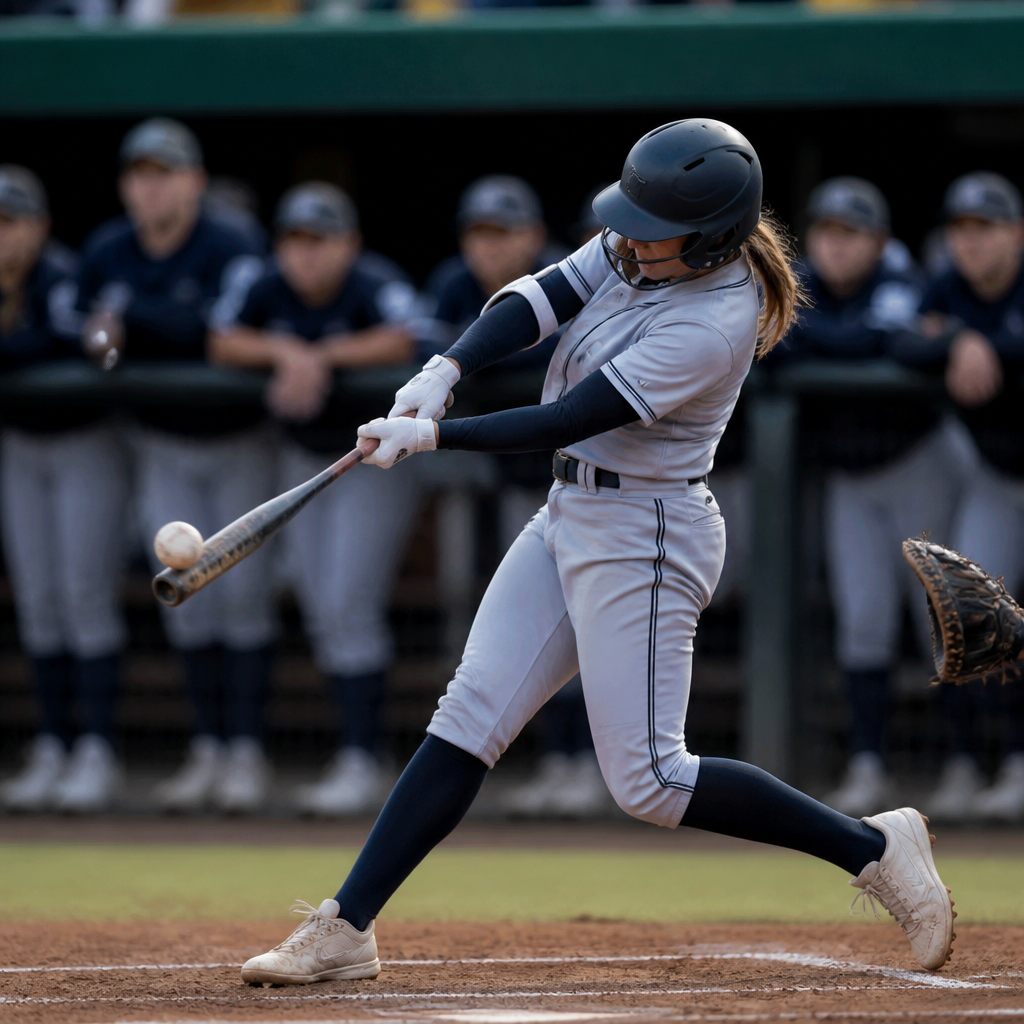
Baseball has long been framed as a men’s game, yet women have shaped, played, organized, promoted, and redefined it from the sport’s earliest decades to the present. “Swinging for the Fences: The Power of Women in Baseball” is not simply a celebration of participation; it is a look at how women in baseball built a lasting presence across playing, coaching, scouting, broadcasting, front office leadership, fandom, business, and culture. When I have worked on baseball history and sports content, one pattern appears consistently: once you look beyond the familiar headline stories, women are everywhere in the game’s infrastructure. They have not been a side note. They have been essential contributors whose impact reaches from sandlots and wartime leagues to Major League Baseball, international competition, youth development, and digital media.
Understanding women in baseball starts with a few key distinctions. Baseball differs from softball in rules, field dimensions, pitching mechanics, and historical development, even though the two sports are often discussed together. A women in baseball hub should therefore address baseball on its own terms while acknowledging overlap in athlete pipelines and public perception. It should also define “power” broadly. Power in baseball is not limited to home runs or velocity. It includes access, visibility, decision-making authority, institutional influence, technical skill, storytelling, and the ability to widen opportunity for the next generation. That broader definition matters because many of the most important advances for women in baseball have happened outside the batter’s box as well as inside it.
This topic matters because baseball remains one of the most tradition-bound sports in the world. Traditions can preserve heritage, but they can also preserve exclusion unless they are challenged by evidence, performance, and leadership. Women in baseball have repeatedly provided all three. From the All-American Girls Professional Baseball League keeping professional baseball in public view during World War II, to modern executives reshaping player development systems, to girls competing in youth and national tournaments, women continue to prove that baseball ability and baseball intelligence are not gendered traits. For readers exploring this subtopic, this hub page maps the full miscellaneous landscape: history, participation, barriers, careers, media visibility, global growth, and where the game is going next.
The historical foundation: women have always been part of baseball
Women have played baseball since the nineteenth century, even if official histories often minimized their role. Bloomer Girls teams toured the United States in the late 1800s and early 1900s, mixing entertainment with genuine baseball skill and drawing paying crowds. Barnstorming women’s clubs proved there was public interest in women playing hardball, not just novelty exhibitions. During World War II, the All-American Girls Professional Baseball League, founded in 1943, became the most recognized milestone. The league eventually included more than 600 players and operated through 1954. It was not a symbolic enterprise; it was a functioning professional circuit with scouting, travel, training, attendance goals, and player development.
The league’s legacy is larger than nostalgia. It preserved pathways for women athletes, demonstrated market demand, and provided a documented record of women excelling in baseball-specific skills. Its players handled wood bats, turned double plays, managed pressure, and adapted as rules evolved from softball-like features toward standard baseball play. The National Baseball Hall of Fame and Museum recognized that importance in 1988 with “Women in Baseball,” a permanent exhibit honoring the league and the broader history of women in the sport. That institutional recognition matters because it moved women’s baseball from anecdote to accepted baseball history.
Historical context also includes women who broke into baseball occupations long denied to them. Effa Manley, co-owner of the Newark Eagles, was inducted into the Hall of Fame in 2006 for her executive leadership in Negro Leagues baseball. Her work in team operations, marketing, civil rights advocacy, and player welfare stands as one of the clearest examples of women shaping baseball at ownership level. When people ask whether women belong in baseball leadership, baseball history already supplies the answer.
Where women influence baseball today
Modern women in baseball are visible across nearly every professional function. In recent years, Major League Baseball clubs have hired women as hitting coaches, minor league managers, coordinators, strength staff, analysts, medical professionals, and front office executives. Kim Ng’s appointment as general manager of the Miami Marlins in 2020 was especially important because it represented the first woman to hold that title in a major North American men’s professional sports league. Her background in MLB offices and club front offices showed that women had long possessed the experience; the barrier was opportunity, not competence.
Alyssa Nakken’s coaching role with the San Francisco Giants expanded public understanding of what on-field authority can look like. Rachel Balkovec’s rise to managing in the New York Yankees system pushed that progress further by placing a woman in direct player leadership within affiliated professional baseball. These milestones matter because baseball is deeply apprenticeship-driven. Once one woman occupies a role, the sport can no longer credibly treat that role as hypothetical for others. Hiring patterns, networking, and mentorship begin to shift.
Women also shape baseball through scouting, biomechanics, performance analysis, and player care. Organizations increasingly rely on TrackMan, Hawk-Eye, force plates, bat sensors, and high-speed video to evaluate performance. In those environments, credibility comes from the quality of analysis and communication. I have seen that technical fluency changes conversations quickly. When a coach or coordinator can explain bat path efficiency, vertical approach angle, spin axis, recovery protocols, or workload management with precision, resistance fades. Baseball remains relational, but the modern game is also data-literate, and that has opened additional entry points for highly trained women professionals.
| Area | What Women Contribute | Why It Matters |
|---|---|---|
| Playing | Competition at youth, collegiate, national team, and international levels | Expands the talent pool and normalizes girls in hardball environments |
| Coaching | Skill instruction, game planning, player development, culture building | Creates direct influence on performance and future hiring pipelines |
| Front Office | Roster construction, operations, scouting, contracts, analytics | Places women in decision-making roles that shape organizations |
| Media | Broadcasting, writing, podcasting, research, documentary storytelling | Changes public narratives about who understands baseball |
| Youth Development | Clinics, academies, nonprofit work, mentorship, advocacy | Builds sustainable access for the next generation |
Girls and women as players: pathways, progress, and persistent gaps
One of the most common questions in this topic is straightforward: do girls and women play baseball now? Yes, in growing numbers, but the pathway is still uneven. Girls often begin in coed youth leagues such as Little League Baseball. Many are competitive through early adolescence, but dropout rates rise when social pressure, lack of girls’ teams, limited access to baseball-specific coaching, and the assumption that softball is the only “appropriate” route narrow their options. That is not an ability problem. It is a structural pipeline problem.
International competition has helped counter that pattern. The Women’s Baseball World Cup, organized by the World Baseball Softball Confederation, has given elite players a global stage since 2004. Countries including Japan, Canada, the United States, Chinese Taipei, Venezuela, and others have fielded national teams, proving that women’s baseball has technical depth and international legitimacy. Japan’s success has been especially instructive. Its development system reflects consistent coaching, stronger baseball culture for girls, and a clearer competitive ladder. Where systems exist, performance follows.
In the United States, organizations such as Baseball For All have addressed the participation gap by creating tournaments, camps, and visibility for girls who want baseball rather than being diverted into another sport. Those initiatives matter because athletes need more than inspiration; they need reps, coaching, competition, and peers. A gifted twelve-year-old who never sees another girl on a baseball field may conclude she is the exception. A national tournament immediately changes that perception. Representation is practical, not abstract.
The college level remains a complicated frontier because varsity women’s baseball programs are rare, and scholarship structures overwhelmingly favor softball. Some women do play on men’s college club or amateur teams, and some independent leagues have offered opportunities, but the pathway is still fragmented. If baseball stakeholders want serious growth, they must invest in dedicated girls’ travel teams, high school recognition, umpire education, coach training, and more national team identification events. The sport does not need to wonder whether interest exists. It needs to build a coherent ladder.
Beyond the field: leadership, media, business, and community impact
The power of women in baseball becomes even clearer when viewed beyond playing roles. Baseball organizations are complex businesses that depend on operations, branding, community relations, sponsorship, legal work, event management, and content production. Women have become increasingly influential in each of these areas, helping teams modernize fan engagement and workplace culture. In practical terms, that means everything from designing inclusive youth outreach to reshaping how clubs communicate player development stories across social platforms, regional broadcasts, and local partnerships.
Broadcasting is one of the most visible examples. Women such as Jessica Mendoza, Melanie Newman, Jenny Cavnar, Suzyn Waldman, and others have broadened who the audience hears explaining baseball strategy and game rhythm. That matters because baseball commentary is still treated by some fans as a test of insider legitimacy. Every excellent call, interview, and analytical breakdown erodes the outdated assumption that authority in baseball media must sound male. Over time, public familiarity becomes acceptance, and acceptance becomes expectation.
Community impact is another major but often overlooked area. Many women in baseball lead nonprofit initiatives, youth camps, education programs, and inclusion efforts tied to local teams or independent organizations. These programs help families navigate cost barriers, equipment access, transportation issues, and the confidence gap that can affect first-generation players. I have seen grassroots development make the difference between a child trying baseball once and staying with it for years. The most successful programs combine instruction with belonging. They make players feel the game has a place for them.
Business leadership also changes outcomes. When women hold authority in budgeting, hiring, sponsorship, or strategy, inclusion efforts are more likely to outlast marketing cycles. Real progress in baseball rarely comes from slogans alone. It comes from line items, staffing plans, facility access, measurable goals, and accountability. That is why front office representation matters so much. Culture follows structure.
The barriers that still shape women’s baseball
Despite meaningful progress, several barriers continue to limit growth. The first is cultural bias. Many girls are still told directly or indirectly that baseball is unusual for them, even when they outperform peers. That affects confidence, retention, and access to high-level coaching. The second barrier is infrastructure. There are still too few girls’ baseball leagues, tournaments, and school-sanctioned pathways. Without regular competition, development stalls. The third barrier is visibility. Media coverage spikes around milestone hires or historic firsts, then fades, making women’s baseball appear rarer than it is.
Another challenge is credential inflation. Women in baseball are often expected to be exceptionally prepared just to be considered adequately qualified. Men in the sport can sometimes grow through opportunity; women are frequently required to prove they are already polished before receiving the same chance. That double standard exists in coaching, scouting, media, and operations. A fair reading of baseball labor markets shows that access to the first opportunity remains one of the biggest gates in the profession.
There are also practical constraints around funding and scheduling. Travel baseball is expensive. Specialized instruction, tournament fees, and equipment costs can push families out. If girls must travel farther than boys to find baseball-specific competition, attrition rises. Solving that problem requires local organizers, national governing bodies, MLB-supported initiatives, and private partners to align incentives. The good news is that the solutions are concrete: more events, more coaches, better data collection, and stronger promotional support.
Why this hub matters and what comes next
As a hub for miscellaneous women in baseball topics, this page should help readers see the full ecosystem rather than a single storyline. Women in baseball are not defined only by trailblazing firsts, though those firsts matter. They are defined by sustained participation, operational excellence, technical knowledge, and the ability to improve the sport at every level. History shows that women have always been present. The modern game shows that when institutions open doors, women perform in them. The remaining task is not proving belonging. It is scaling opportunity.
The clearest takeaway is simple: baseball is stronger when women are fully included as players, coaches, executives, officials, broadcasters, and builders of community programs. The sport gains talent, perspective, and credibility. Fans gain a more accurate picture of baseball’s past and present. Young athletes gain visible pathways that can shape their identity and ambition. If you are exploring women in baseball, use this hub as a starting point, then follow the connected articles on history, careers, leagues, development, and culture to understand the subject in full. The game’s future will be written by the people allowed to shape it, and women have already earned their place at that table.
Frequently Asked Questions
Why is women’s history in baseball so important to understanding the sport as a whole?
Women’s history is essential to baseball history because women have never been outside the game’s story; they have been part of it from the beginning. While baseball has often been marketed and remembered as a male domain, women played, organized teams, drew crowds, managed clubs, kept score, promoted leagues, wrote about the sport, and helped sustain baseball as both a cultural institution and a business. Looking closely at women’s roles reveals a more accurate and much richer account of how the game developed in communities, in professional settings, and in the public imagination.
Understanding women in baseball also changes how we define influence. Influence is not limited to who stood on a major league field as a player. It includes who created opportunities, who challenged exclusion, who built local and regional baseball cultures, and who expanded the sport’s visibility through journalism, broadcasting, ownership, marketing, and fan engagement. Women have shaped baseball’s language, traditions, audiences, and labor systems in ways that are often overlooked when the story is told too narrowly.
Just as importantly, women’s baseball history highlights broader themes in American life: access, representation, labor, media, race, and the politics of belonging. The barriers women faced in baseball were rarely just about athletic ability. They were tied to social expectations, institutional gatekeeping, and the idea that certain spaces were not meant for them. When women pushed into those spaces anyway, they did more than claim a place in the game; they redefined what participation and leadership in baseball could look like.
Have women actually played baseball at a high level, or were their roles mostly off the field?
Women have absolutely played baseball at a high level, and that fact is central to the sport’s history. Although public memory often reduces women’s baseball participation to novelty or wartime necessity, women have competed seriously for generations in organized leagues, barnstorming teams, amateur clubs, school programs, and international competition. Their presence on the field has never been symbolic alone. It has involved skill, strategy, training, endurance, and a sustained commitment to baseball as a competitive sport.
One of the best-known examples is the All-American Girls Professional Baseball League, which demonstrated that women could attract fans and perform in a structured professional environment. But the story goes well beyond that league. Women and girls played baseball in the nineteenth century, continued into the twentieth, and remain active today through college club programs, national teams, youth development pipelines, and international tournaments. Their playing history is broader and deeper than many fans realize.
At the same time, it is true that women’s off-field contributions have been equally significant. Coaching, scouting, player development, strength and conditioning, umpiring, analytics, and executive leadership are all areas where women have built meaningful careers and expanded the sport’s talent base. So the most accurate answer is not either-or. Women have contributed at a high level both on the field and beyond it, and the full power of women in baseball comes from recognizing that their impact spans every layer of the game.
What barriers have women faced in baseball, and how have they changed the game by overcoming them?
Women in baseball have faced a long list of barriers, including formal exclusion, limited access to training and competition, cultural stereotypes about athleticism and femininity, unequal media coverage, and the tendency to treat their accomplishments as exceptions rather than part of the sport’s normal history. In many cases, women were not simply overlooked; they were actively kept out of opportunities that men received by default, whether as players, coaches, scouts, executives, or commentators.
These barriers matter because they shaped the structure of the sport itself. If girls are not encouraged to play baseball young, if women are denied advancement pathways, and if decision-makers assume baseball expertise has a masculine face, then the talent pool narrows and the game loses valuable knowledge. Women who persisted in baseball had to prove themselves repeatedly in environments that often questioned their legitimacy before they even began. That kind of resistance can discourage participation, distort public perception, and delay institutional change for decades.
Yet the women who pushed through those barriers transformed baseball in important ways. They expanded who gets seen as an authority in the sport. They brought new perspectives to player evaluation, communication, leadership, and fan connection. They also forced baseball to confront its own habits of exclusion. Each breakthrough, whether in a dugout, front office, broadcast booth, or development role, made it harder for the sport to claim that tradition alone justified imbalance. In that sense, women did not merely overcome obstacles for themselves; they helped modernize baseball by making it more open, more self-aware, and ultimately more reflective of the communities that love it.
How are women influencing modern baseball beyond playing the game?
Women are influencing modern baseball in nearly every professional and cultural dimension. In front offices, women work in operations, finance, legal affairs, analytics, communications, marketing, and executive leadership. In baseball operations specifically, they contribute to scouting, player development, biomechanics, research, mental performance, and strategic planning. These are not peripheral roles. They shape roster construction, long-term organizational philosophy, and the daily systems that affect player growth and team success.
Broadcasting and media are another major area of impact. Women serve as play-by-play announcers, reporters, analysts, hosts, writers, editors, and digital creators, helping audiences understand the game and broadening the conversation around it. Their work influences not only what fans learn, but also how baseball is presented to the public. That matters because storytelling helps define legitimacy. When women are visible as knowledgeable voices, the sport becomes more inclusive in both perception and practice.
Women also have tremendous influence as business leaders, community builders, and fans. They drive ticket sales, merchandise trends, youth engagement, and online baseball culture. They organize local communities around teams, preserve baseball history, support charitable efforts, and help shape the emotional identity of fandom across generations. In many ways, women are central to baseball’s present and future because they are involved in the sport not just as participants, but as decision-makers, interpreters, investors of time and loyalty, and architects of baseball’s evolving culture.
What does the future of women in baseball look like?
The future of women in baseball looks promising, but it depends on sustained commitment rather than symbolic progress. There is growing visibility for women in coaching, scouting, development, media, and executive roles, and there is increasing recognition that girls who want to play baseball deserve real pathways to do so. That progress matters because representation can shift expectations. When young players and aspiring professionals see women working throughout the sport, it becomes easier to imagine baseball as a place where they belong.
Still, meaningful change requires infrastructure. That means better support for girls’ baseball programs, clearer pipelines from youth participation to advanced competition, stronger hiring and mentorship systems, and a continued willingness by organizations to judge talent without outdated assumptions. It also means preserving and teaching women’s baseball history so that each new generation understands it is not starting from scratch. Visibility alone can inspire, but opportunity is what creates lasting change.
Most likely, the future will be defined by integration across many roles rather than one single milestone. Some women will continue to break barriers in professional baseball operations. Others will build careers in international competition, sports science, media, or baseball entrepreneurship. Together, those developments point to a broader truth: the future of women in baseball is not about being temporarily included in someone else’s game. It is about continuing to shape baseball on their own terms, with authority, expertise, and a permanence that the sport can no longer ignore.