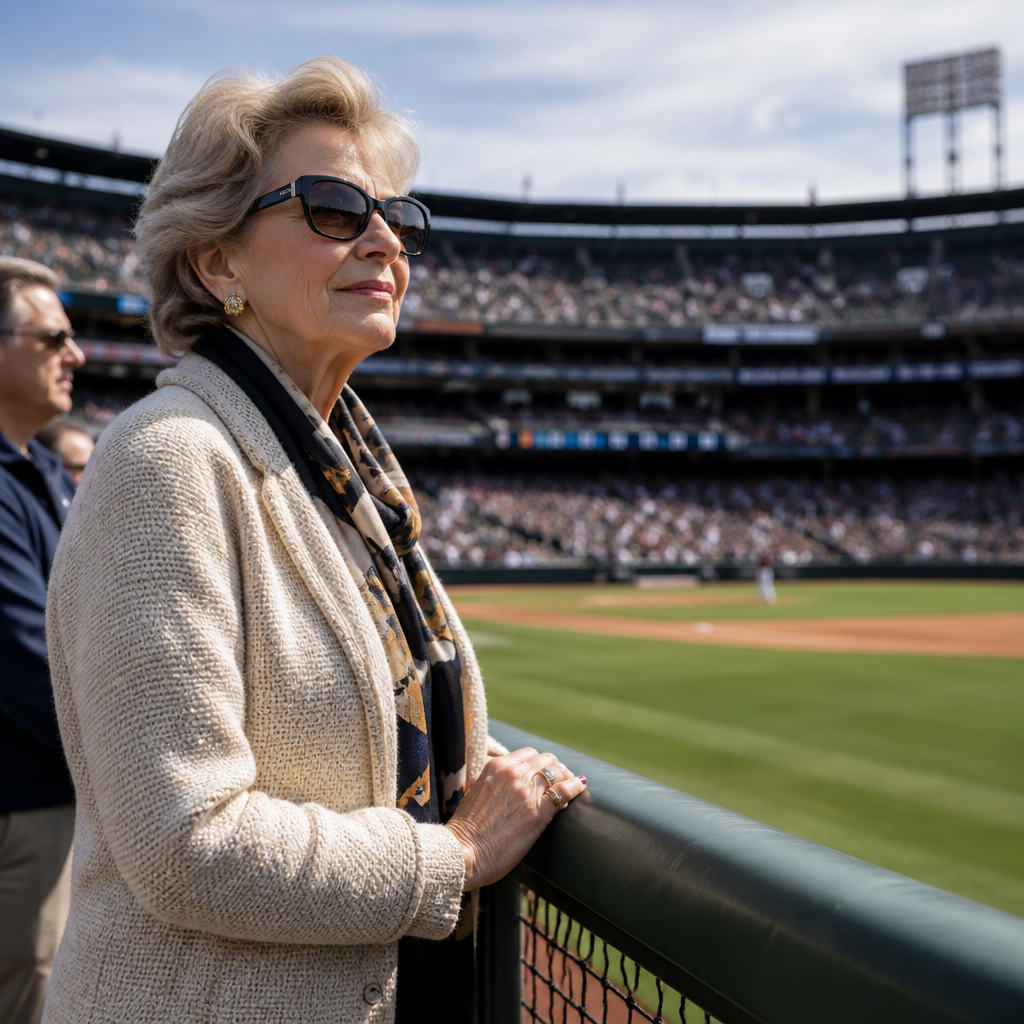
Baseball ownership is usually framed as a story of industrialists, heirs, and modern billionaire investors, yet women have shaped the business of the sport for more than a century. Female baseball team owners have operated major league clubs, financed Negro Leagues organizations, stabilized minor league franchises, and preserved community baseball during periods when men, money, or war left the game exposed. In practical terms, an owner controls the club’s capital, appoints executives, approves payroll, influences public relations, and often determines whether a team survives, relocates, or wins. When we talk about the women who owned the game, we are not discussing symbolic figureheads alone; we are discussing decision-makers who signed checks, hired general managers, negotiated leases, resisted rivals, and built fan loyalty.
This subject matters because ownership power shapes everything beneath it. A club’s scouting budget, ballpark maintenance, radio strategy, integration policy, and local civic role all depend on ownership choices. In my experience researching baseball business history, the record becomes clearer when you move beyond the familiar names and look at ledgers, lawsuits, league minutes, and newspaper archives. Women owners appear there repeatedly, often taking charge in moments of instability and then being written out of simplified retellings. Some inherited teams and proved highly capable operators. Others bought in directly, managed clubs as entrepreneurs, or used ownership to create opportunities denied elsewhere in organized baseball. Together they show that women were never merely spectators in baseball’s economic history; they were governors of it, and their influence stretched from front-office discipline to championship results.
What counts as a female baseball team owner?
A female baseball team owner is any woman who held controlling or significant equity in a baseball club and exercised real authority over operations, strategy, or finance. That definition includes sole owners, principal shareholders, co-owners, and estate holders who actively ran teams after a spouse’s death. It also includes women in Negro Leagues baseball and the minor leagues, where formal corporate structures sometimes differed from the American and National Leagues but ownership authority was no less real. The key test is control: Did she direct decisions, approve spending, appoint leadership, or determine the franchise’s future? If the answer is yes, she belongs in the history.
That standard matters because many women in baseball were dismissed as caretakers even when they made substantive decisions. Grace Comiskey of the Chicago White Sox, for example, was often publicly described in softened social terms after the death of Charles Comiskey, yet she remained deeply influential over club direction through the 1930s. Helene Hathaway Britton of the St. Louis Cardinals was treated by some contemporaries as an accidental owner, but she controlled the franchise, absorbed criticism, and navigated National League politics. Effa Manley, co-owner of the Newark Eagles, handled marketing, administration, and player advocacy with a sophistication that modern executives would recognize instantly. Ownership is not a ceremonial title; in baseball history, it has always meant responsibility under pressure.
Pioneers in the major leagues
Among early major league owners, Helene Hathaway Britton stands out as the first woman to own a National League club. She inherited the St. Louis Cardinals in 1911 after the death of her uncle, Stanley Robison, and controlled the team until selling it in 1917. The Cardinals were not yet the model franchise they would become under Branch Rickey and later dynasties. They struggled financially and competitively, and Britton operated in a baseball culture openly hostile to women in positions of authority. Newspaper coverage often focused on her clothing and manners rather than her decisions. Even so, she supervised a difficult franchise, managed debt pressures, and kept the club operating in a volatile era before modern revenue streams.
Grace Comiskey’s role with the Chicago White Sox was different but equally important. After Charles Comiskey died in 1931, she became principal owner and remained a central authority until the club passed to the next generation. The White Sox of that era were navigating the long aftermath of the 1919 Black Sox scandal, the Great Depression, and changing fan expectations. By every practical measure, Grace Comiskey was a baseball executive with ownership power. She had to preserve the franchise’s reputation, oversee spending discipline, and maintain continuity in one of the American League’s charter cities. Her example shows how women owners often worked inside established family baseball businesses while exercising genuine command.
Later decades brought a different ownership profile. Joan Whitney Payson became the first woman to buy a majority stake in a major league club without inheriting it when she helped create the New York Mets in 1962 and became the club’s first president. Payson had previously owned stock in the New York Giants and fought to bring National League baseball back to New York after the Giants and Dodgers left. Her ownership was visionary rather than custodial. She backed the expansion franchise financially, shaped its public identity, and understood the emotional bond New Yorkers wanted restored. The Mets’ early on-field struggles are famous, but the business achievement was substantial: she helped build a durable brand in the nation’s largest media market.
Women owners in Negro Leagues baseball
No discussion of female baseball team owners is complete without Effa Manley, the most accomplished woman executive in Negro Leagues history and the first woman inducted into the National Baseball Hall of Fame. Manley, along with her husband Abe, co-owned the Newark Eagles. Her work was expansive: she handled promotions, booked events, managed administrative details, sold the club to fans and local businesses, and advocated for players’ rights. She was especially skilled at understanding that baseball teams are civic institutions as much as competitive enterprises. She arranged community programs, ran publicity campaigns, and positioned the Eagles as a source of Black pride in Newark.
Manley’s ownership mattered on the field as well. The Eagles won the Negro League World Series in 1946, powered by stars including Larry Doby and Monte Irvin. Behind that success was a front office willing to scout talent, sustain operations, and market the club aggressively. Manley also fought to secure proper compensation when Negro Leagues stars were signed by major league organizations after integration began. Her insistence on fair payment was not a side issue; it was an owner defending the value of her enterprise in a market where Black baseball was often exploited. That combination of business rigor and social intelligence is why her record remains unmatched.
Other women were present in Negro Leagues ownership circles too, even if the archive is thinner. Because many Black baseball businesses operated under chronic capital constraints, family labor and shared control were common. Women often kept the books, coordinated travel, managed gate receipts, and made staffing decisions. Historians rightly center Manley because her documentation is strongest and her impact is clearest, but the broader lesson is that women were embedded in Black baseball entrepreneurship long before mainstream baseball institutions were willing to acknowledge them.
How women owners changed baseball operations
Female baseball team owners affected the sport in ways that went beyond headlines. First, many brought rigorous cost control during unstable periods. Before television contracts transformed revenue, clubs depended heavily on attendance, concessions, and local media. An owner who understood payroll timing, debt service, and stadium obligations could keep a club alive through recession or weak seasons. I have found that women owners were frequently underestimated precisely when they were making the hardest operational choices: cutting losses, refinancing obligations, replacing ineffective executives, or resisting panic trades that damaged long-term value.
Second, women owners often excelled at public trust. That was true for Payson with the Mets and for Manley with the Eagles, but it also appears in smaller markets where owners had to be visible and accessible. Baseball teams sell memory, identity, and routine. Owners who recognized this treated fans as stakeholders rather than customers alone. Community appearances, charity ties, women’s promotional days, school partnerships, and local press cultivation were not superficial tactics. They were revenue strategy tied directly to attendance and civic leverage, especially when teams sought municipal support for ballparks or transit improvements.
Third, some women owners advanced labor fairness and inclusion more directly than their male peers. Effa Manley’s advocacy is the clearest example, yet the larger point holds: outsiders to baseball’s old boys’ network sometimes saw inequities more clearly. That did not make every woman owner progressive on every issue, and history should not flatten differences. But several female owners showed a pragmatic willingness to evaluate personnel and opportunity based on organizational benefit rather than inherited custom. In baseball, that is often where meaningful reform begins.
| Owner | Team | Era | Why she matters |
|---|---|---|---|
| Helene Hathaway Britton | St. Louis Cardinals | 1911–1917 | First woman to own a National League club; kept a financially pressured franchise operating |
| Grace Comiskey | Chicago White Sox | 1931–mid 1930s influence and beyond | Exercised principal ownership authority during a fragile period for a historic American League team |
| Effa Manley | Newark Eagles | 1930s–1940s | Elite Negro Leagues executive; combined marketing, player advocacy, and championship team building |
| Joan Whitney Payson | New York Mets | 1962–1975 | First woman to purchase majority control of a major league club; restored National League baseball to New York |
Obstacles they faced and how they navigated them
The most obvious obstacle was sexism, and it was rarely subtle. Women owners were questioned in league meetings, trivialized by sportswriters, and judged by standards men did not face. A losing streak became evidence that a woman lacked baseball sense; the same slump under a man was treated as bad luck or a roster problem. This bias affected negotiations, media treatment, and even internal authority. To operate effectively, women owners had to master the substance of baseball business while also controlling the perception that they belonged there. Many did so by being more prepared than the men around them.
A second obstacle was structural exclusion. Baseball’s ownership and executive pipelines were built through banking, law, manufacturing, political patronage, and male social clubs. Women entering ownership often lacked easy access to those networks, even when they had capital. That made league alliances harder to build and information harder to gather. Owners survive by knowing franchise valuations, player contract norms, stadium politics, and commissioner priorities. Women often had to create informal networks, rely on trusted advisers selectively, and learn quickly under public scrutiny.
A third challenge was historical erasure. Because many women entered ownership through inheritance or widowhood, later commentators sometimes assumed they were passive placeholders. The archival record contradicts that simplification. In practice, widow succession often produced active operators who already understood club business from years inside the enterprise. Baseball families were business families. Women listened to negotiations, reviewed correspondence, met political contacts, and absorbed the economics of the club long before formal transfer of title. Recognizing that reality is essential if we want an accurate history rather than a sentimental one.
The modern legacy of women in baseball ownership
The legacy of early female baseball team owners can be seen in today’s wider, though still incomplete, female presence in ownership groups and club governance. Modern franchises are usually held through partnerships, investment vehicles, and family trusts rather than one dominant local proprietor. That structure can make women’s ownership shares less visible to casual fans, but visibility is not the same as influence. Women now appear as controlling owners, board members, and senior investment principals across professional sports, including baseball, and the path was made more credible by earlier owners who proved the model worked.
For readers exploring the broader Women in Baseball topic, this ownership history connects naturally to articles on women executives, scouts, pioneers, broadcasters, and Negro Leagues leadership. Ownership sits at the hub because it affects every other role. Owners decide whether an organization invests in player development, historical preservation, women’s programming, and diverse hiring. If you want to understand why certain clubs became innovators while others lagged, start with who held the power and what they valued. That is the central lesson of this miscellaneous hub: women were not peripheral to baseball’s business history. They financed, defended, and sometimes reinvented the game. Explore the related stories in this series, and you will see that women’s influence on baseball was not occasional. It was structural, sustained, and indispensable.
Frequently Asked Questions
Who were some of the most important female baseball team owners in history?
Several women played major ownership roles in baseball long before the modern sports business began recognizing female leadership as unusual or newsworthy. Helene Hathaway Britton is often cited as one of the earliest and most important examples in Major League Baseball. She inherited the St. Louis Cardinals in 1911 and became the first woman to own a National League club. At a time when baseball was still defining its modern business structure, Britton was not a ceremonial figure. She dealt with finances, faced pressure from male league power brokers, and oversaw the club during a difficult stretch before ultimately selling the team in 1917.
Another landmark figure was Effa Manley, co-owner of the Newark Eagles in the Negro Leagues. Manley was not only a baseball executive and business operator but also one of the most influential women in sports history. Alongside her husband Abe Manley, she helped build the Eagles into a leading franchise, promoted the team aggressively, advocated for players, and became the first woman inducted into the Baseball Hall of Fame. Her ownership matters not simply because she was a woman in a male-dominated space, but because she was deeply involved in roster decisions, marketing, finances, and broader questions of fairness in the game.
Joan Whitney Payson is another essential name. A founding owner of the New York Mets, she became the first woman to hold majority ownership of a major league team after the club’s formation. Her role demonstrated that female ownership was not limited to inherited stewardship. Payson was a committed baseball figure with strong opinions, substantial resources, and lasting influence over the creation and identity of a new National League franchise in New York.
Other women deserve attention as well, including Dorothy Rigney, who co-owned the Los Angeles Angels of the Pacific Coast League, and Marge Schott, whose tenure with the Cincinnati Reds was highly visible, if deeply controversial. In more recent years, female ownership has expanded through principal ownership, family succession, and investment groups. The larger historical point is that women have appeared across every level of baseball ownership: major leagues, Negro Leagues, and minor league baseball. Their stories show that women were not rare footnotes in the sport’s business history; they were active participants in preserving, financing, and shaping baseball institutions.
What does a baseball team owner actually do, and how did women influence those responsibilities?
A baseball team owner is not just a titleholder or public face. Ownership carries control over the club’s capital, strategic direction, executive appointments, and long-term survival. Owners approve major financial commitments, influence organizational priorities, and set the tone for everything from player payroll to stadium decisions to community outreach. In some eras, especially earlier in baseball history, owners were even more directly involved in daily decisions because front-office structures were smaller and less specialized than they are today.
Women who owned baseball teams often had to perform these responsibilities under more scrutiny than their male counterparts. That pressure frequently made their leadership more visible and, in some cases, more hands-on. Female owners were often tasked with stabilizing fragile finances, navigating league politics, and defending their legitimacy in rooms where many male executives assumed they did not belong. Rather than serving as passive stand-ins, many women became highly practical baseball business operators.
For example, ownership could involve selecting or dismissing executives, authorizing contracts, determining whether a club could absorb losses, and deciding whether to invest in player acquisition, promotions, or facilities. In the Negro Leagues and minor leagues, those responsibilities could be even more immediate. Owners often had to manage travel budgets, gate receipts, local sponsorships, and game-day promotions to keep a team alive. Women in those positions did the same hard, sometimes unglamorous labor that sustained baseball’s business model.
Female owners also influenced how teams related to their communities. Some emphasized accessibility, civic identity, and fan experience in ways that mattered deeply to a franchise’s survival. Others became advocates for players or used their platform to challenge inequities in the sport. The significance of women in ownership is not merely symbolic representation. It lies in the real operational authority they exercised and the fact that baseball, as a business, benefited from their decisions at moments when clubs and leagues needed steady leadership.
Were female baseball owners mainly heirs, or did they build influence in other ways?
Inheritance was certainly one path into ownership, but it is too simplistic to reduce female baseball owners to accidental caretakers. In many cases, women entered ownership through family succession because that was one of the few socially acceptable routes available to them in earlier generations. Legal norms, business customs, and gender expectations often blocked women from acquiring sports assets in the same direct way men could. Even so, receiving ownership through inheritance did not mean a woman lacked competence, authority, or impact once she held the position.
Helene Hathaway Britton is a strong example. She inherited the Cardinals from her uncle, but once she controlled the team, she had to manage the same financial and political realities any owner would face. Joan Whitney Payson came from wealth, but she was also a serious baseball investor whose role in the creation of the Mets reflected commitment and agency, not mere inheritance. Effa Manley is an especially important counterexample to the stereotype because her baseball authority grew through active business participation, promotional skill, and executive leadership within the Negro Leagues.
Women also built influence through partnership, entrepreneurship, and local sports business ownership. In the minor leagues, especially, female owners and co-owners often emerged through direct operational work. They managed teams as community enterprises, balancing civic pride with the realities of attendance, travel costs, and seasonal revenue. In those settings, baseball ownership was less about prestige and more about persistence.
The broader historical lesson is that ownership pathways were shaped by the constraints of each era. Some women inherited teams, some bought in through investment, some co-owned clubs with spouses or business partners, and some rose through the practical side of running baseball organizations. However they arrived, many proved themselves by doing what ownership requires: preserving capital, making difficult decisions, and keeping clubs functioning in a volatile sports economy. Their credibility came from performance, not from the route by which they entered the owner’s box.
Why are women team owners especially important in the history of Negro Leagues and minor league baseball?
Women were especially important in the Negro Leagues and minor league baseball because those sectors often operated with less financial protection, less institutional stability, and greater dependence on local leadership than Major League Baseball. In those environments, ownership was not just about prestige. It was about survival. Teams folded easily, travel was expensive, attendance fluctuated, and owners had to be creative, disciplined, and deeply engaged to keep organizations alive. Women who stepped into those spaces often did so at moments when baseball needed practical stewardship more than symbolism.
Effa Manley stands at the center of this history. With the Newark Eagles, she helped run one of the Negro Leagues’ most significant franchises. She promoted games, handled business matters, advocated for fair compensation, and worked to build a professional environment for players and fans. Her role illustrates how ownership in Black baseball could involve a blend of executive authority, activism, and community leadership. That combination makes her one of the most consequential owners in baseball history, regardless of gender.
In the minor leagues, women frequently helped preserve baseball as a local institution. Small-town and regional teams were vulnerable to economic downturns, wartime disruptions, and shifts in entertainment habits. Female owners and operators often acted as stabilizers, keeping franchises solvent, maintaining fan relationships, and protecting baseball’s place in community life. Because minor league ownership required close attention to ticket sales, promotions, local partnerships, and seasonal logistics, women who succeeded there demonstrated especially strong operational skill.
This matters historically because much of baseball’s culture was built outside the major leagues. The Negro Leagues nurtured elite talent, Black entrepreneurship, and fan traditions under segregation. Minor league teams connected baseball to cities and towns across the country. When women owned or sustained clubs in those circuits, they were shaping the sport from the ground up. Their contributions helped preserve opportunities for players, experiences for fans, and business continuity for leagues that might otherwise have disappeared.
How did female baseball team owners change the sport’s legacy and open doors for future leadership?
Female baseball team owners changed the sport’s legacy by proving that authority in baseball was never exclusively male, even if the official histories often told the story that way. Their presence challenged assumptions about who could control a franchise, make baseball decisions, and represent the business side of the game. In many cases, women did this without institutional support, favorable media coverage, or equal treatment from their peers. That makes their achievements not only notable but structurally important in the history of sports leadership.
They also expanded the meaning of ownership itself. Rather than fitting a single model, female owners appeared as heirs, founders, investors, co-owners, negotiators, promoters, and protectors of local baseball culture. Some led major league organizations, others financed Negro Leagues teams, and still others kept minor league baseball rooted in its communities. Together, they demonstrated that leadership in baseball could be strategic, financially disciplined, publicly engaged, and community-minded all at once.
Their legacy extends beyond the teams they controlled. Female owners created precedents. Every woman who now enters baseball ownership,