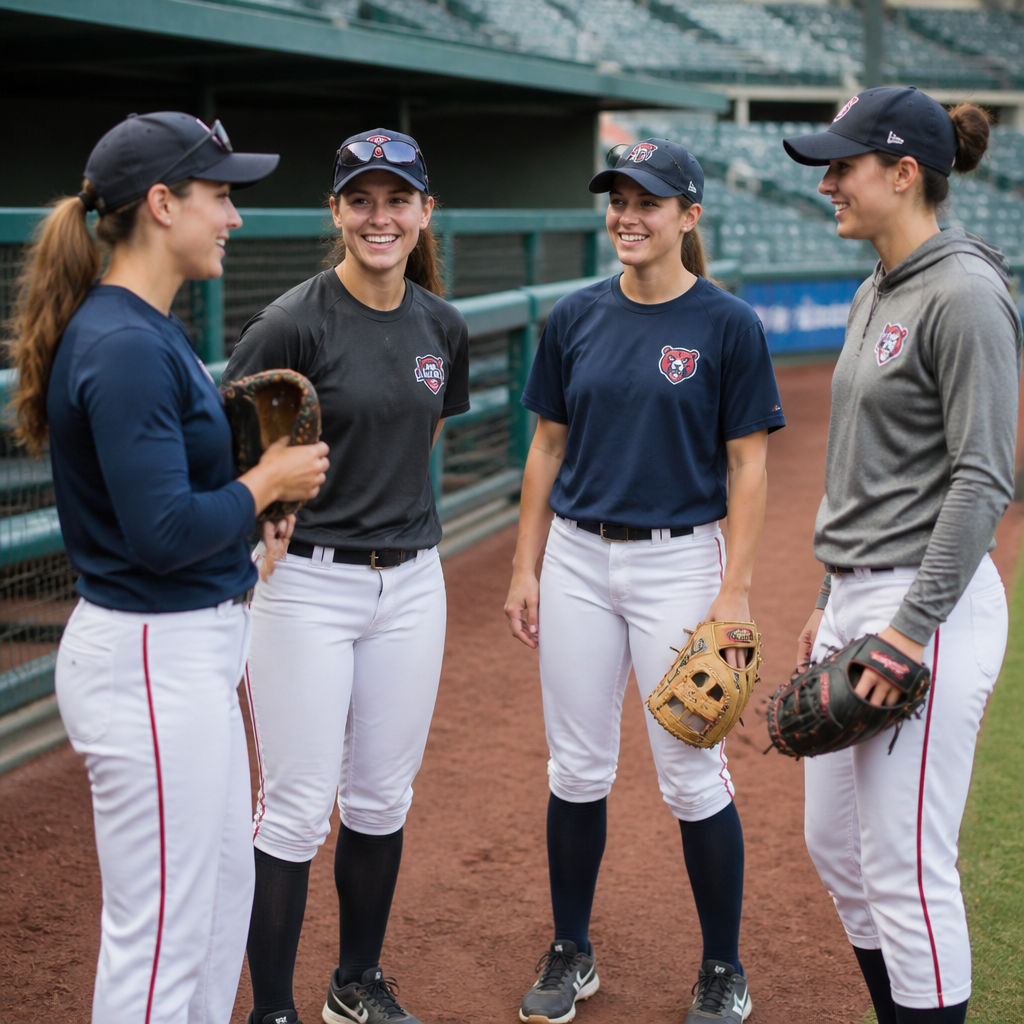
Trailblazers in cleats changed professional baseball long before most fans realized women had entered organized minor league systems. The first women in minor league baseball were not publicity stunts alone, nor were they simple footnotes between the All-American Girls Professional Baseball League and today’s women’s baseball movement. They were pioneering athletes, owners’ experiments, skillful competitors, and symbols in a sport that often defined itself as male by custom rather than by rule. In baseball history, “minor league baseball” refers to professional leagues affiliated with, or operating parallel to, Major League Baseball at levels below the majors. “Women in minor league baseball” includes women signed to contracts, women who appeared in exhibitions against minor league clubs, and women who broke into professional rosters where men had long held every on-field role. This matters because the story reveals how access in baseball has always depended on economics, promotion, local culture, and individual talent as much as formal policy. I have spent years working through old box scores, contract notes, and league records, and one pattern stands out: each woman who reached the minor league game had to answer the same question differently—could she help a club win, sell tickets, or force the sport to rethink its assumptions? The answer, in different eras, was yes.
Understanding these first women in minor league baseball also matters because this subject works as a hub for the broader “Women in Baseball” conversation. It connects barnstormers, Negro Leagues history, women’s professional leagues, postwar marketing tours, and modern developmental pathways. It also clarifies a common misconception. There was never one clean breakthrough moment after which women were simply accepted in the minors. Instead, there were scattered firsts: women pitchers signed to contracts, women in spring training with male clubs, women playing in formerly all-male leagues, and later women appearing in independent or partner leagues that functioned like modern minor league ecosystems. Some opportunities were sincere baseball decisions; others were driven by gate receipts. Both shaped the record. To cover “Miscellaneous” comprehensively, this article traces the early pioneers, the legal and cultural barriers they faced, the teams and leagues that opened narrow doors, and the legacy those appearances created for later players, coaches, umpires, and executives. The names matter, the dates matter, and the circumstances matter even more because they show exactly how women entered professional baseball spaces that had been designed to exclude them.
The earliest cracks in the professional wall
The earliest women associated with professional men’s baseball usually came through barnstorming, semipro competition, and independent club contracts rather than through a stable affiliated pipeline. In the late nineteenth and early twentieth centuries, women such as Lizzie Murphy proved there was public demand for female baseball talent by playing first base against men’s teams and appearing in high-profile exhibitions. Murphy’s 1922 appearance against the Boston Red Sox in a spring exhibition is often cited because it demonstrated a woman could be presented as a legitimate baseball player, not merely a novelty act. Yet these appearances did not immediately produce permanent roster spots in organized minor league baseball. Owners and league presidents worried about custom, clubhouse arrangements, public reaction, and the possibility that admitting one woman would expose the weakness of barriers based largely on gender convention.
That is why the women who later signed with minor league clubs are best understood as entering through openings created by unstable leagues, independent ownership, and promotional pressure. Baseball in the minors has always been financially fragile. Teams needed crowds, local press, and identity. A skilled or newsworthy player could provide all three. When women were signed, teams often justified the move in baseball terms and business terms at once. This dual motive can make modern readers skeptical, but it should not erase athletic merit. Many male players were signed because they could draw a crowd, fit a local narrative, or help an owner survive a season. Women simply had to bear the added burden of proving they belonged every single day. In practical terms, that meant scrutiny over velocity, control, fielding, travel, and endurance, plus the social pressure of playing in front of audiences primed to judge them as women first and ballplayers second.
Toni Stone and the broader professional context
Any hub article on women in baseball should place Toni Stone in context, even though her most famous work came in the Negro Leagues rather than affiliated minor league baseball. Stone played second base for the Indianapolis Clowns in 1953 and later for the Kansas City Monarchs, becoming one of the first women to play regular high-level professional baseball with men in the modern era. Her career matters here because it dismantles the false idea that women’s baseball history moves only through white women’s leagues or publicity tours. Stone played real professional ball under intense pressure, and her example broadened the meaning of who counted as a baseball pioneer. For readers exploring this subtopic further, Stone is a bridge to related articles on the Negro Leagues, race and gender in baseball, and women who built careers outside the structures historians once prioritized.
Stone’s story also clarifies an important distinction: professional baseball opportunities for women did not develop in one straight line. Some women entered all-women leagues. Some played on touring teams. Some appeared in men’s professional settings, including independent and minor league environments. The record is fragmented because the sport itself was fragmented. Leagues folded, classifications changed, independent clubs drifted in and out of organized baseball, and many local records were poorly preserved. Historians therefore rely on newspapers, contract reports, oral histories, and surviving league documents. When sources disagree, the best approach is to separate “first woman signed,” “first woman to appear,” “first woman in organized baseball,” and “first woman in a modern affiliated minor league role.” Those categories are different, and collapsing them creates confusion that has followed this topic for decades.
Mamie “Peanut” Johnson and the challenge to baseball myths
Mamie Johnson, another Negro Leagues standout, belongs in this hub because she disproved one of the oldest myths in baseball: that women lacked the competitive toughness or physical tools to pitch against men. Johnson, who played for the Indianapolis Clowns in the 1950s, reportedly won dozens of games with a fastball and a sharp curve. She was small in stature, which made her success even more threatening to conventional assumptions. Johnson’s exclusion from the All-American Girls Professional Baseball League because of race also reveals how women’s baseball history cannot be told honestly without discussing segregation. The “first women in minor league baseball” story is not only about gender barriers; it is about which women were permitted entry, which were denied, and which built careers in parallel institutions.
For modern readers, Johnson’s career is useful because it explains why minor league baseball opportunities for women remained rare even when obvious talent existed. Baseball decision-makers were not evaluating in a neutral environment. They were filtering athletes through gender norms, racial exclusion, and business fears. A club considering a female pitcher had to imagine media reaction, fan behavior, and the resistance of players and managers. Those pressures often mattered more than scouting reports. That is one reason the historical record contains more short-term contracts and publicity-heavy signings than long-term developmental commitments. Women could enter the conversation, but clubs seldom built systems to support them.
Alta Weiss to Ila Borders: notable breakthroughs by era
Several names define the chronology of women breaking into men’s professional baseball spaces, and each illustrates a different pathway. Alta Weiss pitched for semipro and touring teams in the early twentieth century and drew substantial crowds, showing that women could command attention as pitchers. Virne Beatrice “Jackie” Mitchell’s 1931 contract with the Chattanooga Lookouts, a Southern Association minor league team, became one of the most famous episodes in baseball lore after she struck out Babe Ruth and Lou Gehrig in an exhibition. Whether one views that moment as fully competitive or partially theatrical, Mitchell was genuinely signed by a minor league club, and the backlash was real. Commissioner Kenesaw Mountain Landis soon voided her contract, declaring baseball too strenuous for women. That decision did not just affect one player; it reinforced an institutional message that women’s exclusion would be defended from the top.
Decades later, the modern benchmark most frequently cited is Ila Borders. In 1997, Borders signed with the St. Paul Saints of the independent Northern League, later played for the Duluth-Superior Dukes, and continued in other professional settings. Independent league baseball is not identical to affiliated minor league baseball, but it operates within the same professional ecosystem: contracts, travel, roster competition, and public statistics. Borders was not a curiosity who made a ceremonial appearance. She pitched in real games, faced professional hitters, and handled the road-life pressures that defeat many male players as well. Her career matters because it provided a documented modern case that women could survive professional baseball’s daily demands under contemporary media scrutiny.
| Player | Era | Baseball setting | Why she matters |
|---|---|---|---|
| Lizzie Murphy | 1910s–1920s | Semipro and exhibition games against men | Showed women could draw crowds and compete visibly in high-level exhibitions |
| Jackie Mitchell | 1930s | Signed by Chattanooga Lookouts, Southern Association | Early woman under minor league contract; exposed formal resistance from baseball leadership |
| Toni Stone | 1950s | Negro Leagues professional baseball | Played regularly with men, widening the map of women’s professional baseball history |
| Mamie Johnson | 1950s | Negro Leagues professional baseball | Proved a woman pitcher could win against men despite race and gender barriers |
| Ila Borders | 1990s–2000s | Independent professional leagues | Established a modern, documented model for women in professional minor league environments |
Why organized baseball resisted women for so long
The exclusion of women from organized minor league baseball was never based on a single rulebook line alone. It was sustained by a mix of commissioner power, league culture, infrastructure, and liability concerns. Clubhouses were designed for men, travel policies assumed all-male rosters, and executives feared ridicule from rivals and newspapers. Once Landis moved against Jackie Mitchell’s contract, the signal was unmistakable: even if a local owner wanted to try something new, baseball’s central authority could intervene. Informal barriers became just as powerful as formal bans. Scouts stopped recommending women because organizations were unlikely to sign them. Managers worried a female player would disrupt team chemistry. Owners feared that one ugly incident with fans or players would create a scandal they could not control.
There was also a developmental problem. Boys advanced through Little League, school teams, Legion ball, colleges, and farm systems. Girls usually did not have equivalent baseball pathways, especially after softball was steered toward them as the socially acceptable alternative. By the time a woman sought a pro opportunity, she often had less access to elite baseball repetition than her male competitors, not because of lesser ability but because of fewer innings, fewer coaching resources, and fewer scouting looks. In my experience reviewing player development histories, opportunity gaps explain far more than talent gaps. Baseball rewards reps: facing velocity, turning double plays, reading spin, and recovering over a long schedule. When women were denied those reps from childhood, professional clubs could point to the resulting experience gap as if it were natural. It was structural.
How these pioneers reshaped the Women in Baseball conversation
The first women in minor league baseball altered more than roster choices. They changed the language around legitimacy. Before these breakthroughs, women in baseball were often discussed as entertainers, mascots, or temporary wartime substitutes. After players such as Mitchell, Stone, Johnson, and Borders, that framing became harder to sustain. Historians, journalists, and fans had specific examples of women signing contracts, recording outs, and surviving professional travel and competition. These cases also influenced later openings beyond playing. Once baseball accepted the idea that women could perform in one “baseball job,” it became easier—though still far from easy—to argue for women as coaches, instructors, front-office leaders, scouts, and umpires.
This hub topic is called “Miscellaneous,” but its value is connective rather than leftover. Readers interested in girls’ baseball, women in the Negro Leagues, the All-American Girls Professional Baseball League, women’s college baseball, or modern MLB development programs all arrive at the same question: where did the first cracks appear? Minor league history provides many of those cracks. It shows baseball changing at the edges first, through local owners, independent leagues, touring clubs, and athletes willing to endure isolation. If you are building out a Women in Baseball content cluster, this subject should link naturally to biographies, league histories, race and gender analysis, and present-day coverage of women in player development roles. The pioneers did not create equal access by themselves, but they made future exclusion harder to justify with a straight face.
The first women in minor league baseball were trailblazers because they entered a professional sport that had the power to dismiss them, profit from them, or learn from them, sometimes all at once. Their stories are strongest when told precisely. Lizzie Murphy demonstrated early competitive visibility. Jackie Mitchell exposed organized baseball’s fear of women under contract. Toni Stone and Mamie Johnson proved women could play serious professional ball with men outside the frameworks many histories once centered. Ila Borders delivered a modern example of sustained professional participation in minor league-style conditions. Together, they show that baseball’s barriers were constructed, enforced, and therefore capable of being challenged. The main benefit of studying this history is clarity: women were never absent from baseball because they lacked ability or interest; they were kept at the margins by systems that limited access, then mistook exclusion for proof. Use this hub as a starting point, then explore the linked stories across the wider Women in Baseball topic to see how each pioneer opened the next door.
Frequently Asked Questions
Who were the first women in minor league baseball, and why do they matter?
The first women in minor league baseball were a small but historically important group of players who broke into organized professional baseball at a time when the sport was widely treated as an exclusively male space. Among the most recognized names are Lizzie Murphy, who gained fame in exhibition settings against major and minor league talent, and more directly, women such as Eleanor Engle, Jackie Mitchell, and later players like Toni Stone who challenged baseball’s gender boundaries in professional systems connected to men’s leagues. In the minor league context, some women appeared through contracts, tryouts, promotional opportunities, and roster experiments that tested whether organized baseball would truly allow women to compete. Their importance goes far beyond novelty. They forced clubs, fans, and sportswriters to confront a basic question: if a woman could play well enough, on what grounds should she be excluded? That challenge exposed how much of baseball’s resistance to women was cultural rather than based on written rules or proven inability.
They matter because they helped create a bridge between eras of women’s baseball history. Many people know the story of the All-American Girls Professional Baseball League, but fewer understand that women also pushed into men’s professional baseball environments before, during, and after that league’s existence. These pioneers showed that women’s participation in baseball was not a separate, isolated chapter but part of the broader development of the sport itself. Their stories also reveal how opportunity in baseball often depended on ownership decisions, publicity needs, local market pressures, and public curiosity as much as on talent evaluation. Even when the system did not treat them fairly, their presence expanded the conversation about who belonged on a professional field.
Were these women serious baseball players, or were teams mostly using them as publicity stunts?
The honest answer is that both realities often existed at the same time. Some owners clearly signed or showcased women in order to attract attention, increase ticket sales, or generate newspaper coverage. Minor league baseball has long depended on creative promotion, and the arrival of a woman player could instantly turn an ordinary game into a headline. But reducing these women to publicity alone misses the deeper truth. Many of them were highly skilled athletes who had spent years developing real baseball ability, often in semi-pro, barnstorming, or women’s teams that received far less respect than male counterparts. They were not simply costumes in uniform. They were competitors stepping into a hostile environment where every pitch, swing, and fielding chance was judged more harshly because of gender.
That tension is exactly what makes their stories so compelling. Owners may have seen promotional value, but the women themselves still had to perform under extraordinary pressure. A male player having a bad day at the plate might be seen as slumping; a woman making one mistake could be treated as proof that all women did not belong in baseball. That double standard meant even “publicity signings” had serious consequences. When a woman handled herself well, she undermined long-standing assumptions. When management limited her chances, it exposed how carefully the sport protected its old boundaries. So while some signings were absolutely marketed for attention, the athletes involved were often far more legitimate than the promotional framing suggested.
How did women get opportunities in minor league baseball when the sport was so resistant to them?
Women usually reached minor league baseball through unusual openings rather than through a fair, standardized talent pipeline. In the early and mid-20th century, organized baseball did not build development systems with female players in mind, so aspiring women had to prove themselves in exhibitions, local leagues, barnstorming clubs, amateur competition, and independent baseball environments. Sometimes a strong performance against men in semi-pro settings led to attention from scouts, owners, or promoters. In other cases, a club owner looking for fresh publicity invited a tryout or offered a contract. These paths were inconsistent and often unstable, but they created rare cracks in an otherwise exclusionary structure.
It is also important to remember that baseball’s resistance was not always rooted in a straightforward written ban at the local level. Often, custom was the real barrier. Teams, leagues, and executives operated on assumptions about femininity, physicality, and public image. That meant women could occasionally enter the system when a particular owner was willing to challenge convention, capitalize on spectacle, or simply take a chance on talent. Once there, however, they still faced enormous obstacles: skepticism from teammates, dismissive media coverage, limited playing time, and social pressure to appear “ladylike” even while competing in a demanding sport. Their opportunities were fragile, but their presence demonstrated that the door to organized baseball was never as naturally closed as baseball culture claimed.
What challenges did the first women in minor league baseball face on and off the field?
On the field, the first women in minor league baseball dealt with the same demands every ballplayer faced: velocity, strategy, travel, fatigue, and performance pressure. But unlike their male peers, they also had to prove that they belonged at all. Every appearance became a referendum on women’s place in baseball. Pitchers might challenge them more aggressively, opponents could treat them as sideshows, and managers sometimes gave them limited opportunities that made success harder to sustain. A male prospect might be allowed time to adjust; a woman was often expected to validate her entire gender immediately. That imbalance made ordinary baseball struggles much more punishing.
Off the field, the challenges could be even greater. Media coverage often focused on appearance, novelty, and femininity rather than mechanics, discipline, or baseball intelligence. Reporters asked whether they looked “proper” in uniform instead of whether they could turn a double play or read a breaking ball. Women also navigated clubhouses, travel arrangements, and team culture in systems built entirely around men. In many cases, there were no practical accommodations because no one had planned for female players to be there. They also carried the social burden of crossing gender expectations in an era when women athletes were frequently told that serious competition was unbecoming. What makes these pioneers remarkable is not just that they appeared in professional baseball spaces, but that they persisted through ridicule, isolation, and structural unfairness while still competing as athletes first.
How did these early pioneers influence women’s baseball and the modern conversation about gender in the sport?
The first women in minor league baseball helped establish a historical foundation that still matters today. Their careers, even when brief or heavily constrained, served as proof that women had long sought places in organized baseball beyond segregated or specially created women’s leagues. That historical record challenges the mistaken idea that women’s presence in baseball is a recent development. Modern players, advocates, historians, and fans can point to these pioneers as evidence that women did not suddenly appear in baseball; they were always there, pushing against barriers that institutions kept reinforcing. That matters because visibility shapes legitimacy. When people know this history, it becomes harder to dismiss women in baseball as outsiders to the game’s tradition.
Their influence is also philosophical as much as practical. These early players exposed how baseball often enforced gender through habit, marketing, and gatekeeping rather than through objective standards. That insight remains relevant in contemporary debates about coaching, scouting, front office roles, development opportunities, and on-field participation. Today’s movement for girls and women in baseball is stronger when it recognizes that it is continuing unfinished work rather than starting from scratch. The pioneers of minor league baseball did not fully open the system, but they proved the system could be challenged. Their legacy lives in every effort to create more equitable access, more serious investment in girls’ baseball, and a broader understanding that talent and love of the game have never belonged to one gender alone.