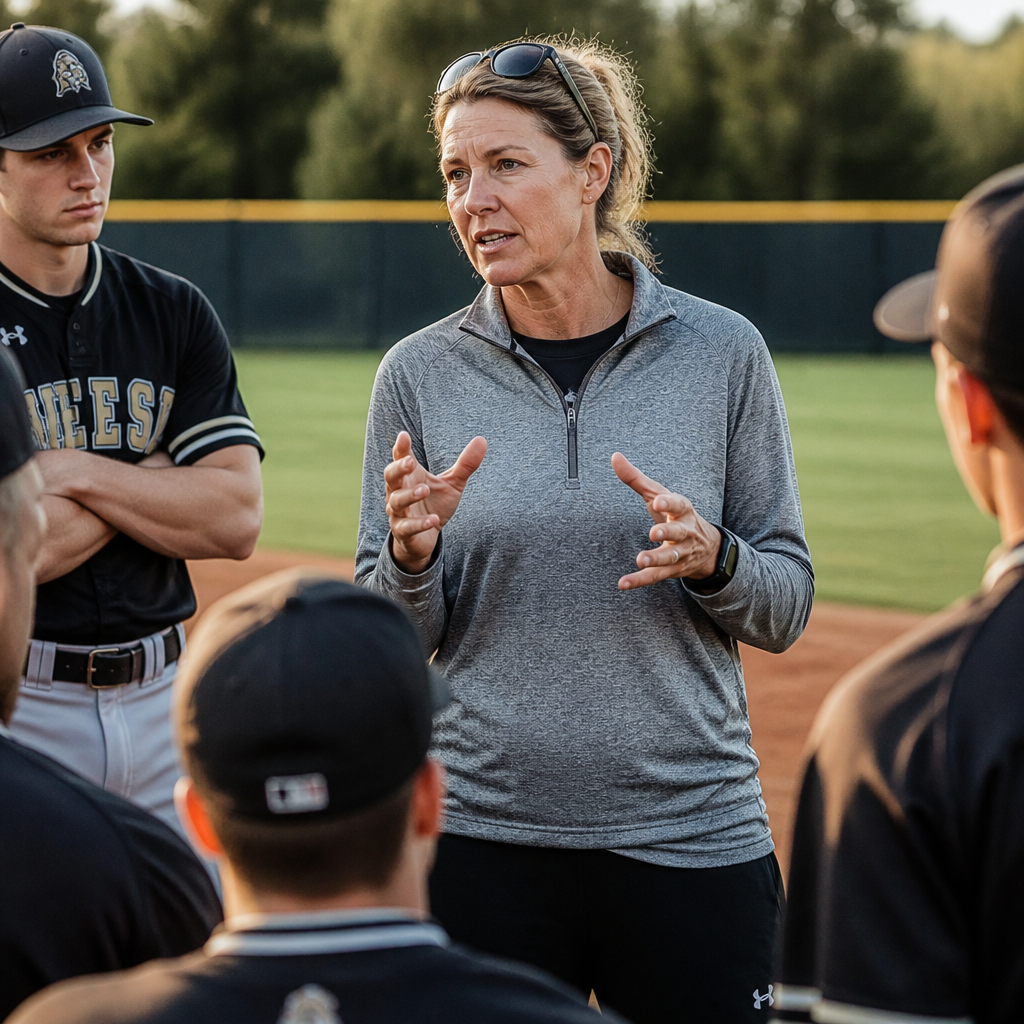
The pioneering women behind college baseball success stories changed the sport by opening administrative doors, shaping player development, expanding media visibility, and proving that baseball programs thrive when leadership reflects more than one traditional path. In college baseball, success is often credited to head coaches, star pitchers, recruiting classes, or new facilities, yet the full record shows that women have influenced winning programs for decades as athletic directors, assistant coaches, operations leaders, compliance experts, athletic trainers, strength specialists, analysts, broadcasters, and advocates. When people talk about women in baseball, they frequently focus on professional milestones or singular headlines. The college game deserves its own serious accounting because campuses have been laboratories for baseball innovation, talent pipelines, and culture change. I have worked around college athletics content long enough to see a repeated pattern: when a baseball program becomes stable, modern, and nationally relevant, there is usually a broader network of leadership behind it, and women are often central to that network. This hub article explains who those women are, how they influence college baseball, why their work matters to players and institutions, and which stories anchor the wider miscellaneous branch of women in baseball coverage.
Defining the topic clearly matters. “College baseball success stories” does not refer only to national championships. It includes sustained postseason appearances, improved graduation outcomes, stronger recruiting operations, better injury prevention, inclusive workplace culture, successful fundraising, smarter travel logistics, and credible storytelling that attracts fans and donors. “Pioneering women” includes both first movers and builders who normalized women’s presence in baseball spaces that were once treated as off-limits. Some were visible public leaders, while others transformed programs from offices, training rooms, video suites, or dugouts. Their impact is measurable because college baseball is highly structured: roster management follows NCAA rules, player health is tracked, budgets are audited, performance is analyzed, and public results are documented. That makes the women behind successful programs easier to identify than casual observers assume. This article serves as a hub for that broader conversation by mapping the major roles women have held in college baseball ecosystems and showing how those roles connect to program outcomes.
Why women matter to college baseball program success
Women matter to college baseball success because the modern program is not built by one voice. It runs on coordinated expertise across governance, sports medicine, recruiting communications, operations, analytics, academics, and public trust. Athletic departments that embrace broad talent pools usually make better hires because they do not restrict expertise to outdated assumptions about who belongs in a clubhouse or on a field. In practical terms, that means a woman athletic director may approve long-term facility investments, a woman trainer may reduce soft-tissue injury recurrence through better return-to-play protocols, a woman operations director may eliminate avoidable travel failures, and a woman communications leader may turn an overlooked regional program into a recognizable brand. These are not symbolic contributions. They affect wins, retention, morale, and revenue.
College baseball also depends on developmental continuity. Players are young, often living away from home for the first time, balancing class loads with year-round training. The best programs build support systems that are disciplined without being brittle. Women have often strengthened those systems because they entered baseball by mastering adjacent disciplines first, then applying them rigorously in baseball settings. That route tends to produce leaders with unusually high organizational literacy. In my experience reviewing successful athletic departments, the baseball teams that function smoothly usually benefit from this exact kind of cross-functional competence. Their advantage is not accidental. It is operational.
Trailblazers in coaching, administration, and baseball operations
Women have broken into college baseball through several gateways, and each has mattered. In coaching, figures such as Justine Siegal became important not only because of where they stood on the field, but because they challenged the assumption that baseball instruction is inherently male. Her work in clinics, player development, and direct engagement with teams helped normalize the idea that baseball knowledge should be judged by teaching quality and technical command, not gender. In administration, leaders like Jean Boyd at Arizona State influenced baseball indirectly but powerfully through fundraising, donor relations, and strategic support tied to elite athletics. In conference and campus leadership, women administrators have shaped hiring processes, Title IX interpretations, risk management standards, and budget decisions that determine whether baseball programs can scale sustainably.
Baseball operations is one of the clearest examples of underappreciated influence. Directors of operations handle travel manifests, meal coordination, equipment timing, practice calendars, compliance paperwork, recruiting visit logistics, and communication between staff members. If those details fail, competitive preparation suffers immediately. Women in these roles have often become institutional memory for baseball programs, especially when coaching staffs turn over. They know what a successful road weekend requires, which facility processes break down under pressure, and how to protect coaches from administrative noise so they can actually coach. Many fans never learn these names, but people inside programs do. They know who kept a season on track.
| Role | Primary contribution to baseball success | Typical measurable outcome |
|---|---|---|
| Athletic director | Budgeting, hiring, facilities, fundraising strategy | Program stability, coaching continuity, capital improvements |
| Assistant coach | Skill instruction, player development, game preparation | Improved performance, better fundamentals, stronger culture |
| Operations director | Travel, scheduling, logistics, daily coordination | Fewer disruptions, efficient routines, smoother road performance |
| Athletic trainer | Injury prevention, treatment, return-to-play management | Higher availability, lower reinjury risk, safer workloads |
| Communications leader | Brand storytelling, media relations, digital visibility | Fan growth, donor engagement, recruiting appeal |
Player development, sports medicine, and performance science
Some of the most important women in college baseball are the ones players trust every day. Athletic trainers, physical therapists, dietitians, mental performance professionals, and strength staff members shape whether athletes can actually convert talent into production over a full season. Baseball’s demands are repetitive and asymmetrical. Throwing workloads stress shoulders and elbows. Catchers accumulate impact and mobility restrictions. Hitters battle hand, wrist, and oblique issues. Travel, sleep disruption, and exam periods complicate recovery. Programs that manage these variables well gain a competitive edge. Women working in sports medicine and performance have been central to that edge because they often bring evidence-based systems rooted in protocols from the NCAA, National Athletic Trainers’ Association, American College of Sports Medicine, and contemporary workload management research.
When people discuss college baseball breakthroughs, they usually mention velocity gains, pitch design, or transfer portal recruiting. They should also ask harder questions: who built the recovery schedule, who monitored hydration and body mass trends during hot-weather series, who coordinated post-operative timelines, who communicated red flags to coaches before a small issue became a six-week absence? I have seen enough performance reporting to say confidently that programs with coherent medical communication outperform those with fragmented chains of authority. Women in these roles have frequently been the connective tissue between coaching ambition and athlete safety. That matters because availability is one of baseball’s most decisive statistics, even when it is not printed in the box score.
Scouting, analytics, recruiting, and strategic decision-making
Another underreported area is strategic baseball intelligence. Women have increasingly contributed to video analysis, scouting workflow, recruiting research, and data interpretation in college programs. The rise of TrackMan, Rapsodo, Blast Motion, Synergy, and advanced video platforms changed baseball staffing. Teams now need people who can capture information, validate it, communicate it clearly, and translate it into actions a player can use in a bullpen or batting cage. That work rewards precision and communication skill more than stereotype. Women who entered through analytics, player development support, or recruiting operations have helped staffs modernize decisions about swing changes, pitch usage, defensive positioning, and opponent preparation.
Recruiting is especially significant because college baseball scholarships are limited and roster construction is unforgiving. Strong programs identify athletes who fit both the competitive model and academic environment. Women involved in recruiting communications and evaluations often sharpen the process by improving organization, background research, visit planning, and family communication. A prospect may be sold by a coach’s vision, but families often commit because the entire program feels competent and trustworthy. That perception is built through dozens of interactions. Women have been pivotal in creating those touchpoints, particularly at programs trying to compete above their traditional weight class. Better process leads to better classes, and better classes lead to durable winning.
Media, visibility, and the stories that change opportunity
Visibility is not separate from success in college baseball; it is one of its engines. Sports information directors, digital content strategists, photographers, broadcasters, and athletic communications leaders have long influenced which programs break through public awareness. Women in these roles have amplified baseball stories that might otherwise remain local, and that exposure has material consequences. Better storytelling supports attendance, sponsorship interest, alumni pride, player recognition, and recruiting reach. A regional program that consistently publishes strong behind-the-scenes content, accurate statistical notes, and credible human-interest features becomes easier for national outlets to cover. Once that coverage arrives, the program’s ceiling changes.
This is also where the women in baseball conversation becomes cultural as well as operational. When women tell baseball stories, appear on broadcasts, or lead communications strategy, they expand who feels invited into the sport. That audience growth matters on campus. Recruits notice packed parks, polished social feeds, and national mentions. Donors respond to momentum. Administrators are more willing to fund winners that look relevant beyond the scoreboard. The strongest baseball brands in college sports understand this cycle. On many campuses, women have quietly built it by turning baseball from a seasonal result into a year-round narrative.
Barriers, tradeoffs, and what still needs to change
Progress has been real, but barriers remain. Women in college baseball still face credibility tests that men in equivalent roles often do not. They may be asked to prove baseball knowledge repeatedly, navigate isolation on all-male staffs, or accept being celebrated as novelties rather than evaluated as professionals. Advancement can also be uneven. Many women enter through support roles but encounter narrower paths into on-field coaching or senior baseball decision-making. That is not only unfair; it is inefficient. Programs lose talent when they fail to build clear pipelines from coordinator, analyst, trainer, or operations positions into higher leadership opportunities.
There are also practical tradeoffs. Baseball schedules are demanding, and college athletics often asks staff to absorb travel, weekend work, and constant digital responsiveness. Institutions that want to retain talented women must address workload design, mentorship, pay equity, and professional development. The best athletic departments do not solve representation through one headline hire. They create repeatable systems: inclusive search processes, transparent promotion criteria, continuing education budgets, and visible support from athletic directors and head coaches. Standards matter. So does daily behavior. A program cannot claim modern values while operating with outdated assumptions in meeting rooms, dugouts, or hiring committees.
How this hub connects the miscellaneous women in baseball landscape
As a hub article within the broader women in baseball topic, this page matters because “miscellaneous” should not mean minor. It should mean cross-cutting, connective, and essential to understanding the full ecosystem. Some stories fit neatly into categories like coaching or broadcasting. Others do not. A university president who backed baseball expansion, a compliance officer who protected eligibility during a postseason run, a donor-relations executive who helped fund a player development lab, or a campus medical leader who modernized concussion and heat protocols may not fit standard baseball coverage, yet each can shape the trajectory of a program. This hub gives those stories a home.
Use this page as a starting point for deeper exploration across women in baseball coverage. Look for linked profiles of female college baseball coaches, women in athletic administration, women in baseball operations, women in player health and performance, and women in baseball media and storytelling. Together, those articles show a simple truth: college baseball success is rarely the product of one dugout voice. It is built by networks of expertise, and pioneering women are embedded throughout those networks. If you follow college baseball seriously, start noticing the architects beyond the lineup card, and read further into the people whose work keeps winning programs moving.
Frequently Asked Questions
Who are the pioneering women behind college baseball success stories, and why do they matter?
The pioneering women behind college baseball success stories include athletic directors, assistant coaches, operations leaders, academic advisers, sports information directors, compliance administrators, strength and conditioning professionals, athletic trainers, and media professionals who helped programs grow from the inside out. While public attention often centers on head coaches, elite recruits, or postseason runs, many winning college baseball environments were built with the leadership, planning, and institutional support of women whose work shaped culture, accountability, and long-term stability. They mattered because they helped create the systems that allow players and coaches to succeed consistently rather than temporarily.
In practical terms, these women expanded access, improved organization, strengthened player development structures, and helped programs adapt to modern expectations in recruiting, academics, branding, and athlete care. They also changed assumptions about who belongs in baseball leadership. By succeeding in roles that had often been overlooked or undervalued, they demonstrated that championship-level baseball depends on more than dugout decision-making. Their influence can be seen in stronger athletic departments, better communication between staff and athletes, more visible programs, and broader ideas about leadership in a sport that has historically been narrow in how it recognized authority.
How have women influenced college baseball programs beyond coaching on the field?
Women have influenced college baseball in many ways that are essential to winning, even when those contributions are not immediately visible during a game. In administration, women have helped set budgets, approve staffing models, guide facility investments, and support long-term strategic planning that allows baseball programs to compete. In player support roles, they have shaped academic success plans, mental and physical wellness systems, travel logistics, eligibility management, and day-to-day operations that keep a season functioning smoothly. These responsibilities may not appear in a box score, but they are often the difference between a disorganized program and one that performs at a high level year after year.
Women have also made a major impact in communications and media visibility. Sports information directors, digital content teams, and athletic communications professionals have helped college baseball programs tell their stories, connect with alumni, improve recruiting appeal, and build fan engagement. That visibility matters because successful programs are not sustained by performance alone; they also need public support, donor confidence, and a recognizable identity. In addition, women working in compliance, fundraising, and student-athlete development have helped baseball programs stay eligible, financially supported, and aligned with institutional goals. Their influence proves that success in college baseball is built through a network of leadership roles, not just what happens between the foul lines.
Why is administrative leadership by women so important to the success of college baseball?
Administrative leadership by women is important because college baseball success depends heavily on decision-making that happens far above the lineup card. Athletic directors and senior administrators influence hiring, facility planning, scholarship priorities, staffing resources, scheduling support, and the broader expectations placed on a program. When women have held these positions, many have brought strong organizational vision, cross-department collaboration, and a focus on sustainable excellence rather than short-term optics. That kind of leadership can create an environment where baseball programs are not simply trying to survive each season, but are positioned to grow competitively and institutionally.
Administrative leaders also shape culture. They decide whether baseball is treated as a fully integrated part of the athletic department, whether athlete support systems are taken seriously, and whether coaches are given the resources and accountability needed to build strong programs. Women in these roles have often been key advocates for modernization, helping programs improve everything from academic oversight to branding strategy and student-athlete experience. Their leadership matters because winning teams usually reflect strong infrastructure, and infrastructure is created through smart administration. In that sense, women administrators have not just supported college baseball success stories; in many cases, they helped author them.
Have women helped change how college baseball players are developed and supported?
Yes, women have played an important role in broadening the way college baseball players are developed and supported. Traditional baseball culture often focused heavily on performance metrics, positional competition, and game preparation, but modern player development requires a more complete approach. Women working as trainers, strength staff, nutrition professionals, academic advisers, mental performance specialists, and student-athlete development leaders have helped programs treat players as whole people rather than simply roster pieces. That has improved both athlete well-being and on-field results, because players tend to perform better when their academic, physical, and personal needs are managed with professionalism and consistency.
This wider support model affects retention, recovery, discipline, confidence, and long-term growth. A player who receives smart injury management, clear academic guidance, structured life-skills support, and strong communication from staff is more likely to stay eligible, stay healthy, and improve over time. Women have helped institutionalize these support systems in many athletic departments, making them part of a winning culture rather than optional extras. Their impact is especially important in college baseball, where long seasons, travel demands, academic pressure, and developmental expectations can test athletes in multiple ways. By strengthening the support structure around players, women have helped programs become more resilient, more professional, and more capable of sustained success.
What does the rise of women in college baseball leadership mean for the future of the sport?
The rise of women in college baseball leadership signals a healthier and more competitive future for the sport. It shows that successful programs are increasingly willing to value expertise, vision, and results over outdated assumptions about who should lead in baseball spaces. That shift matters because college athletics is becoming more complex every year, with greater demands in recruiting, branding, compliance, athlete development, fundraising, and program management. Programs that welcome a broader range of leadership perspectives are often better equipped to adapt, innovate, and build sustainable success. In that way, the growing presence of women is not symbolic; it is a practical advantage.
It also means future generations will see college baseball as a field with more pathways for contribution and leadership. As women continue to succeed in visible and influential roles, they expand the sport’s talent pool and challenge narrow traditions that can limit growth. For players, coaches, and athletic departments, this creates stronger institutions and more dynamic programs. For the sport itself, it encourages a version of baseball leadership that is more inclusive, more strategic, and more reflective of how winning actually happens. The future of college baseball will likely belong to programs that recognize this early: success is strongest when leadership comes from multiple perspectives and when excellence is not confined to one traditional profile.