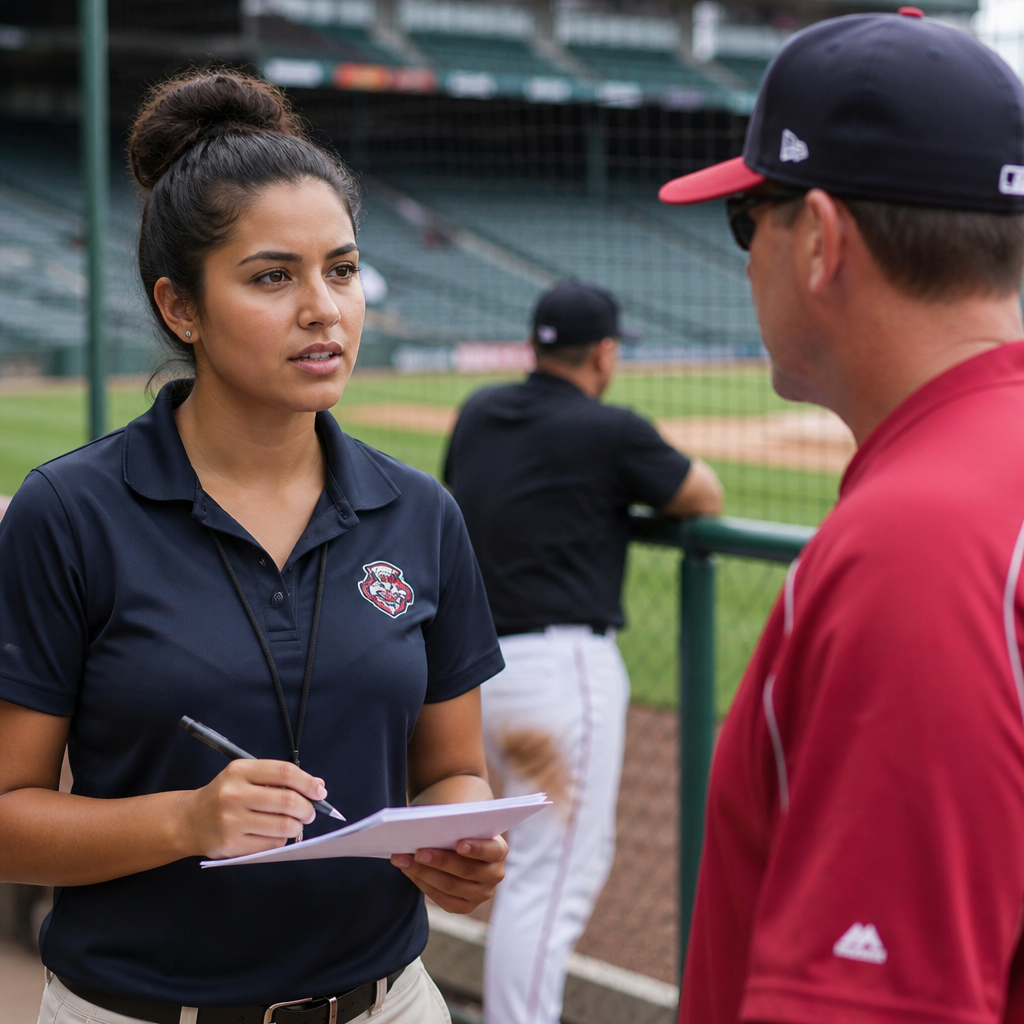
The transformation of women’s roles in the minor leagues reflects a broader shift in professional baseball, from a culture that once limited women to peripheral jobs toward an industry that increasingly relies on women as executives, coaches, scouts, trainers, broadcasters, umpires, marketers, and community leaders. In baseball, the “minor leagues” include affiliated clubs tied to Major League organizations, independent leagues, developmental circuits, and front offices that shape player pipelines and fan experience. A “role” is not only a job title; it is the authority to make decisions, influence outcomes, and build a long-term career within the game. That distinction matters because women have worked around minor league baseball for generations, yet access to leadership, technical baseball operations, and on-field instruction emerged slowly and unevenly. I have seen this firsthand while tracking club staffing trends and league announcements over the past decade: the biggest change is not visibility alone, but normalization. Women are no longer appearing as isolated exceptions in every department.
This topic matters because the minor leagues are baseball’s laboratory. New staffing models, fan engagement strategies, player development systems, and workplace norms often take shape there before spreading across the sport. If women can build durable careers in the minors, the effects reach the major leagues, college programs, youth baseball, and the business side of sports. The minor league environment also reveals baseball’s practical realities: smaller budgets, leaner staffs, heavy travel, seasonal employment, and close daily contact between departments. Those conditions can create barriers, but they can also accelerate trust when organizations evaluate people by output rather than tradition. Understanding this transformation helps explain where baseball has made meaningful progress, where bottlenecks remain, and why the future of women in baseball will depend as much on retention and promotion as on first hires. As a hub within Women in Baseball, this article maps the miscellaneous but essential roles that together changed the minor league landscape.
From novelty to infrastructure: how women entered more parts of minor league baseball
For much of minor league history, women were concentrated in administrative support, ticketing, hospitality, promotions, and family-facing game-day work. Those jobs were essential, but they rarely led to baseball operations authority. The transformation began when clubs and parent organizations recognized that strong organizations need talent across analytics, sports medicine, operations, and communications, not just in traditional male pipelines. High-profile appointments helped, but the deeper shift came from repeated hiring across departments. Once one club saw a woman succeed in player development or scouting, the hire became easier to justify elsewhere. That pattern mirrors baseball’s broader adoption of data and interdisciplinary staffing, where nontraditional backgrounds gained legitimacy alongside former player résumés.
Independent leagues and lower-level affiliates often moved faster because they are more flexible. They have smaller hierarchies, fewer layers between ownership and staff, and a practical need to maximize every employee’s range. A woman hired in communications might also handle media operations, community relations, sponsor activations, and game presentation. That breadth creates experience quickly. In affiliated baseball, parent clubs increasingly placed women in athletic training, nutrition, mental performance, and analyst roles, then expanded into coaching and front-office leadership. The result is not a single story of breakthrough, but an infrastructure story: women now exist in enough roles across enough clubs that younger staff members can see actual career paths rather than symbolic one-off examples.
Women in front offices: ownership, general management, and business leadership
Front offices have been one of the clearest areas of progress because minor league baseball depends heavily on business ingenuity. Teams are local entertainment companies as much as player-development partners, so presidents, general managers, chief operating officers, and department heads shape revenue and public identity. Women have become increasingly visible in these jobs, particularly in ticket sales leadership, sponsorship, digital strategy, finance, and community engagement. Those functions are not separate from baseball success. A stable business operation funds staffing, facilities, fan development, and local partnerships that keep clubs healthy through affiliation changes and economic stress.
Some of the strongest examples come from women who advanced internally. A promotions assistant becomes a director of marketing, then oversees an entire ballpark experience. A ticket executive builds a data-driven renewals program, improves retention, and moves into general management. In my observation, minor league owners value leaders who understand both spreadsheet discipline and the emotional rhythm of a 66- or 132-game season. Women who mastered sponsorship inventory, premium seating strategy, food-and-beverage coordination, and local media relationships proved they could run the whole operation. Industry groups such as Minor League Baseball’s historical business meetings and current club leadership conferences have also mattered by creating networking channels that once excluded women informally.
Business leadership still has limits. Revenue departments may offer more entry points than baseball operations, but advancement can stall if clubs treat women as excellent organizers rather than strategic decision-makers. The strongest organizations avoid that trap by tying women to budgeting, capital planning, staffing, and board-level communication. That is how a role becomes power instead of support.
Baseball operations and player development: scouts, analysts, coaches, and coordinators
The rise of women in baseball operations is one of the most consequential changes in the minor leagues because these jobs influence who gets signed, how prospects improve, and how organizations interpret performance. Scouting, video analysis, biomechanics, advance preparation, roster logistics, and development planning now require interdisciplinary expertise. Women entered these spaces through analytics departments, player-development fellowships, research internships, and specialized backgrounds in kinesiology, data science, and performance technology. Once in the system, many proved their value by translating information into decisions coaches and players could use.
Coaching has been the most visible frontier. Recent years have brought women into hitting, strength, development, and complex-league coaching roles connected to minor league systems. The significance is not just symbolic. Effective coaching requires drill design, feedback timing, communication under stress, and command of tools such as TrackMan, Hawk-Eye, blast-motion data, and force-plate assessments. Players respond when instruction makes them better. I have repeatedly seen that credibility in baseball is built through preparation and actionable detail. A coach who can explain why a hitter’s bat path is late against velocity, then connect cage work to game results, earns trust quickly regardless of gender.
Scouting and player development also reveal tradeoffs. Travel-heavy schedules, irregular housing, and seasonal instability can make long-term retention harder. Clubs that want women in these pipelines need more than headline hires; they need mentorship, clear evaluation standards, and family-friendly policies that recognize the realities of baseball work.
On-field support roles: athletic training, strength, nutrition, mental skills, and equipment
Women have had a major impact in the on-field support ecosystem, where modern baseball increasingly relies on applied science and day-to-day care. Athletic trainers, physical therapists, strength coaches, dietitians, and mental skills staff are central to player availability and development. Minor league players often need individualized plans despite limited resources, so staff members must prioritize efficiently. In these jobs, trust is intensely practical. Can the trainer manage return-to-throw progressions? Can the strength coach monitor workload during a six-game week? Can the nutrition coordinator improve recovery when players have inconsistent meal options and long bus rides? Women have established authority by solving those exact problems.
These roles also changed club culture because they sit at the intersection of health, communication, and performance. A strong female athletic trainer or strength coach often becomes one of the most consistent professional voices in the clubhouse, especially for young players adjusting to the grind of their first full season. Standards from bodies such as the National Athletic Trainers’ Association and the Collegiate Strength and Conditioning Coaches Association have helped professionalize these pathways. So have baseball-specific technologies, including wearable workload monitors and high-speed motion analysis, which reward technical competence over stereotype.
| Role | What changed | Why it matters in the minors |
|---|---|---|
| Athletic trainer | Women moved from rare appointments to regular hires across affiliates | Player health, rehab timelines, and injury prevention depend on daily expertise |
| Strength coach | More women now lead individualized programming and workload management | Minor leaguers need development gains without overtraining during dense schedules |
| Nutrition staff | Clubs increasingly use women to build fueling systems and education plans | Recovery and body composition are difficult with bus travel and inconsistent meals |
| Mental skills | Women entered performance psychology and adjustment support roles | Young players face pressure, language barriers, and long seasons away from home |
| Equipment and operations | Women gained credibility in clubhouse logistics and field-level support | Preparation quality affects daily practice flow and player readiness |
Equipment and clubhouse operations deserve mention because they are often overlooked in discussions about women in baseball. These jobs require organization, technical understanding of player preferences, and the ability to keep routines running under relentless schedule pressure. When women succeed there, they challenge one of the sport’s oldest assumptions: that clubhouse competence is inherently male.
Visibility and voice: broadcasting, communications, media relations, and community impact
Minor league baseball is a storytelling business, and women have transformed how teams communicate with fans, media, and local communities. Broadcasters, public address voices, social media directors, photographers, videographers, and media relations staff shape whether a club feels modern, credible, and connected. In many organizations, women led the transition from basic promotion to fully integrated content strategy. They turned mascot-driven entertainment into year-round audience development through email segmentation, sponsor storytelling, player-feature videos, and platform-specific reporting from the road.
Broadcasting has been especially important because it places women in direct baseball explanation roles. A strong broadcaster does more than host a show; she interprets a pitching change, explains the value of a sweep-and-miss shape, or tells listeners why a rehabbing prospect is on a pitch count. That expertise changes audience expectations. The same applies to media relations. Women handling clubhouse access, press notes, postgame interview logistics, and crisis communication are not just publicists. They are gatekeepers of accurate information and translators between baseball operations and the public.
Community impact is another area where women have often led with measurable results. Minor league teams depend on school programs, nonprofit partnerships, fundraising nights, and local business ties. Women directing community relations have expanded baseball’s civic footprint, especially through youth clinics, literacy programs, girls’ sports initiatives, and family health campaigns. Those efforts matter strategically because they convert a ballclub from a seasonal attraction into a trusted local institution.
Barriers that remain: pay, promotion, culture, and the pipeline problem
Progress is real, but the barriers are equally real. Minor league pay has historically been modest for many nonplayer roles, especially at entry and mid-level positions. Seasonal contracts, relocation expectations, and long hours can push talented staff out of the sport before they reach senior leadership. Women may also face the extra burden of having to prove technical authority repeatedly in environments where assumptions lag behind hiring practices. A club can celebrate one female coach publicly while still failing to build a culture where her voice carries equal weight in meetings.
Promotion remains a central issue. Entry-level hiring improved faster than advancement into top baseball-operations leadership, ownership influence, or systemwide coordinator roles. That gap often reflects informal sponsorship networks. In baseball, careers move through recommendations as much as job postings. If women are not included in those trust networks, they plateau. The solution is not abstract. Organizations need transparent hiring criteria, compensation benchmarking, anti-harassment enforcement, relocation support, and intentional mentorship connecting lower-level staff to decision-makers.
The pipeline question also begins earlier than professional baseball. Girls and women need pathways through softball, baseball coaching, sports science programs, communications training, and internship access that treat baseball as a realistic career field. The stronger the pipeline, the less every hire is framed as exceptional. That normalizing effect is the clearest sign of real transformation.
Why this minor league shift matters for the future of women in baseball
The minor leagues matter because they create habits that spread upward and outward. When women work successfully as coordinators, coaches, broadcasters, and executives in developmental baseball, they alter expectations for every level of the game. Owners become more comfortable hiring broadly. Players grow up taking instruction from women as a normal part of baseball. Fans hear women explain roster construction and swing decisions with authority. Young professionals see examples in jobs that once seemed unreachable. Over time, that compounds.
As a hub for the miscellaneous side of Women in Baseball, the key takeaway is simple: the transformation of women’s roles in the minor leagues is not one story, but many connected stories across business, performance, media, and community work. The biggest benefit is durability. Baseball becomes stronger when talent is drawn from the full population and evaluated by contribution. If you are building coverage of women in baseball, use this page as your starting point, then explore deeper articles on coaching, front-office leadership, broadcasting, and player development to see how this transformation continues.
Frequently Asked Questions
How have women’s roles in the minor leagues changed over time?
Women’s roles in the minor leagues have evolved from largely behind-the-scenes or narrowly defined responsibilities into a broad range of leadership and baseball operations positions. For much of baseball’s history, women were often concentrated in administrative support, promotional work, hospitality, or game-day entertainment. While those jobs were and remain important, they did not usually place women in decision-making roles tied to player development, team strategy, or organizational leadership. Over time, that structure began to shift as clubs, leagues, and parent organizations recognized that strong operations depend on a wider talent pool and more inclusive hiring practices.
Today, women contribute across nearly every part of the minor league ecosystem. They serve as general managers, assistant general managers, scouts, player development staff, athletic trainers, strength and conditioning specialists, broadcasters, marketing directors, ticketing executives, social media leaders, community relations professionals, and in some cases coaches and umpires. That expansion matters because the minor leagues are not just entertainment businesses; they are developmental systems that shape the future of professional baseball. When women hold meaningful positions in those systems, they influence not only front-office culture but also how players are evaluated, supported, promoted, and prepared for higher levels of the sport.
This transformation also reflects a larger cultural change in baseball. The industry has gradually moved away from outdated assumptions about who belongs in authority within the game. Although progress has not been uniform and barriers still exist, the trend is clear: women are no longer viewed as peripheral to the minor leagues. They are increasingly seen as essential to how clubs operate, connect with communities, and build sustainable success.
What kinds of jobs do women hold in the minor leagues today?
Women now work in a remarkably wide variety of minor league roles, spanning both the business side and the competitive side of the sport. On the business side, women are commonly found in executive leadership, marketing, sponsorship sales, communications, public relations, digital media, ticket operations, promotions, event management, and community outreach. These roles are central to a club’s financial health and public identity, especially in the minor leagues, where fan experience and local engagement are often the foundation of a team’s success.
On the baseball side, women increasingly serve in player development, scouting, analytics, coaching support, athletic training, nutrition, mental skills, and strength and conditioning. These are highly influential jobs because they shape how players improve, recover, adapt, and advance through the system. Some women also work as broadcasters and on-field reporters, helping interpret the game for fans and increasing visibility for female expertise in baseball. Others have entered officiating and umpiring pathways, another area that historically offered limited access to women.
What makes this especially significant in the minor leagues is the environment itself. Minor league clubs operate as training grounds not just for players, but for staff throughout baseball. A woman who starts in a front-office role, coaching support position, or scouting department in the minors may eventually move into larger responsibilities at higher levels of the sport. In that sense, the minor leagues function as a pipeline for future baseball leadership. The growing presence of women in these roles is not symbolic; it is structurally important to how the sport develops talent on and off the field.
Why are the minor leagues such an important space for the advancement of women in baseball?
The minor leagues are especially important because they sit at the intersection of player development, business operations, and community-based sports management. Unlike the major leagues, where roles are fewer and public scrutiny is often more intense, the minors can provide a more flexible environment for organizations to broaden hiring practices, test new staffing models, and create pathways for emerging talent. That makes the minor leagues one of the most influential spaces for changing who gets experience, authority, and upward mobility in professional baseball.
For women, this matters because career advancement in baseball often depends on hands-on experience. The minor leagues offer opportunities to manage daily operations, solve practical challenges, travel with teams, oversee local initiatives, and work directly with players and staff. Those responsibilities build the kind of resume that can lead to promotions within affiliated clubs, independent leagues, league offices, or Major League organizations. In other words, the minors are not simply a lower tier of baseball; they are a crucial proving ground where careers are built.
The minor league environment also puts women in visible roles within local communities. Fans interact with women as executives, broadcasters, marketers, trainers, and baseball professionals, which helps normalize female authority in a sport that has long been associated with male leadership. That visibility can influence young fans, aspiring sports professionals, and even hiring culture itself. As more women establish successful careers in the minor leagues, they expand the perception of who belongs in baseball and strengthen the pipeline for the next generation.
What challenges do women still face in the minor leagues?
Even with meaningful progress, women in the minor leagues still face several persistent challenges. One of the most common is the legacy of baseball’s traditional culture, which can sometimes create skepticism around women in authority, particularly in baseball operations or on-field roles. In some settings, women may feel pressure to prove their expertise more often than male colleagues, especially in environments where they remain underrepresented. That extra scrutiny can affect everything from day-to-day interactions to long-term career advancement.
Another challenge is the structure of minor league work itself. These jobs often involve long hours, frequent travel, modest pay compared with other professional sectors, and a high-pressure environment tied to performance and promotion. Those realities can be difficult for anyone, but they may be compounded for women when mentorship networks are limited or when organizations have not fully adapted workplace policies to support inclusion, safety, and professional growth. Access to sponsorship, advancement opportunities, and clear leadership pathways can still vary widely from club to club.
There is also the issue of representation. While more women are entering the minor leagues, they are not yet equally represented across every department, especially in top baseball decision-making roles. That means many women continue to work as “firsts” or “onlys” within their organizations, which can be professionally isolating. Still, it is important to recognize that progress and challenge can exist at the same time. The current landscape is far more open than it once was, but continued gains will depend on intentional hiring, strong mentorship, equitable pay structures, and organizational cultures that value women’s contributions as standard rather than exceptional.
How does the rise of women in the minor leagues affect the future of baseball?
The rise of women in the minor leagues has a direct impact on baseball’s future because it expands the sport’s talent base, strengthens organizational decision-making, and modernizes the culture of the game. Baseball is a complex industry that depends on far more than what happens between the foul lines. It requires strong leadership, player support systems, community engagement, communications strategy, data analysis, health and performance expertise, and long-term developmental planning. When women are fully integrated into those areas, clubs gain access to a broader range of perspectives and skills, which can improve both business outcomes and player development.
This shift also matters because the minor leagues are where many of baseball’s future leaders learn the industry. Players move through the minors on their way to the major leagues, but so do executives, scouts, broadcasters, and operations staff. As women become more established in these roles, they are not just participating in baseball’s present; they are shaping its next generation of leadership. The result is a more representative and potentially more innovative professional system, one that reflects the realities of modern sports management rather than the limitations of past tradition.
Just as important, greater female representation in the minor leagues sends a powerful message about belonging. It shows young women interested in sports careers that baseball includes pathways for them, whether their strengths are in analytics, coaching, medicine, media, business, or leadership. Over time, that kind of visibility can change the sport from the ground up. The transformation of women’s roles in the minor leagues is not a side story to baseball’s evolution; it is a meaningful part of how the game becomes more effective, more inclusive, and better prepared for the future.