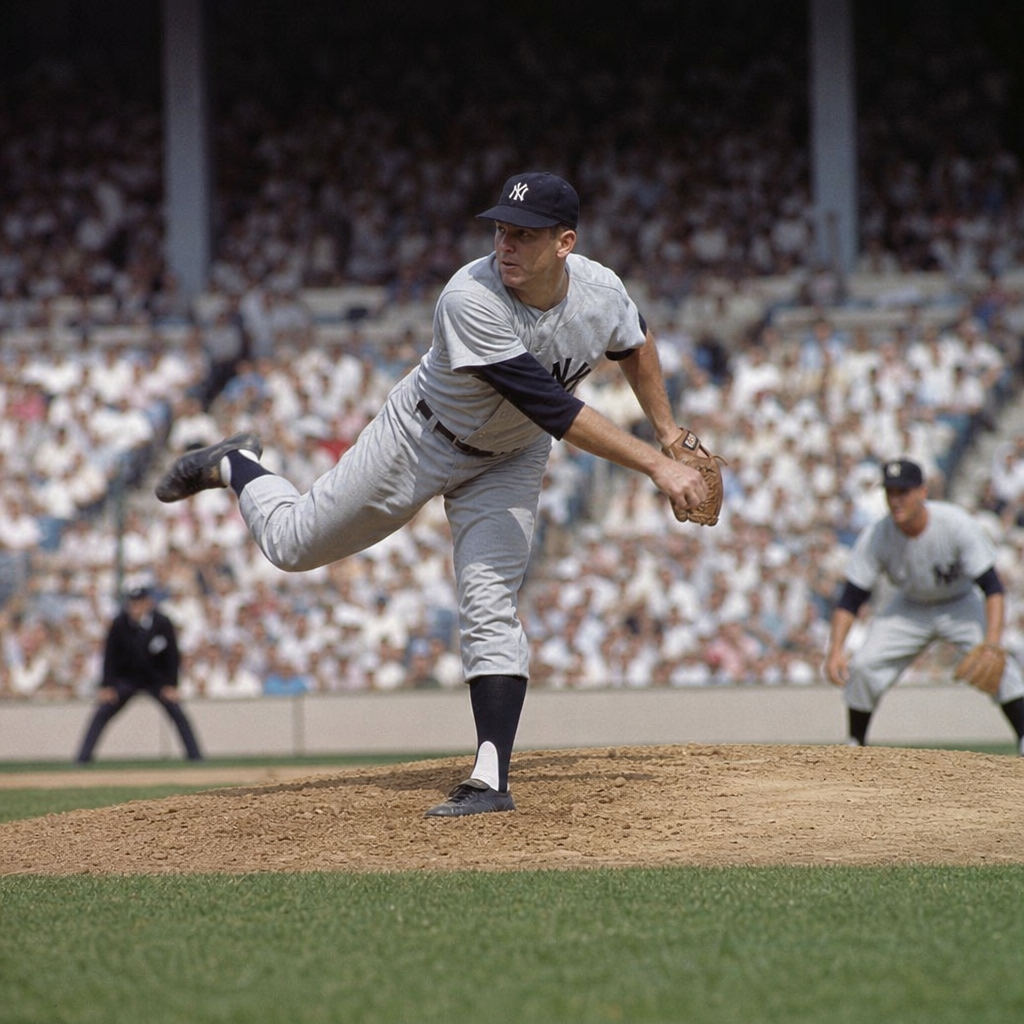
The 1960s pitching mound height controversy sits at the intersection of baseball rules, competitive balance, and cultural change. At its core, the debate asked a simple question: how much advantage should a pitcher have over a hitter? The answer reshaped Major League Baseball and still influences the modern game. When people refer to the controversy, they usually mean the mounting criticism during the 1960s that the pitching mound, officially fifteen inches high before 1969, gave pitchers too much help at a time when strike zones were large and run scoring was falling. The issue became impossible to ignore after the so-called Year of the Pitcher in 1968, when Bob Gibson posted a 1.12 earned run average, Denny McLain won thirty-one games, and Carl Yastrzemski led the American League with a .301 batting average. Those numbers were not just impressive; they were evidence of a game drifting out of balance.
The mound itself is more than a patch of dirt. It is a carefully regulated piece of baseball architecture that affects release point, downhill plane, pitch movement, hitter reaction time, and even injury patterns. In the 1960s, teams also built mounds with inconsistent slopes and landing areas, sometimes pushing rules to the edge. I have spent years studying game footage, rulebook revisions, and player testimony from this period, and the same theme appears repeatedly: hitters believed they were battling not only elite pitching but also a structural advantage embedded in the field. Pitchers, unsurprisingly, defended the status quo, arguing that command, not height alone, explained dominance.
Why does this controversy matter now? Because it remains the clearest example of the league changing the physical environment to restore offense and protect entertainment value. It also belongs in any wider discussion of miscellaneous baseball controversies because it connects labor tensions, umpiring standards, television-era business pressures, and the sport’s ongoing struggle to define fairness. Understanding the mound debate helps explain later arguments over juiced balls, sticky substances, pitch clocks, defensive shifts, and automated strike zones. In baseball, controversy often begins with one visible rule, but beneath it lies a larger question about what kind of game the public wants to watch.
What the mound height controversy was really about
The formal rule issue centered on the pitcher’s plate and mound dimensions. Before 1969, the rules allowed a mound up to fifteen inches above home plate level. In practice, the shape and maintenance of mounds varied more than the language suggested. Grounds crews could create steep front edges, firm landing spots, or awkward transitions that subtly changed how a pitcher attacked hitters. A higher mound lets a pitcher release the ball from a more elevated position, creating a sharper vertical approach angle. That angle can make a high fastball appear to rise and a curveball break later, while also reducing a hitter’s visual comfort. These are small physical effects, but at major league level, small effects become major results.
The controversy, however, was never just geometry. It was about cumulative advantage. The National League had expanded in 1962, and the American League followed in 1961, diluting hitting depth for a time. The strike zone was enlarged in 1963, from the top of the shoulders to the bottom of the knees, giving pitchers extra room above and below the natural swing path. Many clubs were also emphasizing power arms, elevated fastballs, and hard breaking balls. Relievers were used more strategically, reducing the number of tired starters hitters saw late in games. Put together, these conditions produced a sustained offensive decline. By 1968, fans, executives, and writers were openly asking whether baseball had tilted too far toward the mound.
From a controversy standpoint, that combination is important. Few scandals or disputes come from one isolated cause. The mound became the symbol because it was visible and actionable, even though the broader problem involved rules, roster construction, and league expansion. That is why the topic fits a miscellaneous hub within scandals and controversies: it links technical regulation with public frustration, media pressure, and institutional response.
The offensive collapse that forced action
If you want the clearest evidence behind the 1960s pitching mound height controversy, look at league-wide offense in 1968. The American League batted .230, and the National League batted .243. The combined major league earned run average was 2.98. Scoring felt compressed every night. In the National League, Gibson’s 1.12 ERA became legendary, but he was not alone. Luis Tiant posted a 1.60 ERA in the American League in 1968. Don Drysdale had set a scoreless innings record that same season. Yastrzemski’s .301 league-leading average in the AL became perhaps the most famous marker of how hard hitting had become. When a .301 average leads a league, offense is in crisis.
Attendance and entertainment concerns mattered as much as statistics. Baseball in the late 1960s was competing for national attention in a changing media landscape. Television rewarded action: balls in play, base running, rallies, and memorable at-bats. Low-scoring games can be dramatic, but a steady diet of strikeouts and weak contact narrows the sport’s appeal. Owners and league officials understood that a product dominated by pitchers risked alienating casual fans. This was not anti-pitcher sentiment; it was market reality.
Players described the imbalance in practical terms. Hitters complained that a tall mound paired with a large strike zone allowed pitchers to work downhill and expand vertically beyond what was reasonably attackable. Catchers and infielders, meanwhile, often loved the environment because games moved quickly and one run felt decisive. Managers had to choose between defending tradition and supporting an adjustment that might make their lineups more viable. That tension is what turned a technical rule matter into a genuine league controversy.
How pitchers, hitters, and officials saw the issue
Pitchers often argued that blaming the mound oversimplified what was happening. Gibson himself was blunt throughout his career about not wanting his achievements reduced to a dirt hill. He had command, intimidation, athleticism, and extraordinary competitiveness. That point was fair. Great pitchers were great because of skill, not because they stood a few inches higher. Yet hitters had a fair point too: environmental advantages stack. A larger strike zone, a higher mound, and inconsistent enforcement create conditions where elite pitching becomes nearly unhittable.
League officials had to parse those competing truths. They could not publicly say that pitchers were too good, because excellence is not a problem. Instead, they framed the issue around balance. Baseball has always adjusted conditions when one side gains too much structural leverage. Dead-ball rules changed. The spitball was restricted. The livelier ball altered offense. The designated hitter later changed the American League. Seen in that context, lowering the mound was not radical; it was a standard corrective measure within baseball’s long tradition of rule calibration.
Umpires also played a hidden role. The enlarged strike zone introduced in 1963 was never enforced perfectly uniformly. Some umpires gave pitchers the high strike consistently, which paired especially well with elevated release points. Others squeezed pitchers lower in the zone. Because television was less comprehensive than today, fans often experienced those inconsistencies through newspaper descriptions and player complaints rather than instant replay breakdowns. That ambiguity fed the controversy. When enforcement varies, participants search for a visible culprit, and the mound became that culprit.
The 1969 rule change and why it mattered
Major League Baseball responded before the 1969 season by lowering the mound from fifteen inches to ten inches and reducing the strike zone from the top of the shoulders to the armpits, still down to the knees. This was the decisive end point of the 1960s pitching mound height controversy. The league did not merely tweak aesthetics; it changed the physics of confrontation between pitcher and hitter. Five inches may sound minor, but on a mound it alters leverage, posture, extension, and downhill angle. It also affects how a pitcher repeats mechanics and where a breaking ball is most effective.
The results were immediate enough to validate the change. League offense rose in 1969, and batting averages recovered. The National League average increased to .248, and the American League to .246. Runs per game also climbed. Not every improvement came from the mound adjustment alone; expansion continued to influence roster quality, and the revised strike zone mattered significantly. Still, the combined package worked. Baseball looked more like a contest again, not a siege.
| Season | Mound Rule | League Context | Visible Outcome |
|---|---|---|---|
| 1968 | Up to 15 inches | Large strike zone, dominant pitching | Historically low offense |
| 1969 | Reduced to 10 inches | Strike zone narrowed | Batting averages and scoring improved |
| After 1969 | 10 inches standard | More balanced environment | Rule became part of modern baseline |
The significance goes beyond numbers. The rule change established that field design is part of competitive governance. Baseball was admitting that conditions on the ground can shape outcomes as much as talent does. That lesson continues to inform modern debates over fences, humidor use, ball composition, and pace-of-play rules.
Why this belongs in a miscellaneous controversies hub
Some readers expect “scandals and controversies” to mean gambling, sign stealing, or substance abuse. The 1960s mound debate proves the category is broader. Controversy in sports often emerges from gray areas where rules, business interests, tradition, and performance intersect. This topic belongs in a miscellaneous hub because it does not fit neatly into cheating or discipline, yet it produced strong factions, public argument, and a major institutional response.
It also serves as a bridge to many related articles. Discussions of the Year of the Pitcher naturally connect here. So do articles on strike zone history, expansion-era talent dilution, groundskeeping standards, and the 1969 rule changes that reshaped offense. A hub page on miscellaneous controversies should help readers see patterns, and this case offers a clear one: when baseball’s ecosystem drifts too far in one direction, the resulting dispute is framed as a fairness issue long before it is solved as a technical one.
There is another reason this story matters within a broader sub-pillar. It shows that not every controversy has villains. Grounds crews were doing their jobs, pitchers were exploiting legal advantages, and league officials were balancing spectacle against tradition. The dispute was structural. That makes it especially useful for readers who want to understand how baseball controversies can arise without fraud or bad faith.
Lasting legacy in modern baseball
The legacy of the 1960s pitching mound height controversy is visible every time Major League Baseball evaluates run environment. Modern front offices track vertical approach angle, induced vertical break, extension, release height, and seam effects with tools like Statcast, high-speed cameras, and biomechanical analysis. Those technologies confirm what hitters sensed decades ago: geometry matters. Mound height does not determine success by itself, but it changes the shape of competition in measurable ways.
The controversy also taught the league a governance lesson. If offense or pitching becomes too dominant, officials will intervene sooner than they once did. Recent restrictions on extreme infield shifts, the introduction of the pitch clock, and ongoing scrutiny of baseball construction all follow the same logic. Baseball protects its entertainment value by adjusting the environment rather than waiting for imbalance to fix itself.
For historians, the episode remains a caution against single-cause explanations. The 1968 offensive crash was not caused only by mound height. It came from the interaction of mound height, strike zone policy, expansion, pitcher quality, strategic evolution, and uneven enforcement. That nuance matters because oversimplified stories lead to poor rulemaking. The best reading of the controversy is not that the mound was unfair in isolation, but that it became unfair within a specific competitive context.
The 1960s pitching mound height controversy endures because it explains how baseball negotiates change without abandoning identity. The game did not stop valuing pitching after 1968, and it did not suddenly become offense only. Instead, it reset the conditions so that both skills could coexist more fairly. That is the central takeaway for anyone exploring miscellaneous baseball controversies: the fiercest disputes often emerge from ordinary rules that no longer produce ordinary results. If you are building out your understanding of baseball’s most important debates, use this episode as a starting point, then follow the connected topics on strike zones, expansion, groundskeeping, and the Year of the Pitcher to see how one rule dispute reshaped the sport.
Frequently Asked Questions
What was the 1960s pitching mound height controversy in Major League Baseball?
The 1960s pitching mound height controversy was a debate over whether the raised pitching mound gave pitchers too much of an advantage over hitters, especially during the low-scoring offensive environment of the late 1960s. Before 1969, the mound could be as high as fifteen inches, and critics argued that this elevation, combined with a larger strike zone and increasingly dominant pitching, tilted the game too far away from offense. The issue was not just technical; it became a broader argument about what baseball should look like. Fans, writers, executives, and players all weighed in on whether the sport was becoming less entertaining because hitters had too little chance to succeed.
The controversy built gradually throughout the decade as pitching performances became more overpowering and batting numbers declined. By the time the sport reached the so-called “Year of the Pitcher” in 1968, concern had become impossible to ignore. Major League Baseball ultimately responded by lowering the mound for the 1969 season, making it clear that mound height was seen as a major factor in restoring competitive balance. In that sense, the controversy was really about fairness, aesthetics, and the league’s power to adjust the rules when one side of the game becomes too dominant.
Why did mound height become such a major issue during the 1960s?
Mound height became a flashpoint because it symbolized a much larger imbalance in the sport. A higher mound lets pitchers throw on a steeper downhill plane, which can increase perceived velocity, improve leverage, and make pitches more difficult for hitters to track and square up. In the 1960s, that structural advantage mattered even more because many pitchers were already exceptionally talented, training was improving, and the strike zone was interpreted in ways that favored pitching. As a result, offensive production fell across the league, and games increasingly turned into struggles for hitters simply to make consistent contact.
The issue reached its peak in 1968, when pitching dominance became historic. Bob Gibson posted a 1.12 ERA, Denny McLain won 31 games, and batting averages around the league sank. These were not isolated achievements; they reflected a broader environment in which scoring was depressed and shutouts, strikeouts, and low-hit games became common. To many observers, the mound was not the only cause, but it was one of the most visible and actionable ones. That made it a natural target for reform. The controversy, then, was driven by both statistics and perception: the numbers showed a problem, and the on-field product convinced many people that baseball needed a correction.
What rule changes did MLB make in response to the controversy?
Major League Baseball responded after the 1968 season by lowering the pitching mound from fifteen inches to ten inches for 1969. The league also tightened the rules governing the shape and slope of the mound to promote greater consistency from ballpark to ballpark. At the same time, MLB reduced the strike zone, reversing an earlier enlargement that had helped pitchers. These were significant adjustments, and together they were designed to increase offense and create a more balanced contest between pitcher and hitter.
The mound reduction was especially important because it directly affected pitching mechanics and pitch behavior. With less elevation, pitchers generally lost some of the downhill angle that made fastballs appear more explosive and breaking pitches more deceptive. Hitters gained a slightly better visual and timing window, even if only by fractions of a second. In baseball, those fractions matter enormously. The 1969 rule changes did not eliminate great pitching, but they did signal that the league was willing to step in when run scoring dropped too far. The controversy therefore led to one of the most consequential competitive-balance adjustments in modern baseball history.
Did lowering the mound actually change the game?
Yes, lowering the mound helped change the offensive environment, although it worked in combination with the strike zone adjustment rather than in isolation. After the 1969 changes, run scoring increased compared with the extreme pitching conditions of 1968, and the game moved toward a healthier equilibrium. Hitters were not suddenly dominant, but the sport became less overwhelmingly tilted toward pitchers. The changes also affected how teams were built, how pitchers approached hitters, and how the public experienced the game. More balls were put in play, rallies became more common, and offense was easier to generate.
It is important, however, not to oversimplify the results. Baseball outcomes are shaped by many variables, including player talent, ballpark dimensions, equipment, expansion, and strategic trends. Even so, the mound reduction became a landmark example of how a rule adjustment can meaningfully alter the balance of the sport. It showed that field geometry and playing conditions are not neutral details; they can shape entire eras. The legacy of the change remains strong because it proved that MLB could use the rulebook not just to govern the game, but to influence the style of play fans see on the field.
Why does the 1960s mound controversy still matter today?
The controversy still matters because it established a lasting framework for how baseball thinks about competitive balance. Whenever modern discussions arise about strike zones, pitch clocks, defensive shifts, velocity trends, or the dominance of strikeouts, they echo the same central question from the 1960s: how much advantage should one side of the game have? The mound debate is a foundational case study in how the league evaluates whether the sport is functioning as intended. It reminds fans and decision-makers alike that baseball’s rules are not frozen in time; they can be adjusted to preserve action, fairness, and entertainment.
It also matters historically because it reflects a moment when baseball was adapting to broader cultural and institutional change. The 1960s were a decade of reevaluation across American life, and the sport was not immune. The decision to lower the mound showed that even a tradition-bound game could modernize when circumstances demanded it. Today, analysts, historians, and fans still look back on the mound controversy as proof that small technical details can have enormous consequences. It remains one of the clearest examples of how rule changes can redefine an era and shape the version of baseball future generations inherit.