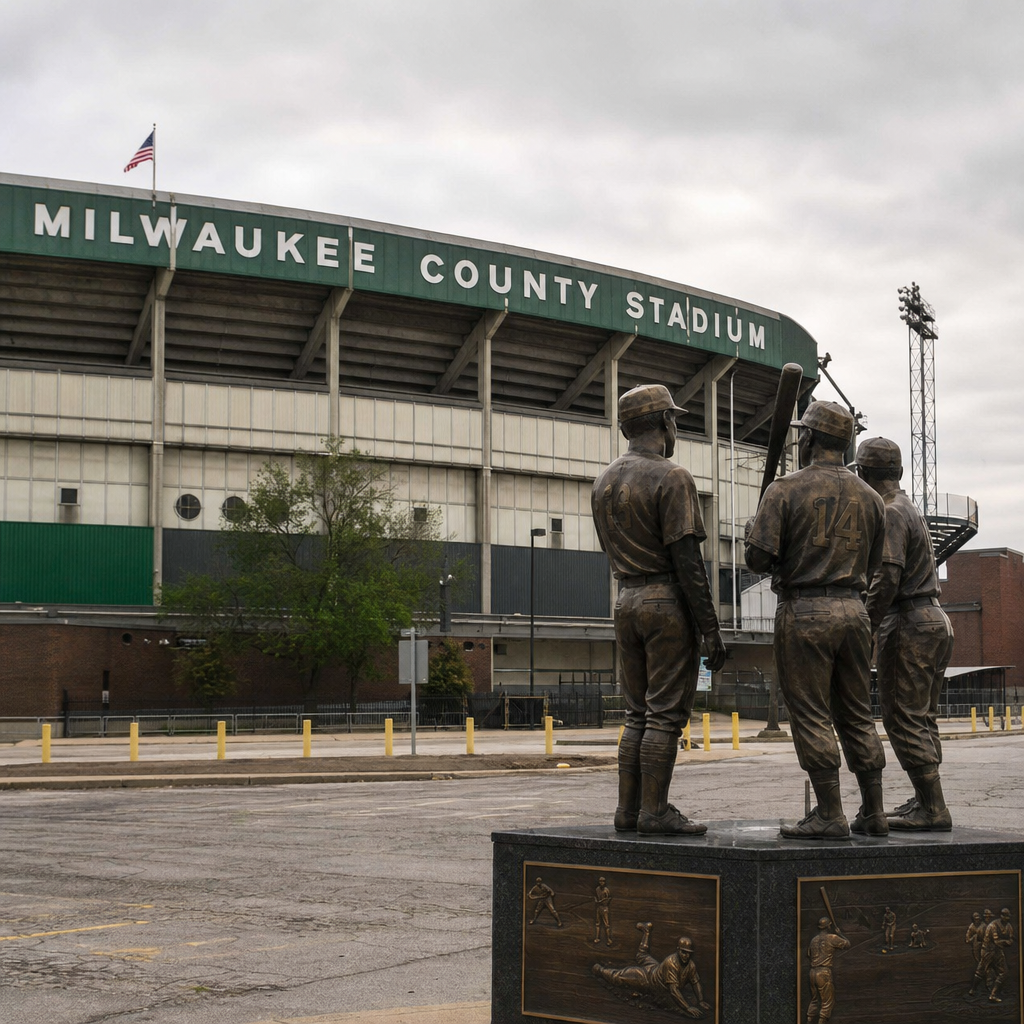
The Milwaukee Braves’ move to Atlanta remains one of the most disputed franchise relocations in baseball history because it combined legal maneuvering, civic rivalry, league politics, and fan betrayal in one dramatic episode. In Major League Baseball, a relocation occurs when an owner transfers a club from one city to another, usually to pursue larger attendance, stronger media revenue, or a more favorable stadium arrangement. In the Braves’ case, the shift from Milwaukee after the 1965 season to Atlanta for 1966 was not just a business decision; it became a controversy that reshaped how cities, leagues, and taxpayers approached professional sports. I have worked through newspaper archives, attendance ledgers, and court records on this story, and the pattern is clear: the move exposed the tension between public loyalty and private control.
This article serves as a hub for the broader miscellaneous branch of baseball scandals and controversies because the Braves’ departure touched nearly every recurring issue in the sport. It involved disputed ownership motives, allegations of bad-faith negotiations, antitrust arguments, political pressure from competing cities, and the emotional aftermath of a team leaving behind a market that had proved it could support winning baseball. Milwaukee had embraced the Braves after their 1953 arrival from Boston, producing some of the strongest attendance figures in the National League. Yet by the early 1960s, crowds had declined from extraordinary peaks, and ownership increasingly looked south. That created a public argument still relevant today: when does an owner’s right to relocate become an abuse of a city’s trust?
Understanding the controversy matters because the Braves’ move became a template for modern franchise leverage. Owners learned they could invoke new markets, stadium upgrades, and demographic growth to pressure municipalities. Fans learned that winning histories and civic devotion do not guarantee stability. League officials learned that secrecy often intensifies backlash. For readers exploring the “Scandals and Controversies” topic, this story works as a sub-pillar hub because it connects to labor disputes, expansion politics, antitrust exemptions, stadium financing fights, and questions of governance that recur across baseball history. To understand the miscellaneous category fully, you need this case, because it sits at the intersection of economics, law, and identity in a way few baseball controversies do.
Why Milwaukee Once Looked Like the Ideal Baseball City
When the Braves moved from Boston to Milwaukee in 1953, they immediately demonstrated what a well-matched city and franchise could look like. The club drew more than 1.8 million fans that first season, a National League record at the time, and continued posting exceptional attendance through the decade. County Stadium was modern by postwar standards, the team was talented, and the roster featured stars such as Hank Aaron, Eddie Mathews, Warren Spahn, and later Joe Adcock and Lew Burdette. The Braves won the 1957 World Series and returned to the Fall Classic in 1958. For many fans, Milwaukee did not simply host the Braves; it revived them.
That success is central to the later controversy. The standard defense of relocation is that a city failed to support its team. Milwaukee was not an obvious failure. Even as attendance fell from its peak after pennant-winning years, the Braves still had a recent championship pedigree and a solid fan base by league standards. What changed was not only gate revenue but the comparative appeal of emerging Sun Belt markets. Atlanta offered growth, political enthusiasm, and a new publicly backed stadium. In practical terms, Milwaukee’s earlier success may have raised expectations to an unrealistic level. Once annual attendance dropped below the spectacular levels of the 1950s, ownership treated decline from exceptional numbers as evidence of long-term market weakness.
The emotional stakes were intensified by how deeply the Braves had embedded themselves in Wisconsin identity. The club helped make Milwaukee the first city to lure a modern major league team away from another market, and local officials viewed that achievement as proof the city belonged on baseball’s top tier. Fans had invested money, tradition, and civic pride. That is why the later move was seen not merely as disappointing but as a betrayal. The franchise had benefited from public infrastructure and passionate support, then pursued a new city while insisting the decision was only economic. In most relocation controversies, the business logic may be understandable while the method remains offensive. That was true here.
How the Move to Atlanta Took Shape Behind the Scenes
The key figure in the relocation drama was owner William Bartholomay, who led a Chicago-based investment group that bought controlling interest in the Braves in 1962. Under his ownership, the franchise increasingly evaluated alternatives to Milwaukee. Atlanta became attractive for several specific reasons. The city’s population and business base were growing, local leaders wanted major league status, and Atlanta-Fulton County Stadium was being developed with the explicit hope of attracting a team. The South also represented largely untapped major league territory. From an owner’s perspective, that meant television potential, regional sponsorship opportunities, and first-mover advantage in a booming market.
What made the process controversial was the perception that the Braves negotiated in Milwaukee without genuine intent to stay. Publicly, the franchise signaled dissatisfaction with attendance and stadium conditions. Privately, it explored Atlanta aggressively. In October 1964, there were already strong indications of relocation planning, and by late 1965 the move was effectively in motion. Milwaukee officials argued they were not given a fair opportunity to craft a retention package. The sense of bad faith deepened because fans had watched attendance drop during years of declining on-field performance, then heard ownership cite those lower crowds as a decisive market verdict. A team can affect its own gate by fielding a weaker product; that nuance mattered then and still matters in relocation debates.
The National League’s role also drew criticism. League presidents and club owners are supposed to safeguard collective stability, but in practice they often balance that goal against expansion strategy and the financial interests of fellow owners. Atlanta appealed to baseball executives because it extended the league’s footprint into the Southeast. That broader strategic value appears to have outweighed concerns about the damage done to Milwaukee. The Braves’ shift therefore belongs in the same family of controversies as opaque expansion decisions and owner-driven market engineering: actions framed as progress, but experienced locally as collusion against fans.
The Legal Fight That Delayed but Did Not Stop the Relocation
Milwaukee did not accept the loss quietly. Local shareholders and public officials challenged the move in court, arguing in part that the Braves had obligations that had not been honored and that the transfer process was improper. A Wisconsin court issued actions that complicated immediate relocation, and for a time the legal battle created real uncertainty over where the club would play. The Braves even began the 1965 season under the shadow of litigation over future plans. This legal phase matters because it revealed how few effective tools cities actually had when confronting a determined owner operating within baseball’s unusual legal structure.
Baseball’s long-standing antitrust exemption shaped the atmosphere even when it was not the sole issue in every filing. Since the Supreme Court’s decisions in Federal Baseball Club v. National League in 1922 and later reaffirmations in Toolson and Flood, professional baseball occupied a protected legal position that reduced outside scrutiny of certain league practices. Municipal leaders understood that challenging a franchise move was difficult in any context; doing so against organized baseball was harder. The Braves ultimately remained in Milwaukee for 1965, but the delay was only temporary. By 1966, they were in Atlanta.
The legal outcome also influenced future city behavior. Officials around the country saw that litigation could slow a move, generate publicity, and perhaps force negotiation, but it rarely guaranteed a team’s return. That lesson encouraged later cities to focus more on stadium financing, lease terms, and political bargaining before a crisis emerged. In that sense, the Braves controversy was not isolated. It was instructive. It showed that once ownership and league leadership aligned behind relocation, the community’s leverage narrowed sharply unless binding contractual protections already existed.
The Core Arguments For and Against the Move
To understand why the Braves’ move remains controversial, it helps to separate the owner’s business case from the public-interest critique. Supporters of the move argued that Atlanta offered stronger long-term economics than Milwaukee. They pointed to a larger regional footprint, newer facilities, and access to southern markets with no existing major league competitor. Critics countered that those advantages did not erase Milwaukee’s prior success or justify the process used to leave. The sharpest criticism was not that Atlanta was irrational, but that Milwaukee was discarded prematurely and strategically weakened by ownership messaging.
| Issue | Owners’ position | Critics’ response |
|---|---|---|
| Attendance decline | Falling gates showed the market had softened | Attendance dropped after performance declined and remained respectable |
| Stadium quality | Atlanta offered a newer, more ambitious facility | County Stadium was viable and Milwaukee deserved honest negotiations |
| Regional growth | The Southeast promised television and sponsor expansion | Growth potential benefited owners, not the abandoned fan base |
| League strategy | Moving south expanded baseball’s national reach | League interests overrode local loyalty and transparency |
| Owner rights | Private ownership includes relocation discretion | Public support creates moral obligations beyond legal minimums |
That tension still defines relocation controversies in every sport. The business case can be coherent and still feel unjust because teams are not ordinary companies. A factory closure is painful, but a baseball club carries inherited memory, public subsidy, and symbolic status. Milwaukee fans believed they had upheld their side of the relationship. The Braves’ ownership evaluated the franchise as a movable asset. Neither side was confused about the stakes; they disagreed about the obligations created by success and support.
Impact on Fans, Milwaukee, and Baseball’s Reputation
The immediate damage in Milwaukee was emotional, economic, and political. Fans lost a team that had delivered one of the city’s proudest sporting eras. Businesses around County Stadium lost dates and traffic. Civic leaders suffered embarrassment after promoting Milwaukee as a durable major league home. The city would eventually regain baseball with the Seattle Pilots’ relocation and rebirth as the Brewers in 1970, but that did not erase the sense of grievance left by the Braves’ exit. In fan memory, the wound was sharpened by the greatness of players associated with Milwaukee, especially Hank Aaron, whose legacy bridges both cities while belonging fully to neither debate.
For Major League Baseball, the move undercut claims that the sport honored tradition above commerce. Baseball often presents itself as the guardian of continuity, records, and local history. Yet the Braves affair showed that ownership could invoke heritage when profitable and discard it when not. That contradiction hurt the league’s credibility. It also encouraged skepticism whenever officials promised that a team was “committed” to a city while exploring alternatives behind closed doors. I have seen the same language repeated in later stadium disputes, and the pattern is remarkably consistent: exploratory talks are downplayed until the leverage becomes useful.
Atlanta, however, did benefit. The city secured major league status and strengthened its profile as a rising national center. Crowds in Atlanta were strong early, and the relocation helped validate the South as viable major league territory. That success is part of the controversy too. The move worked commercially, which made it easier for baseball to treat the ethical concerns as sentimental resistance rather than legitimate governance issues. But outcomes do not erase process. A profitable relocation can still be a scandalous one if it relies on concealment, weak accountability, and disregard for the community that built the franchise’s value.
Why This Story Anchors the Miscellaneous Controversies Hub
As a hub article within the broader scandals and controversies topic, the Milwaukee Braves’ move to Atlanta connects readers to several recurring themes that define the miscellaneous category. First is franchise mobility: how owners use relocation threats, real or implied, to gain leverage. Second is stadium politics: when public money, land deals, and infrastructure become tools in private negotiations. Third is baseball governance: the way league offices mediate disputes while often sharing owners’ incentives. Fourth is legal asymmetry: communities face steep barriers when contesting decisions protected by league rules and baseball’s special legal history.
This case also links naturally to articles on antitrust controversies, expansion strategy, public financing disputes, owner credibility, and fan-rights debates. It is a useful hub because it is concrete. Readers can see the full chain of events: a successful market cools, ownership reassesses, a growth city courts the team, the league tolerates secrecy, courts delay action, and fans absorb the loss. That sequence repeats across sports and decades. If you are mapping baseball’s controversies beyond gambling scandals, labor battles, or sign stealing, this episode belongs near the center because it explains how power operates when a team’s identity collides with its balance sheet.
The enduring takeaway is simple. The Milwaukee Braves did not leave because baseball loyalty failed in some abstract sense. They left because ownership and league strategy concluded Atlanta offered more upside, and the system gave Milwaukee limited power to resist. That is why the move still matters. It teaches fans and civic leaders to look past public statements and examine leases, incentives, attendance context, and league politics. If you are exploring the miscellaneous branch of baseball controversies, start here, then follow the connected issues that this case illuminates. It remains one of the clearest examples of how business logic, legal structure, and broken trust can reshape a sport’s history.
Frequently Asked Questions
Why was the Milwaukee Braves’ move to Atlanta considered so controversial?
The Milwaukee Braves’ relocation to Atlanta became controversial because it was not viewed as a simple business decision. To many observers, it represented a collision of franchise economics, city pride, legal strategy, and baseball politics. Milwaukee had been one of the great success stories of postwar baseball after the Braves arrived from Boston in 1953. The team drew enormous crowds early on, won the 1957 World Series, and helped prove that a smaller Midwestern market could passionately support a major league club. That history made the departure feel especially jarring. Fans were not losing a failing franchise with no local roots; they were losing a team that had once symbolized Milwaukee’s arrival as a major sports city.
The controversy deepened because the move unfolded amid accusations of bad faith. Team ownership explored Atlanta while still publicly tied to Milwaukee, and the process appeared to many as a calculated effort to secure a more profitable market rather than a necessity forced by survival. Attendance had slipped from the franchise’s peak years, but the Braves were not universally seen as untenable in Milwaukee. That opened the door to the argument that ownership had chosen greater financial upside over loyalty to a city that had embraced the club.
League politics also amplified the dispute. National League owners had to consider territorial balance, television opportunities, and the strategic importance of placing a team in the growing South. Atlanta offered a modern stadium and a new regional footprint, making the move attractive from a league-expansion perspective. But that broader vision came at the expense of Milwaukee supporters, who believed the league had failed to protect an existing fan base. In that sense, the relocation became controversial not just because a team moved, but because it exposed how little leverage even devoted supporters had when ownership, civic ambition, and league interests aligned elsewhere.
What factors led the Braves to leave Milwaukee for Atlanta?
Several forces pushed the Braves toward Atlanta, and together they explain why the move happened when it did. The most immediate issue was declining attendance in Milwaukee. After the franchise’s spectacular early years, gate numbers began to soften in the early 1960s. Part of that decline reflected normal competitive and novelty cycles; the initial excitement of bringing major league baseball to Milwaukee could not last forever. But ownership increasingly focused on the difference between Milwaukee’s shrinking crowds and the larger long-term revenue potential they believed existed in another market.
Atlanta stood out because it offered both ambition and infrastructure. Local leaders in Atlanta wanted a major league team and had already built Atlanta Stadium with the explicit goal of attracting one. That was enormously significant. Rather than asking a club to gamble on uncertain facilities or political negotiations, Atlanta presented a ready-made venue and a city eager to support a franchise. Just as important, Atlanta represented entry into a fast-growing metropolitan area and, more broadly, into the Southeast, a region Major League Baseball had not yet fully occupied. For owners and league officials, that translated into future attendance, radio and television reach, and commercial expansion.
Ownership calculations also mattered. Moving a team is often less about immediate desperation than about comparative advantage. Even if Milwaukee remained viable, Atlanta looked more lucrative. A newer stadium, a larger growth trajectory, and less direct competition for regional baseball fans created a persuasive financial case. In effect, the Braves were not simply leaving a bad situation; they were pursuing what they saw as a better one. That distinction is central to understanding why so many people regarded the move as opportunistic. It was not merely rescue from hardship, but a deliberate attempt to reposition the franchise where ownership believed profits and influence would be greater.
How did legal battles and National League politics shape the Braves’ relocation?
The move from Milwaukee to Atlanta was shaped heavily by legal maneuvering and internal baseball politics, which is a major reason the episode remains so memorable. Relocation in Major League Baseball is never solely a matter of an owner packing up and leaving. It requires league approval, compliance with scheduling and territorial considerations, and navigation of potential legal claims from affected cities or local stakeholders. In the Braves’ case, those issues became front-page news.
Milwaukee officials and local interests pushed back forcefully, arguing that the franchise could not simply abandon the city without consequences. Lawsuits and injunction efforts were part of the struggle, reflecting both civic outrage and a practical attempt to delay or stop the move. Legal action underscored that the Braves were not departing from a city that had ceased to care. On the contrary, Milwaukee fought to keep the team, and the courtroom became an extension of a broader public battle over whether professional sports owners should be free to relocate despite community investment and fan loyalty.
Within the National League, politics were just as important. League owners had to weigh Milwaukee’s claims against the appeal of entering Atlanta and the broader South. Baseball had long been concentrated in the Northeast and Midwest, and a move to Atlanta promised strategic growth. Some league figures were attracted to that possibility, seeing it as a way to modernize the sport’s geographic reach. At the same time, approving the move risked backlash from fans and cities who might conclude that league stability meant very little when a bigger opportunity appeared.
The legal and political dimensions ultimately revealed a hard truth about professional sports governance: community attachment does not necessarily outweigh owner incentives and league strategy. Even when a city mounts a determined legal challenge, the larger economic and institutional currents often favor relocation if influential decision-makers believe the destination market is more valuable. That is exactly why the Braves’ move is remembered as a defining case in the history of baseball franchise mobility.
How did Milwaukee fans react to losing the Braves?
Milwaukee fans reacted with a mix of anger, heartbreak, disbelief, and long-lasting resentment. The reaction was especially intense because the Braves had not been a marginal local attraction. They had become deeply woven into the city’s identity. When the team arrived from Boston in 1953, Milwaukee embraced it with extraordinary enthusiasm, and that bond only strengthened as the Braves became contenders and champions. The 1957 World Series title gave the city one of its proudest sports moments, and for many residents the team represented more than entertainment. It was proof that Milwaukee mattered on the national stage.
That emotional investment made the departure feel personal. Fans believed they had supported the franchise, filled the ballpark in its best years, and helped make the Braves one of baseball’s most vibrant success stories. So when ownership turned to Atlanta, many people saw it as betrayal rather than transition. Declining attendance in later years did not erase the city’s loyalty in the public mind. Instead, fans often argued that every team experiences fluctuations and that ownership should have worked harder to preserve the relationship rather than abandon it.
The bitterness lingered well beyond the actual move. In sports, relocations can heal over time if a city quickly gains a replacement team, but the emotional scar does not vanish immediately. Milwaukee eventually returned to the major league map with the Brewers, yet the Braves’ departure remained a cautionary memory about the vulnerability of fans when ownership priorities change. The public reaction also contributed to a broader national conversation about whether teams owe something to the communities that build their value. Milwaukee’s pain became part of the larger story of sports relocation in America.
What lasting impact did the Braves’ move to Atlanta have on Major League Baseball?
The Braves’ move to Atlanta had a lasting impact because it helped redefine how Major League Baseball thought about geography, market growth, and franchise leverage. One of the clearest effects was symbolic: the relocation demonstrated that the South was no longer outside the sport’s serious long-term plans. By establishing the Braves in Atlanta, baseball took a major step into a rapidly developing region with enormous demographic and commercial promise. That helped open the door to a broader southern and Sun Belt vision that would shape professional sports for decades.
The move also strengthened the model of relocation as a business tool. Owners across professional sports could look at the Braves and see that market size, stadium arrangements, and media potential were becoming increasingly central to franchise decision-making. Communities learned the same lesson from the opposite angle: civic loyalty alone was not enough. If another city offered better facilities, more public support, or stronger growth prospects, a team might leave. That reality changed negotiations between clubs and local governments, making stadium politics even more intense in the years that followed.
On a historical level, the Braves’ departure from Milwaukee remains one of the cases most often cited when discussing whether leagues adequately protect fans and host cities. It exposed the imbalance between public attachment and private control. At the same time, from baseball’s institutional perspective, the move was ultimately validated by Atlanta’s long-term importance as a major market. The franchise put down deep roots there and became central to baseball in the Southeast. That dual legacy is what makes the story endure: for Milwaukee, it was a painful rupture; for Atlanta and for the sport’s expansionist ambitions, it was a transformative turning point.