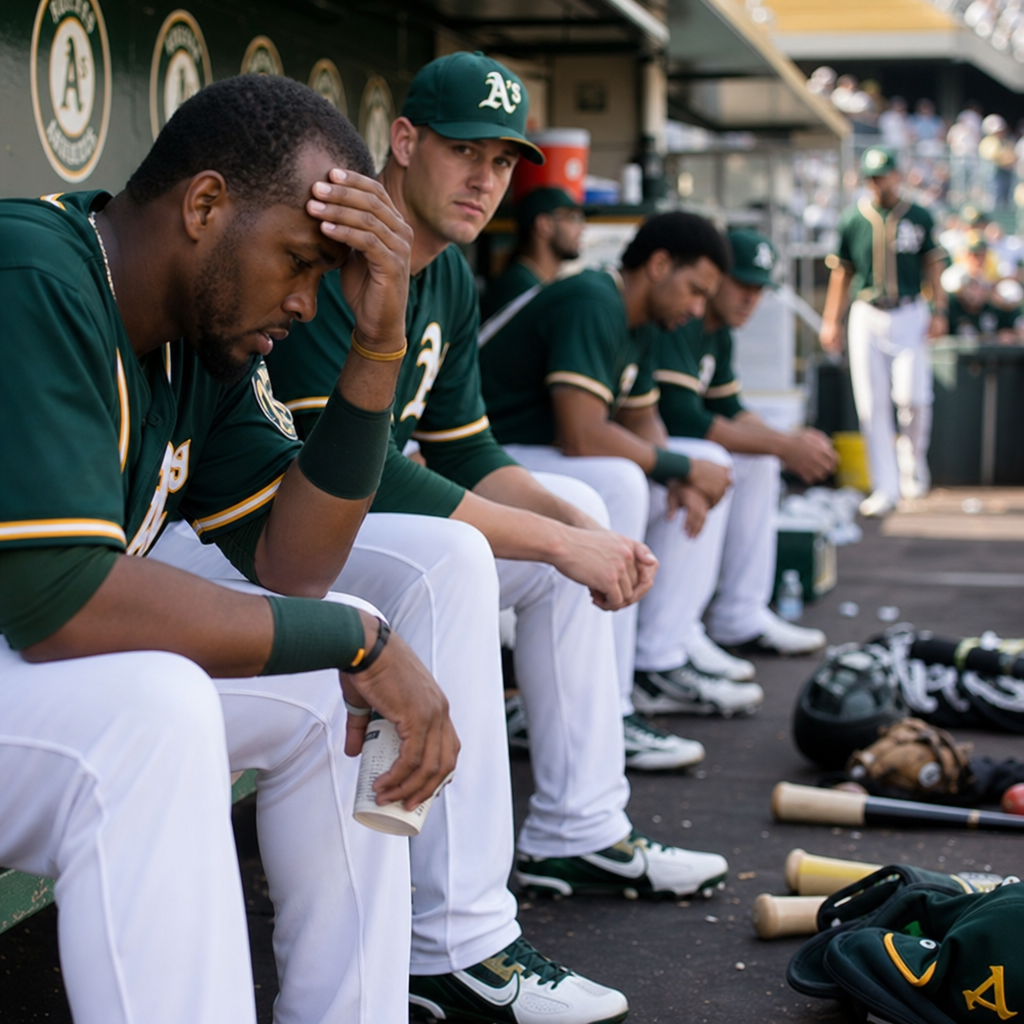
The Oakland A’s steroid scandals are not a single event but a web of allegations, investigations, suspensions, clubhouse rumors, media narratives, and leaguewide policy failures that touched the franchise at several points in modern baseball history. To uncover the truth, it helps to define what “steroid scandal” actually means in a baseball context. The term can refer to confirmed use of anabolic steroids or human growth hormone, failed drug tests, testimony in federal investigations, supplier links, clubhouse cultures that tolerated enhancement, or the reputational fallout that follows even when proof remains incomplete. In the case of the Athletics, every one of those layers matters because the club sits at the intersection of two important baseball stories: the performance-enhancing drug era and the rise of analytically driven roster building.
For fans researching Oakland A’s controversies, this topic matters because the franchise’s public image has often been split between innovation and suspicion. The A’s are widely associated with efficiency, undervalued talent, and front-office experimentation, yet several notable players connected to Oakland were later tied to performance-enhancing drugs. Some cases involved stars who spent meaningful years with the Athletics. Others involved brief stops, rumors, or indirect links through trainers, agents, and broader league probes. In practical terms, that means any serious hub page on Oakland A’s steroid scandals has to separate verified facts from retrospective guilt by association.
I have worked through these cases the same way investigators and careful baseball historians do: start with documents, place events on a timeline, distinguish allegations from admissions, and ask what was knowable at the time. That approach matters because the steroid era in Major League Baseball was defined by weak testing rules before 2004, inconsistent enforcement, and a culture where dramatic physical transformation did not automatically trigger consequences. The result is that the truth around the Oakland A’s is neither a clean indictment nor a clean exoneration. It is a record of specific individuals, incomplete evidence, and an organization operating inside a sport that was slow to regulate itself.
This article serves as a hub for the miscellaneous side of the A’s scandal history: Jose Canseco’s foundational role, Mark McGwire’s complicated legacy in Oakland, Miguel Tejada’s name in the Mitchell Report and related testimony, Jason Giambi’s BALCO-era admissions after leaving the club, and the wider question of how much institutional responsibility belonged to the Athletics. It also explains what was proven, what remains disputed, and how these episodes continue to shape how fans interpret the franchise’s achievements.
Why the Oakland A’s are central to the steroid era story
No franchise invented performance-enhancing drug use, but the Athletics became central to the public story for one simple reason: several emblematic figures of the steroid era passed through Oakland at crucial moments in their careers. Jose Canseco emerged there as a phenomenon in the late 1980s, pairing rare power and speed with a body type that stood out even in a muscular era. Mark McGwire developed into one of baseball’s most feared sluggers as an Athletic and later became one of the sport’s defining PED-era symbols. Jason Giambi won an American League MVP in Oakland before his later admissions placed his name squarely in the BALCO orbit. Miguel Tejada, another A’s MVP, was later cited in federal and investigative reporting tied to PED discussions.
The timing amplified everything. The A’s were excellent in the late 1980s and early 1990s, then became relevant again in the early 2000s during baseball’s testing transition. That meant Oakland repeatedly appeared in conversations about whether enhanced performance had influenced pennant races, MVP awards, and home run totals. It also meant that when baseball’s anti-doping framework tightened, old Oakland stars were re-evaluated through a harsher lens. The franchise became a case study in how a team can be historically linked to a scandal even when direct organizational misconduct is difficult to prove.
Jose Canseco: the whistleblower, participant, and accelerant
Any truthful account begins with Jose Canseco. As an Oakland outfielder, he became one of the game’s first modern power-speed superstars, winning American League Rookie of the Year in 1986 and AL MVP in 1988. He was also the player who most aggressively dragged baseball’s steroid culture into public view. In his 2005 book Juiced, Canseco claimed extensive firsthand knowledge of steroid use across the league and said he had personally introduced or discussed substances with other players. His accusations were explosive because he was not speaking as an outsider. He was a former clubhouse insider, and he described use as normalized rather than exceptional.
Canseco’s credibility has always been double-edged. He was undeniably close to the subject and admitted his own use, which gave his account unusual weight. At the same time, he had incentives to provoke attention, and some details in his broader public claims were challenged. Still, history has largely validated his central point: steroid use in baseball was widespread, and the sport had failed to confront it honestly. When assessing the Oakland A’s specifically, Canseco matters not only because he used PEDs, but because he shaped the public understanding of how clubhouses from that era functioned. He portrayed enhancement as embedded in competitive culture, not hidden at the margins.
Mark McGwire and the Oakland legacy that never fully cleared
Mark McGwire’s Oakland years established the profile that later became controversial: extreme strength, elite home run power, and eye-catching physicality. During his Athletics tenure, he was already one of the game’s most famous sluggers, helping the club win the 1989 World Series and reach three straight AL pennants from 1988 through 1990. Suspicion intensified in 1998 when an Associated Press reporter noticed androstenedione, a legal but controversial muscle-building supplement at the time, in McGwire’s locker during his home run chase with Sammy Sosa. That discovery did not prove steroid use by itself, but it altered how many fans viewed his entire career, including his Oakland period.
In 2010, McGwire admitted he had used steroids on and off during his career, including while with the Athletics. That admission settled the broad historical question. The remaining nuances concern timing, frequency, and impact. McGwire said he used to recover from injuries and did not take steroids year-round, a distinction that some observers accepted and others rejected. What cannot be disputed is that one of Oakland’s most celebrated stars was later confirmed as a steroid user. That fact permanently changed how people assess his records, his Hall of Fame case, and the A’s place in baseball’s PED narrative.
Jason Giambi, BALCO, and the expanding circle around Oakland
Jason Giambi is central because his Oakland success and later testimony linked the franchise to the most notorious drug-distribution case in modern baseball. Giambi became a star with the Athletics, won the 2000 AL MVP award, and then signed with the New York Yankees. In the BALCO investigation, grand jury testimony later reported by news organizations indicated that Giambi admitted using performance-enhancing substances, including testosterone and human growth hormone. Although his most public reckoning came after he left Oakland, the baseball world immediately revisited his dramatic late-career rise with the Athletics.
BALCO mattered because it moved the conversation beyond rumor. Federal investigation, named suppliers, and documented substance distribution gave the scandal a structure that baseball had long lacked. Oakland was geographically linked as well, since BALCO operated in the Bay Area. That proximity does not prove team complicity, but it explains why the Athletics were frequently mentioned when the case dominated headlines. Giambi eventually made a partial public apology in 2005, widely understood as relating to steroid use even though he did not initially offer full detail. For the A’s, his case reinforced a painful pattern: another franchise-defining hitter from a signature Oakland era had become inseparable from the PED story.
Miguel Tejada, Rafael Palmeiro, and other connected names
Miguel Tejada’s name is more complicated because the evidence around him developed in stages. Tejada was the 2002 AL MVP with Oakland and the emotional center of those early-2000s clubs. He was later named in the Mitchell Report, which cited allegations that he had received performance-enhancing substances from Kirk Radomski. Tejada denied using PEDs, but his reputation took another hit when he pleaded guilty in 2009 to misleading Congress during its investigation into baseball steroids, specifically regarding statements connected to Rafael Palmeiro. That plea was not an admission of personal steroid use, yet it deepened public suspicion.
For a hub page, it is important to state the distinction clearly: Tejada’s case involves allegations, report inclusion, and false statements to Congress, but not the same kind of direct public admission seen with Canseco or McGwire. Rafael Palmeiro, meanwhile, is relevant because he had an Oakland chapter early in his career before becoming one of baseball’s most famous PED cases elsewhere. His 2005 suspension after a positive test became part of the broader pattern in which former or future A’s stars repeatedly surfaced in steroid discussions. The same is true, to lesser degrees, with other names who touched the franchise and later appeared in reports, rumors, or league discipline.
| Figure | Connection to Oakland A’s | Nature of scandal | What is established |
|---|---|---|---|
| Jose Canseco | Star outfielder, late 1980s dynasty core | Admitted PED use; public allegations against others | Own use admitted; broader claims partly corroborated over time |
| Mark McGwire | Franchise slugger, 1989 champion | Later steroid admission; andro locker controversy | Admitted steroid use including Oakland years |
| Jason Giambi | MVP first baseman, 2000 contender core | BALCO-linked testimony and apology | Use widely established through testimony and later acknowledgments |
| Miguel Tejada | 2002 MVP shortstop | Mitchell Report mention; Congress false statement case | No full public PED admission; suspicion remains significant |
| Rafael Palmeiro | Former A’s player early in career | Positive test and suspension later elsewhere | Suspension confirmed; not primarily an Oakland-period case |
What the organization knew, and what it likely could not prove
The hardest question is whether the Oakland A’s as an organization knowingly enabled steroid use. Based on public evidence, there is no definitive proof that the front office or coaching staff ran, supplied, or formally coordinated a PED program. That distinction matters. In sports scandal analysis, institutional guilt requires more than later embarrassment from player admissions. At the same time, it would be unrealistic to assume baseball executives in that era were oblivious to the physical transformations happening around them. Clubhouses are close environments. Trainers, teammates, and staff notice changes in body composition, recovery patterns, and strength gains.
What limited action was possible before stronger MLB rules is the key context. Until survey testing in 2003 and penalties beginning in 2004, league policy was weak by modern standards. Teams were not operating under today’s compliance expectations, and suspicion alone did not create an enforceable mechanism. That does not excuse inaction, but it explains why so many clubs, not only Oakland, drifted into a culture of selective blindness. In my view, the fairest conclusion is that the A’s were part of a baseball environment that tolerated obvious warning signs because competitive incentives favored looking away.
How the scandals changed the way Oakland’s success is remembered
The effect on legacy has been profound. The late-1980s Athletics were once remembered mainly for swagger, power, and postseason dominance. Now, any honest retelling includes Canseco and McGwire as central steroid-era figures. The early-2000s A’s, often celebrated for smart roster construction and playoff consistency, are also viewed through the Giambi and Tejada questions. This does not mean every win was fraudulent or every player was enhanced. Baseball outcomes remain too complex for that. Pitching, defense, health, scouting, and tactical decisions still mattered. But the scandals undeniably changed the emotional framing of those teams.
That change also affects how newer fans research Oakland A’s miscellaneous controversies. They are not just asking who used what. They are asking whether famous achievements should be discounted, whether front offices benefited indirectly, and whether the franchise’s underdog identity sits uneasily beside repeated PED associations. The truth is uncomfortable but clear: the Athletics were neither uniquely corrupt nor untouched innocents. They were a highly visible participant in baseball’s steroid age, with multiple marquee figures later implicated at different levels.
What fans should take away from the evidence
If you want the concise answer, here it is: several major players strongly associated with the Oakland A’s were tied to steroids or related PED controversies, but the scandals vary sharply in certainty and severity. Canseco and McGwire are confirmed cases. Giambi is effectively established through testimony and subsequent acknowledgment. Tejada remains more legally and historically nuanced. The franchise itself is historically linked to the steroid era because of those players, yet no public record proves an organized Oakland-specific doping scheme.
That distinction is the real truth worth keeping. Good scandal research resists two temptations: treating every allegation as settled fact, and pretending repeated links mean nothing. For the A’s, the evidence supports a middle position grounded in documents, admissions, and context. The club’s history cannot be told honestly without the steroid scandals, but it also should not be reduced only to them. If you are exploring the wider “Scandals and Controversies” hub, use this page as a map: follow the named cases, compare direct admissions with indirect allegations, and judge each episode by the quality of proof rather than the volume of noise.
Frequently Asked Questions
What does the term “Oakland A’s steroid scandals” actually refer to?
The phrase “Oakland A’s steroid scandals” does not point to one isolated controversy. Instead, it describes a broader pattern of allegations, investigations, suspensions, rumors, media reports, and policy shortcomings that intersected with the franchise during baseball’s larger performance-enhancing drug era. In practical terms, a “steroid scandal” can mean several different things: a player testing positive under Major League Baseball’s drug policy, a player being linked to a supplier or federal investigation, testimony given in legal proceedings, leaked clubhouse stories, or persistent public suspicion based on sudden changes in performance or physique. Those categories are not the same, and separating them is essential to understanding the truth.
For the Oakland A’s, the story is especially complex because the team existed within a leaguewide environment where PED concerns were widespread, enforcement standards evolved over time, and public evidence often lagged behind private suspicion. Some cases involved confirmed violations and formal discipline, while others remained unproven but heavily discussed in the press and among fans. That distinction matters. A credible investigation, a failed drug test, and an anonymous rumor do not carry equal weight. Any serious article on the subject should define its terms clearly and avoid collapsing every allegation into a single narrative of guilt.
In other words, uncovering the truth means understanding the spectrum of evidence. It also means recognizing that the A’s were not operating in a vacuum. Their connection to steroid-era baseball reflects both specific franchise-related episodes and the larger institutional failures of MLB during that period, including delayed testing programs, uneven accountability, and a culture that often rewarded power and recovery without asking enough hard questions.
Were Oakland A’s players ever directly connected to confirmed PED use or major steroid investigations?
Yes, the franchise has been touched by both confirmed PED issues and broader steroid-era investigations, but the details vary from case to case. Some players associated with the A’s were formally disciplined under MLB rules, while others were linked to the steroid conversation through investigations, reports, or later revelations connected to baseball’s wider PED network. It is important not to treat all of those connections as interchangeable. A confirmed suspension under league policy is very different from being named in testimony, mentioned in an investigative report, or discussed in clubhouse rumor circles without official findings.
One reason this topic remains difficult is that baseball’s PED history unfolded in stages. In earlier years, the league’s testing system was weaker or nonexistent by modern standards, so many suspicions were never resolved through official mechanisms. Later, stronger testing, more public discipline, and more aggressive investigative journalism brought clearer documentation. That means some A’s-related controversies are grounded in concrete league action, while others remain part of a murkier historical record shaped by media accounts and circumstantial evidence.
When examining these cases, the most reliable approach is to distinguish among three levels of connection: confirmed violations, documented investigative links, and unverified allegations. Confirmed violations involve league discipline or admissions. Documented investigative links may include references in federal inquiries, supplier records, or sworn testimony, though not every such link resulted in punishment. Unverified allegations are the weakest category and should be treated carefully. The truth is not that every player connected to the A’s was implicated, nor that the franchise was uniquely guilty. The more accurate conclusion is that the team, like many others in that era, was affected by a drug culture that blurred the line between suspicion and proof.
Why is it so hard to separate fact from rumor in the Oakland A’s steroid story?
It is hard to separate fact from rumor because the steroid era in baseball was built on partial information, delayed disclosures, and inconsistent enforcement. For years, many accusations lived in a gray area where reporters, fans, teammates, and former insiders all had pieces of the story, but very few had complete proof. In the case of the Oakland A’s, that confusion was amplified by the franchise’s visibility during an analytically driven era, the public fascination with player performance trends, and the broader obsession with uncovering who was and was not using PEDs across the league.
Another major reason is that evidence came from many different sources, not all equally trustworthy. Some information came from official MLB announcements or legal proceedings, which carry significant weight. Other claims came from leaked testimony, unnamed sources, books, documentaries, and retrospective interviews, each with different levels of credibility and potential bias. Once a player’s name entered the public PED conversation, even without a confirmed positive test, suspicion often became part of his reputation permanently. That made objective evaluation more difficult and encouraged oversimplified narratives.
The timing of baseball’s policy evolution also created confusion. In some periods, there was little testing and almost no real deterrence, so players could be widely suspected without facing formal consequences. Later, stronger drug policies made it easier to establish official violations. Looking backward, that creates an uneven historical record. Some players from earlier periods may have escaped confirmation simply because the system was not equipped to catch them, while others from later periods were exposed under tighter rules. For readers trying to uncover the truth, the key is to prioritize verified facts, note the limits of available evidence, and resist turning every rumor into a definitive conclusion.
How did MLB’s drug policies and leaguewide failures shape the A’s steroid controversies?
MLB’s policy failures are central to understanding why the A’s steroid scandals became part of a larger, messier story rather than a clean series of resolved cases. During much of the steroid era, baseball was reactive instead of proactive. Testing was introduced late, penalties were initially limited, and enforcement often failed to match the scale of the problem. That environment allowed performance-enhancing drugs to become embedded in the sport’s culture before the league developed a meaningful framework for detection and discipline.
For the Oakland A’s, this meant that any PED-related controversy involving the team unfolded inside a system that often lacked clarity and consistency. Players, clubs, executives, media members, and fans were all operating with incomplete information. Teams benefited from strong performance in a competitive environment, while the league struggled to establish credible oversight. As a result, suspicions could circulate for years without decisive action, and later revelations often rewrote how earlier seasons and player achievements were remembered.
The policy failures also affected public trust. When MLB appeared slow to respond, many fans concluded that teams and league officials had tolerated a culture of plausible deniability. That perception did not spare the A’s. Even when no specific club was uniquely responsible, every franchise linked to steroid-era questions became part of baseball’s broader credibility crisis. In that sense, the A’s steroid scandals were not just about individual players. They were also about an institutional failure to define rules early, enforce them consistently, and communicate clearly with the public. Any honest effort to uncover the truth has to acknowledge that the league’s weaknesses helped create the confusion that still surrounds these stories today.
What is the most accurate way to evaluate the legacy of the Oakland A’s in relation to the steroid era?
The most accurate way to evaluate the Oakland A’s legacy is with balance. The franchise should neither be singled out as uniquely emblematic of baseball’s PED problems nor excused from the realities of the era. Like many teams in modern baseball history, the A’s were affected by a period in which performance-enhancing drugs influenced player development, statistical output, roster perceptions, media coverage, and fan trust. Their place in the steroid conversation reflects both specific episodes tied to individual players and the larger environment in which the entire sport operated.
A fair assessment starts by separating franchise identity from individual conduct. A team can be linked to steroid controversy without every player, coach, or executive sharing equal responsibility. It also requires recognizing that historical judgment depends heavily on evidence. Confirmed violations deserve to be treated as facts. Investigative connections deserve careful explanation and context. Rumors deserve skepticism. That framework helps avoid two common mistakes: overstating the extent of wrongdoing based on suspicion alone, or minimizing documented concerns simply because the full picture is uncomfortable.
Ultimately, the A’s legacy in this area is tied to baseball’s struggle with accountability during a transformative period. The team remains part of the story because the steroid era was never confined to one clubhouse, one season, or one scandal. It was a structural issue that reshaped how fans interpret performance, records, and competitive integrity. For readers seeking the truth, the best conclusion is not a sensational one. It is a measured one: the Oakland A’s were one franchise caught in a much bigger baseball crisis, and understanding their role requires evidence, context, and a willingness to distinguish what is known from what has only been claimed.