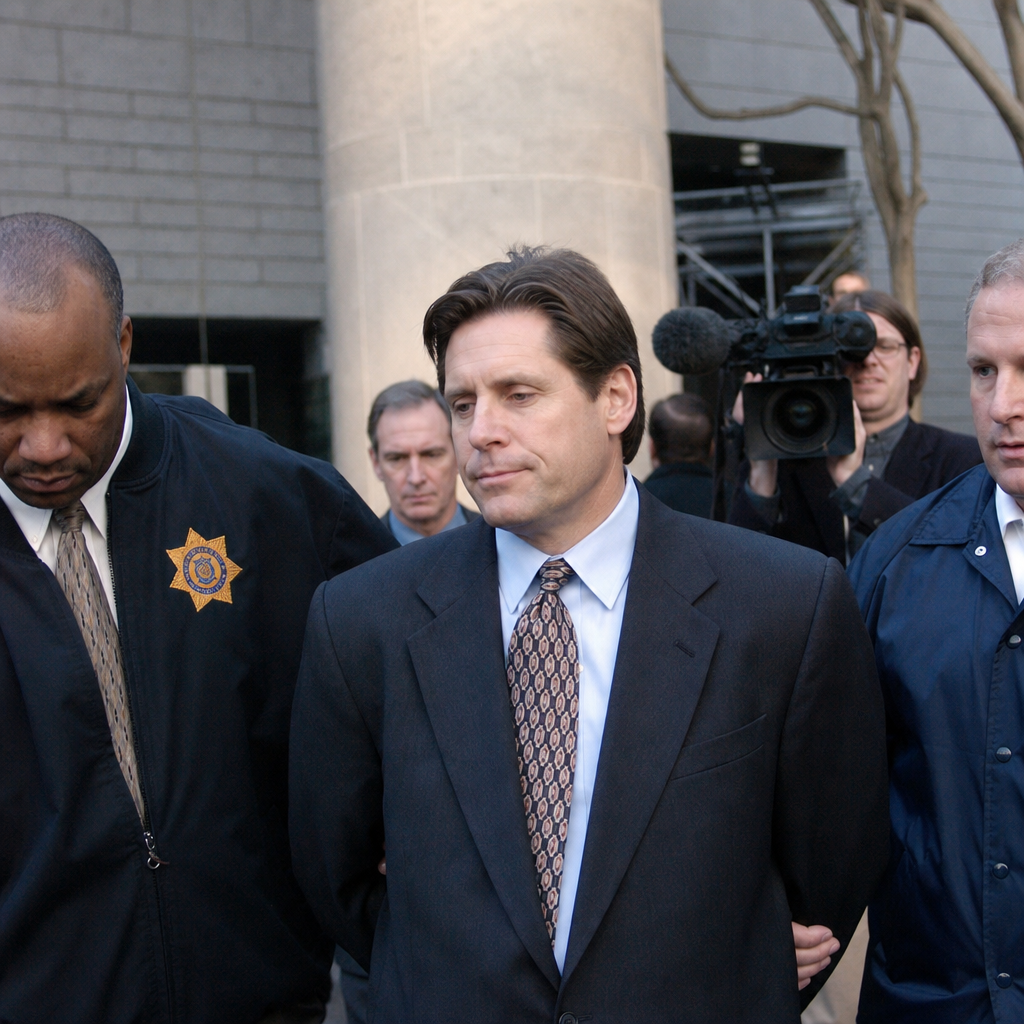
The BALCO investigation changed baseball more than any single scandal of the modern era. What began as a federal probe into the Bay Area Laboratory Co-Operative, a supplement company known as BALCO, exposed a sophisticated performance-enhancing drug network that reached star athletes, trainers, and eventually Major League Baseball itself. In baseball history, BALCO matters because it moved the steroid conversation from rumor and clubhouse suspicion into sworn testimony, seized records, criminal indictments, and public disgrace. It also accelerated the sport’s shift from permissive ambiguity to aggressive testing, suspensions, and permanent Hall of Fame debates.
To understand why the BALCO investigation became baseball’s steroid nightmare, it helps to define the central terms. Performance-enhancing drugs, often shortened to PEDs, include anabolic steroids, human growth hormone, testosterone precursors, and masking agents designed to improve strength, recovery, or conceal drug use. Doping is the intentional use of banned substances or methods to gain a competitive advantage. BALCO itself was not a baseball organization; it was a nutrition and supplement business in Burlingame, California, led by Victor Conte. Yet through Conte, trainer Greg Anderson, and a circle of elite clients, BALCO became the delivery system for substances that were marketed as undetectable. In practice, that promise was the scandal’s most dangerous element.
I have covered this era through court documents, congressional transcripts, league policy changes, and the testimony that redefined how fans viewed home run records. The reason this story still matters is simple: BALCO did not merely catch individual cheaters. It exposed structural weaknesses in baseball’s governance, showed how science could outrun league rules, and created a template for later investigations into anti-doping failures across sports. If you want a hub for the miscellaneous side of scandals and controversies in baseball, BALCO sits at the center because it touches law enforcement, media ethics, union politics, record-book arguments, and the credibility of an entire generation of stars.
How BALCO worked and why baseball was vulnerable
BALCO began as a legitimate sports nutrition business, but investigators concluded that it also distributed banned substances to high-profile athletes. Victor Conte developed relationships by presenting himself as a cutting-edge performance consultant. Greg Anderson, personal trainer to Barry Bonds, became one of the most important connectors between BALCO and baseball. According to federal investigators, the network supplied designer steroids such as tetrahydrogestrinone, commonly called THG, along with “the cream” and “the clear,” code names that later became infamous. The substances were attractive because they were engineered to evade standard testing protocols of the early 2000s.
Baseball was especially vulnerable for several reasons. First, MLB had no robust year-round testing system when steroid use expanded during the 1990s. Second, the players’ union historically resisted intrusive testing without collectively bargained protections. Third, the sport’s economic incentives rewarded power hitting. Home runs sold tickets, drove television ratings, and revived fan interest after the 1994 strike. In that environment, dramatic body transformations and unprecedented offensive numbers were often treated as curiosities rather than urgent warning signs. Club officials, media outlets, and fans all benefited from the spectacle, which made accountability weak until federal agents forced the issue.
The investigation timeline that broke open the steroid era
The BALCO case gathered momentum in 2003 when the United States Anti-Doping Agency received a syringe containing THG from coach Trevor Graham. That sample gave authorities and anti-doping scientists a starting point to identify a previously undetectable steroid. Federal agents soon searched BALCO’s facilities, and the investigation widened beyond track and field into professional baseball and football. The result was not a single dramatic reveal but a chain reaction: laboratory analysis, grand jury testimony, leaked documents, media reports, and eventually criminal charges against Conte, Anderson, and others.
For baseball, the most explosive development was the emergence of grand jury testimony attributed to elite players. Names that had circulated in whispers suddenly appeared in detailed reporting. The San Francisco Chronicle became central to public understanding by reporting on leaked testimony connected to Barry Bonds, Jason Giambi, and Gary Sheffield. Although the legal status of those leaks became a major controversy of its own, the practical effect was immediate. Baseball’s biggest stars were now tied to a federal steroid investigation, and every box score, milestone chase, and awards debate took on new suspicion.
| Year | Event | Why it mattered |
|---|---|---|
| 2003 | THG sample reaches anti-doping officials | Confirmed a designer steroid that standard tests had missed |
| 2003 | Federal raid on BALCO | Turned rumors into a criminal investigation with seized evidence |
| 2004 | Conte, Anderson, and others indicted | Established that the case was broader than athlete gossip |
| 2004-2005 | Grand jury testimony leaks reported publicly | Linked star baseball players directly to the scandal |
| 2005 | Congressional pressure intensifies | Forced MLB to strengthen its drug policy under national scrutiny |
Barry Bonds, star power, and the public collapse of plausible deniability
No player became more associated with the BALCO investigation than Barry Bonds. Before the scandal, Bonds was already one of the greatest all-around players in baseball history, with multiple MVP awards, elite on-base ability, speed, defense, and power. After his late-career surge in home run totals, however, scrutiny intensified. Bonds was never suspended by MLB under the later testing regimes for the conduct at issue in BALCO, but his reported grand jury testimony and relationship with Greg Anderson permanently altered how his achievements were discussed. The home run record, once treated as a sacred statistical prize, became a referendum on the steroid era.
The reason Bonds mattered so much was not only his fame. He represented the end of plausible deniability. Fans could no longer dismiss steroids as the behavior of fringe players trying to survive on the margins of a roster. BALCO suggested that an inner circle of elite athletes, armed with expert guidance and pharmaceutical sophistication, had exploited a broken system. Jason Giambi publicly apologized in 2005 without specifying details, a moment widely interpreted as tacit acknowledgment of steroid involvement. Sheffield denied knowingly using steroids and argued he had been deceived. Those distinctions mattered legally and morally, but they did not stop the broader trust collapse.
How MLB policy changed after BALCO
The BALCO investigation did what internal baseball politics had failed to do: it made weak drug enforcement untenable. In 2002, MLB and the MLB Players Association had adopted a survey-testing program designed to determine whether mandatory testing thresholds would be triggered. That approach already looked limited, but BALCO made it look naive. By 2004 and especially after the 2005 congressional hearings, MLB toughened penalties and expanded testing. The Joint Drug Prevention and Treatment Program evolved into a far stricter framework with year-round testing, better laboratory methods, and meaningful suspensions.
These changes were not cosmetic. Testing standards improved because anti-doping science improved. Chain-of-custody procedures, isotope ratio mass spectrometry, and test development for designer compounds became more central to enforcement. Penalties also escalated over time, culminating in suspensions severe enough to damage careers and contracts. Baseball did not become drug-free, and later scandals proved that determined users still searched for loopholes. But after BALCO, the sport could no longer pretend that a loosely enforced honor system was credible. The investigation forced baseball to align more closely with modern anti-doping practice, even if that alignment came years late.
The legal and media battles that widened the scandal
BALCO was not only a sports story. It became a legal drama involving federal prosecutorial strategy, grand jury secrecy, plea deals, and the limits of journalistic protection. Victor Conte eventually pleaded guilty in 2005 to conspiracy to distribute steroids and money laundering. Greg Anderson also pleaded guilty and later spent time in jail for refusing to testify in the government’s perjury case against Bonds. That refusal became a crucial example of how loyalty networks inside elite sports could complicate prosecution, even when investigators believed they understood the broader scheme.
The media dimension was equally significant. Reporters Mark Fainaru-Wada and Lance Williams of the San Francisco Chronicle broke major stories based on leaked grand jury material and later expanded their reporting in the book Game of Shadows. Their work shaped public understanding of the steroid era, but it also triggered a conflict over source protection when federal investigators sought testimony about the leaks. For baseball readers, this mattered because the scandal’s narrative was built from two parallel systems: the courtroom and the press. Without both, BALCO might have remained a technical doping case instead of becoming a defining cultural controversy.
The legacy of BALCO across baseball’s broader scandals and controversies
BALCO remains a hub topic because its consequences spread into nearly every later baseball controversy. Hall of Fame voting still reflects it. Voters continue to wrestle with whether players linked to performance-enhancing drugs should be judged by era, evidence, competitive context, or character clause standards. Record-book debates also flow from BALCO. Home run totals by Bonds, Mark McGwire, and Sammy Sosa are interpreted through a steroid-era lens, even though not every major name was directly part of the BALCO case. Once trust collapsed, suspicion attached itself broadly.
The investigation also influenced how later stories were framed. When the Mitchell Report appeared in 2007, audiences were ready to believe that doping had been systemic. When Biogenesis led to suspensions, including Alex Rodriguez’s historic penalty, the reporting and enforcement framework felt like an extension of what BALCO had started. Even current discussions about therapeutic use exemptions, clubhouse culture, and player development ethics trace back to lessons from this era. The core lesson is durable: if incentives reward performance at all costs and oversight lags behind science, scandal is not an exception. It is an eventual outcome.
For readers exploring miscellaneous scandals and controversies in baseball, BALCO is the essential hub because it connects the sport’s most important fault lines. It explains why steroid policy changed, why certain records remain contested, why some stars stay outside Cooperstown, and why fans still question sudden performance spikes. It also shows how baseball scandals rarely stay confined to the field. They expand into labor negotiations, criminal law, journalism, public health, and the business of sport. That breadth makes BALCO more than one ugly chapter; it is the framework for understanding the steroid era as a system failure.
The key takeaway is clear. The BALCO investigation exposed a network, but its deeper significance was revealing how many institutions had reasons not to look too closely. Players gained results, teams gained revenue, media gained spectacle, and the league gained renewed popularity. Only when federal investigators, anti-doping scientists, and relentless reporting forced the evidence into public view did baseball seriously reform its approach. That is why BALCO remains the benchmark steroid scandal: it combined elite names, hidden chemistry, legal pressure, and historic consequences in one case.
For anyone studying baseball controversies, start with BALCO and then follow the threads outward. Read the policy history, review the congressional testimony, compare pre- and post-testing eras, and examine how Hall of Fame arguments use evidence from this case. The more closely you study BALCO, the more clearly you see modern baseball’s central truth: competitive integrity requires rules, testing, enforcement, and transparency to work together. Without them, the game eventually pays the price.
Frequently Asked Questions
What was the BALCO investigation, and why was it such a turning point for baseball?
The BALCO investigation centered on the Bay Area Laboratory Co-Operative, a California-based supplement company that became the focus of a federal probe into the distribution of performance-enhancing drugs. What made this case so important was that it pushed baseball’s steroid problem out of the realm of rumor and into documented legal fact. For years, fans, writers, and even some people inside the sport suspected widespread PED use, but suspicion is very different from evidence. The BALCO case produced seized records, grand jury testimony, criminal charges, and a paper trail connecting elite athletes, trainers, and suppliers.
In baseball history, BALCO marked the moment when the sport could no longer treat steroids as a vague clubhouse issue. The investigation exposed how sophisticated the system had become, with designer substances, coded language, and carefully managed distribution networks intended to avoid detection. That level of organization made clear that this was not just a few isolated players making bad choices. It suggested a culture in which competitive pressure, money, and weak testing policies allowed PED use to flourish.
The scandal also forced Major League Baseball to confront the credibility problem it had been trying to manage for years. Once BALCO became national news, the conversation changed from “Is there a problem?” to “How deep does it go, and what will baseball do about it?” That shift had lasting consequences for league policy, public trust, Hall of Fame debates, and the way fans interpret records from the so-called Steroid Era.
How did BALCO allegedly supply performance-enhancing drugs to athletes?
According to investigators, BALCO was not simply selling ordinary nutritional supplements. The company was accused of being part of a much more advanced system that provided athletes with banned performance-enhancing substances, including designer steroids created to be difficult to detect through standard drug testing. One of the most famous examples was THG, often referred to as “the clear,” a substance that became symbolic of how far doping practices had evolved beyond older, more familiar steroids.
The alleged operation worked through a network of relationships involving trainers, handlers, and athletes who were looking for a competitive edge while reducing the risk of being caught. Substances were often discussed in coded terms, and the methods used reflected an awareness of drug-testing vulnerabilities. That is one reason the BALCO scandal hit so hard: it showed that anti-doping systems were lagging behind the people trying to beat them.
For baseball, this mattered because it shattered the comforting idea that testing alone would automatically keep the game clean. BALCO highlighted the reality that athletes with access to expert guidance and specialized substances could potentially stay ahead of enforcement. It revealed a cat-and-mouse dynamic between dopers and regulators, one that forced MLB and other sports organizations to rethink not just what they were testing for, but how quickly they needed to adapt to new forms of cheating.
Which baseball figures were connected to the BALCO scandal?
Several high-profile baseball names became associated with the BALCO investigation, either through testimony, reporting, or public scrutiny. Barry Bonds was the most prominent figure linked to the case, and his connection made the scandal especially explosive because he was one of the era’s defining superstars. The possibility that one of baseball’s greatest sluggers had ties to a sophisticated doping network transformed BALCO from a legal story into a full-scale crisis for the sport’s image.
Other players were also drawn into the broader conversation, directly or indirectly, as investigators and journalists uncovered the extent of the performance-enhancing drug culture surrounding elite athletics. While not every name carried the same legal implications, the cumulative effect was enormous. BALCO suggested that PED use was not confined to fringe players trying to hang on to a roster spot. It reached the top tier of professional sports, including athletes whose achievements were central to baseball’s popularity and marketing.
That broader pattern is part of why the scandal remains so significant. Fans were forced to grapple with uncomfortable questions about the legitimacy of on-field accomplishments, and baseball had to confront the possibility that some of its biggest icons were tied to the very practices it had failed to police aggressively. Even today, discussions about legacy, records, and Hall of Fame voting often circle back to the names associated with BALCO and what those connections meant for the integrity of the game.
How did the BALCO investigation change Major League Baseball’s drug policies?
The BALCO investigation dramatically accelerated the pressure on Major League Baseball to adopt stricter, more credible anti-doping measures. Before the scandal fully erupted, MLB’s approach to performance-enhancing drugs was widely viewed as weak, reactive, and behind the times. Testing policies were limited, penalties were not especially severe, and enforcement lacked the kind of urgency needed to address a fast-moving problem. BALCO exposed those shortcomings in a very public way.
In response to mounting outrage, MLB and the players’ union moved toward stronger testing protocols, broader banned-substance lists, and harsher suspensions for violations. The league also became more serious about year-round testing and more responsive to developments in the science of PED detection. While change did not happen overnight, BALCO was one of the major catalysts that made a tougher anti-drug framework politically and culturally unavoidable.
Just as importantly, the investigation changed the expectations surrounding accountability. After BALCO, the public no longer accepted vague assurances that baseball was handling the issue internally. Fans, lawmakers, and media outlets expected transparency, consistency, and visible enforcement. In that sense, the scandal did more than alter specific rules. It changed the standard by which MLB’s integrity efforts would be judged, and that influence can still be seen in how the league handles PED issues today.
Why does the BALCO scandal still matter in baseball history today?
The BALCO scandal still matters because it sits at the center of baseball’s reckoning with the Steroid Era. It was not the only PED controversy in the sport, but it was arguably the one that made denial impossible. By linking federal investigators, criminal proceedings, star athletes, and detailed evidence, BALCO gave the steroid debate a level of seriousness and permanence that baseball could not escape. It changed how fans interpret an entire generation of statistics and accomplishments.
Its legacy also lives on in the unresolved debates it left behind. When people argue about home run records, Hall of Fame elections, competitive fairness, or whether certain players should be celebrated or criticized, BALCO is often part of the backdrop. The investigation helped define the moral and historical framework through which that era is remembered. It raised difficult questions about personal responsibility, institutional failure, media complicity, and the line between training innovation and cheating.
Perhaps most importantly, BALCO matters because it serves as a warning about what happens when a sport benefits from explosive performance but hesitates to ask hard questions about how that performance is being achieved. Baseball’s steroid nightmare was not just about individual choices. It was about a system that allowed suspicion to grow until a federal investigation forced the truth into the open. That is why BALCO remains one of the most consequential scandals in modern baseball history.