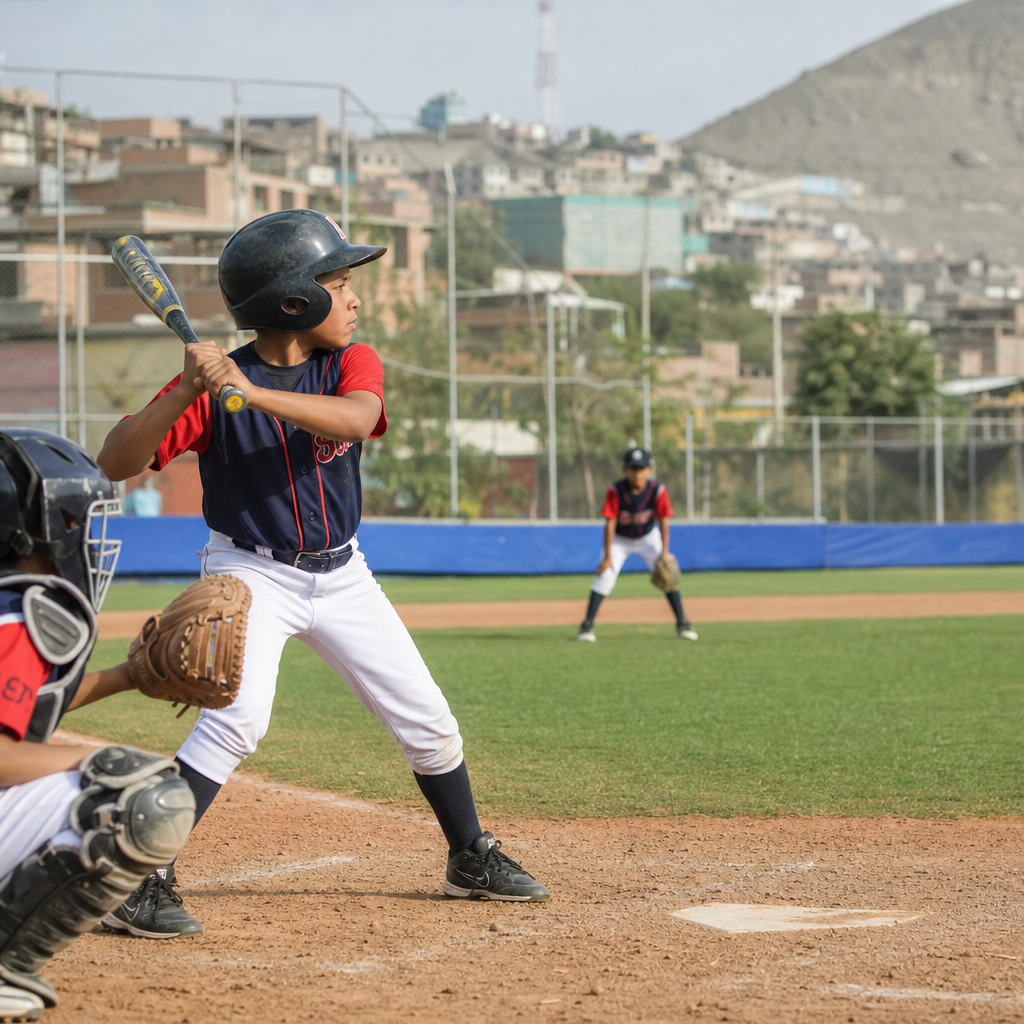
Baseball in Peru is no longer a curiosity discussed only in small sporting circles; it is becoming a credible new pastime shaped by migration, community clubs, youth development, and global media. In Peru, a country where football dominates attention and volleyball has deep roots, baseball occupies a different space: smaller, more localized, but increasingly organized. The sport’s growth matters because it shows how international baseball can take hold outside traditional strongholds when local identity, family networks, and accessible training come together. I have seen this pattern repeatedly across emerging baseball markets, and Peru fits it well. The game grows first through communities, then schools, then structured competitions, and finally broader recognition. Understanding baseball in Peru means looking beyond headline results. It requires attention to history, regional demographics, coaching quality, facilities, women’s participation, youth pathways, and the role of diaspora communities. This hub article explains those moving parts and shows why Peru’s baseball future is more promising than many casual observers realize today.
Historical Roots and Early Development
Baseball in Peru did not appear overnight. Its roots are tied to immigration, especially Japanese and other international communities that brought the game with them during the twentieth century. Lima became the main center because immigrant families, schools, and cultural associations had enough density to sustain clubs and regular play. That pattern mirrors early baseball growth in several nontraditional countries: the sport survives first as a community practice before it becomes a national project. In Peru, this meant baseball developed in pockets rather than across the whole country. For years, it remained overshadowed by football’s commercial power and by volleyball’s national success, yet the sport endured through volunteer administrators, local leagues, and parents willing to commit time and money.
The Peruvian Baseball and Softball Federation has been central in keeping that continuity. Federations in developing baseball nations often perform multiple roles at once, acting as organizer, talent scout, coach educator, and fundraiser. Peru has faced the same structural challenge: building a national sport without the budget or infrastructure available in countries such as Japan, the Dominican Republic, or Mexico. Even so, continuity matters more than size in the early stages of sports development. A small but stable competition calendar can preserve institutional knowledge and create a base for future growth. Peru’s baseball story is therefore less about sudden expansion and more about persistence. That persistence is exactly what allows a so-called miscellaneous baseball market to become an emerging one.
Why Baseball Is Growing in Peru Now
Several practical factors explain why baseball in Peru is receiving more attention now than in earlier decades. First, international exposure has expanded dramatically. Streaming platforms, social media highlights, and global tournaments make it easier for young Peruvians to discover Major League Baseball, the World Baseball Classic, and high-level youth competitions. A teenager in Lima no longer needs a local television contract to follow Shohei Ohtani, Ronald Acuña Jr., or Julio Rodríguez. Second, training knowledge is easier to access. Coaches can study drills, throwing progressions, strength programs, and defensive systems from respected sources such as USA Baseball, Major League Baseball development content, and private academies.
Third, Peru benefits from a community-to-youth pipeline. When I evaluate whether a baseball country can move from hobby status to durable growth, I look for three signs: parents willing to bring children regularly, coaches who can teach fundamentals safely, and competitions meaningful enough to keep players engaged after age twelve. Peru increasingly shows all three. Families see baseball as a disciplined environment where children learn concentration, timing, teamwork, and resilience. That matters in crowded urban environments where organized recreational options are limited. The sport also appeals to children who may not fit football’s nonstop running model but excel in reaction speed, hand-eye coordination, and tactical decision-making. This broadens participation and gives baseball a distinct place in Peru’s youth sports landscape.
Where the Game Is Played and Who Plays It
Lima remains the center of Peruvian baseball, both administratively and competitively. Most clubs, coaches, and organized leagues are concentrated in and around the capital, which is typical in emerging baseball nations. Dense population, transport access, and existing immigrant institutions all make regular training easier there than in more remote regions. However, the importance of Lima should not obscure the broader social picture. Baseball in Peru is sustained by a mix of longtime community members, children entering the sport through school or neighborhood programs, and families with connections to countries where baseball has a stronger profile.
One important thread is the influence of the Japanese Peruvian community. Historically, Nikkei institutions have supported baseball culture through clubs, facilities, and family participation. This contribution has been foundational rather than symbolic. In many developing baseball settings, a committed minority keeps standards alive across generations until the sport can expand outward. Peru is a clear example. At the same time, the player base is becoming more mixed. Coaches and organizers increasingly aim to present baseball not as a heritage activity for a specific community but as an accessible sport for any Peruvian child. That transition is essential. A sport becomes nationally relevant only when it moves from community preservation to open recruitment and visible pathways.
| Growth Factor | Why It Matters in Peru | Practical Effect |
|---|---|---|
| Community clubs | Provide stable training environments and volunteer leadership | Children can play consistently instead of attending one-off clinics |
| Youth development | Builds the sport from early ages rather than relying on adult converts | Improves fundamentals and long-term retention |
| International media | Introduces stars, tactics, and the wider baseball culture | Raises interest and makes the sport easier to understand |
| Federation support | Organizes leagues, national teams, and external competition | Creates legitimacy and measurable goals for players |
| Facility access | Baseball requires safe spaces for throwing, hitting, and games | Determines whether growth stays casual or becomes structured |
Youth Development, Coaching, and Competition
If baseball in Peru is to become a lasting pastime, youth development will determine the outcome. Talent identification alone is not enough. Countries new to baseball often make the mistake of focusing on occasional tournaments while neglecting routine skill acquisition. In practice, the decisive work happens in repetition: throwing mechanics, receiving, infield footwork, strike-zone awareness, base running reads, and age-appropriate strength habits. The best Peruvian programs understand this. They prioritize regular training over event-based visibility. That is a smart approach because baseball punishes technical shortcuts. A player can be athletic and still struggle badly without solid fundamentals.
Coaching quality is another turning point. Safe throwing programs, pitch-count awareness, and progressive instruction are nonnegotiable if Peru wants to retain players and avoid preventable injuries. Established baseball countries benefit from generations of tacit knowledge, while Peru must build that expertise more intentionally. Clinics, certification pathways, and partnerships with experienced instructors are therefore especially valuable. I have seen emerging programs improve quickly when coaches stop copying professional workouts and instead focus on age-specific progression. For an eight-year-old, catching cleanly and learning proper grip matters more than velocity. For a fourteen-year-old, command, mobility, and decision-making matter more than radar-gun readings. When Peru develops coaching literacy at scale, player development accelerates.
Competition also needs calibration. Too little competition causes boredom; too much emphasis on winning distorts development. The healthiest baseball ecosystems use local leagues for repetition, regional tournaments for motivation, and national teams for aspiration. Peru has room to strengthen each level. A wider domestic calendar would give players more game situations, while better scorekeeping and simple performance tracking would help coaches identify weaknesses. Even basic data, such as strike percentage, on-base rate, and defensive error patterns, can transform how a club trains.
Facilities, Equipment, and Structural Challenges
One reason baseball grows more slowly than some other sports in Peru is that it demands specialized space and equipment. A football can be kicked almost anywhere. Baseball cannot be played safely without sufficient distance, maintained fields, backstops, gloves, bats, helmets, and balls. This creates a real barrier, especially in urban areas where land is expensive and multiuse recreation spaces are contested. When baseball programs share fields not designed for the sport, training quality drops and injury risk rises. Poor infield surfaces affect footwork and hops, while inadequate fencing limits batting practice and game readiness.
Equipment costs also matter. For new families, a glove, cleats, protective gear, and travel expenses can feel substantial compared with lower-cost sports. Successful baseball countries at Peru’s stage usually address this with club lending systems, federation support, sponsorships, and donated equipment channels. Those solutions are not glamorous, but they work. In my experience, the clubs that grow fastest are often the ones that remove friction at the beginner stage. If a child can attend the first months of training using shared gear, the chance of long-term retention increases sharply.
There is also the challenge of visibility. Because baseball is not yet mainstream in Peru, it competes for municipal support, media coverage, and private sponsorship against better-known sports. That makes proof of impact essential. Programs that can show steady attendance, school partnerships, and youth outcomes are more likely to secure field time or institutional backing. Baseball in Peru will advance when organizers treat administration with the same seriousness as coaching. Registration systems, safeguarding policies, scheduling discipline, and sponsor reporting are not secondary tasks; they are part of building a credible sport.
International Connections and the Path Ahead
Peru’s baseball future will depend heavily on international connections. In emerging markets, outside competition sharpens standards faster than local play alone. Regional tournaments in South America and broader continental events expose Peruvian players to different pitching profiles, game speeds, and tactical norms. They also reveal development gaps honestly. A team may discover that its hitters struggle with velocity, its catchers need quicker transfers, or its pitchers lack off-speed command. Those lessons are valuable because they turn vague ambition into specific training priorities.
International links also matter through coaching exchanges and diaspora networks. Countries such as Argentina, Brazil, Colombia, and Venezuela provide useful regional reference points, while Japan and the United States offer models for technical education and player pathways. Peru does not need to copy any one system wholesale. It needs selective adaptation. That means borrowing coach education standards, youth competition formats, and facility management ideas that fit local realities. It also means recognizing women’s softball and baseball-adjacent development as part of the ecosystem, not separate from it. Broader bat-and-ball participation helps normalize the sport culturally and widens the volunteer base.
For readers exploring international baseball, Peru is a compelling case because it represents the middle stage of growth. The sport is not starting from zero, but it is not yet embedded nationally. That makes this page a useful hub for miscellaneous coverage: history, clubs, youth training, facilities, diaspora influence, and regional competition all connect here. The key takeaway is simple. Baseball in Peru is growing because committed communities built a foundation, youth programs are improving, and global access has made the sport easier to follow and teach. The next step is sustained investment in coaching, facilities, and local competition. If you follow international baseball, keep Peru on your radar and explore the related articles in this hub to understand where the game may expand next.
Frequently Asked Questions
Why is baseball starting to gain attention in Peru?
Baseball is gaining attention in Peru because it fits into a wider pattern seen in many emerging sports markets: a small but committed base of players, families, and organizers gradually building enough structure for the game to move beyond novelty. For years, baseball in Peru was easy to overlook because football overwhelmingly dominated the sporting landscape, while volleyball already had strong cultural recognition and institutional support. That meant baseball developed more quietly, often through local clubs, migrant communities, and personal networks rather than through major national headlines. What is changing now is the level of organization around the sport. More people are becoming aware that baseball is not just being played casually, but is being taught, practiced, and promoted in a more systematic way.
Another important reason is visibility. Global media, streaming access, international tournaments, and social media have made baseball easier to follow than in previous generations. Peruvians can now watch Major League Baseball highlights, international competitions, youth training content, and Spanish-language coverage with much less difficulty. That kind of exposure matters because it helps new audiences understand the rules, appreciate the strategy, and imagine a pathway into the sport. Combined with local coaching efforts and grassroots participation, this visibility gives baseball a stronger identity in Peru as a legitimate developing pastime rather than an imported curiosity with no local future.
What factors are driving the growth of baseball in Peru?
Several forces are helping baseball grow in Peru, and the most important ones are community organization, migration, youth development, and international influence. Community clubs have been especially significant because they provide the day-to-day foundation every growing sport needs. Without local places to train, compete, and build routine participation, interest tends to remain abstract. In Peru, baseball’s expansion depends heavily on these smaller structures: neighborhood teams, family-led initiatives, local coaches, and amateur leagues that keep the sport active and visible. These groups create continuity, which is often more valuable in early growth stages than high-profile publicity.
Migration has also played a central role. In many countries where baseball is expanding, migrant communities bring not just enthusiasm for the game but practical knowledge about how to organize it. That can include coaching methods, equipment networks, club culture, and exposure to baseball traditions from countries where the sport is more established. In Peru, that transfer of knowledge helps baseball develop with greater authenticity and stability. At the same time, youth development is essential. If a sport wants long-term growth, it cannot depend only on adults who discover it later in life. It needs children and teenagers learning fundamentals, joining teams, and seeing baseball as part of their regular sporting options. When youth programs begin to take hold, the sport gains a future, not just a present.
International media and global baseball culture add another layer. Young athletes today are influenced by what they watch online as much as by what they see in person. Highlights, player stories, coaching clips, and international tournaments can spark interest quickly. That interest becomes meaningful when local clubs are ready to receive it. In other words, media may open the door, but organized local participation is what turns curiosity into sustained growth. Peru’s baseball story is being shaped by exactly that combination.
How does baseball fit into Peru’s sports culture when football and volleyball are already so dominant?
Baseball fits into Peru’s sports culture as a niche sport with room to grow, rather than as a direct challenger to football or volleyball. That distinction is important. Football has an unmatched emotional, commercial, and cultural presence in Peru, and volleyball has long-standing popularity and legitimacy. Baseball is not trying to replace either one. Instead, it is carving out its own space among communities looking for additional sporting identities, alternative development opportunities, and more diverse forms of youth participation. In practical terms, that means baseball’s success in Peru should not be measured by whether it overtakes the country’s biggest sports, but by whether it becomes more organized, more accessible, and more sustainable over time.
This can actually work in baseball’s favor. Sports that grow outside the pressure of immediate mass expectation often have the chance to develop strong grassroots cultures. Participants tend to be highly committed, clubs become important social hubs, and the people involved often take active roles in promotion, coaching, and recruitment. That kind of community energy can produce steady expansion. Baseball also offers something distinct in terms of rhythm and skill set. It appeals to athletes and families who enjoy its combination of strategy, individual responsibility, technical development, and team coordination. As awareness increases, more Peruvians may come to see baseball not as an unusual foreign pastime, but as one more legitimate option in an increasingly varied national sports scene.
What challenges does baseball still face in Peru?
Despite its progress, baseball in Peru still faces several important challenges, and infrastructure is one of the biggest. A sport can generate interest, but that interest is difficult to sustain without adequate fields, equipment, coaching resources, and regular competition. Football has the advantage of being relatively easy to organize almost anywhere, while baseball usually requires more specialized space and gear. That makes early growth more demanding. If players cannot find appropriate places to train or if clubs struggle to maintain equipment, the sport’s development can slow significantly.
Another challenge is visibility within a crowded sports environment. Even if baseball is growing, it still competes for media attention, funding, sponsorship, and institutional recognition. Sports that are already established naturally attract more coverage and investment. Baseball therefore has to build momentum carefully, often through local success stories rather than national spotlight. There is also the issue of continuity. Many emerging sports experience bursts of enthusiasm that fade if leadership changes, funding dries up, or youth pathways are not maintained. For baseball in Peru to move from promising growth to lasting presence, it needs stable administration, consistent coaching, and long-term development plans that connect beginners, youth players, amateur competition, and broader public engagement.
Even so, these challenges are not unusual for a sport in an expansion phase. In fact, the existence of organized clubs, developing youth participation, and growing awareness suggests that baseball in Peru has already moved beyond the most fragile stage. The next step is not simply attracting attention, but turning that attention into durable systems that can support the sport year after year.
What could the future of baseball in Peru look like?
The future of baseball in Peru will likely depend on whether current grassroots momentum can be translated into broader national structure. If clubs continue to grow, youth programs expand, and more communities gain access to coaching and facilities, baseball could become a recognized secondary sport with a loyal and increasing player base. That would be a meaningful achievement in a country where established sports already command so much attention. A realistic and positive future for baseball in Peru is not necessarily one of instant mass popularity, but of steady institutional growth: more leagues, better training environments, stronger youth pipelines, and greater public familiarity with the game.
There is also potential for baseball to strengthen Peru’s international sporting connections. As the sport develops locally, players, coaches, and clubs may gain more opportunities to participate in regional competitions, exchange knowledge, and build relationships with baseball communities elsewhere in Latin America and beyond. That can raise standards and create a sense of ambition around the sport. Over time, even modest success stories can have a multiplying effect. A single strong youth program, a well-run club, or a player who reaches a higher competitive level can inspire broader participation and convince families that baseball offers real opportunities.
Ultimately, baseball’s future in Peru will be shaped by patience as much as passion. New pastimes do not become durable through excitement alone; they become durable through repetition, teaching, community trust, and visible pathways for participation. Peru appears to be moving in that direction. If that progress continues, baseball could establish itself not as a temporary trend, but as a small yet important part of the country’s evolving sports culture.