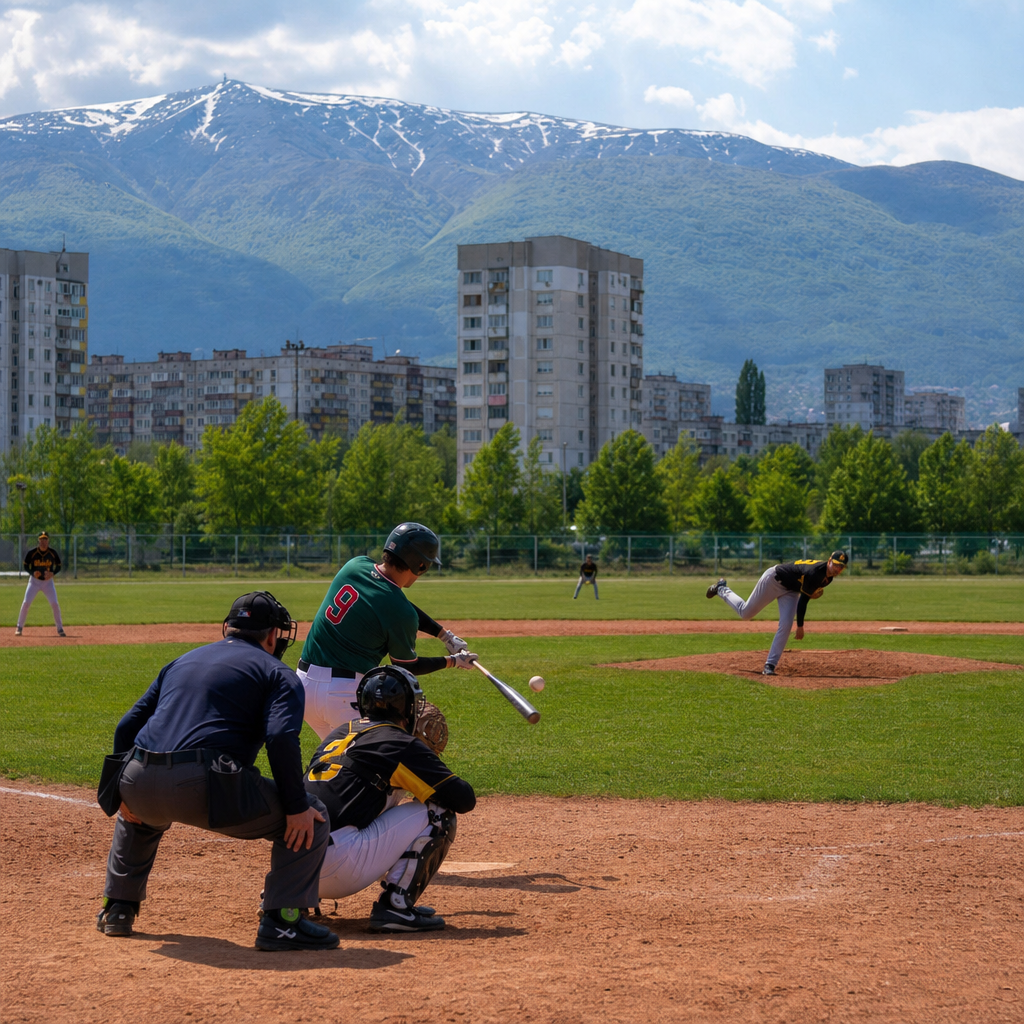
Baseball’s emergence in Bulgaria is a story of patient institution building, cultural translation, and steady international connection rather than sudden mass popularity. In practical terms, Bulgarian baseball developed through schools, local clubs, municipal support, and ties to European and American baseball communities that supplied coaching, equipment, and competition. For readers exploring international baseball, Bulgaria matters because it shows how the sport grows outside its traditional strongholds: not by replacing football or basketball overnight, but by creating durable structures, committed volunteers, and pathways for young players to learn a complex game. Having worked across international sports development projects, I have seen this pattern repeatedly, and Bulgaria is one of the clearest examples. Its baseball ecosystem remains relatively small, yet it reveals how emerging federations organize leagues, train coaches, secure fields, and build legitimacy. That makes Bulgaria an important case within miscellaneous international baseball coverage: it connects grassroots sport, post-socialist transition, European federation support, and the realities of sustaining a niche game in a competitive sports market.
How baseball first took root in Bulgaria
Baseball arrived in Bulgaria during the broader opening of Eastern Europe in the late twentieth century, when new sports entered school systems and local communities through exchange programs, visiting coaches, and media exposure. After 1989, Bulgarian civil society and sports administration changed rapidly. That environment created space for sports with little domestic tradition to establish governing bodies and register clubs. In baseball’s case, the early challenge was basic literacy: players, teachers, and municipal officials needed to understand rules, field dimensions, equipment needs, and season structure. Unlike football, which can begin with minimal gear, baseball requires gloves, bats, balls, protective equipment, scoring knowledge, and enough trained participants to practice meaningfully.
Early organizers solved those barriers in practical ways. They adapted existing open fields, shared equipment, and leaned heavily on demonstration events. In several emerging baseball countries, introductory sessions often start with soft toss, simplified base running, and modified games before full nine-inning baseball becomes realistic. Bulgaria followed a similar path. Initial growth depended less on spectators and more on enthusiasts willing to become founders, coaches, groundskeepers, and administrators at the same time. That multipurpose volunteer model is common in smaller federations and remains one of the defining features of Bulgarian baseball.
Institutional recognition was another turning point. Once a national federation structure exists, clubs can register players, organize championships, communicate with continental bodies, and pursue public funding or sponsorship. In Europe, confederation-level relationships are crucial because they give developing nations access to tournament calendars, coach education, and standardized rules. Bulgaria’s baseball advocates understood that legitimacy would not come from isolated exhibition games. It would come from repeatable competition and visible governance. That is why federation building, however unglamorous, mattered as much as any memorable on-field result.
The organizations, leagues, and clubs that built the game
The backbone of baseball in Bulgaria has been its national federation and the network of clubs that carry the sport locally. In emerging baseball systems, clubs are not just teams. They are recruitment centers, equipment libraries, youth academies, and event organizers. A viable club teaches fundamentals, maintains a practice schedule, recruits children from nearby schools, communicates with parents, and enters regional or national competition. Without that full-service role, a team may last a season but not a decade.
Bulgarian baseball has historically depended on a handful of committed clubs concentrated in cities where volunteer leadership and facility access aligned. That concentration is not a weakness by itself; many European baseball countries developed the same way. The key is whether those clubs become training nodes that spread knowledge outward. When one club hosts clinics, lends gear, or sends coaches to another town, the national footprint expands even if total player numbers remain modest.
League structure also matters. For a developing baseball country, an ideal calendar balances competitive intensity with travel costs and roster depth. Too many fixtures can drain budgets; too few can stall player development. Bulgaria’s organizers, like their peers across Europe, have had to fit baseball around school calendars, municipal field availability, and the realities of part-time athletes. National championships and cup-style events provide focal points for the season, while youth categories are especially important because they create continuity. If a federation relies only on adults who discovered baseball late, attrition eventually becomes severe.
Another often overlooked factor is scorekeeping and officiating. Baseball cannot be administered credibly without trained umpires and accurate records. Developing federations usually progress in stages: first playing games, then recording standings consistently, then compiling player statistics, disciplinary rules, and eligibility systems. Bulgaria’s baseball growth should be understood through that lens. Every functioning league requires invisible administrative labor, and that labor is frequently the difference between a hobby scene and an enduring sport structure.
| Development area | Why it matters in Bulgaria | Typical challenge | Practical response |
|---|---|---|---|
| Club formation | Creates stable local entry points for players | Small volunteer base | Combine coaching, administration, and outreach roles |
| Youth programs | Builds long-term player pipeline | Limited school awareness | Run demonstrations and beginner clinics |
| League competition | Gives structure and legitimacy to the season | Travel and scheduling costs | Use regional concentration and weekend play |
| Facilities | Allows regular training and safer games | Few dedicated diamonds | Adapt multipurpose fields gradually |
| Coach and umpire education | Improves quality and trust in competition | Limited domestic expertise | Use federation courses and international support |
Youth development, coaching, and the school connection
If someone asks how baseball grows in a country like Bulgaria, the direct answer is through children first, adults second. Youth development is the decisive variable because baseball is technique heavy. Hitting mechanics, glove work, throwing patterns, base running instincts, and game awareness all improve most efficiently when learned early. In my experience, late-start baseball communities can remain enthusiastic for years without breaking through competitively because their athletes simply begin too old. Bulgaria’s progress has therefore depended on introducing the game in schools, community programs, and junior club settings.
School partnerships are especially effective because they solve two problems at once: access to participants and access to space. Physical education teachers can introduce simplified baseball or softball drills even when a full diamond is unavailable. Bat-and-ball activities, throwing progression, reaction games, and base running circuits help children learn the sport’s movement patterns before formal competition. Once interest appears, clubs can invite students to weekend sessions and begin the more specialized work of pitching, catching, infield footwork, and tactical play.
Coaching quality determines whether those early introductions turn into retention. Baseball instruction is highly sequential. Young players need age-appropriate progressions, not adult practice plans copied from television. Good development programs start with grip, stance, receiving, and throwing mechanics; then they add situational understanding such as force plays, cutoffs, bunts, and pitch selection. They also monitor workload. Even at modest amateur levels, responsible coaches must protect throwing arms by limiting high-intensity volume and teaching proper recovery habits.
International clinics have been important here. Federations across Europe often rely on visiting instructors from more established baseball nations to certify local coaches and introduce standardized training methods. Bulgaria benefits when these exchanges produce local multiplication, meaning one trained coach returns home and educates three more. That is how niche sports become self-sustaining. The ultimate indicator is not one successful camp but whether Bulgarian coaches can independently run quality sessions year after year.
Facilities, equipment, and the economics of a niche sport
One reason baseball remains challenging to expand in Bulgaria is that it is materially demanding. A proper baseball environment needs more than enthusiasm. It needs gloves in different sizes, helmets, catcher’s gear, bats matched to age and competition level, baseballs in large quantities, field marking tools, bases, protective screens, and safe playing surfaces. Dedicated diamonds are ideal, but many emerging programs begin on adapted football grounds or municipal open spaces. That keeps entry costs manageable, yet it also limits the experience. Outfield depth may be short, infield dirt may be absent, and backstop protection may be improvised.
These details affect development more than casual observers realize. Ground balls behave differently on uneven grass than on a prepared infield. Catchers cannot train properly without reliable protective gear. Pitchers struggle to repeat mechanics on unstable mounds. For that reason, facility improvement is not cosmetic; it is developmental infrastructure. In Bulgaria, as in many smaller baseball countries, progress often comes incrementally: portable mounds first, fencing later, dugouts after that, and eventually a more specialized venue capable of hosting national or international games.
Funding sources are usually mixed. Municipal grants, federation assistance, member fees, private sponsors, donated equipment, and international partnerships all play a role. Used equipment from established baseball nations has historically been valuable for emerging programs, though it is not a complete solution. Secondhand gloves help beginners start, but long-term growth requires predictable domestic budgeting. Clubs that rely entirely on occasional donations remain vulnerable. Sustainable baseball in Bulgaria depends on regular expenses being planned like any serious sport operation, including transport, umpire costs, medical provision, and facility maintenance.
Bulgaria in the European and global baseball landscape
Bulgaria’s baseball profile makes the most sense when viewed within European baseball rather than against Major League Baseball countries. Europe contains a wide spectrum of baseball development. Nations such as the Netherlands and Italy have deep traditions, professional links, and strong international records. Others are still building the foundations of coaching and competition. Bulgaria belongs to the developing tier, where success is measured not only by wins but by whether national teams are fielded consistently, clubs remain active, and youth participation expands.
Continental tournaments are important because they provide benchmark competition. A Bulgarian player or coach learns faster from a weekend against stronger opposition than from months of isolated practice. International events expose weaknesses clearly: fielding speed, strike-zone control, situational hitting, depth of pitching, and defensive communication. They also validate progress. Even competitive losses can be productive if they show that a federation’s training standards are rising.
Baseball’s global governing framework also shapes Bulgarian opportunities. International eligibility rules, age-group events, anti-doping expectations, scoring protocols, and coach certification standards all push smaller federations toward professionalization. That process can feel burdensome for volunteer-led organizations, but it is necessary. Without it, countries struggle to attract credible partnerships or host meaningful events. Bulgaria’s place in international baseball is therefore not peripheral in a trivial sense; it is part of the sport’s real expansion geography, where growth is measured in institutions as much as medals.
The cultural challenge: winning attention in a crowded sports market
The hardest obstacle for baseball in Bulgaria is not rules complexity alone. It is competition for attention. Football dominates media space, public identity, and youth aspiration. Basketball, volleyball, wrestling, weightlifting, and other established sports also command tradition and resources. In that environment, baseball must explain itself quickly to parents, schools, sponsors, and local officials. Why should children choose a sport many adults have never played? Why should a municipality allocate field time? Why should a business support a club with modest spectator numbers?
The most effective answer is specificity. Baseball offers a developmental environment built on reaction speed, hand-eye coordination, tactical thinking, and individual accountability inside a team framework. It accommodates different body types and can keep adolescents engaged who might not fit mainstream sporting pathways. It also connects Bulgarian participants to a genuinely international network spanning Europe, the Americas, and Asia. For some families, that global connection matters. Exchange events, tournaments abroad, and English-language coaching resources can make baseball feel educational as well as athletic.
Media visibility remains limited, but digital platforms have improved the situation. Clubs can now publish highlights, explain rules, announce tryouts, and tell player stories directly. For a niche sport, that matters enormously. Growth often starts when one child sees a local clip online, attends a trial session, and brings two friends. Bulgarian baseball will likely continue to expand through these small conversion points rather than through mass broadcasting.
Bulgaria’s baseball story shows how a sport can establish itself patiently in unfamiliar ground. The essential lesson is clear: baseball does not need immediate mainstream dominance to matter. It needs functioning clubs, trained coaches, youth pathways, reliable competition, safe facilities, and a federation capable of turning enthusiasm into structure. Bulgaria has advanced through exactly those mechanisms, building a modest but meaningful place within international baseball.
For readers using this page as a miscellaneous hub under international baseball, Bulgaria represents a wider truth about global growth. Emerging baseball nations are shaped by local volunteers, school access, municipal partnerships, and continental competition more than by headlines. Their progress is easiest to miss and most worth studying because it reveals how the sport actually spreads. When a country without a deep baseball tradition sustains leagues, develops juniors, and keeps returning to the field each season, that is genuine success.
The main benefit of following Bulgaria’s development is perspective. It helps explain what baseball requires to travel well across cultures: adaptability, patient instruction, institutional credibility, and community commitment. If you are exploring international baseball further, use Bulgaria as a reference point for understanding federation building, grassroots coaching, and the economics of niche sports. Continue to the related country, league, and development articles in this section to see how similar patterns appear across Europe and beyond.
Frequently Asked Questions
How did baseball first take root in Bulgaria?
Baseball in Bulgaria did not arrive through a single dramatic moment or instant nationwide craze. Instead, it took root gradually through institution building, local initiative, and international exposure. As Bulgaria opened more fully to cultural and sporting exchange, baseball began to appear through schools, youth programs, and community-level clubs that were willing to introduce a sport unfamiliar to most of the population. This early growth depended heavily on people who saw baseball not just as a game, but as a teachable system built around discipline, teamwork, repetition, and structured development.
One of the most important factors was the role of educators, coaches, and local organizers who translated the sport for Bulgarian players and families. Because baseball did not have the same inherited presence as football or basketball, it had to be explained in practical terms: how the rules worked, why the game moved at a different rhythm, and what skills children could gain from learning it. That process of cultural translation mattered enormously. Baseball only became sustainable once communities began to see it as something that could fit Bulgarian sporting life rather than remain an imported curiosity.
International connections also helped baseball take root. Support from European baseball networks and, at times, American contacts provided coaching knowledge, equipment, and opportunities for competition. These links gave Bulgarian clubs and young players access to training standards and baseball culture that would have been difficult to build in isolation. In that sense, baseball’s emergence in Bulgaria was less about mass popularity from the start and more about patiently laying foundations that could support long-term participation.
Why is Bulgaria considered an interesting case in the global growth of baseball?
Bulgaria matters in the story of international baseball because it illustrates how the sport grows outside its traditional strongholds. In countries where baseball is not already embedded in national culture, success usually does not come from immediate mainstream adoption. It comes from smaller, durable systems: school programs, municipal backing, volunteer coaches, local clubs, and international relationships that provide expertise and competition. Bulgaria is a strong example of that slower but meaningful pattern of development.
For readers interested in how sports globalize, Bulgaria shows that baseball can adapt to very different cultural settings when it is introduced with patience and structure. Rather than relying on celebrity, television history, or commercial momentum, Bulgarian baseball developed through everyday work on the ground. That includes finding fields, organizing youth participation, securing equipment, and creating regular training environments where players can improve over time. These practical steps are often less visible than headlines, but they are the real engine of growth in emerging baseball countries.
Bulgaria is also interesting because its baseball development reflects the importance of international connection without losing local ownership. European competitions, coaching exchanges, and relationships with the broader baseball world helped the sport gain credibility and direction. At the same time, Bulgarian organizers had to shape the game in ways that made sense locally. That balance between outside support and domestic commitment is one of the clearest lessons Bulgaria offers to anyone studying the spread of baseball across Europe and beyond.
What role did schools and local clubs play in building Bulgarian baseball?
Schools and local clubs were central to Bulgarian baseball’s growth because they provided the everyday structure the sport needed to survive. In a country where baseball did not begin with a large spectator base or deep professional tradition, the sport had to be built from the grassroots up. Schools introduced young people to the basic rules and skills, while clubs created the continuity necessary for players to keep developing after that first exposure. Together, they formed the core pipeline for participation.
The school setting was especially important because it offered access to children and teenagers at the stage when athletic habits are formed. Baseball can be difficult for newcomers if they only encounter it casually, since it requires understanding specialized positions, strategic play, and technical skills like throwing, catching, batting, and baserunning. Schools gave coaches a place to break the game down into manageable parts. Once students became comfortable with the sport, local clubs could turn that early interest into regular training, team identity, and competitive experience.
Clubs also played a broader civic role. They often became the main centers of organization, bringing together coaches, families, volunteers, and municipal partners. In developing baseball environments, clubs do much more than field teams; they often handle recruitment, logistics, equipment sharing, scheduling, and promotion. In Bulgaria, that kind of club infrastructure helped transform baseball from an occasional novelty into a real sporting community. Without schools creating first contact and clubs sustaining commitment, the sport would have struggled to establish lasting roots.
How important were international partnerships and foreign support to baseball’s development in Bulgaria?
International partnerships were extremely important to the development of baseball in Bulgaria, particularly in the sport’s formative stages. Because baseball was not deeply established domestically, Bulgarian players and coaches benefited significantly from connections with European and American baseball communities. These relationships helped supply some of the essentials required to grow a sport from a small base: equipment, technical instruction, exposure to stronger competition, and models for how clubs and youth programs could be organized effectively.
Coaching support was especially valuable. Baseball is highly technical, and many of its finer points are not easy to invent locally without prior experience. Instruction on pitching mechanics, defensive positioning, game management, player development, and training methods gave Bulgarian teams a way to progress more quickly and avoid some of the inefficiencies that can slow emerging programs. Even occasional clinics, exchange visits, or tournament opportunities could have an outsized impact because they connected Bulgarian baseball to broader standards and expectations.
That said, foreign support worked best when it reinforced local commitment rather than replacing it. International ties can introduce knowledge and resources, but they do not build a domestic baseball culture by themselves. Bulgarian baseball advanced because outside assistance met local effort: coaches willing to teach, communities willing to host teams, and institutions willing to make room for the sport. In that sense, foreign support was not the whole story, but it was a major accelerant that helped Bulgaria stay connected to the wider baseball world while developing its own internal foundation.
Has baseball become a major sport in Bulgaria, and what does its future look like?
Baseball has not become a major mass-market sport in Bulgaria in the way football dominates many European countries, but that does not mean its development has been insignificant. The more accurate way to understand Bulgarian baseball is as a steadily maintained sport with meaningful pockets of participation, organization, and international relevance. Its story is not one of sudden mainstream breakthrough. It is a story of persistence, where growth is measured in functioning clubs, youth engagement, coaching continuity, and the ability to remain connected to competitive baseball networks.
This kind of development can actually be more durable than brief popularity spikes. When a sport grows through schools, clubs, municipalities, and long-term relationships, it builds habits and structures that can outlast temporary trends. For Bulgaria, the challenge has never simply been attracting attention; it has been sustaining pathways for new players to learn the sport and stay involved. That means access to facilities, trained coaches, reliable equipment, and regular competition all remain crucial to the game’s future.
Looking ahead, the future of baseball in Bulgaria will likely depend on the same strengths that defined its emergence: patient institution building, youth development, and international connection. If local clubs continue recruiting players, if municipal and community support remains available, and if Bulgarian baseball stays linked to European and wider global baseball systems, the sport can continue to strengthen its place. It may never become the country’s dominant game, but it does not need to in order to matter. Bulgaria’s baseball future lies in sustainable growth, deeper expertise, and the continued proof that the sport can thrive well beyond its traditional heartlands.