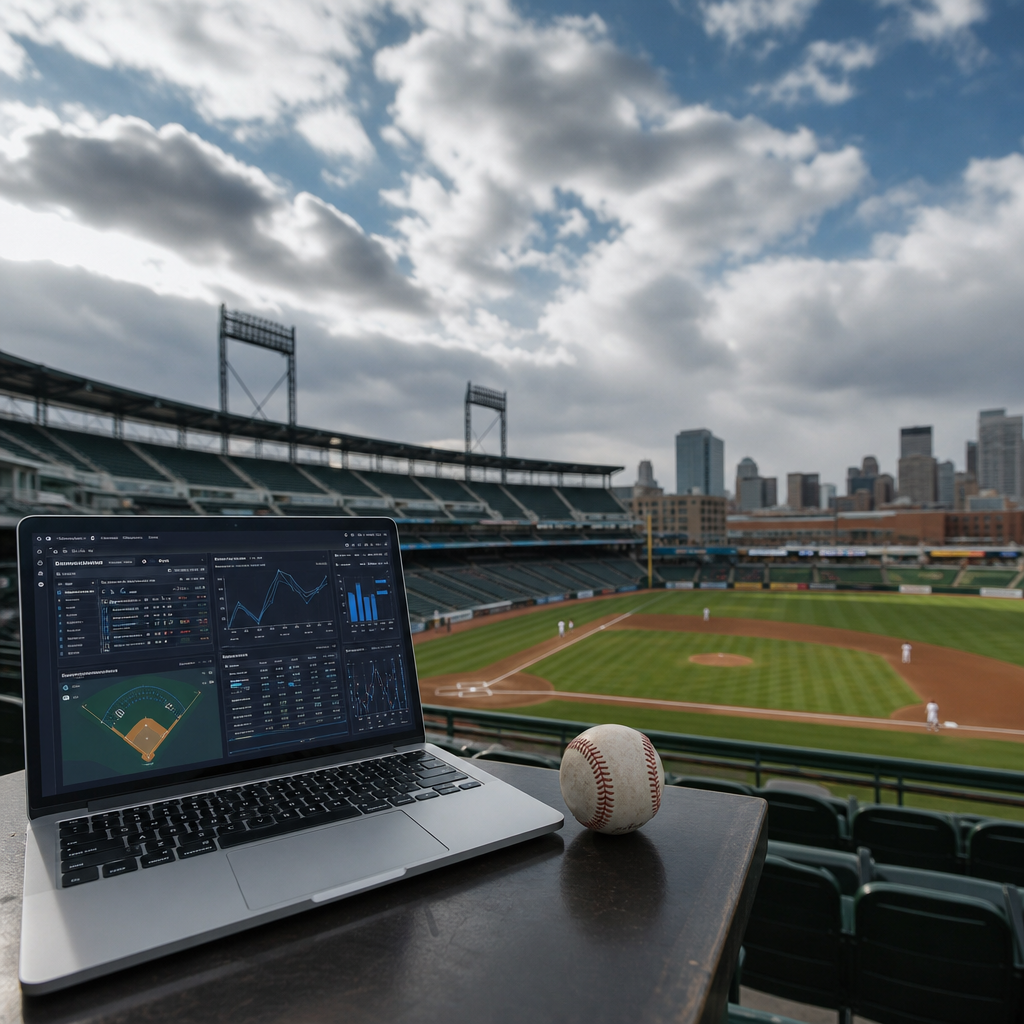
Cloud computing has transformed baseball data analysis from a back-office support function into a central driver of player evaluation, game strategy, scouting, and fan engagement. In practical terms, cloud computing means storing, processing, and sharing data through remote servers and on-demand platforms rather than relying only on local machines or isolated team databases. Baseball data analysis includes everything from pitch tracking and biomechanics to injury monitoring, lineup optimization, video review, and business intelligence. When these two forces meet, teams gain faster access to larger datasets, more computing power for advanced models, and better collaboration across departments.
I have worked with baseball operations groups that once moved reports through email attachments, locally saved spreadsheets, and manually updated scouting files. That approach created delays, version conflicts, and blind spots. Today, cloud infrastructure allows analysts, coaches, scouts, medical staff, and executives to work from the same data foundation. A pitching coordinator can review movement profiles generated from Hawkeye tracking, a strength coach can compare workload data from wearables, and a front office can run projection models against years of Statcast outcomes without waiting for a single office server to free up capacity. That shift matters because baseball has become a decision-making contest built on speed, accuracy, and context.
This article serves as a hub for understanding the intersection of baseball and technology through the lens of cloud computing. It explains what cloud systems actually do in baseball environments, why clubs and vendors depend on them, how they support modern analytics, and where the limits still exist. It also connects this topic to player development, scouting, injury prevention, broadcasting, and organizational change. For anyone following innovations and changes in baseball, cloud computing is not a side trend. It is the infrastructure layer that makes modern baseball technology usable at scale.
Why Cloud Computing Became Essential in Modern Baseball
Baseball generates an enormous volume of structured and unstructured data. Structured data includes pitch velocity, spin rate, launch angle, swing decisions, and defensive positioning coordinates. Unstructured data includes video, scouting notes, medical observations, bullpen reports, and player development feedback. Before cloud adoption accelerated, many organizations stored these assets in disconnected systems. Analysts might have one database for game events, player development staff another for biomechanics, and scouts yet another for reports. That fragmentation made it harder to answer basic but important questions such as whether a prospect’s swing change in spring training improved contact quality by July or whether a reliever’s declining extension signaled fatigue before velocity dropped.
Cloud platforms solved that operational problem by centralizing storage and making compute resources elastic. Instead of purchasing fixed hardware for peak demand, clubs can scale processing when needed. During the amateur draft, trade deadline, or postseason advance preparation, demand spikes sharply. A cloud environment can support that load without the delays that used to come from limited on-premise servers. Services from Amazon Web Services, Microsoft Azure, and Google Cloud Platform let teams store historical pitch-by-pitch data, build data pipelines, run machine learning workloads, and provide secure dashboards to coaches in multiple locations.
The larger impact is organizational. Baseball decisions no longer happen only in one room at one stadium. Coordinators travel between affiliates. Scouts work internationally. Analysts support player development in Florida, Arizona, Latin America, and minor league parks across the country. A cloud-based architecture keeps everyone aligned around current information. It also creates auditability. Teams can track what data changed, which model version generated a recommendation, and whether a process is repeatable. That level of operational discipline is one reason technically mature clubs make better use of information than teams that simply collect more of it.
How Baseball Data Flows Through the Cloud
A modern baseball data workflow usually begins with collection. MLB parks and many development environments capture pitch and batted-ball data through systems such as Statcast and Hawkeye. High-speed cameras, force plates, bat sensors, radar units like TrackMan, motion-capture labs, and wearable devices add more layers. Raw data enters ingestion pipelines, often through APIs, streaming connectors, or scheduled batch jobs. Once in the cloud, the data is validated, cleaned, standardized, and stored in databases or data lakes. From there, analytics teams query it with SQL, Python, R, or business intelligence tools like Tableau and Power BI.
That sounds technical, but the baseball application is straightforward. Suppose a hitting department wants to understand why a player’s hard-hit rate improved. Analysts can pull swing decisions, bat speed, attack angle, pitch-location maps, and opposing pitch-type distributions from a unified cloud environment. Video clips can be linked to the same events. Coaches then review not just the result, but the underlying process. The value comes from joining sources that used to sit apart.
Cloud data flow also supports automation. Daily reports on pitcher usage, opponent tendencies, catcher framing trends, and injury risk indicators can be generated overnight and delivered to staff before early work begins. In the past, baseball operations interns and analysts often spent hours assembling these reports manually. Automation does not remove expertise; it frees experts to ask better questions. Teams still need informed people to interpret patterns, challenge assumptions, and adapt outputs to player communication.
| Baseball Function | Cloud-Enabled Input | Practical Outcome |
|---|---|---|
| Pitch design | Hawkeye, Rapsodo, Edgertronic video | Faster identification of movement changes and seam-shifted wake effects |
| Hitting development | Bat sensors, swing video, Statcast outcomes | Integrated feedback on mechanics, decisions, and contact quality |
| Scouting | Crosschecker reports, video libraries, performance feeds | Shared draft and trade evaluations across departments |
| Sports medicine | Workload tracking, force plates, medical notes | Better monitoring of fatigue and return-to-play progress |
| Game planning | Historical matchup data, defensive positioning, pitch usage models | Rapid pregame decision support for coaches and players |
Player Evaluation, Development, and Performance Modeling
Cloud computing matters most when it improves baseball decisions. In player evaluation, that means creating a clearer picture of current skill, future projection, and risk. Traditional scouting still matters; no serious organization treats numbers as a replacement for eyes, makeup assessment, or context. But cloud-based systems make it possible to combine subjective and objective information in a disciplined way. A scout’s report on a pitcher’s deception can sit alongside release height consistency, induced vertical break, command maps, and biomechanical markers. Decision-makers can compare similar profiles across years and leagues without stitching together files by hand.
In player development, cloud infrastructure supports continuous feedback loops. A minor league hitter can complete cage work in the afternoon, upload sensor and video data, and have a coordinator in another state review the session before the evening game. If bat path improved but swing decisions remain poor against elevated fastballs, the next training block can be adjusted quickly. Pitchers benefit in similar ways. During pitch design sessions, analysts and coaches can track grip changes, spin efficiency, release metrics, and movement clusters in near real time. The cloud makes those sessions cumulative rather than isolated, preserving a history of what changed and what actually worked in competition.
Performance modeling is another major benefit. Projection systems rely on large historical datasets, park adjustments, aging curves, league translations, injury records, and context-specific variables. Running these models at scale requires serious compute capacity. Cloud services enable parallel processing and machine learning workflows that would be cumbersome on a single local machine. Teams can simulate defensive alignments, optimize baserunning aggressiveness, forecast bullpen fatigue, and estimate the likely effect of mechanical changes. The best organizations do not blindly trust models, but they do use them to narrow uncertainty and test assumptions before making costly decisions.
Scouting, Video, and Cross-Department Collaboration
One underappreciated effect of cloud computing is improved collaboration. Baseball organizations are famously siloed. Amateur scouting, pro scouting, research and development, player development, and the major league staff often work on different timelines and with different priorities. Cloud-based systems create a shared operating environment. That does not eliminate disagreement, but it gives everyone access to the same evidence base. A pro scout evaluating a trade target can pull recent video, pitch metrics, medical flags, and contract notes in one place. A farm director can review whether instructional goals are being reinforced consistently at each affiliate.
Video is central here. Baseball is a visual sport, and modern analysis depends on tagged, searchable, synchronized footage. Storing video locally or on scattered hard drives is inefficient and risky. In the cloud, teams can index clips by pitch type, count, location, result, movement profile, hitter handedness, or mechanical checkpoint. That makes video not just archival, but analytical. Coaches can compare a pitcher’s current delivery with last month’s or align swing footage with contact quality outcomes. Scouts can verify whether a player’s current movement matches earlier reports rather than relying on memory alone.
Cloud collaboration also strengthens communication with players. Good information is not useful if it arrives in a format players cannot trust or act on. Centralized dashboards and mobile access help present individualized feedback simply: heat maps, strike-zone decisions, recovery indicators, and side-by-side video. The best systems limit noise and focus on intervention. In my experience, adoption improves when players see that the numbers connect directly to daily work and when coaches use the same platform instead of relaying secondhand summaries.
Injury Prevention, Medical Operations, and Risk Management
Health data is one of the most sensitive and valuable categories in baseball. Pitch counts alone are a crude workload measure, so teams now monitor a broader set of indicators including throwing intensity, recovery markers, force output, asymmetries, sleep trends, and subjective readiness scores. Cloud platforms help integrate these signals with performance data and medical notes. A training staff can examine whether a pitcher’s reduced shoulder range of motion coincides with changes in arm slot or fastball shape. A rehab coordinator can track a hitter’s progression across strength benchmarks, on-field workload, and swing quality before clearing full return.
There are clear benefits, but also real constraints. Medical data requires strict access controls, audit logs, encryption, and governance. Not everyone in a baseball organization should see everything. Good cloud architecture supports permissioning so that trainers, physicians, strength staff, and baseball operations personnel access appropriate views. Compliance standards and vendor security practices matter. A breach involving player health data would damage trust immediately and could create legal exposure.
Risk management extends beyond privacy. Models that try to predict injury are helpful only within limits. Human bodies are complex, injuries are multifactorial, and false confidence is dangerous. Cloud computing improves the collection and processing of relevant signals, but it does not make prediction perfect. Smart organizations treat risk scores as decision support, not destiny. They use them to guide conversations, modify workloads, and identify athletes who need closer review rather than claiming certainty where none exists.
Fan Experience, Media, and the Business of Baseball Technology
The impact of cloud computing reaches beyond team operations. Fans experience baseball technology through live stat overlays, real-time probability graphics, personalized highlights, fantasy integrations, and on-demand archives. These services depend on cloud systems that can ingest game events instantly, process them, and distribute outputs across apps, broadcast tools, and digital platforms. When a broadcast shows expected batting average, defensive positioning, or pitch movement comparisons seconds after a play, that responsiveness reflects cloud-enabled data infrastructure.
Media departments benefit as well. They can search large video libraries, build story packages quickly, and serve tailored content to local, national, and international audiences. Clubs also use cloud-based customer data platforms for ticketing analytics, marketing segmentation, and sponsorship reporting. In other words, the same infrastructure that helps evaluate a slider can also help understand season-ticket renewal risk or digital engagement patterns.
This broader business value explains why cloud computing is now foundational to the intersection of baseball and technology. It connects competitive operations, player care, content production, and commercial strategy. It also levels some barriers. Smaller organizations can access sophisticated tools through cloud subscriptions instead of building every capability from scratch. The edge no longer comes from owning servers. It comes from asking better baseball questions, building cleaner workflows, and turning information into action faster than competitors.
Cloud computing has changed baseball data analysis by making advanced information systems scalable, connected, and useful across the entire organization. It allows teams to centralize tracking data, video, scouting reports, medical inputs, and performance models in one environment, then deliver those insights to the right people at the right time. That shift improves player development, supports sharper game planning, strengthens collaboration, and expands what fans can see and understand during games. It is the infrastructure behind much of modern baseball innovation.
The most important takeaway is that technology alone does not create an advantage. Clubs still need strong data governance, clear communication, trusted coaching, and disciplined decision-making. Cloud platforms can process millions of records, but they cannot replace baseball judgment. What they do exceptionally well is remove friction, connect departments, and make evidence easier to use. In a sport where small edges compound over long seasons, that is a meaningful competitive gain.
As you explore innovations and changes in baseball, use cloud computing as the organizing concept for understanding the wider technology landscape. It ties together analytics, biomechanics, scouting, injury management, broadcasting, and business operations. Start by examining how data is collected, where it lives, who can access it, and how quickly it becomes actionable. That is where the real impact begins.
Frequently Asked Questions
How has cloud computing changed baseball data analysis compared to older, team-specific systems?
Cloud computing has fundamentally changed baseball data analysis by making information faster to collect, easier to process, and far more accessible across an entire organization. In older models, teams often depended on isolated local servers, spreadsheets, and department-specific databases that limited collaboration between analysts, coaches, scouts, medical staff, and front-office decision-makers. That setup created delays, duplicated work, and made it harder to turn raw information into actionable insights. With cloud-based infrastructure, teams can centralize massive volumes of data from sources such as pitch tracking systems, high-speed cameras, wearable devices, biomechanics labs, scouting reports, and video platforms in one scalable environment.
This shift matters because modern baseball operations depend on speed and integration. A cloud platform allows analysts to run complex models on player performance, compare historical and real-time data, and distribute insights across departments without waiting for files to be manually transferred or reports to be rebuilt. Coaches can review player-specific dashboards, scouts can upload observations from the road, and executives can access organization-wide metrics from anywhere. In practical terms, cloud computing has moved baseball analysis from a back-office support role into a core strategic function that influences player evaluation, roster construction, game planning, player development, and even communication throughout the organization.
What types of baseball data benefit the most from cloud computing?
Some of the biggest beneficiaries are high-volume, high-speed data sources that would be difficult to manage efficiently on traditional local systems. Pitch tracking data is a clear example. Every pitch can generate information on velocity, spin rate, movement profile, release point, location, and sequencing. Multiply that across every game, bullpen session, and development environment, and the amount of data becomes enormous. Cloud systems make it possible to store that information at scale and analyze it quickly enough to support in-game adjustments, opponent preparation, and long-term player development.
Biomechanics and motion-capture data also benefit tremendously from cloud infrastructure. These datasets often include video, sensor outputs, force measurements, and body movement models that require substantial storage and computing power. In a cloud environment, player development and performance science staffs can compare mechanics over time, identify stress patterns, and connect movement changes to velocity, command, or injury risk. Injury monitoring data, lineup optimization models, defensive positioning metrics, scouting databases, and fan engagement analytics also gain value because cloud computing allows all of them to be linked instead of treated as separate streams. That interconnected view helps teams make better decisions because they are evaluating players and performance from multiple angles at once rather than relying on isolated statistics.
Why is cloud computing so important for real-time decision-making during games and throughout the season?
Cloud computing is especially valuable in baseball because the sport now produces a continuous flow of live data that can influence decisions almost immediately. During games, teams may want to evaluate pitch effectiveness, hitter swing decisions, defensive positioning trends, bullpen fatigue, matchup probabilities, or opponent tendencies in real time. Cloud platforms support that need by enabling fast data ingestion, automated processing, and rapid delivery of visualizations or alerts to the people making decisions. Instead of waiting until after a game to evaluate what happened, teams can increasingly analyze patterns as they develop.
Over the course of a season, that same responsiveness becomes even more important. Baseball schedules are dense, travel is constant, and player performance can change quickly due to fatigue, mechanical drift, injury, or strategic adjustments by opponents. A cloud-based analytics environment helps teams monitor those changes continuously and share updates across the organization without friction. If a pitcher’s arm slot starts trending differently, if a hitter performs better against a certain pitch shape, or if a minor league prospect shows a meaningful development jump, that information can be surfaced and acted on faster. The result is a more agile decision-making process that supports both day-to-day tactics and longer-term planning.
How does cloud computing improve collaboration between analysts, coaches, scouts, and player development staff?
One of the most important impacts of cloud computing is that it breaks down silos inside a baseball organization. Analysts may build sophisticated models, but those models only create value if coaches can apply them, scouts can add context to them, and development staff can use them to guide player improvement. Cloud-based systems create a shared environment where each group can contribute to and access the same information structure. Instead of maintaining disconnected files or waiting for static reports, users can work from common dashboards, shared databases, integrated video tools, and player profiles that update in near real time.
This kind of collaboration is critical because baseball decisions are rarely based on a single data point. A front office might evaluate a prospect by combining performance metrics, biomechanics trends, scouting grades, medical history, and video evidence. A pitching coach might pair cloud-based movement data with bullpen notes and visual breakdowns of release consistency. A scout on the road can upload observations directly into the system so analysts and executives can review them immediately. Cloud computing makes this process smoother, more consistent, and more transparent. It helps every department operate from a common version of the truth, which leads to better alignment on player evaluation, strategy, and development priorities.
Does cloud computing affect fan engagement and the business side of baseball as well as team performance?
Yes, cloud computing has a major impact beyond player analysis and on-field strategy. On the fan engagement side, cloud platforms help teams and leagues process large volumes of behavioral, transactional, and content-consumption data from ticketing systems, mobile apps, streaming platforms, fantasy sports integrations, and social media channels. That information can be used to personalize marketing, improve digital experiences, recommend content, and better understand what keeps fans engaged throughout a season. It also supports richer broadcasts and second-screen experiences by making advanced statistics, pitch visualizations, and interactive data features easier to deliver at scale.
From a business perspective, cloud computing improves flexibility, scalability, and efficiency. Organizations can expand storage and computing resources as needed instead of constantly investing in new local hardware. They can also support distributed operations more effectively, which matters for teams with front-office staff, affiliates, analysts, and scouts working in different locations. In addition, cloud-based systems can help standardize data governance, security controls, and reporting workflows across the organization. Taken together, these advantages mean cloud computing is not just a technical upgrade for baseball. It is a foundational system that supports competitive analysis, organizational collaboration, commercial operations, and the increasingly data-driven relationship between teams and fans.