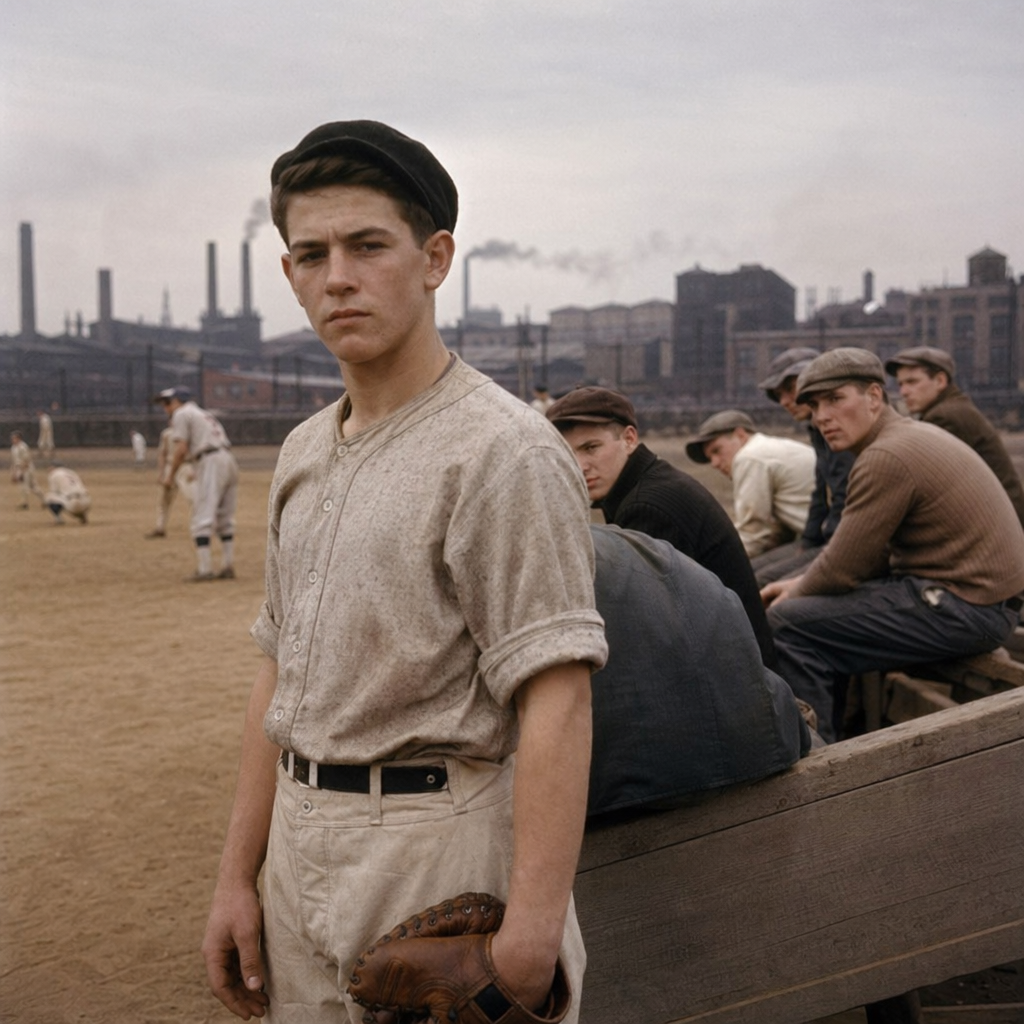
Baseball during the Depression Era in literature and film reveals how a game became a cultural language for hardship, endurance, fantasy, and collective memory. The Depression Era generally refers to the years following the 1929 stock market crash through the late 1930s, when unemployment, bank failures, foreclosures, and mass migration reshaped daily life across the United States. In that setting, baseball was more than entertainment. It was a cheap afternoon escape, a newspaper obsession, a radio ritual, and a powerful symbol writers and filmmakers could use to talk about class, masculinity, race, ambition, and hope without losing a broad audience. When I study this period across novels, short fiction, memoir, newsreels, studio features, and later retrospective films about the 1930s, one pattern stands out: baseball stories from this era almost never focus only on the field. They use the ballpark to dramatize economic struggle, neighborhood identity, and the uneasy promise that talent might still matter in a broken system.
Understanding this subject requires defining two related ideas. First, Depression Era baseball literature and film includes works produced during the 1930s as well as later works set in that decade. Second, “miscellaneous” in this subtopic matters because many important treatments of baseball in the Depression do not fit neatly into single categories like biography, children’s fiction, race narratives, or team histories. Some are comic, some tragic, some nostalgic, and some sharply political. Together they form a hub that connects broader discussions of baseball realism, mythmaking, labor history, the Negro leagues, celebrity culture, and Hollywood sports storytelling. This material matters because it shows how American culture processed scarcity. Baseball provided structure when institutions felt unstable. In fiction it offered plot, rules, and recognizable heroes. In film it supplied movement, crowd energy, and a democratic visual space where ordinary people and stars shared the frame.
Why baseball became a Depression-era storytelling engine
Baseball fit Depression storytelling because it balanced order and uncertainty. The sport is governed by exact dimensions, counted outs, and measurable statistics, yet any game can turn on a bad hop, a cheap single, or one swing. That combination mirrored the decade’s emotional logic. Families could work hard and still lose farms or jobs; a minor break could change everything. Writers understood that a pennant race, a failing minor league club, or a sandlot game could embody the same tension ordinary Americans felt in breadlines and boardinghouses. Newspaper sports pages amplified that effect. Even readers who could not afford tickets followed players through box scores and syndicated columns, making baseball one of the most widely shared narrative systems in the country.
Hollywood also recognized the sport’s value. Baseball films were relatively inexpensive compared with historical epics, and they arrived with built-in audience familiarity. Newsreels before feature presentations routinely showed opening day ceremonies, World Series scenes, and celebrity first pitches, reinforcing the game’s place in popular imagination. Radio deepened that presence. Live broadcasts and recreations let listeners build mental cinema from play-by-play, which influenced how prose writers described games: crisp, episodic, and attentive to suspense. In practical terms, baseball stories could address unemployment, corruption, gambling, ethnic neighborhoods, and generational aspiration while still promising pleasure. That made them commercially durable and culturally rich.
Depression themes in fiction: survival, class, and the dream of mobility
Baseball fiction tied to the Depression repeatedly returns to the idea of mobility. A gifted player might escape factory labor, farm debt, or immigrant precarity, but the route is fragile and often exploitative. Popular and literary writers alike used ballplayers as workers whose bodies were their capital. Contracts, bus rides, tryouts, and medical setbacks mattered as much as batting averages. In this respect, baseball narratives overlap with other labor literature of the 1930s. The clubhouse becomes a workplace; management can appear paternal, indifferent, or predatory; fans can love a player while ownership treats him as inventory.
Mark Harris’s later Henry Wiggen novels, though published after the Depression, are useful when examining the era because they preserve the plainspoken working-player perspective earlier fiction often implied. More directly tied to the 1930s mood are stories in magazines and newspapers that depicted washed-up veterans, small-town prospects, and boys investing impossible hope in local teams. The recurring message was not simply that baseball saves people. It was that baseball offers a temporary ladder. Some climb it. Many do not. That nuance matters. Depression baseball literature is strongest when it resists easy uplift and instead shows the costs of chasing the game.
Children’s and young adult fiction from the period added another dimension. For younger readers, baseball represented discipline, fair play, and community belonging at a time of instability. Yet even these stories often carried the era’s pressures: fathers out of work, patched equipment, public playgrounds replacing private leisure, and coaches doubling as moral guardians. The field could be a proving ground for citizenship. That theme would echo for decades in American sports storytelling.
Film portrayals: realism, aspiration, and studio-era mythmaking
Depression-era baseball films and baseball-adjacent films did not always aim for documentary realism. Studios often preferred sentimental arcs, romance, comedy, or redemption stories anchored by the game. Still, the economic context remained visible in wardrobe, dialogue, and setting. Boardinghouses, train travel, cheap suits, crowded bleachers, and cash-strapped teams signal a world where success is uncertain. The baseball player in 1930s film is rarely just an athlete. He is a son supporting family, a local celebrity navigating temptation, or a worker whose talent collides with urban modernity.
A key title is Alibi Ike (1935), adapted from Ring Lardner’s story. Its comic premise about a boastful but gifted ballplayer reflects a central Depression concern: performance versus truth. Talking big could be survival theater in a competitive economy, and the film translates that anxiety into sports comedy. Another important example is The Pride of the Yankees (1942), which is set partly in the 1930s and helped codify the era’s baseball hero for later audiences. Although made during World War II, its recreation of Lou Gehrig’s rise and illness shaped collective memory of Depression baseball as noble, stoic, and communal. As with many studio films, historical compression and sentiment are present, but the movie’s influence is undeniable because it fused celebrity biography with national emotional need.
| Work | Medium | Depression-era relevance | What it illustrates |
|---|---|---|---|
| Alibi Ike (1935) | Film | Produced in the 1930s during economic hardship | Comic treatment of bravado, class aspiration, and sports celebrity |
| The Pride of the Yankees (1942) | Film | Recreates 1930s baseball culture through Lou Gehrig | Heroism, illness, labor discipline, and national myth |
| Ring Lardner baseball stories | Fiction | Widely read as baseball remained central to mass culture | Player speech, vanity, insecurity, and commercialized sport |
| Negro league memoirs and later films | Mixed | Recover experiences obscured in mainstream 1930s media | Segregation, excellence, travel, and parallel institutions |
Writers who shaped the era’s baseball imagination
No discussion of baseball in literature can skip Ring Lardner. Although his peak preceded the heart of the Depression, his influence on 1930s baseball storytelling was enormous. Lardner captured the rhythms of player speech, the vanity of athletes, the absurdity of sports publicity, and the gap between public image and private confusion. He treated ballplayers as human beings rather than cardboard heroes, which gave later writers a model for realism. His work also mattered to film because its dialogue and characterization were adaptable to screen comedy and drama.
Another essential figure is Bernard Malamud, whose The Natural was published in 1952 but draws deeply from earlier baseball mythology rooted in the interwar years. For a hub article, this matters because many readers encounter the Depression through retrospective works rather than texts published during the 1930s. Later authors mined the decade as a symbolic reservoir: worn parks, train travel, mythic sluggers, and communities searching for deliverance. Likewise, John Tunis, one of the most important American sportswriters for younger readers, helped establish baseball fiction as a serious way to think about character and society. His books were not all specifically Depression documents, but they carried forward assumptions born in that era about effort, teamwork, and social reality.
From firsthand archival reading, I would stress that magazines, newspaper columns, serialized fiction, and juvenile publishing did as much as canonical novels to shape public understanding. The Depression was a period of fragmented media consumption. Many baseball stories reached audiences not as prestigious books but as affordable, portable texts read on streetcars, at kitchen tables, and in barbershops.
Race, exclusion, and the parallel baseball world
Any serious account of baseball during the Depression Era in literature and film must address segregation. Mainstream studio films and much white-authored fiction centered Major League Baseball while marginalizing Black players, even though the Negro leagues were producing extraordinary talent and vibrant fan culture. The 1930s were crucial years for teams such as the Pittsburgh Crawfords and Homestead Grays, and stars including Satchel Paige, Josh Gibson, and Cool Papa Bell became legends through barnstorming, Black press coverage, and oral tradition. Their relative absence from mainstream film of the time is not incidental. It reflects the racial limits of American cultural production.
Later literature and film corrected part of that omission by revisiting Depression-era Black baseball as a story of excellence under structural exclusion. Works about Jackie Robinson often begin with the segregated baseball world that preceded integration, and documentaries on the Negro leagues use the 1930s to show entrepreneurship, community pride, and relentless inequity. This is one of the most important miscellaneous connections in the subtopic hub: the Depression baseball story is incomplete without parallel institutions. Black teams traveled grueling schedules, played in unstable financial conditions, and still built some of the most compelling spectacles in American sports. Literature and film that recover this history do more than add diversity; they correct the record.
Nostalgia, memory, and why later works keep returning to the 1930s
The Depression remains attractive to writers and filmmakers because it compresses contradiction. It was economically brutal yet culturally generative. Baseball serves as a memory machine within that contradiction. Later films, novels, and documentaries revisit the 1930s not simply to celebrate an innocent past, but to explore how communities narrate survival after catastrophe. The old ballpark, the hand-stitched glove, the gravel lot, and the radio broadcast all function as memory triggers. They suggest continuity in a decade when continuity was badly damaged.
This nostalgia can be useful or misleading. At its best, it highlights resilience without denying hunger, exclusion, or exploitation. At its worst, it turns the decade into sepia décor and erases labor conflict, racial segregation, and the fact that baseball itself was a business. The strongest works hold both truths together. They understand that a cheap bleacher seat could feel transcendent and that transcendence did not solve structural problems. That balance is why Depression baseball stories still resonate in periods of modern uncertainty, from recessionary moments to contemporary debates about national identity and public memory.
How this hub connects the broader baseball in literature and film landscape
As a sub-pillar hub, this topic links multiple adjacent conversations. Biographical studies connect through figures like Gehrig, Paige, and Gibson. Children’s literature connects through school and sandlot narratives shaped by scarcity. Film history connects through studio sports pictures, newsreels, and later prestige biographies. Social history connects through urbanization, migration, labor, and race. Even genre studies belong here, because Depression baseball appears in comedy, melodrama, realism, mythic fiction, documentary, and historical reconstruction.
If you are building a reading or viewing path, start with Lardner for voice, move to a representative 1930s film such as Alibi Ike for studio treatment, then add later retrospective works like The Pride of the Yankees and Negro league documentaries for memory and correction. From there, explore youth sports fiction, oral histories, and newspaper archives. That sequence shows how baseball during the Depression Era in literature and film functions not as a narrow niche, but as a crossroads where American storytelling tests ideas about fairness, opportunity, heroism, and belonging.
The central lesson is simple: Depression-era baseball stories matter because they turn a familiar game into a precise record of American stress and imagination. Literature gave readers language for disappointment, hustle, and endurance. Film gave audiences visible heroes, comic release, and shared ritual. Together they preserved the textures of a decade when millions needed stories that acknowledged hardship without surrendering hope. For anyone studying baseball in literature and film, this miscellaneous hub is essential because it gathers the works that do not stay inside one box yet explain the period most fully.
Read the fiction for its worker’s-eye view, watch the films for their mythmaking, and pay special attention to the voices mainstream culture left out. That is where the Depression baseball story becomes most complete, and where this subtopic opens into the larger history of American culture. Continue with the connected articles in this hub to trace individual authors, landmark films, Negro league representation, and the lasting legacy of 1930s baseball on modern storytelling.
Frequently Asked Questions
Why does baseball matter so much in Depression Era literature and film?
Baseball matters in Depression Era literature and film because it gave writers and filmmakers a shared national language for explaining struggle, hope, routine, and identity during one of the hardest periods in American history. After the 1929 stock market crash, millions of Americans faced unemployment, eviction, hunger, bank failures, and forced migration. In that environment, baseball represented something stable. The rules did not change even when daily life did. A ballgame could still begin in the afternoon, statistics still mattered, heroes could still emerge, and the season still moved forward in a recognizable rhythm. That sense of continuity made the sport unusually powerful as a symbol.
In literary and cinematic depictions of the 1930s, baseball often functions on two levels at once. On the surface, it is a pastime: a game watched from cheap seats, heard on the radio, debated in barbershops, and followed in box scores printed in the newspaper. But beneath that, it becomes a framework for understanding endurance. Characters who have lost jobs, farms, or social standing often measure themselves against baseball ideas such as patience, failure, comeback, sacrifice, and resilience. Because baseball is a game where even great players fail regularly, it offered a natural metaphor for a country trying to survive repeated disappointments without surrendering belief in the next chance.
Film and literature also use baseball to dramatize collective memory. A team, a stadium, or a legendary player could stand in for a city’s pride or a family’s emotional inheritance. During the Depression, when so many Americans experienced instability, baseball helped preserve a sense of belonging. That is why works set in or reflecting on the era rarely present the sport as trivial entertainment. Instead, they portray it as a democratic cultural space where class tensions, regional loyalties, immigrant identities, racial exclusions, and personal dreams all became visible. In short, baseball mattered because it helped Americans narrate hardship in a form they already understood and emotionally trusted.
How did Depression Era writers use baseball as a symbol of hardship and endurance?
Depression Era writers often used baseball to make economic suffering emotionally legible. Rather than describing hardship only through abstract statistics or political arguments, they could show what deprivation felt like through a game people already knew intimately. A worn glove, a sandlot game played by children with few resources, a crowd scraping together the price of admission, or a worker following pennant races despite losing his job could communicate scarcity and persistence more vividly than a simple statement about poverty. Baseball imagery gave writers a way to humanize national crisis.
One reason the symbolism worked so well is that baseball contains failure at its core. Hitters make outs far more often than they succeed. Teams lose long before they win championships. Seasons are long, and progress is uneven. That structure mirrored Depression life, where setbacks were common and recovery was slow. Writers could therefore present baseball not as a fantasy of effortless triumph, but as a disciplined art of staying in the game. Endurance in these works often looks ordinary rather than heroic: listening to games after a disappointing day, keeping score as a ritual of order, or remembering a favorite player as proof that excellence still exists in a damaged world.
Writers also used baseball to connect personal hardship with broader national feeling. A struggling family might follow a team as a form of emotional continuity, while a migrant or unemployed character might cling to baseball references as links to home, childhood, or community. In many narratives, the sport becomes a symbolic bridge between private pain and public culture. It assures readers that suffering is not isolating, because millions of others are sharing the same headlines, same pennant races, and same stories of improbable comeback. That blend of realism and hope is central to why baseball imagery remained so durable in Depression-related literature.
What role did baseball play in Depression Era films compared with books?
Baseball played a related but distinct role in Depression Era films and books because each medium shaped audience experience differently. In books, baseball could be interior and reflective. Novelists and essayists were able to use the sport as a lens for memory, symbolism, psychology, and social commentary. They could linger over what a game meant to a character who had lost work, left home, or struggled to preserve dignity. On the page, baseball often becomes part of a larger meditation on class, masculinity, regional identity, family tradition, or the tension between fantasy and realism.
Film, by contrast, could make baseball immediate and communal. Even when a movie was not strictly about the sport, visual references to uniforms, ballparks, sandlots, crowds, and street conversations could quickly establish mood and setting. A baseball scene could signal normalcy, aspiration, or public togetherness in a way that audiences instantly recognized. During the Depression, that visual shorthand was especially effective because moviegoers were themselves seeking temporary escape. Seeing baseball on screen reinforced the idea that shared pleasures still existed, even in a damaged economy.
At the same time, films often emphasized emotional uplift more directly than books. Hollywood in the 1930s regularly balanced realism with reassurance, and baseball fit that formula well. It could represent discipline, fair play, youthful ambition, and the possibility of redemption. Books were sometimes more willing to stress the harsher contradictions around the game, including broken dreams, commercial pressures, or the gap between baseball mythology and actual social conditions. Still, both forms relied on the same cultural truth: baseball had become a powerful shorthand for American endurance. Whether through a reflective literary passage or a crowd scene in a theater, the sport conveyed that people were still capable of belief, ritual, and shared feeling during a period of severe uncertainty.
Did baseball in Depression Era literature and film reflect real social issues like class, migration, and race?
Yes, and that is one of the most important reasons the subject remains meaningful. Baseball in Depression Era literature and film was never only about the game itself. It reflected the major social tensions of the 1930s, including class inequality, mass migration, urban and rural dislocation, and racial exclusion. Because baseball was so visible in everyday life, it became a natural place for artists to explore who belonged in the American story and under what conditions. A ballpark crowd could reveal class differences. A sandlot could suggest neighborhood change or immigrant adaptation. A character’s attachment to a team could show how regional identity survived even after economic collapse uprooted families from their homes.
Class is especially central. During the Depression, baseball was often described as accessible entertainment, and compared with many other leisure activities, it was. But literature and film still recognized that economic hardship shaped who could attend games, who had leisure, and who consumed baseball mainly through newspapers and radio. Stories about workers, children, and struggling families often use baseball to show the emotional importance of small pleasures in a world defined by limited means. The sport becomes a reminder that culture does not disappear during poverty; it adapts.
Race is equally crucial, though it was not always treated honestly by mainstream film and publishing at the time. The 1930s were still the era of segregation in professional baseball, which means that any serious modern discussion of Depression Era baseball in literature and film must acknowledge absence as well as presence. The mythology of baseball as a national unifier coexisted with the exclusion of Black players from Major League Baseball. That contradiction shaped the cultural meaning of the sport, even when works of the period failed to confront it directly. For modern readers and viewers, this makes baseball in Depression-era storytelling especially revealing: it shows both the nation’s desire for unity and the boundaries of that unity. In that sense, baseball becomes a lens for understanding not only endurance, but also the limits of the era’s democratic ideals.
Why does Depression Era baseball still influence modern stories, movies, and cultural memory?
Depression Era baseball still influences modern stories, movies, and cultural memory because it represents a foundational version of the sport’s meaning in American life. Later generations inherited not just the statistics, teams, and legends of the 1930s, but also the emotional framework attached to them. That framework says baseball is more than competition. It is ritual, resilience, nostalgia, and a way of turning hardship into narrative. Modern writers and filmmakers return to the Depression-era imagination because it offers a compelling blend of realism and myth: empty pockets alongside full grandstands, economic despair alongside summer routine, private grief alongside public heroes.
This influence is especially strong in stories that treat baseball as memory rather than mere action. Many later works look back on the game as something that helped families, towns, and generations endure difficult times. The Depression becomes a kind of cultural reference point, even for works created decades later. When a film presents baseball as a bond between parent and child, a symbol of lost innocence, or a language of hope in hard times, it is often drawing from patterns that became deeply rooted in the 1930s. The era helped establish the sport as a repository of national feeling.
Modern audiences also continue to find the Depression-era baseball story compelling because its themes remain relevant. Economic uncertainty, displacement, labor anxiety, and the search for shared identity are not confined to the 1930s. Baseball from that period offers a historical example of how popular culture can help people absorb collective crisis without denying it. That is why Depression Era baseball continues to appear in scholarship, historical fiction, documentaries, and films: