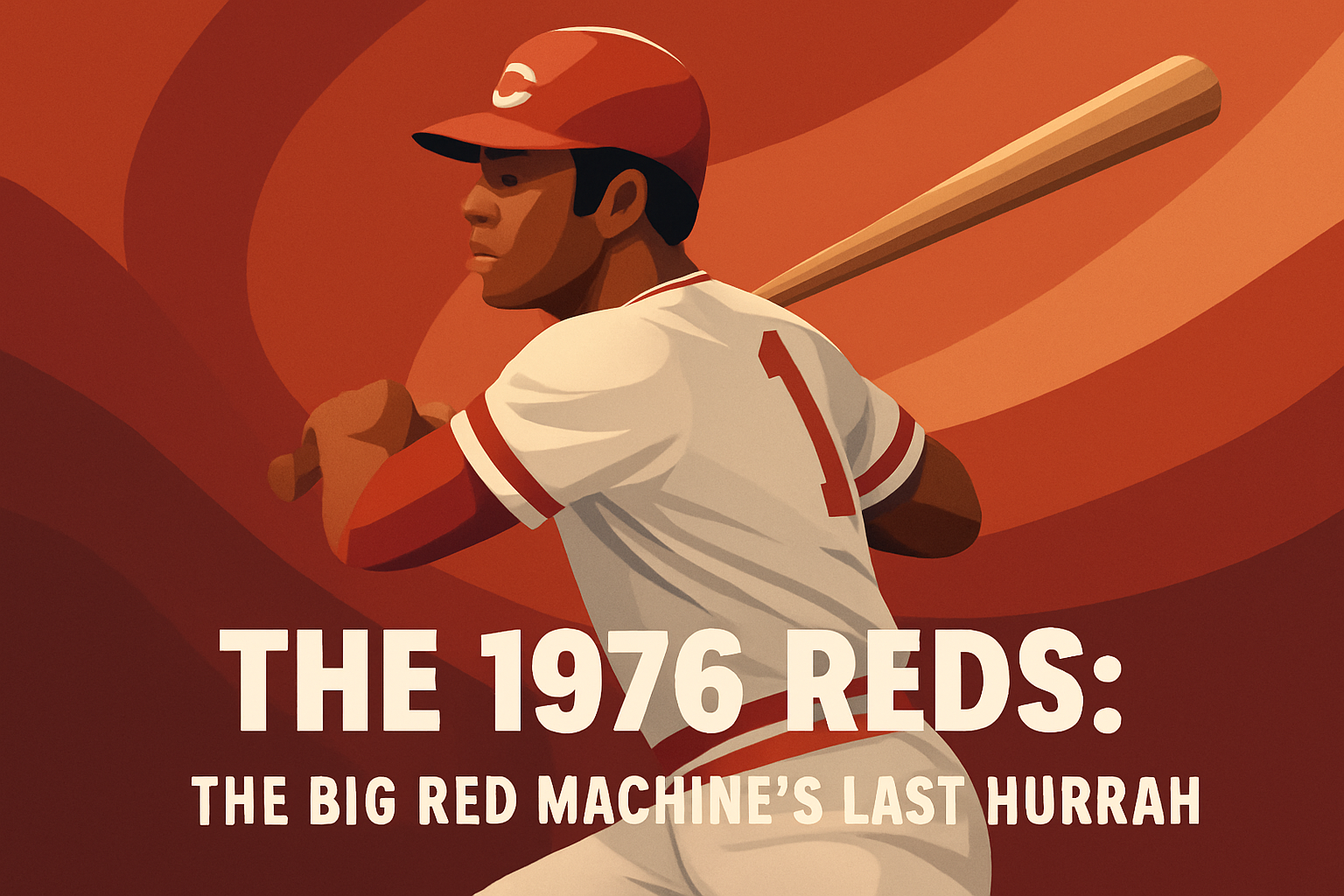
The Cincinnati Reds, famously known as the “Big Red Machine,” were one of the most dominant teams in Major League Baseball history. Their prowess on the diamond was unmatched during the 1970s, culminating in what many consider their crowning achievement—the 1976 season. This team was not just about winning games; it was about establishing a legacy that signified innovation, teamwork, and sheer talent. The 1976 Reds were the epitome of these qualities, showcasing how a perfectly synchronized baseball team can perform at its peak. Understanding the significance of the 1976 Reds is important as it reflects not only on their historical success but also on the evolution of team dynamics and strategy in sports.
The Ascent of the Big Red Machine
The 1976 season was the culmination of a team that had been building its roster and fine-tuning its strategies since the mid-1960s. Under the management of Sparky Anderson, the Reds developed a winning formula that emphasized speed, defense, and a relentless spirit. The Reds won the National League (NL) West Division by ten games over the Los Angeles Dodgers with a record of 102-60. This achievement did not happen overnight. It was a mix of careful planning, talent scouting, and strategic investments.
A critical example of the Reds’ strategic excellence was their investment in players like Johnny Bench, Tony Pérez, and Pete Rose. These players became household names and helped mold the team into a formidable force. Bench was celebrated for his exceptional skill as a catcher, earning ten Gold Gloves during his career. Pérez was renowned for his timely hitting, while Rose’s unmatched hustle and versatility earned him the nickname “Charlie Hustle.”
- Sparky Anderson: The visionary manager who orchestrated the team’s strategies.
- Johnny Bench: A legendary catcher known for both defensive and offensive prowess.
- Pete Rose: The quintessential hustler who led with grit and determination.
- Tony Pérez: Provided the necessary offensive firepower.
These players, among others, symbolized the best of what baseball had to offer at the time. Their embodiment of dedication and skill made them role models for teamwork and sportsmanship.
Key Players and Performances
In 1976, the Reds showcased talents that extended beyond the usual suspects. Every player on their roster played a critical role in ensuring the team’s success. Joe Morgan, a second baseman, stood out with his consistent performance, earning the NL MVP award for the second consecutive year. His capability to get on base and his defensive excellence gave the Reds a distinctive advantage on both ends of the spectrum.
Another standout player was George Foster, who led the team in home runs and was an integral part of their powerful lineup. His ability to drive in runs bolstered the team’s offensive dominance. In addition, pitchers like Don Gullett and Gary Nolan provided stability and effectiveness on the mound, making it difficult for opposing teams to gain any ground against them.
These performances were not just about statistics; they were about cohesion and the ability to deliver under pressure. For instance, in the 1976 World Series, the Reds swept the New York Yankees in four games. An extraordinary feat at a time when the Yankees were perceived as the quintessential baseball powerhouse.
| Player | Position | Key Contribution |
|---|---|---|
| Joe Morgan | Second Base | NL MVP and on-base leader |
| George Foster | Outfield | Home run leader |
| Don Gullett | Pitcher | Pitching reliability |
Strategic Innovations and Managerial Prowess
The success of the 1976 Reds can be attributed largely to their strategic innovations and the managerial acumen of Sparky Anderson. Anderson was known for his ability to push the right buttons and capitalize on the strengths of his players. He orchestrated the lineup in such a way that ensured maximum impact from each contributor. His willingness to embrace bold strategies, like having a deep and versatile bullpen, allowed the Reds to maintain their dominance throughout the season.
One of the innovations credited to this team was the use of advanced scouting reports, which allowed them to have comprehensive knowledge of their opponents’ tendencies and weaknesses. This approach to preparation made them highly adaptable and difficult to counter on the field.
Moreover, Anderson’s philosophy that every team member was vital to the success of their campaign contributed to a culture of responsibility and accountability. He fostered an environment where leadership was not confined to just one individual; every player had to step up and lead by example.
The Impact of Team Chemistry
A pivotal factor that defined the 1976 Reds was their exceptional team chemistry. The synergy among the players was palpable, and it translated into their on-field performances. The culture built within the team emphasized unity and mutual respect, enabling them to perform as a single cohesive unit rather than a collection of individuals.
For instance, during the World Series, the Reds demonstrated an uncanny ability to focus under high-stakes pressure. Their commitment to each other and collective sense of purpose made it difficult for opposing teams to disrupt their rhythm. This chemistry was important not only for winning games but also for maintaining momentum throughout the arduous regular season.
This harmonious environment also allowed lesser-known players to step up and deliver pivotal performances. The Reds proved that a team is only as strong as its weakest link, and by eliminating vulnerabilities through unity, they established themselves as one of the greatest teams of all time.
Legacy and Lessons from the 1976 Reds
The legacy of the 1976 Reds extends beyond their victories and accolades. They represent a model of sports excellence that future generations can learn from. The team’s balance of skill, strategy, and chemistry serves as a benchmark in how to build a successful sports franchise.
From a broader perspective, the Reds’ story emphasizes the importance of leadership, preparation, and adaptability in any competitive environment. Teams and organizations across various fields can draw parallels from the Reds’ approach and apply these principles to achieve sustainable success.
The story of the 1976 Reds is often cited when discussing the pinnacle of team performance in sports history. Their achievements serve as a reminder that while talent is essential, it is the combination of vision, strategy, and execution that paves the way to greatness.
Concluding Reflections
The 1976 Cincinnati Reds encapsulated everything extraordinary about the sport of baseball. They were a team that embodied excellence, determination, and innovation at its finest. Their success was not solely derived from individual talents but from a collective effort that transcended the standard conventions of the game. As we reflect on the team’s historic achievements, we are reminded of the timeless principles of teamwork and dedication.
For those looking to replicate the Reds’ success, whether in sports or any other field, it is essential to focus on building a strong foundation, nurturing talent, and fostering an environment of collaboration. The 1976 Reds teach us that when people work as one, with passion and purpose, nothing is insurmountable. Their legacy continues to inspire and set the standard for greatness.
If you are a fan of baseball, consider diving deeper into the history of the Big Red Machine and explore what made them legendary. Embrace their lessons and strive to implement their approach in your own endeavors. Success is a team effort, and the 1976 Reds are a testament to that enduring truth.
Will you take inspiration from their playbook and aim for your own big win?
Frequently Asked Questions
1. Why are the 1976 Cincinnati Reds considered one of the greatest teams in MLB history?
The 1976 Cincinnati Reds, often referred to as the “Big Red Machine,” are hailed as one of the greatest teams in Major League Baseball history due to their incredible performance both during the regular season and the postseason. They had an exceptionally well-rounded team with a blend of powerful hitters, strategic base runners, and strong pitchers. Managed by the legendary Sparky Anderson, the Reds finished the regular season with a record of 102 wins and 60 losses, securing their second consecutive National League West division title. But more impressively, their postseason run was flawless—they swept through both the National League Championship Series (NLCS) and the World Series without losing a game. This perfect 7-0 postseason record is a testament to their dominance.
2. Who were the standout players on the 1976 Big Red Machine, and what made them special?
The 1976 Reds boasted a roster full of future Hall of Famers and All-Stars, making them an unstoppable force on the field. Key players included Joe Morgan, Johnny Bench, Pete Rose, Tony Pérez, and George Foster. Joe Morgan was a critical component of the team’s success, not only for his incredible defensive skills at second base but also for his prowess as a hitter and base runner, which earned him the National League Most Valuable Player (MVP) award for the second consecutive year. Johnny Bench, one of the greatest catchers in the history of the game, provided leadership and power hitting, contributing significantly to the team’s overall success. Pete Rose, known as “Charlie Hustle,” epitomized hard work and relentless drive, setting the tone with his hustle and competitiveness. Tony Pérez and George Foster were powerhouses, delivering crucial hits and contributing to a fearsome lineup that could outscore opponents with ease.
3. What was unique about the play style of the 1976 Cincinnati Reds?
The 1976 Reds were unique in their ability to blend old-school baseball strategies with innovative approaches. Their aggressive base running and strategic mindsets, such as taking advantage of every opportunity to steal bases, took many opponents by surprise. This team functioned like a well-oiled machine, each player knowing their role and executing it to perfection. The combination of power hitting with a high on-base percentage made them a nightmare for pitchers. They also excelled defensively, with well-orchestrated plays and few errors. Manager Sparky Anderson crafted a team that could adapt to various game situations, ensuring victory was always within reach.
4. How did the 1976 World Series solidify the Reds’ legacy as the Big Red Machine?
The 1976 World Series was the crowning moment for the Big Red Machine, solidifying their legacy as one of the most dominant and strategic teams in MLB history. Facing the New York Yankees, a team with a storied history of its own, the Reds displayed unparalleled skill, winning the series in a sweeping fashion. The Reds’ lineup consistently delivered clutch hits and demonstrated their superior teamwork and execution of strategies. Winning the World Series solidified not just a championship title but an era of baseball where teamwork combined with individual brilliance culminated in a cohesive unit that would be remembered as one of the finest in sports history. Joe Morgan’s performance, earning him the Series MVP, encapsulated the Reds’ dynamic influence during this period of baseball brilliance.
5. What impact did the Big Red Machine have on baseball and future generations of players and teams?
The legacy of the Big Red Machine extends far beyond their immediate achievements on the field. Their success and style of play influenced how teams approached building their rosters and managing games. The concept of having a well-rounded team that excelled in all facets of the game became a model for future teams striving for greatness. They demonstrated that consistent teamwork and execution could compete with, and overcome, teams built solely around star power. The Reds’ innovative use of strategies such as multitasking players in different roles helped pave the way for a more flexible approach to lineup construction. Additionally, legends such as Johnny Bench and Joe Morgan went on to become revered figures in baseball lore, with their careers inspiring countless young players to emulate their skill sets and work ethic.