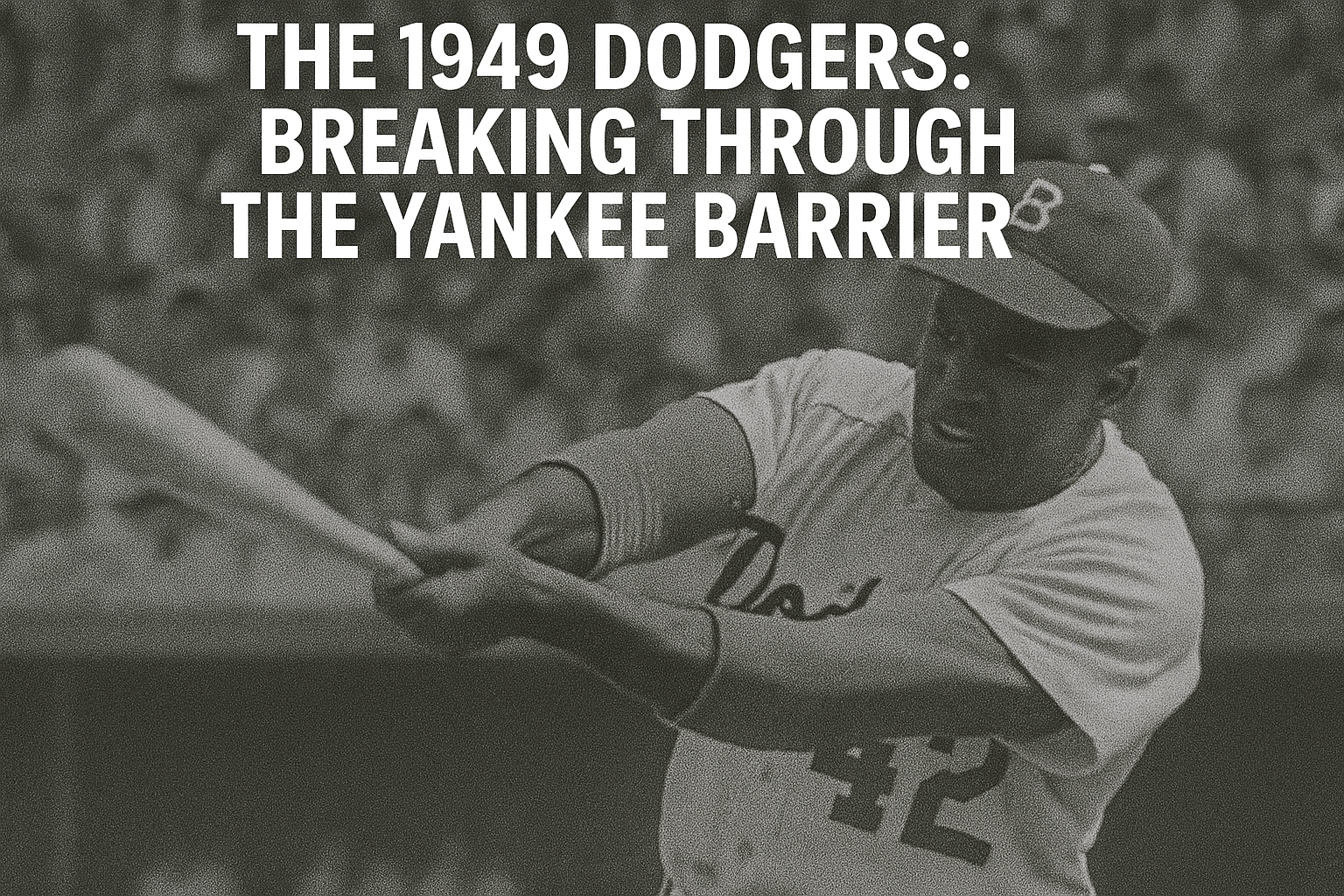
In 1949, the Brooklyn Dodgers embarked on a remarkable season that would firmly establish their place in baseball history. This season marked the Dodgers’ relentless pursuit to break through the longstanding barrier presented by the New York Yankees, a team that had dominated Major League Baseball for years. The Dodgers, often seen as the underdogs, emerged with a newfound strength and determination. The 1949 season was not just about playing baseball; it was about challenging a narrative that had long seen the Yankees as the undefeatable giants, always on top, the inevitable victors in the sport. The Dodgers, led by visionary players and driven by an earnest desire to redefine their legacy, took significant steps during this memorable year. Their efforts created ripples not just within the sport, but also influenced wider cultural and social contexts. This article delves into the 1949 Dodgers’ journey, exploring the dynamics, the players, the games, and the significant themes that framed their epic season. By understanding the elements that contributed to their fight against the Yankee dominance, one can appreciate the 1949 Dodgers’ pivotal role in shaping the landscape of American baseball.
The Rise of the Dodgers
The Brooklyn Dodgers in 1949 symbolized change and resilience, representing a team emerging from years of mediocrity. The franchise had been striving for a breakthrough for decades, grappling with inconsistency and close calls. However, 1949 was a year that reflected their evolution in striking form. The team management, led by Branch Rickey, made strategic decisions that would redefine their potential. These decisions were not merely about acquiring players; they were about fostering an environment of growth, excellence, and commitment against the odds.
Management’s foresight was crucial in bringing individuals like Jackie Robinson into the spotlight. Robinson, who had already broken the color barrier a couple of years prior, embodied tenacity and skill. His presence was not just historic but catalytic, inspiring teammates and fans alike. The addition of Roy Campanella, an incredible catcher with enormous potential, fortified their lineup. Such strategic acquisitions highlighted the Dodgers’ intent to not just participate but to contend. The inclusion of Pee Wee Reese, their captain and shortstop, added steadiness that commanded respect within the league. The collective influence of these players created a team that was not only talented but cohesive and spirited.
The 1949 roster began to reflect the diversity of America itself and provided a narrative that transcended sports. The Dodgers became a symbol for social progress, willingly pushing against traditional limitations to redefine what it meant to be a professional baseball team. They showcased a blend of young and veteran talent, combining individual brilliance with team solidarity, eager to challenge and dismantle the monopolistic triumphs of the Yankees.
The Rivalry with the Yankees
The Dodgers’ rivalry with the New York Yankees was more than just about winning or losing games; it had deeper implications. It was about breaking a cycle of Yankee triumphs and establishing an era where competition in the league was genuinely fierce. The Yankees went into the 1949 season as heavy favorites, boasting a star-studded lineup that included Joe DiMaggio, Yogi Berra, and Phil Rizzuto. They had an established reputation that players aspired to overcome. The Dodgers, on the other hand, were often seen less prominently, perpetually in the shadows of their city counterparts from the Bronx.
This rivalry was invigorated by geographical proximity, fans’ loyalty, and media attention. Every game played between these two teams was fraught with tension, rivalry-driven excitement, and the relentless push for superiority. The Dodgers were motivated by a decade-long aspiration to displace the Yankees from their pedestal and assert themselves as equally potent contenders for the World Series title. Each encounter with the Yankees was underscored by the resolve to redefine dialogues about superiority within baseball.
The 1949 season was indeed different, as the Dodgers showed their capability by leading the National League. Through skillful plays and strategic finesse, they surged past their opponents, often matching the Yankees blow for blow. Each series against the Yankees added to their motivation, fueling their resolve to be the better team. They played with the knowledge that dethroning the Yankees meant more than just lifting a trophy; it was about claiming respect, recognition, and altering the narrative of baseball dominance.
Key Moments and Games
The 1949 season was filled with remarkable displays of skill, resilience, and pivotal games that defined the Dodgers’ journey. One of the most iconic moments occurred during the regular season in a matchup that showcased Jackie Robinson’s extraordinary talent. Robinson, renowned for his equal prowess in offense and defense, played an integral role in leading the Dodgers to clinch their National League pennant this year. His strategic stealing and notable batting average were instrumental in critical games, often tipping scales in favor of the Dodgers.
Another defining moment was the extraordinary performance by Don Newcombe, pitching with precision and flair. In his rookie season, Newcombe became a vital part of the Dodgers’ success. His contribution on the mound was critical in high-stake games, especially against formidable teams in the National League and when the anticipation of Yankee match-ups grew throughout the season. Each game he pitched reminded opponents of the growing potency of the Dodgers’ arsenal.
Pee Wee Reese’s leadership was another key element. His defense at shortstop and impeccable batting reinforced the Dodgers’ confidence. Alongside Robinson, Reese’s reliability played a significant role in their offense, and his strategic plays were often celebrated. The chemistry between him and his teammates, including Duke Snider and Gil Hodges, made opponents wary of the Dodgers’ flexibility and capability.
These key moments were not just displays of individual talent but were augmented by strategic plays devised by manager Burt Shotton. Under his guidance, the team displayed a synergy that was powerful and effective on the field. Games against seasoned teams in the National League set the stage for the ultimate showdown with the Yankees in a much-anticipated World Series. The Dodgers’ path to these key games set them apart as serious contenders, ready to challenge the traditional Yankee superiority and etch their memory into the annals of baseball history.
The Impact on Baseball and Society
The Brooklyn Dodgers of 1949 were not isolated heroes of the diamond; they were catalysts for change, exerting influence on both the societal and sporting realms. This Dodgers’ squad signified a turning tide within Major League Baseball. They were not only a beacon of progress within the game but also mirrored broader societal transformations. It was during this era that sports began to embrace changes that the Dodgers had already adopted as part of their truest identity.
The inclusion of African American players like Jackie Robinson and Roy Campanella marked a decisive crossroads in the sport, leading to increased inclusivity and diverse representation. Their participation in Major League significantly challenged societal norms and pushed the boundaries of diversity within sports. Robinson’s resilience and success inspired countless others, establishing baseball as a platform that pushed for more than just athletic excellence—it called for fairness and equality.
The Dodgers galvanized support across a variety of fan demographics, transcending traditional baseball fandoms. Their drive against the Yankees reflected a quest for justice and capability, winning the respect of audiences worldwide. The inspiration drawn from the Dodgers went beyond their gameplay; their story captivated hearts, standing as an emblem of possibility transcending hardship. The team’s camaraderie and triumph over challenges symbolized resilience, fostering a sense of pride among Brooklyn’s diverse community, and setting a standard for what a unified collective could achieve against established norms.
Moreover, the 1949 Dodgers inexorably advanced the argument that teams should not only be seen for their achievements but also as barometers of cultural change. Their triumphs and trials became metaphors for America’s ongoing battle for equality and justice. The Dodgers’ narrative intertwined with the greater struggles for civil rights, positioning them as more than a team of baseball players, but as significant drivers for social change and advocates for a new era in America.
Conclusion
The Brooklyn Dodgers’ 1949 season was a momentous chapter in baseball history. As they broke through the Yankee barrier, their story solidified their status as pioneers both within and beyond the realm of sports. The Dodgers demonstrated that determination, teamwork, and a forward-thinking vision could challenge longstanding hierarchies, and in doing so, reshaped the landscape of baseball. The Yankees served as the quintessential giants, a gauge for greatness the Dodgers would use to measure their progress and success.
By challenging Yankee supremacy, the Dodgers did more than win; they sparked a movement, altering perceptions of possibility within the sport. Their relentless pursuit of excellence proved catalytic for affirmative institutional changes across Major League Baseball, inspiring generations of players and fans. Their efforts underscored the significance of diversity, camaraderie, and strategic acumen in achieving success, instilling a legacy of both sportsmanship and courage.
The 1949 Dodgers showcased baseball’s potential impact on society, far beyond entertainment. They advocated for change, integration, and acceptance, advocating a progressive ethos that legacy teams aspired to emulate. This season underscored the importance of challenging the status quo and the empowering nature of sport as a force for social good. In hindsight, the 1949 Dodgers were not just a baseball team breaking through a Yankee stronghold; they were a reflection of the dynamic shifts within America—a testament to what could be achieved when talent and vision united against challenges. Through their trailblazing path, they left an indelible legacy, serving as perennial inspirations for generations who sought victory both on and off the field.
Frequently Asked Questions
1. Who were the key players for the Brooklyn Dodgers during the 1949 season?
The 1949 Brooklyn Dodgers had several standout players who played pivotal roles in their successful season. Key players included Jackie Robinson, who continued to break barriers as one of the most influential figures in sports history. Robinson not only excelled at second base but also in his role as a civil rights icon. Pee Wee Reese, serving as the Dodgers’ shortstop and team captain, was renowned for his leadership and defensive skills. Pitcher Don Newcombe was a force on the mound, contributing immensely to the Dodgers’ performance with his powerful pitching. Roy Campanella provided strong support behind the plate as the team’s catcher, known for his reliable defense and power hitting. Each of these players contributed unique strengths that helped define the Dodgers in 1949 and set the stage for their triumphs on the field.
2. How did the 1949 Dodgers’ season differ from previous years?
The 1949 season represented a turning point for the Brooklyn Dodgers, setting it apart from previous years due to their evolved team identity and ambitions. Before 1949, the Dodgers were often regarded as a team perpetually in the shadow of the New York Yankees, who were perennial World Series contenders. However, the Dodgers entered the 1949 season with a recalibrated focus and determination. This was a time when Major League Baseball was witnessing significant changes, particularly with the integration of African American players. Jackie Robinson’s presence in the team since 1947 had already initiated this shift, but by 1949, integration was becoming more normalized, significantly benefiting the Dodgers both competitively and culturally. The team’s collective mindset had transformed; they were no longer content with being second best. Instead, they were determined to utilize their diverse roster, talent, and strategic approach to finally overcome the Yankees’ stronghold and pave their own way to glory.
3. What was the impact of Jackie Robinson on the Dodgers and baseball during the 1949 season?
Jackie Robinson’s impact on the Dodgers, as well as on Major League Baseball as a whole during the 1949 season, was monumental. As the first African American to play in the MLB in the modern era, Robinson broke the color barrier just two years prior. By 1949, he had established himself not only as a key player on the Dodgers but also as a leading sportsman nationwide. His exceptional performance, particularly in hitting and base running, earned him the National League Most Valuable Player (MVP) award that year. Beyond his athletic accomplishments, Robinson symbolized a broader cultural and societal movement towards acceptance and integration within professional sports. His courage and perseverance against significant racial adversity inspired both teammates and fans alike, challenging established norms and bringing much-needed change to the league. His presence on the Dodgers encouraged more teams to begin integrating players, which fundamentally transformed the landscape of baseball.
4. How did the Dodgers’ 1949 season contribute to their rivalry with the New York Yankees?
The 1949 season was pivotal in intensifying the rivalry between the Brooklyn Dodgers and the New York Yankees, which would become one of the most celebrated rivalries in baseball history. The season epitomized the Dodgers’ determined efforts to dismantle the Yankees’ dynasty that had long stood as an imposing figure in Major League Baseball. Historically, the Yankees were seen as the epitome of baseball success, both on and off the field. Conversely, the Dodgers, who had often played second fiddle, were committed to being the team that would unseat them. The 1949 season saw the Dodgers advance to the World Series, creating a direct showdown with the Yankees. Although they eventually fell short in the series, this breakthrough season showcased the Dodgers’ formidable presence and served as a prelude to future matches where they would continue to challenge the Yankees’ hegemony. This ongoing saga between the two teams fueled an enduring rivalry that captivated fans and heightened competition between the clubs for decades to come.
5. What were some of the challenges faced by the Dodgers during the 1949 season?
The 1949 Brooklyn Dodgers faced numerous challenges, both on and off the field, which tested their resolve and unity as a team. One of the primary challenges was the integration and backlash against African American players in Major League Baseball. Jackie Robinson and other minority players, such as pitcher Don Newcombe, often encountered racism and hostility from fans and some opposing teams. This environment necessitated resilience and fortitude as the Dodgers aimed to stay focused on their competitive goals. Moreover, the team faced the constant pressure of competing against the consistently strong performances of the New York Yankees, who brought an additional level of competitive stress. The Dodgers needed to strategize carefully and adapt in order to close the gap in performance. Despite these obstacles, the Dodgers continued to demonstrate remarkable teamwork and sportsmanship, proving that their commitment to success was greater than the setbacks they encountered.