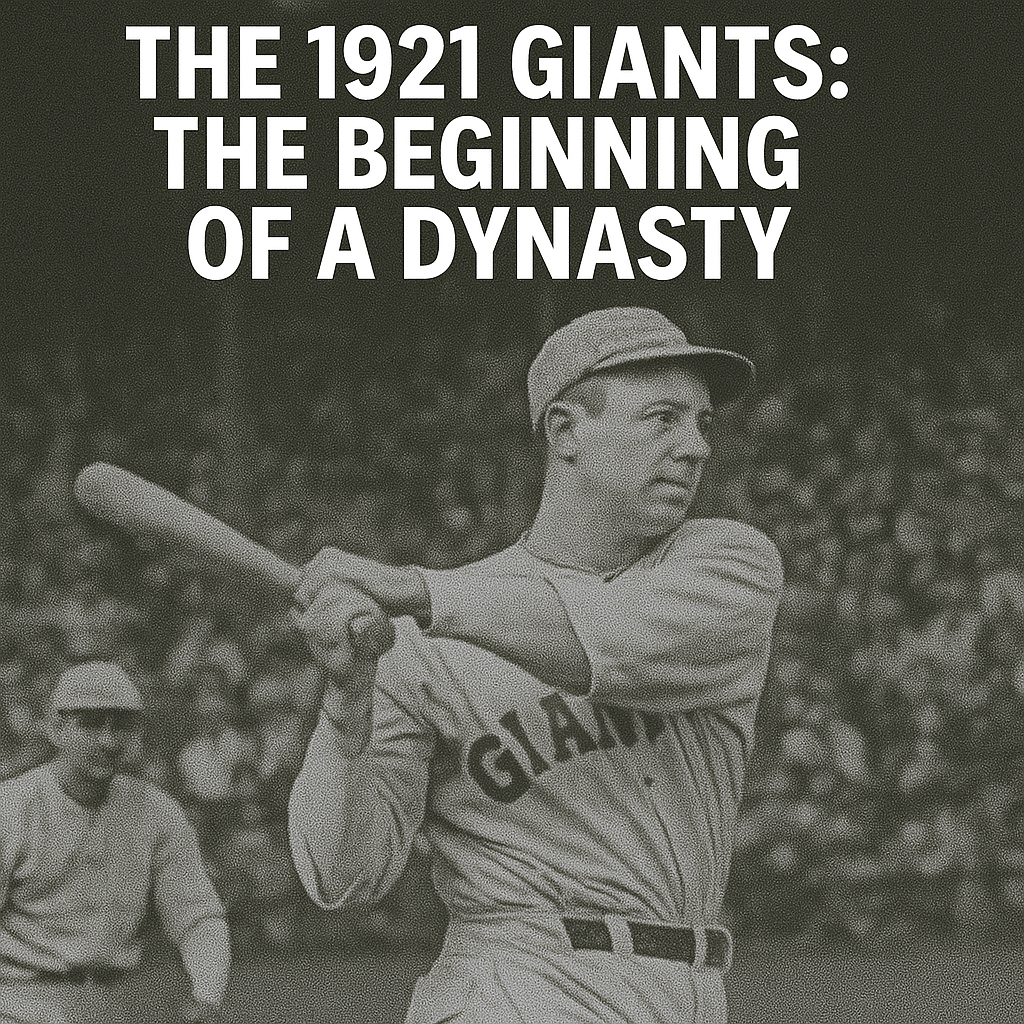
The early 1920s were a transformative period for baseball, a time when the sport was evolving and teams were beginning to carve out their legacies. Amid this backdrop emerged the 1921 New York Giants, a baseball team that would set the course for future dominance. Their achievements in 1921 were not just about victories and titles; they signified the onset of a dynasty that would etch its legacy into the annals of Major League Baseball (MLB) history. It is essential to appreciate the context and contributions of this exceptional team to understand its impact and lasting influence on the sport. The 1921 Giants, led by brilliant minds and potent players, were unstoppable. Triumph, teamwork, and tenacity defined this bygone era, and their resilience is just as relevant today. As we explore the elements that made the 1921 Giants the foundation of a baseball dynasty, we will delve into the season’s highlights, players’ individual contributions, managerial strategies, and the overall atmosphere surrounding this legendary team. This thorough examination will bring to light how the Giants not only captured a championship but also established a culture of success that would perennially influence baseball.
The Season’s Highlights
The 1921 MLB season was remarkable for many reasons, primarily because it showcased the New York Giants’ prowess as they captured the National League pennant. The team, managed by the astute John McGraw, was a force to be reckoned with, demonstrating consistency and skill throughout the regular season. It was a period when baseball was not just a game but a blossoming national pastime with the cities’ pride and a new American spirit. The Giants’ journey reflected this vibrant era. The team ended the season with ninety-four wins, securing them the National League title. Their games frequently saw packed stadiums, with fans flocking to marvel at their strategic plays and the sheer athleticism displayed by the players. This point in history was characterized by the increasing influence of tactics in enhancing team performance. McGraw’s emphasis on strong defense and timely hitting became instrumental in the Giants’ success. These tactics culminated in a sense of promise and expectation as the team moved to face their American League counterparts, the New York Yankees, in the first-ever all-New York World Series.
Key Players and Their Contributions
The Giants’ roster in 1921 was a unique amalgam of talent and skill. It boasted several notable figures who contributed to their winning campaign, each adding different strengths that meshed into a cohesive force. One of the standout players was Frankie Frisch, who was instrumental as the team’s infielder. His energy, versatility, and effective batting were critical during the entire season. Frisch’s performance came at a time when the team needed consistency and dependability on both offense and defense. George Kelly, known for his potent first base skills, also played a crucial role in defining the Giants’ season triumph. His ability to produce outstanding plays was a tremendous asset during their games. Naturally, we must also acknowledge Ross Youngs, whose temperament and hitting prowess lifted the team in crucial moments. Fenway distances and formidable opponents couldn’t deter his sharp focus or clutch hits. These players, along with others, laid the foundation for a group dynamic that allowed the Giants to achieve unparalleled success. Their dedication, discipline, and passion for the game were evident and contributed directly to the dynasty’s early growth, setting a standard for excellence.
Managerial Strategies and Leadership
Managing a baseball team is no small feat, especially considering the high stakes and expectations during the 1920s. John McGraw, the manager of the Giants, was a strategic mastermind whose leadership style had been tried and tested. Known for his no-nonsense approach, his emphasis on the fundamentals of baseball played an enormous role in propelling the Giants to become a formidable team. McGraw’s management transcended typical baseball strategies as he instilled an attitude in his players that emphasized the importance of resilience, preparation, and focus. He was a craftsman of the batting order and always yielded lineups that maximized both contact and power. McGraw’s tactical genius wasn’t limited to lineup selection; it extended to the utilization of pitching and defensive alignments. His understanding of situational gameplay and optimal use of his roster was second to none. Throughout this season, his guidance was indispensable as he orchestrated games with precision, adapting to circumstances and rival strategies. His eye for detail and insistence on hustle elevated the Giants’ performance beyond raw talent, fostering a mentality that encouraged the belief in seizing opportunities and overcoming adversities. Under McGraw’s stewardship, the Giants transformed into more than a provincial team; they began their journey towards becoming iconic in the realm of baseball. His style of leadership remains a benchmark for managers aiming to combine tactical innovation with motivational prowess.
The Impact of Baseball on Society
During the early 20th century, baseball’s mushrooming popularity was indicative of broader societal dynamics. The game represented an amalgam of cultural pride, leisure, and competition during a time when America itself was burgeoning into a dominant socio-economic power. As baseball flourished, so too did its influence permeate various facets of daily life. The Giants became synonymous with New York’s vibrant city life, unparalleled energy, and the American dream’s spirit. Newspapers extensively covered baseball, particularly the World Series events, and detailed accounts of the tournaments became central to family discussions and community gatherings. The Giants’ 1921 success bestowed immense pride upon New Yorkers, fostering a sense of belonging and communal identity. Their victories were seen as a reflection of the city’s prestige and capabilities. Concurrently, the baseball diamond served as a platform where larger narratives of perseverance, hard work, and success amidst an era of economic challenges were enacted. The Giants’ season resonated beyond just sports, symbolizing determination and upward mobility, reinforcing the ideal that success was achievable, no matter the odds.
The Inaugural All-New York World Series
The World Series showdown between the New York Giants and the New York Yankees in 1921 marked a historic moment, as it was the first time the series was played entirely within a single city. This setting captured the public’s imagination and further accelerated baseball’s growth in popularity. This specific World Series was crucial, not merely for the outcome but for how it signaled a shift in sports culture. Much attention was on the Yankees’ Babe Ruth, a burgeoning baseball superstar and an offensive force. However, it was the Giants’ calculated and comprehensive performance that stole the show. The series saw the Giants emerge as winners after a gripping nine-game series. The all-New York final brought out fans in droves and presented an electric atmosphere where every swing and pitch was dissected with rapt attention. This unique series elevated the Giants’ status and increased pressure and expectations for future performances. The Giants solidified their reputation through composure and skill, thriving amidst intense scrutiny and setting the stage for future dynastic endeavors.
Conclusion
The 1921 New York Giants’ triumphs were much more than victories on a scoreboard; they marked the burgeoning of a dynasty that would fundamentally influence that era of baseball and cement their legacy within the sport’s rich history. The foundations laid by that team’s exemplary players, tactical managerial leadership under John McGraw, and their unprecedented success provided a blueprint for excellence that clubs brimming with aspirations aim to emulate today. Beyond accolades, the Giants exemplified how sports, when intersected with cultural identity, can serve as powerful binding forces within communities. The Giants were not merely a baseball team but an emblem of commitment, overcoming adversity, strategic brilliance, and collective achievement. As new generations of teams emerge, seeking to leave their mark on the sport, the lessons and standards set forth by the 1921 Giants remain as relevant as ever. Their legacy isn’t confined solely to the annals; rather, their story epitomizes how sports can etch timeless narratives of triumph and tenacity. It was the dawn of a dynasty, characterized by endurance, foresight, and sheer passion, which forever altered the landscape of baseball as we know it.
Frequently Asked Questions
1. Who were the key players for the 1921 New York Giants, and what made them exceptional?
The 1921 New York Giants boasted several standout players who played pivotal roles in their success. Among the most notable were Frankie Frisch, nicknamed “The Fordham Flash,” who was known for his versatility and speed. As an infielder, Frisch was renowned for his remarkable agility and his ability to cover vast ground, making him an invaluable asset on both offense and defense.
Another critical player was Ross Youngs, an explosive outfielder with a powerful swing and sharp eye. Youngs was admired for his ability to consistently deliver at the plate, ranking among the top hitters in the league. Furthermore, the adept craftsmanship of George “High Pockets” Kelly at first base brought both defensive prowess and power hitting, making him a cornerstone of the team.
On the mound, pitcher Art Nehf was a formidable force. Nehf’s cunning pitching style and ability to maintain composure in pressure situations made him a reliable starter. Together, these players, alongside a supportive cast of talented contributors, helped the Giants forge their dynamic playing style, which was characterized by strategic base running, robust defense, and timely hitting.
2. What strategies did the 1921 Giants employ that set them apart from other teams of the era?
The strategic genius of John McGraw, the Giants’ manager, was a significant factor in the team’s success. McGraw was known for his aggressive and analytical approach to the game, often employing strategies that caught opposing teams off guard. One of his favorite tactics was the “inside baseball” approach, which emphasized small ball tactics — bunts, stolen bases, hit-and-run plays — to manufacture runs.
Moreover, McGraw’s emphasis on defense was revolutionary for the time. He believed in assembling a team that excelled in both fielding and pitching, a combination that allowed the Giants to limit their opponents’ scoring opportunities effectively. The meticulous attention to detail in all facets of the game underscored McGraw’s leadership style, coupled with his ability to instill a fierce competitive spirit in his players. This strategic acumen paved the way for the team’s triumphs and solidified their standing as a baseball powerhouse.
3. How did the 1921 World Series contribute to the Giants’ reputation as the beginning of a dynasty?
The 1921 World Series was a defining moment for the New York Giants, marking their rise as a dominant force in baseball. The Giants faced off against the New York Yankees, their cross-town rivals, in an all-New York World Series, which heightened the excitement and stakes for both the players and fans. This series was particularly significant as it marked the first of three consecutive World Series appearances for the Giants.
Throughout the series, the Giants showcased their resilient and tactical style of play, rallying back from a deficit to clinch the championship in eight games (the series was a best-of-nine). The victory showcased their ability to perform under pressure and adapt to various game situations. By defeating the Yankees, led by the legendary Babe Ruth, the Giants secured their place in the spotlight, signaling the start of their dominance throughout the early 1920s.
4. How did the success of the 1921 Giants influence the development of the team in subsequent years?
The triumphs of the 1921 season laid the foundational ethos for the New York Giants’ forthcoming success and established a winning culture within the organization. The achievements brought forth considerable attention and credibility to the Giants as a major contender in Major League Baseball. This bolstered team morale and attracted top-tier talent eager to be part of a winning legacy.
Building on their 1921 success, the Giants went on to win the World Series again in 1922, further cementing their reputation as a burgeoning dynasty. The guiding principles of strategic intelligence, defensive tenacity, and cohesive teamwork became hallmarks of the franchise. As a result, the Giants were able to develop and maintain a competitive edge over their adversaries, sustaining excellence for much of the decade.
5. What were the broader impacts of the 1921 Giants on the game of baseball as a whole?
The 1921 Giants left an indelible mark on the game of baseball, influencing the evolution of playing style and team management in MLB. Their innovative strategies under John McGraw’s leadership highlighted the importance of tactical versatility and adaptability, inspiring managers and teams to incorporate similar methods in their gameplay.
The Giants showcased the potential of strategic depth and disciplined execution, shifting the focus from reliance solely on slugging power to a multifaceted approach that balanced offense and defense. This change prompted other teams to enhance their scouting, training, and analysis of opponents, setting new standards for the strategic depth of baseball management.
Additionally, the successes of entities like the 1921 Giants helped elevate the stature of professional baseball in American culture, increasing interest and investment in the sport. Their role in popularizing dynamic and engaging gameplay contributed significantly to baseball’s burgeoning reputation as “America’s pastime.” The Giants inspired generations of players, managers, and enthusiasts with their artistry on the field and served as a benchmark for excellence in the sport’s long and storied history.