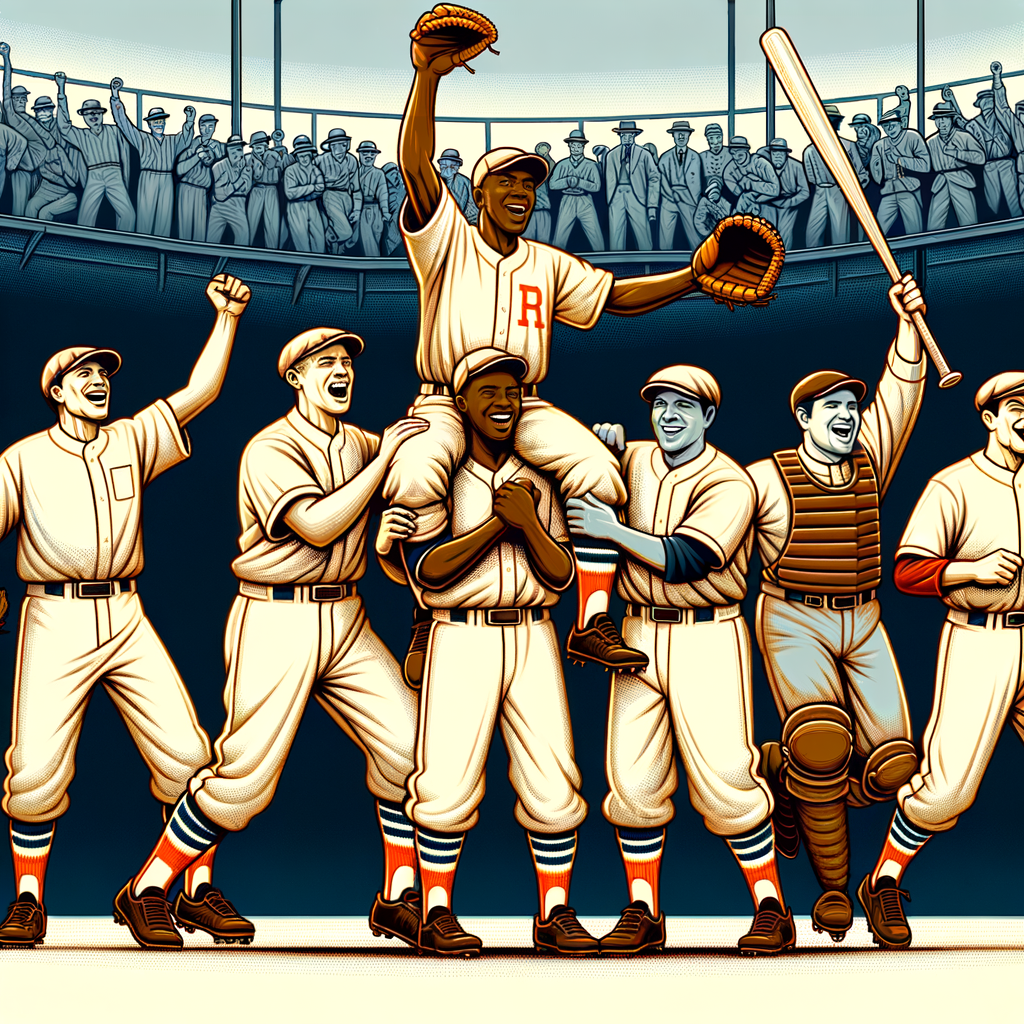
In the annals of Major League Baseball, few teams have left such a significant mark as the 1948 Cleveland Indians. This historical season was not merely about their prowess on the field but also their role in transforming the baseball landscape. The story of the 1948 Indians is one of triumph, overcoming adversity, and setting a new direction in the sport. By that time, Major League Baseball was evolving both in terms of skill and cultural significance, with the game starting to reflect broader social changes in the United States. For the Indians, this meant competing at a high level and breaking new ground in personnel and diversity. Cleveland’s 1948 season remains a symbol of hope, change, and achievement. This article delves into the season that etched the Indians’ name into the history books, exploring their journey through the pennant race, the pivotal moments, and the larger implications of their success—both on and off the field.
The 1948 campaign saw the Indians clinch their second World Series title, a feat that demanded not only athletic excellence but also strategic brilliance from players and management alike. However, beyond the thrill of victory, the season was equally important for its undertones of racial integration. Two key players, Larry Doby and Satchel Paige, emerged as central figures in this journey, symbolizing a shift towards inclusion in a sport long dominated by segregationist traditions. As we explore this chapter in baseball history, we reflect on its lasting impact on both the sport and society at large. To fully appreciate the significance of the 1948 Indians, we will dissect the events that paved the way for their historic win. We will examine the team’s strategy, the contribution of its diverse roster, and the climactic playoffs that culminated in a triumphant World Series. As we journey through these pivotal moments, we will highlight how this team managed to capture not just a championship, but a movement towards equality and change.
Chasing the Pennant
The Cleveland Indians’ 1948 season kicked off with high expectations, buoyed by a revamped roster and a strategic focus on blending youthful talent with experienced veterans. Manager Lou Boudreau, who doubled as a player-manager, orchestrated this delicate balance with precision. Boudreau’s leadership on and off the field was instrumental in setting a tone of resilience and determination. The Indians’ roster was impressive, with Boudreau, future Hall of Famers Bob Feller and Bob Lemon, as well as the emerging star Larry Doby. Under Boudreau’s guidance, the Indians developed a cohesive unit, focused on precision fielding, aggressive baserunning, and a relentless offensive strategy that exploited opponents’ weaknesses.
As the season progressed, the Indians faced stiff competition from American League rivals such as the Boston Red Sox and the New York Yankees. Yet, their consistency and adaptability enabled them to persevere, securing crucial victories against these formidable adversaries. One game that stands out was their doubleheader victory against the Yankees, which cemented their position at the top of the standings. Pitching was undeniably the Indians’ strongest asset. Bob Feller, known for his fiery fastballs, was complemented by the cunning curveballs and sliders of Bob Lemon. Moreover, the mid-season acquisition of Satchel Paige, the 42-year-old rookie, added depth and unpredictability to their bullpen. Paige’s signing was groundbreaking, representing a step forward in the integration of baseball. Despite skepticism due to his age, Paige’s experience in the Negro Leagues translated into several crucial wins during the regular season, helping to catapult the Indians into the lead.
As the summer gave way to fall, the Indians kept their momentum going. They maintained a gripping race with the Boston Red Sox for the AL pennant, a contest that came down to a one-game playoff at Fenway Park. In this decisive match, Lou Boudreau personally led the charge, hitting two home runs as the Indians outperformed the Red Sox, winning 8-3. This victory was not just a testament to the team’s on-field excellence but also highlighted Boudreau’s remarkable strategic mind and leadership capability.
The Road to the World Series
With the American League pennant secured, the Indians faced the Boston Braves in the 1948 World Series. This marked Cleveland’s first appearance in the Fall Classic since 1920, raising fans’ expectations. The series was set to be a contrast of styles—Cleveland’s balanced offense and strategic pitching against the Braves’ powerful batting lineup. Game 1 saw Bob Feller against Johnny Sain in a classic pitcher’s duel. The Braves eked out a narrow 1-0 victory, but this only fueled the Indians’ resolve. Boudreau and his team adjusted their strategy, emphasizing defensive rigidity and calculated offensive plays.
In Game 2, Bob Lemon took the mound, dominating with a complete game and distributing his pitches with surgical precision. Winning 4-1, the Indians tied the series, gaining momentum and confidence. Game 3 at Cleveland saw Gene Bearden, previously unheralded, pitch a masterful game, contributing significantly both on the mound and at the plate. The Indians won 2-0, taking a crucial 2-1 series lead. The Braves evened the series in Game 4, but Game 5 marked a turning point, with Larry Doby hitting a decisive home run, becoming the first black player to hit a home run in a World Series game. This moment was symbolic, highlighting the bridging of barriers in baseball and elevating Doby’s status as a pioneering figure.
Game 6 brought the series back to Boston, with the Indians leading 3-2. The stage was set for a climactic showdown. Satchel Paige’s relief appearance added flair and tension, while Bob Lemon’s resilience on the mound and Boudreau’s tactical nouse ensured the Indians stayed ahead. The combination of strategic bunts, timely hits, and unyielding defense saw the Indians prevail 4-3, clinching their first World Series title in 28 years. This victory was monumental, not merely for the championship itself but also for the dramatic integration and redefinition it heralded in baseball lore.
Legacy and Integration
The 1948 Cleveland Indians’ triumph is remembered as a watershed moment in baseball for multiple reasons. Firstly, it showcased the effectiveness of a strategic, flexible playing style, with a focus on all-round performance rather than reliance on a single facet of the game. Lou Boudreau’s dual role as a manager-player was pivotal, displaying exceptional leadership. His strategic decisions were often unorthodox yet effective, drawing applause for challenging the managerial norms of baseball. Notably, the Indians’ roster was a blend of youth and experience, a tactical structure they carried into future seasons with varying degrees of success. This strategic approach has since served as a blueprint for many modern teams seeking a competitive edge.
Besides the tactical brilliance, the 1948 season is also celebrated for its progressive impact on baseball’s integration. Larry Doby, the first African American to play in the American League, faced immense pressure but rose as a key player for the team. His determination and talent on the field shattered racial barriers within the sport, furthering Jackie Robinson’s efforts in integrating Major League Baseball. Similarly, Satchel Paige’s contributions, despite his late entry into the major leagues, proved his skills were timeless, emphasizing the vast talent pool available beyond the color line.
The Indians’ integration efforts didn’t merely uplift the team’s fortunes but also sparked broader social conversations. They pushed boundaries and challenged preconceived notions of racial capabilities in sports. This era illustrated that talent, not color, was the true litmus of a player’s worth to a team. Such a transformative season didn’t just alter the dynamics within baseball but encouraged dialogue that transcended sports, hinting at a more inclusive society.
Beyond their historic win, the 1948 team’s legacy lies in their brave challenge to tradition while delivering on the field. The team set a precedent, igniting a slow yet inevitable change toward greater diversity not just in personnel but also in baseball culture and attitudes. Their success inspired other franchises to follow suit, leading to a more inclusive and competitive environment, culminating in the rich blend of talents seen in today’s game.
Conclusion
The 1948 Cleveland Indians were more than just a championship team. Their season was a groundbreaking narrative woven into the broader tapestry of American history. Against the backdrop of post-war America, where social norms were shifting, the Indians represented both a victory on the field and a triumph of progressive values. They stepped beyond athletic competition, embodying the start of change in a sport long resistant to integration. Their victory in the World Series was not only a result of pitch-perfect execution, tactical acumen, and athletic excellence but also a symbol of social change—showing that breaking down racial barriers could coexist with achieving the pinnacle of sporting success.
As we reflect on their impact, it’s vital to recognize the broader implications the 1948 Indians left on the sport and society. Their efforts echoed in future generations, influencing countless players, teams, and fans. They taught us that sports could be a powerful agent of change and that integration wasn’t just a possibility but a necessity for growth and evolution in the realm of competitive athletics. The Indians’ lasting legacy is not just in their triumph but in their ability to inspire. They encouraged other teams to embrace diversity, leading to a more vibrant and inclusive league.
The impact of their 1948 win lingers in baseball’s fabric, teaching lessons about courage, perseverance, and the strength found in unity amidst adversity. The story of the 1948 Cleveland Indians remains an extraordinary chapter in the chronicles of baseball, encapsulating a moment where sport, society, and history intersected. Their journey from hopeful contenders to groundbreaking champions is a testament to their enduring influence on baseball and the trajectory of integration within the sport. That season taught us about the power of unity, resilience, and change—qualities that hold the potential to redefine not just sports but society itself.
Frequently Asked Questions
1. Who were the key players in the 1948 Cleveland Indians team?
The 1948 Cleveland Indians boasted an impressive roster, featuring some of baseball’s most iconic figures. At the helm was manager Lou Boudreau, who also played shortstop and was a key part of the team’s success. Bob Feller, known as “Rapid Robert,” was a standout pitcher with an electric fastball that awed crowds. Then there was the charismatic Larry Doby, who made history as the first African-American player in the American League, breaking barriers and showcasing extraordinary talent. Satchel Paige, another pioneering African-American athlete, joined the team mid-season and brought a wealth of experience and flair. With players like Bob Lemon and Gene Bearden anchoring the pitching staff, and Joe Gordon providing power at second base, every game was an exhibition of extraordinary skill and teamwork. This roster didn’t just play; they embodied a blend of athletic genius and pioneering spirit, which has cemented them in baseball history.
2. Why is the 1948 season considered historic beyond just winning the championship?
The 1948 season is celebrated not only for the Cleveland Indians’ triumphant World Series victory but for its pivotal role in evolving Major League Baseball into a more inclusive and competitive sport. It was the year Larry Doby, a symbol of integration much like Jackie Robinson in the National League, broke the color barrier in the American League. Each match Doby played wasn’t just a display of athletic prowess; it was a statement of courage against racial segregation. Satchel Paige also joined the Indians that summer, aplomb with his unique pitching history from the Negro Leagues. Their inclusion on the roster challenged and eventually helped to dismantle the flawed segregation policies of the time, setting a precedent for other teams. Moreover, their success on the field validated the abilities and potential of all players, regardless of race, legitimizing the sport’s move towards equality and diversity. The season was a cultural milestone as much as it was an athletic achievement.
3. How did the fans and the public react to the integration of the 1948 Indians?
The 1948 season was a turning point, not just on the field but in the hearts and minds of baseball fans. Initially, there was skepticism and resistance from certain segments of society about integrating African-American players into Major League Baseball. However, the overwhelming majority of fans quickly embraced the exciting new dynamics brought to the game. Seeing athletes like Larry Doby and Satchel Paige excel and play key roles in the Indians’ success helped shift public perception. Doby’s consistent performance and Paige’s strategic brilliance on the mound won over many fans. For Cleveland residents in particular, this integration added another layer of pride to their hometown team. As the season progressed and the Indians kept winning, a sense of unity began to form among fans of different backgrounds. The 1948 Indians became a symbol of positive social change and a forerunner for the equality movements that would follow in American society, proving that talent knows no color.
4. What challenges did the team face during the 1948 season?
The 1948 Cleveland Indians faced a myriad of challenges, from intense competition to societal pressures. On the field, they contended with fierce rivals like the Boston Red Sox and the New York Yankees, who were powerhouses in their own right. Navigating the American League was no easy feat, with each game testing their determination, strategy, and stamina. Off the field, the inclusion of African-American players introduced additional hurdles, as the team had to deal with both supportive and hostile spectators. For players like Larry Doby and Satchel Paige, there was the immense pressure of not only performing well but also representing an entire race under a spotlight seldom experienced by other players. The team had to remain cohesive and focused amid these external tensions. Yet, through unwavering camaraderie and strong leadership from Lou Boudreau, the Indians managed to forge a sense of unity that transcended these barriers, leading them triumphantly to a World Series victory and leaving a legacy of integration in professional sports.
5. How did the 1948 Indians’ victory influence Major League Baseball in subsequent years?
The 1948 Cleveland Indians’ victory was a watershed moment for Major League Baseball, catalyzing a boom in the sport’s popularity and setting a precedent for greater inclusivity. Their success demonstrated that a diverse team could excel on baseball’s biggest stage, encouraging other teams to incorporate players from the Negro Leagues and beyond. Over the following decades, the roster’s diversity grew, reflecting America’s multicultural landscape more accurately. Moreover, the 1948 triumph reinforced the viability of integrating talent from all backgrounds, empowering more African-American and international players to pursue major league careers. This cultural shift laid the groundwork for future superstars and expanded the global appeal of baseball. The Indians’ historic win illustrated the advantages of adaptability and openness, prompting organizations to prioritize skill and teamwork over outdated racial policies. As the inclusive model took root, the league flourished, showcasing a richer, more compelling brand of baseball that continued to capture the imagination of fans around the world.