
Baseball has celebrated numerous pitchers who have left indelible marks on the game, but few have been as compelling and resilient as Vic Willis. Often overshadowed by his contemporaries, Willis’s consistency, durability, and skill positioned him as one of the major workhorses of the 20th century. During an era marked by the transition from the rough-and-tumble dead-ball era to a more refined style, Willis stood tall, overcoming formidable odds to etch his name in baseball history.
Introduction to Vic Willis
Born on April 12, 1876, in Cecil County, Maryland, Victor Gazaway Willis grew up in a period ripe for baseball’s burgeoning popularity. He ventured into professional baseball at a time when the sport was still finding its footing, with players often juggling multiple roles within and outside the game. Willis joined Major League Baseball (MLB) in 1898, debuting with the Boston Beaneaters, a team that would later become the Boston Braves and eventually the Atlanta Braves.
Standing at an imposing 6 feet 2 inches, Vic Willis was an intimidating presence on the mound. His physical stature, combined with his skill set, made him a prolific pitcher. Throughout his 13-year career, he played for the Beaneaters, Pittsburgh Pirates, and St. Louis Cardinals, amassing a record that remains impressive even by today’s standards. Despite the lack of modern amenities and training resources, Willis’s endurance and persistence were hallmarks of his career, reflecting the era’s grueling nature.
Vic Willis’s inaugural season in 1898 saw him win 25 games, setting a precedent for the rest of his career. His rookie year success was no fluke; he consistently delivered performances that made him a household name. His legacy, however, extends beyond mere numbers; it encapsulates the determination and passion that defined early 20th-century baseball.
Vic Willis’s Prowess on the Mound
Vic Willis was known for his remarkable fastball and deceptive curveball, a combination that left many batters bewildered. But beyond his impressive arsenal of pitches, Willis was celebrated for his incredible stamina and capacity to pitch complete games. In an era long before the advent of specialized relief pitchers and meticulously monitored pitch counts, Willis was a true ironman.
In the 1902 season, perhaps his most extraordinary year, Willis pitched an astounding 410 innings. To put this into context, it’s a feat nearly unimaginable in today’s game, where pitchers are closely monitored to prevent injuries. That year, Willis’s endurance paid dividends: he recorded a stunning 27 wins with a sparkling 2.20 ERA, firmly establishing himself among the best pitchers of his generation.
Willis’s incredible durability was evidenced by his record of 388 complete games, making him one of the all-time leaders in this category. He also topped the league in shutouts three times, underscoring his ability to dominate and control games from start to finish. These accomplishments were realized despite the lack of advanced medical support and training techniques available to modern players, further highlighting his toughness and tenacity.
The Pinnacle with Pittsburgh Pirates
In 1906, Vic Willis joined the Pittsburgh Pirates, where he would achieve some of his most memorable career highlights. The transition to the Pirates proved to be a crucial turning point, as it was with this team that Willis found intermittent success. Playing alongside other baseball legends, Willis found himself in an environment that pushed him to elevate his game even further.
One of the crowning achievements of his career came in 1909, when the Pirates secured the World Series against the Detroit Tigers. Willis’s contributions to the team’s success were significant, and his ability to perform under pressure showcased his mettle. Although he wasn’t the primary pitcher in the World Series, his season-long performances fortified the team’s rotation and were integral to Pittsburgh’s championship run.
Willis’s tenure with the Pirates also included consistent excellence. In 1907, he led the pitching staff with 21 wins and a commendable 2.30 ERA. Over his stint with the team, he proved to be an invaluable asset, with his reliability greatly contributing to the Pirates’ competitive edge during these years.
Stellar Statistics and Achievements
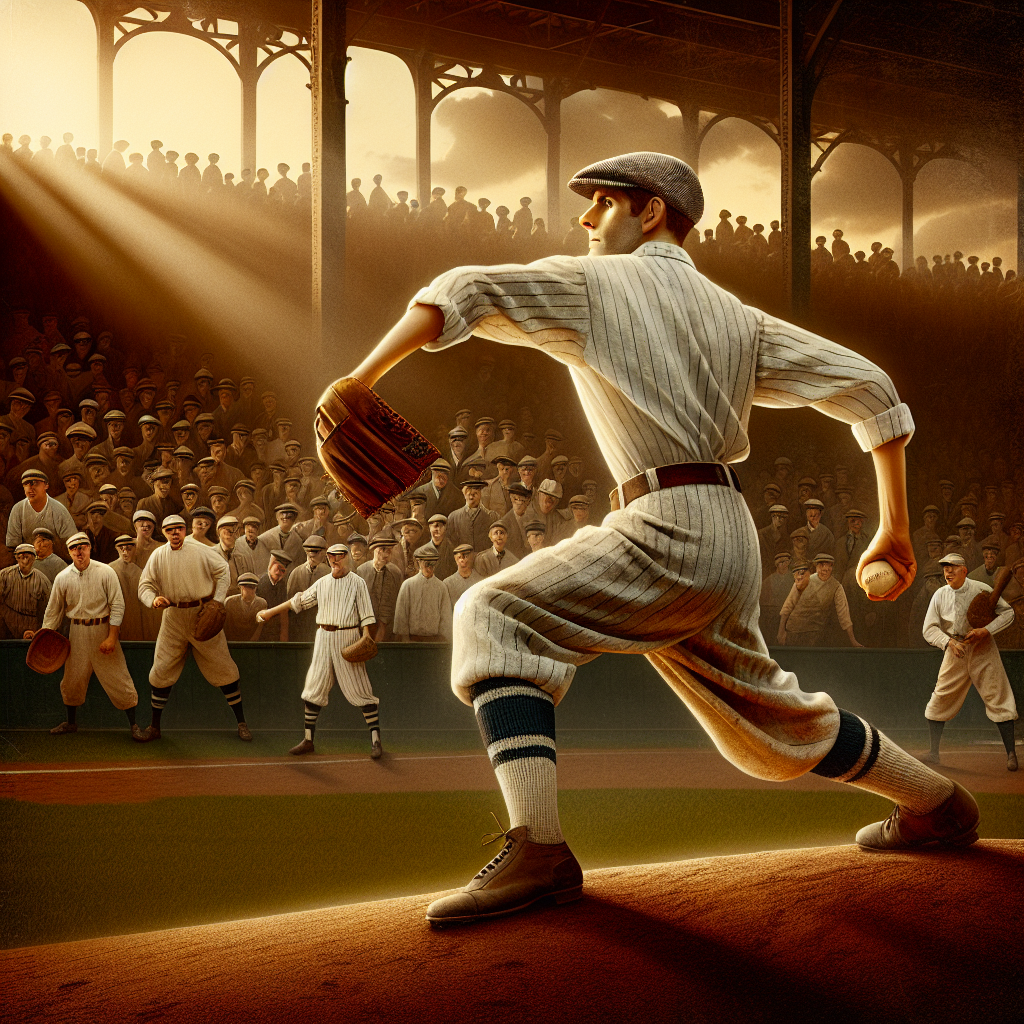
Throughout his career, Vic Willis amassed statistics that any pitcher would envy. His final tally included 249 wins, ranking him among the top pitchers of his era. His career ERA of 2.63 only underscores the dominance he held over hitters, and his 1,651 strikeouts further accentuate his ability to control the game.
Willis was not only a workhorse but also a key figure in his era’s pitching landscape. He led the league in innings pitched twice and finished in the top ten in wins multiple times. Despite playing during a fiercely competitive era, often against some of the gritty baseball greats, Willis’s stats reveal a player who relentlessly held his ground.
Recognition of his achievements came posthumously with his induction into the Baseball Hall of Fame in 1995, ensuring that his legacy would be remembered. While he may not have garnered the same instant fame as some of his contemporaries, Willis’s contributions to the game were undeniable and duly recognized by historians and baseball aficionados alike.
Challenges and Triumphs
Despite his numerous successes, Vic Willis’s career was not without its challenges. The physical and mental demands of pitching so many innings year after year took their toll, and he faced injuries and the wear-and-tear that accompany such a grueling workload. These adversities, however, never diminished his resolve to perform at the highest level.
In addition to the physical difficulties, Willis played in an era marked by evolving rules and changes within the sport. The transition from the dead-ball era to more offensive-minded play required pitchers to adapt continually, and Willis managed this shift with remarkable skill. His ability to navigate these changes and still maintain his prowess is a testament to his adaptability and expertise.
Furthermore, the financial rewards and accolades that players enjoy today were non-existent during Willis’s time. Players often had to seek off-season employment to make ends meet, adding another layer of challenge to their professional commitments. Despite these hurdles, Willis’s dedication to his craft never waned, embodying the spirit of perseverance and passion.
Legacy and Impact on Baseball
Vic Willis’s contribution to baseball extends beyond his impressive statistics and accolades. He represents an era of the sport characterized by hard work, resilience, and determination—qualities that are timeless and continue to inspire new generations of players. His career serves as a reminder of the dedication required to excel at the highest levels of the game.
Willis’s induction into the Hall of Fame posthumously acknowledges the significant impact he had on the sport. It ensures that his legacy endures, providing a model of excellence and integrity for future players. His life and career continue to be a subject of study and admiration for baseball historians, reflecting the deep respect he commands within the industry.
Moreover, Vic Willis’s life story is a compelling narrative that underscores the transformative power of sports. It illustrates how an individual, through sheer determination and skill, can leave a lasting impact on a national pastime, influencing the game’s evolution and setting benchmarks for future athletes.
Conclusion: Remembering Vic Willis
As we reflect on the illustrious career of Vic Willis, it becomes clear that his legacy is defined by much more than his statistics. He epitomizes the virtues of perseverance, dedication, and endurance, traits that define the very essence of baseball. Willis was a workhorse, a player who embodied the spirit of his era and left an indelible mark on the game.
Although contemporary fans might not immediately recognize his name, Willis’s contributions have been instrumental in shaping the trajectory of professional baseball. His ability to perform under pressure, adapt to changing circumstances, and consistently deliver outstanding performances makes his story an essential chapter in the annals of baseball history.
Remembering Vic Willis is not just about celebrating a player; it’s about recognizing the legacy of an individual who, through his efforts, elevated the game and inspired generations. His induction into the Hall of Fame serves as a testament to his enduring influence and the respect he commands within the baseball community.
As we look back on Vic Willis’s career, we celebrate not only his triumphs on the field but also the enduring spirit and resilience he demonstrated. His story is a cornerstone of baseball’s rich history and serves as an inspiration for all who aspire to greatness in the sport. Indeed, Vic Willis was truly the 20th century’s workhorse, a title befitting his remarkable journey and enduring legacy.
Frequently Asked Questions
1. Who was Vic Willis and what made him stand out in baseball history?
Vic Willis was one of baseball’s enduring figures, a pitcher who carved out a significant niche in the early 20th-century game. Born on April 12, 1876, in Cecil County, Maryland, Willis played in the Major Leagues from 1898 until 1910. Even though he often played in the shadows of more famous contemporaries such as Cy Young, his ability to consistently deliver quality performances differentiated him from many of his peers. He was a right-handed pitcher known for his large frame and durability on the mound, a common characteristic during the strenuous schedule of the dead-ball era. What truly set Willis apart was his spectacular resilience and work ethic; he regularly pitched massive innings in a single season, something that would be considered extraordinary today. This was an era without the luxury of modern recovery techniques, underlining the physical toll such consistency entailed. He led the league in innings pitched multiple times and was known for not shying away from taking the mound, even under tough circumstances. Vic Willis’s standout features were his consistency, skill, and the staggering endurance that made him one of the primary workhorses of the game during his time.
2. How did the dead-ball and refined eras affect Vic Willis’s career?
Vic Willis’s career began during the dead-ball era, a time when baseball was typically characterized by low-scoring games, and home runs were a rare spectacle. This era required pitchers to develop a diverse set of skills to be truly effective, incorporating not just speed and power but also finesse and tactical variations. For Willis, this meant adapting his game to work around the strengths and weaknesses of each batter. As baseball transitioned to a more refined era, with evolving rules and philosophies favoring different styles of play, Willis continued to thrive by adapting and refining his own approach on the mound. Although the refined era began emphasizing a slightly more offensive brand of baseball, his steadfast technique and unwavering focus enabled him to maintain dominance even as the game’s landscape started to shift. The transition showcased not only his adaptability as a player but also his profound understanding of the game’s evolving facets. It illustrated how his competence withstood the test of changing times, allowing him to leave an indelible mark across both eras.
3. What are some of Vic Willis’s career highlights and achievements?
Vic Willis racked up numerous accolades and achievements throughout his career that highlighted his exceptional contributions to baseball. His very first season in the majors with the Boston Beaneaters resulted in a personal tally of 25 wins, an impressive feat for any pitcher and evidence of his early promise as a professional athlete. Willis was a consistent leader in various pitching categories, often finishing among the top contenders in earned run averages (ERAs) and strikeouts. Notably, in 1902, he achieved a headline-grabbing 27 wins, marking one of the peak performances of his career. This illustrious season was accompanied by a remarkable 2.20 ERA. Across his 13-year career, Willis logged over 300 wins, a testament to his effectiveness and longevity on the mound. Furthermore, his pitching prowess was pivotal in the Pittsburgh Pirates’ 1909 World Series victory, securing his reputation as a key performer in the team’s roster during critical moments. This remarkable consistency and numerous achievements culminated in Willis being rightfully inducted into the Baseball Hall of Fame in 1995, a posthumous recognition of his enduring legacy.
4. How did Vic Willis’s playing style contribute to his long-lasting career?
Vic Willis’s playing style was hallmarked by a robust adaptability and innate understanding of strategic pitching, which contributed significantly to the longevity and productivity of his career. Known for his intimidating presence on the mound, thanks to his towering frame, Willis implemented a pitching style that blended raw power with strategic finesse. He possessed an extensive arsenal of pitches that he could deploy with precise control – a quality that continually kept hitters on their toes. Moreover, Willis was able to consistently study batters and adjust his techniques accordingly, a testament to his keen analytical skills and commitment to maintaining a high level of performance. This intelligence in gameplay allowed him to maintain a competitive edge, season after season, despite the physical demands placed on pitchers during his era. His durability, both physical and mental, proved to be a cornerstone of his career. Unlike many contemporaries who were prone to burnout, Vic Willis managed to combine his remarkable work ethic with meticulous personal care, ensuring he stayed in peak condition to tackle the relentless pitching responsibilities week in and week out.
5. Why is Vic Willis less famous than other pitchers of his era, despite his success?
Vic Willis’s relative obscurity compared to other pitchers of his era can be attributed to several interrelated factors. Although highly successful and possessing an impressive record, his career coincided with several baseball legends whose fame and charisma captivated public attention and media spotlight. Players like Cy Young, whose names have since become synonymous with pitching excellence, often drew the lion’s share of recognition and left little for others who performed slightly out of those limelight circles. Moreover, the era itself did not have today’s intensive media presence or storytelling mechanisms that help elevate certain players to iconic status within the public’s imagination. There wasn’t as robust an infrastructure for turning athletes into household names, unless they were consistently highlighted in the limited sports reportage of the time due to their uniqueness or extraordinary feats. Lastly, Willis’s reserved personality might have played a role. He was known more for his quiet determination and less for charismatic antics or flamboyant style, traits that often capture fan adoration and add to a player’s mythology. In essence, while his actions spoke volumes on the field, the quieter confidence with which he engaged the sport left him overshadowed somewhat in the annals of spoken history, despite his richly deserved accolades and achievements in statistical records.