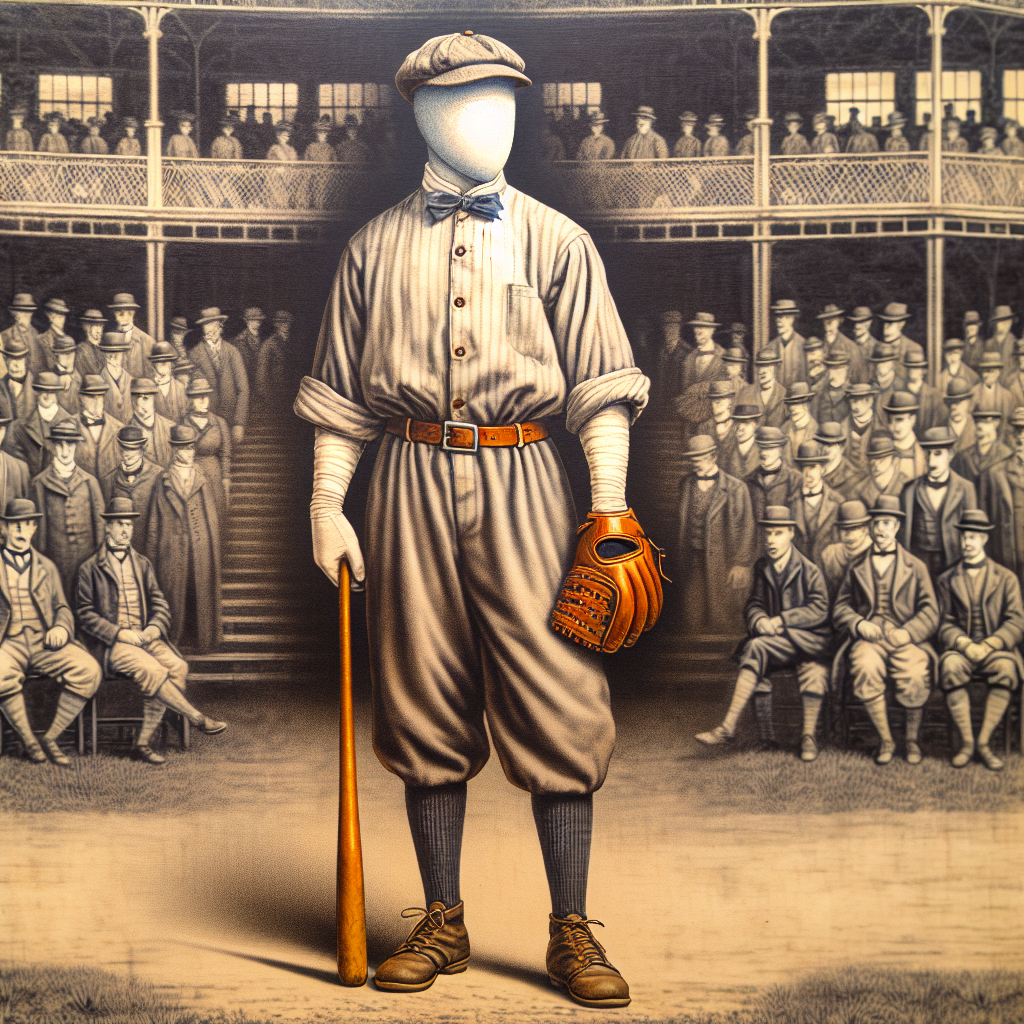
When discussing the greatest players of baseball’s early days, names like Cy Young, Honus Wagner, and Ty Cobb often dominate the conversation. These names are celebrated for their immense contributions on the diamond and their legacies that have endured through the years. Yet, amid these titans, another star shone brightly, perhaps too briefly remembered: Joe Kelley. This article aims to shed light on Joe Kelley’s illustrious career and underscore why he deserves to be remembered as one of the greats of the 1890s.
Introduction
Joseph James Kelley, born on December 9, 1871, in Cambridge, Massachusetts, holds a unique place in baseball history. Despite not being as widely known today, Kelley carved out a spectacular career during the late 19th century, a time often referred to as the “dead-ball era.” His left-handed batting prowess and versatile fielding abilities made him an invaluable asset to the teams he played for, and his hitting statistics often matched, if not exceeded those of his contemporaries.
In his early years, Kelley showcased his baseball talents in semi-professional leagues in Massachusetts. It wasn’t long before his skills caught the attention of professional scouts. By 1891, Kelley had made his professional debut, quickly establishing himself as a prodigious talent and becoming a key player for the Boston Reds.
As one delves deeper into the career of Joe Kelley, it becomes clear that his impact on the game was far more significant than his relative obscurity today might suggest. Like a comet across the night sky, Kelley’s brilliance was undeniable, even if it was to be unfairly overshadowed by some of his contemporaries. This introduction sets the stage for an exploration of Kelley’s remarkable achievements, the teams he led to glory, and the legacy he left behind in the sport that he helped shape.
An Early Career Full of Promise
The early stages of Joe Kelley’s career read like a fairy tale of triumphant ascension. After making a name for himself with stellar performances in Massachusetts, Kelley’s big break came with the Boston Reds in the American Association (AA). His time with the Reds showcased his tremendous hitting ability; he batted an impressive .323 during his rookie season in 1891. However, the American Association disbanded after the 1891 season, prompting Kelley to move to the National League.
In 1892, Kelley joined the Pittsburgh Pirates, though his time there was short-lived. The turning point in his career arrived when he was acquired by the Baltimore Orioles in 1893. The Orioles of the 1890s were a juggernaut, known for their aggressive style of play and strategic innovations like the hit-and-run. It was here that Kelley would flourish and become a household name in baseball circles.
Under the leadership of manager Ned Hanlon, the Baltimore Orioles were a powerhouse team, and Joe Kelley was right at the heart of it. Kelley’s exceptional batting average, coupled with his ability to steal bases and his defensive prowess, made him one of the most complete players of his era. By 1894, he was hitting .393, part of a batting order so potent it was dubbed “Murderers’ Row” long before the Yankees’ 1927 lineup would inherit the nickname.
Peak Performance and Unmatched Versatility
Joe Kelley’s peak years with the Baltimore Orioles from 1893-1898 were nothing short of extraordinary. These years saw Kelley establish himself as one of the premier players in the league, and his statistics tell the story convincingly. Over this period, Kelley consistently demonstrated a blend of power, speed, and precision at the plate. The 1894 season stands out in particular, as he managed a batting average of .393 with 9 home runs and 165 RBIs, in an era where home runs were scarce.
Kelley’s versatility was also notable—he played multiple positions with aplomb, primarily excelling in the outfield. Such adaptability made him an invaluable team asset, as he could seamlessly shift between roles as needed. This adaptability extended to his batting style; Kelley was proficient at placing the ball where fielders weren’t, a skillset that contributed to his consistently high on-base percentages.
Off the field, Kelley was regarded as a player with an astute understanding of the game. His baseball IQ was often cited by teammates and opponents alike, who admired his strategic thinking and clutch performances in critical situations. It was this blend of athletic talent and mental sharpness that set Kelley apart from many of his peers.
Moreover, Kelley’s enthusiasm and leadership abilities were integral to the Orioles’ multiple pennant victories during his tenure. His influence extended beyond statistics; he was a morale booster, often encouraging young players and pushing his team to perform at their best. Kelley’s legacy, especially within the Baltimore Orioles franchise, is a testament to a player whose impact transcended simple numbers.

The Move to Brooklyn and Subsequent Years
In 1899, Joe Kelley’s career took another significant turn as he was traded to the Brooklyn Superbas (now known as the Dodgers). Reuniting with former Orioles manager Ned Hanlon, Kelley continued to shine on the field. That same year, Kelley played a critical role in leading the Superbas to a National League pennant. His all-around skill set and seasoned experience were invaluable to his new team.
Although his batting average took a slight dip compared to his peak years with the Orioles, Kelley’s contributions to the Superbas were undeniable. He continued to be a significant offensive threat and a defensive stalwart. Kelley’s time with Brooklyn was marked by a solid batting average and a knack for stealing bases at crucial moments, showcasing that he still possessed the unique combination of power and speed.
However, by the early 1900s, the wear and tear of professional baseball began to take its toll on Kelley. Injuries started to impact his performance, and his batting statistics began to decline. Nonetheless, his strategic mind for the game never wavered; he often found himself taking on managerial responsibilities, both as a player-manager and later solely as a manager. These roles allowed him to impart his extensive knowledge and love for the game to the next generation of players.
Despite the setbacks, Kelley’s competitive spirit remained undiminished, and he played professional baseball until 1908. His final years were characterized by short stints with several teams, including the Cincinnati Reds and the Boston Doves. Even as his on-field performance waned, his immense contribution to the teams he played for and mentored underscores why Kelley is a legendary figure deserving of recognition.
Statistics and Legacy: A Study in Excellence
Joe Kelley’s career statistics are a testament to his excellent skillset and enduring impact on baseball. Over his remarkable career, Kelley managed a lifetime batting average of .317, amassing 2,220 hits, 65 home runs, and 1,194 RBIs. In an era dominated by pitching, these numbers underscore the exceptional talent Kelley possessed and his crucial role in his teams’ successes.
One of the most telling aspects of Kelley’s career is his consistency. From 1893 to 1898, his batting averages were consistently among the highest in the league, often exceeding .350. This period of sustained excellence cemented his place among the elite hitters of his era. Moreover, his 443 stolen bases further illustrate his multidimensional impact on the game—Kelley wasn’t just a hitter; he was a complete player whose speed and intelligence on the base paths were critical assets.
Recognition for Joe Kelley’s contributions came, albeit posthumously, when he was inducted into the Baseball Hall of Fame in 1971 by the Veterans Committee. This honor, though deserved, still leaves some modern baseball enthusiasts perplexed at the relative obscurity of Joe Kelley’s name in historical discussions. While the Hall of Fame induction acknowledges his greatness, more should be done to celebrate and disseminate the legacy of this forgotten star.
Joe Kelley’s impact goes beyond mere numbers. As a player, he was a pioneer of aggressive base running and strategic play that influenced the tactics of the teams he played for. As a mentor and manager, he helped shape the careers of numerous players, ensuring his influence would be felt long after his playing days were over.
Joe Kelley’s Role in Baseball’s Evolution
The story of Joe Kelley is, in many ways, the story of baseball’s evolution at the turn of the century. Playing in an era that saw the transition from bare-handed fielding to glove use, from amateur play to more professionalized leagues, Kelley was a constant through these transformative years. He embodied the adaptation and perseverance required to excel in a rapidly changing sport.
Kelley was not just a player but a trailblazer in various aspects of the game. His approach to hitting, characterized by a keen eye and disciplined contact, set a standard that players in subsequent generations would strive to emulate. His tactical understanding of the game laid groundwork for more sophisticated and nuanced strategies that have come to characterize modern baseball. Cruelly nicknamed a “forgotten star,” Kelley in truth should be regarded as a pivotal figure in the sport’s history.
Moreover, Kelley’s influence extended into clubhouse dynamics and team morale. He was a master at fostering a competitive yet cooperative environment that brought out the best in his teammates. This ability to inspire and lead arguably contributed as much to his teams’ successes as his considerable physical talents. Baseball historians argue that Kelley’s impact on the Baltimore Orioles and Brooklyn Superbas alone would qualify him for legendary status, yet his broader influence on the sport adds further layers to his legacy.
Even the leagues now implement strategies that owe something to Kelley’s innovative thinking. The hit-and-run, aggressive base stealing, and strategic outfield positions; Kelley was a master of these approaches, popularizing tactics that remain part of the game’s modern vernacular.
Conclusion
Joe Kelley may not be the most famous name when talk turns to baseball legends, yet his contributions to the sport during the 1890s and early 1900s are undeniable. From his breakout seasons with the Boston Reds and Pittsburgh Pirates to his golden years with the Baltimore Orioles and productive tenure with the Brooklyn Superbas, Kelley consistently demonstrated excellence in nearly every facet of the game.
His remarkable batting averages, combined with his impressive number of stolen bases and defensive versatility, mark him as one of the true all-rounders of his time. Though injuries and the passage of time have rendered him less remembered than some of his contemporaries, the recognition of his peers and historians alike serve as a testament to his stellar career.
In celebrating the forgotten star of the 1890s, we do more than just honor Joe Kelley; we pay homage to an entire era of baseball history that laid the foundations for the game we cherish today. As baseball continues to evolve, the legacies of pioneers like Joe Kelley provide a rich tapestry of stories, skills, and strategies that enrich the sport.
Let us remember and honor Joe Kelley not just as a player defined by statistics but as a visionary who helped shape baseball into the beloved game it has become. His contributions, both on and off the field, render him truly unforgettable.