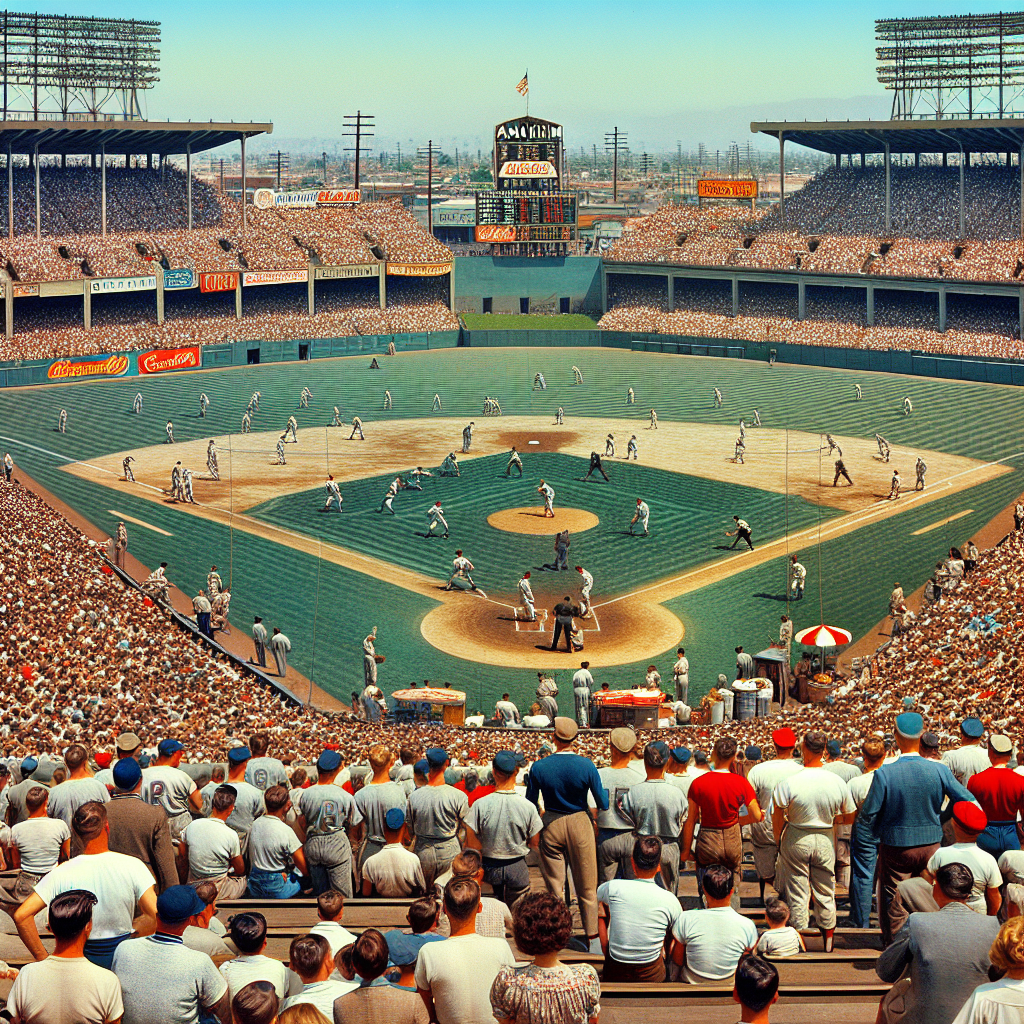
Baseball holds a nostalgic and nearly sacred place in the hearts of many Americans, and for those who root for the Los Angeles Angels, Anaheim Stadium (also known as Angel Stadium of Anaheim) is hallowed ground. Whether you’re a die-hard fan or a curious newcomer, understanding the early history of this iconic ballpark will deepen your appreciation for its cultural significance, both locally and nationally.
Introduction
When Major League Baseball announced the expansion of the league in the early 1960s, California was poised for a baseball renaissance. The Los Angeles Angels, who began as an expansion team in 1961, initially shared Dodger Stadium with the Los Angeles Dodgers. However, it was clear that the Angels needed a home of their own, a place where they could build their own legacy. Enter Anaheim Stadium, a state-of-the-art ballpark constructed in the mid-1960s that would become the Angels’ permanent home.
Anaheim Stadium, sometimes affectionately referred to as “The Big A,” opened its gates in 1966. Situated in the heart of Orange County, it was envisioned as a multi-purpose venue that could accommodate both baseball and football. The undertaking was colossal, reflecting California’s ambition to assert itself as a major player in America’s favorite pastime. Initially built at a cost of around $24 million, the stadium was a testament to mid-century modern design and grandeur.
The Angels saw immediate benefits from having their own stadium. Not only did the ballpark provide a dedicated space for the team’s growing fan base, but it also allowed for enhanced revenue opportunities from concessions, parking, and other stadium-themed events. It was an exciting era marked by optimism, growth, and a deepening of community ties.
The Construction: Roots and Ambitions
In the early 1960s, as America was experiencing a post-war economic boom, California emerged as a magnet for growth and development. Cities like Los Angeles and San Francisco were rapidly expanding, and Anaheim was no exception. Officials and planners envisioned Anaheim Stadium as not just a baseball field but as an embodiment of suburban utopia—a place where families could gather, enjoy America’s favorite pastime, and participate in communal gaiety.
The location of the stadium itself was symbolic, nestled in the heart of Orange County which was, at the time, experiencing a dramatic population growth. The design of the stadium was meticulously planned to incorporate modern architectural elements. Spearheaded by the architectural firm Noble W. Herzberg and Jack L. Meiselman, the construction of the stadium commenced in August 1964, and it took approximately 18 months to complete.
One of the standout features of the stadium was its extravagant scoreboard known as the “Big A”. It was a colossal structure, towering at 230 feet and easily visible from the nearby freeway. The scoreboard was not just an engineering marvel; it became an emblem of Anaheim’s bold aspirations and a signature element that would define the ballpark for years to come.
Financially, the initial cost of $24 million was a considerable investment, equivalent to several hundred million in today’s money. But the promise of economic benefits, including job creation, tourism, and increased local commerce, made the venture a worthwhile risk. By the time the stadium was complete, it was not merely a venue; it was a beacon of progress and prosperity for Anaheim.
The Grand Opening: A New Era
The grand opening of Anaheim Stadium in April 1966 was a festive occasion. Fans from all around Southern California flocked to witness the inaugural game between the Angels and the Chicago White Sox. The atmosphere was electric, filled with anticipation and jubilation. The stadium brimming with enthusiastic fans heralded a new era for the Angels, one that promised triumphs and memory-making moments.
The opening game did not disappoint. Although the Angels lost to the White Sox in a closely contested match, the larger narrative was one of hope and commencement. The event encapsulated the sentiment that Anaheim Stadium was more than just a sports venue; it was a communal melting pot where fans from diverse backgrounds could unite in their love for the game.
Additionally, the stadium’s design and amenities were well ahead of their time. Features like the ample parking, diverse food concessions, and clean, modern restrooms made it family-friendly, ensuring an enjoyable experience for fans of all ages. The architectural design included expansive foul territory, which was uncommon at the time, making it unique compared to other stadiums.
Another noteworthy aspect was the seamless traffic flow around the stadium. Freeway access points were strategically positioned to minimize congestion, allowing fans to arrive and depart with relative ease. This logistical superiority further enhanced the overall fan experience and contributed to the stadium’s growing prominence.

Early Community Impact
Anaheim Stadium’s opening marked a significant cultural milestone, embedding itself into the fabric of the community. Families made attending games a tradition, sports enthusiasts found a new sanctuary, and local businesses flourished with the influx of fans. The ballpark was more than just a venue for baseball; it was a communal hub that fostered civic pride and unity.
The Angels reciprocated this community loyalty by actively participating in local charitable initiatives. The team regularly hosted events at local schools, hospitals, and community centers, further solidifying their bond with the residents of Anaheim and Orange County. Players became local heroes, their exploits on the field mirrored in the enthusiasm of young fans who aspired to emulate them.
Beyond community affection, Anaheim Stadium generated significant economic benefits. Increased foot traffic to and from games led to a rise in local spending. Restaurants, hotels, and shops saw a substantial uptick in business on game days. The overall economic uplift was palpable, contributing to both civic revenue and the prosperity of private enterprises.
Moreover, media coverage helped boost the stadium’s profile. Television and radio broadcasts of games were instrumental in building the Angels’ fan base, not just within California but nationwide. The media buzz surrounding the new stadium added to its allure, making it a landmark of national significance.
Memorable Moments
While the early years were marked by the Angels establishing their roots, several memorable moments still stand out in the stadium’s initial phase. One such iconic event was pitcher Nolan Ryan’s record-breaking moments. Ryan, who joined the Angels in the early 1970s, delivered some of the most electrifying performances in baseball history at Anaheim Stadium. His multiple no-hitters and astounding strikeouts are etched in the annals of the ballpark’s storied past.
Another unforgettable moment was the 1967 All-Star Game hosted at Anaheim Stadium. The game brought some of the biggest names in baseball to Californian soil, treating local fans to a display of exceptional talent. Players like Willie Mays, Hank Aaron, and Roberto Clemente graced the field, offering a glimpse of baseball greatness to the awe-struck audience.
Besides athletic achievements, the ballpark served as a venue for numerous concerts, adding another layer of cultural richness. From icons like The Rolling Stones to local rock bands, Anaheim Stadium morphed into a multifunctional arena, showcasing its versatility and its capacity to serve as a cultural nexus.
These early highlights were more than just isolated events; they were foundational bricks that cemented Anaheim Stadium’s reputation as a premier venue for sports and entertainment. It became a place where history was made, where the improbable became possible, and where community bonds were strengthened through shared experiences.
The Evolution: Changes and Upgrades
Although the initial days were marked by a sense of awe and admiration, as time progressed, the need for upgrades became apparent. The multi-purpose nature of the stadium, while initially a selling point, eventually led to functional challenges. This need for modernization led to several noteworthy changes over the years.
One significant upgrade occurred in the late 1970s, when the outfield dimensions were altered to provide a more hitter-friendly environment. Previously criticized for its expansive foul territory and deep outfield, these changes were aimed at increasing offensive statistics, thereby making games more exciting for the spectators.
In 1980, the entry of Disney as the owners of the team brought a new wave of transformation. Their acquisition led to comprehensive renovation projects aimed at modernizing the ballpark while retaining its historical charm. Changes included the installation of modern seating, enhanced lighting, and technological upgrades like electronic scoreboards and state-of-the-art sound systems.
The stadium also had to adapt to the physical wear and tear that come with being a beloved local institution. Steps were taken to ensure it continued to meet safety standards, and yearly maintenance became a rigorously organized affair, ensuring that the ballpark remained a crown jewel of Southern California.
Conclusion
Reflecting on the early days of Anaheim Stadium offers more than just a nostalgic trip down memory lane. It serves as an essential chapter in the broader narrative of baseball in America. From its groundbreaking construction to its grand opening, from memorable moments on the field to off-the-field community impacts, Anaheim Stadium has been instrumental in shaping the identity of the Los Angeles Angels and the city of Anaheim.
The ballpark’s contributions extend beyond the world of sports; it has been a social and economic catalyst, fostering community spirit and serving as a venue where dreams were realized, heroes made, and legends born. Understanding its early history provides a richer context to appreciate the present and look forward to the future.
Even as the stadium continues to evolve, with new upgrades and modern amenities, its legacy remains deeply rooted in those formative years—years filled with optimism, excitement, and a profound connection with the community it serves. Anaheim Stadium is more than just a venue; it is a living monument to the enduring spirit of baseball.
In conclusion, revisiting the early days of Anaheim Stadium allows us to recognize its monumental role in the Angels’ history. It’s a testament to ambition, community, and the timeless magic of baseball.
Frequently Asked Questions
1. Why was Anaheim Stadium chosen as the home for the Los Angeles Angels?
In the early 1960s, Major League Baseball was on the verge of a significant expansion, and the Los Angeles area presented a promising market. The Angels initially played at Dodger Stadium but needed their own place to call home. Anaheim, a city in Orange County, was selected due to its central location, population growth potential, and logistical advantages. The local community and city officials were eager to attract a major league team to bring prestige and economic growth to the area. Thus, the construction of Anaheim Stadium began, and it opened its doors in 1966, proudly welcoming the Angels and marking the start of a rich sporting tradition.
2. How did the design of Anaheim Stadium reflect the era it was built in?
The design and architecture of Anaheim Stadium were emblematic of its time—the mid-1960s—when multipurpose stadiums began appearing across America. It featured a modernist design, with clean lines and an open-air concept. Initially, the stadium had a capacity of 43,204, designed primarily for baseball but adaptable for football games. Its bowl shape and expansive seating were designed to cater to large crowds and create an immersive, energetic atmosphere. This design philosophy catered to a growing post-war America that saw sports as a form of communal entertainment.
3. What were some early challenges faced by the Los Angeles Angels at Anaheim Stadium?
During the early days at Anaheim Stadium, the Los Angeles Angels faced several challenges. Firstly, they had to establish a robust fan base, competing with the more established Los Angeles Dodgers. Building community loyalty in the Anaheim area required substantial marketing and community engagement efforts. Moreover, the team struggled initially with performance consistency on the field, which affected attendance and local support. Another issue was adapting the stadium to meet evolving needs, as it originally lacked certain amenities that became standard in later years, leading to several renovations.
4. What significant events in baseball history took place at Anaheim Stadium during its early days?
During the early days of Anaheim Stadium, several memorable baseball events helped to solidify its place in sports history. One notable highlight was the 1967 MLB All-Star Game, which was the first major national event held at the stadium, showcasing top talent from across the league. The stadium also saw unforgettable performances, such as Nolan Ryan’s career-defining pitching feats in the 1970s, where he recorded several no-hitters and strikeout records. These events helped set the foundation for the stadium as a venue revered both locally and nationally.
5. How did Anaheim Stadium evolve during its early years to meet the needs of both the team and fans?
In its early years, Anaheim Stadium underwent several changes to improve the experience for both the Los Angeles Angels and their fans. As the demand for more amenities and comfort grew, the stadium underwent renovations to expand seating capacity and improve facilities. This included better seating configurations, updated concession areas, and improved accessibility. The transformations were aimed at enhancing the fan experience and ensuring the stadium could compete with other venues as a modern, desirable sports destination. Additionally, efforts were made to enhance the playing field and its surroundings to meet the Angels’ evolving needs, allowing them to thrive as a competitive team within the major leagues.