
Metropolitan Stadium, affectionately known as “The Met,” was a seminal ballpark in professional baseball’s rich history and the birthplace of the Minnesota Twins. Nestled in the suburbs of Bloomington, Minnesota—which at the time was a burgeoning area amidst the sprawl of the Twin Cities—the stadium opened its gates on April 24, 1956, initially hosting the minor league Minneapolis Millers. However, it didn’t take long for this iconic ballpark to cement itself in Major League Baseball lore, culminating with the arrival of the Washington Senators in 1961. Renamed the Minnesota Twins, the franchise brought a new era of baseball to the North Star state and forever etched Metropolitan Stadium into the annals of America’s pastime.
The journey to bring a major league team to Minnesota was marked by vision, collaboration, and plenty of ambition. As cities around the country clamored for baseball’s attention amidst a growing love for televised sports, Minnesota’s civic leaders engineered what some might now consider a masterstroke of urban influence. By constructing Metropolitan Stadium, they laid down not just AstroTurf, grass, and concrete, but dreams that culminated in the transformation of a sport and a locality. This article delves into various aspects of Metropolitan Stadium, from its architectural nuances to memorable games, to the towering legends that graced its field, painting a comprehensive picture of where the Twins began.
From Vision to Reality
Metropolitan Stadium’s origin story is a testament to visionaries who dared to dream big. Initially proposed in the early 1950s, the idea of constructing a major league ballpark gained traction as local business leaders and politicians united in their quest to attract professional baseball to Minnesota. A key player in this push was the Minneapolis–St. Paul Area Chamber of Commerce, which recognized the potential economic and cultural benefits of having a major league team.
The suburbs of Bloomington were chosen as the site for the new stadium due to their vast open spaces and proximity to the metropolitan area. The location offered easy accessibility for fans from both Minneapolis and St. Paul, making it an ideal spot to accommodate large crowds without the constraints of urban congestion. Groundbreaking for the stadium took place in June 1955, and the project progressed rapidly, driven by the enthusiasm and determination of everyone involved.
The official opening of Metropolitan Stadium on April 24, 1956, marked a significant milestone for Minnesota baseball. Initially serving as the home of the Minneapolis Millers, a minor league team, the stadium’s construction created a buzz that drew fans and media attention alike. However, the ultimate goal was to bring Major League Baseball to the Twin Cities, and the opportunity materialized with the relocation of the Washington Senators in 1961. Renamed the Minnesota Twins, the team found its new home in Metropolitan Stadium, signaling the dawn of a new era in Minnesota sports history.
Architectural Innovation
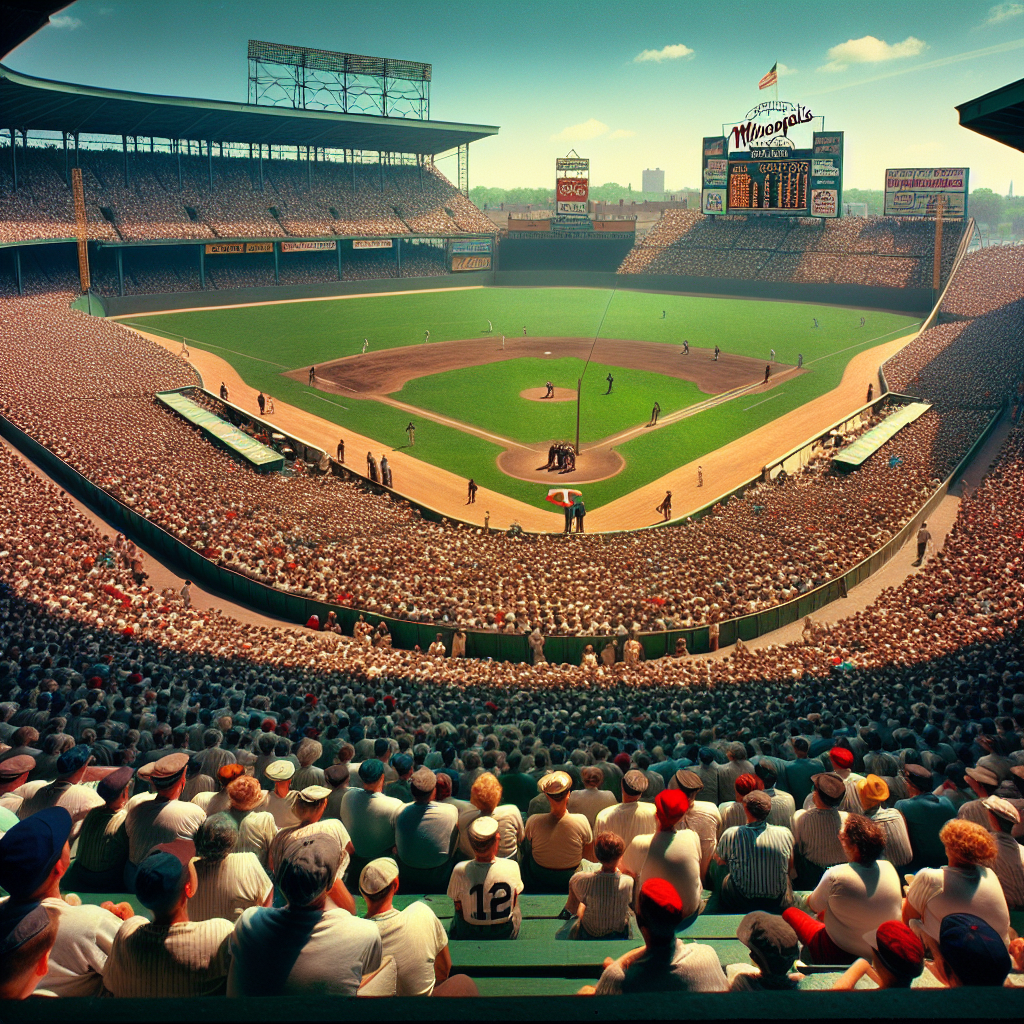
Metropolitan Stadium was more than just a ballpark; it was an architectural marvel of its time. Designed with a modernist approach, the stadium incorporated cutting-edge features that set it apart from its contemporaries. The seating capacity varied over the years, initially accommodating approximately 18,000 fans but eventually expanding to around 40,000. The layout provided excellent sightlines from virtually every angle, ensuring that fans could enjoy an unobstructed view of the action on the field.
One of the stadium’s standout features was its multi-level design. The lower deck offered proximity to the action, making fans feel like they were part of the game, while the upper deck provided sweeping views of the field and surrounding area. This tiered arrangement became a hallmark of modern ballpark design and influenced future stadiums across the country. Additionally, Metropolitan Stadium was among the first to introduce an escalator system, a novel addition that facilitated the smooth movement of fans between different levels.
The stadium’s outfield dimensions were another notable aspect. The left field measured 343 feet from home plate, while the right field was a formidable 367 feet away. Center field stretched to an imposing 411 feet, making it a challenge for even the most powerful hitters. These dimensions added to the stadium’s uniqueness and created thrilling moments as players grappled with the expansive outfield. The architects’ ingenuity in balancing aesthetic appeal with functional design cemented Metropolitan Stadium’s reputation as a state-of-the-art venue.
Memorable Moments
Over its 21-year lifespan as the home of the Minnesota Twins, Metropolitan Stadium played host to an array of unforgettable moments that stand as testaments to the ballpark’s storied legacy. One of the most iconic events occurred on April 12, 1966, when the Twins’ very own Harmon Killebrew launched a mammoth home run that sailed over the left-field bleachers and landed in the parking lot. This titanic blast not only exemplified Killebrew’s prodigious power but also became a part of local lore, earning the nickname “Killebrew’s Seat” for the spot where the ball landed.
Another memorable moment occurred on September 26, 1972, when the Twins faced the Oakland Athletics. Trailing 5-2 in the bottom of the ninth inning, the Twins staged an incredible comeback, capped by a walk-off single by Tony Oliva. This dramatic victory was a microcosm of the resilience and determination that characterized the Twins’ tenure at Metropolitan Stadium. The electric atmosphere and roar of the crowd during such moments underscored the deep connection between the team and its fans.
Metropolitan Stadium also witnessed historic performances from visiting legends. On August 3, 1962, Mickey Mantle of the New York Yankees hit one of the longest home runs in the ballpark’s history, further solidifying the stadium’s reputation as a venue where greatness was routinely on display. These memorable moments, etched in the memories of those who witnessed them, are a testament to the enduring legacy of Metropolitan Stadium in the annals of baseball history.
Fan Experience
The experience of attending a game at Metropolitan Stadium transcended the mere act of watching baseball; it was a communal event that brought people together. Fans cherished their time at “The Met,” creating lasting memories that extended beyond the final out. The stadium’s design facilitated an intimate and engaging atmosphere, where the cheers and chants of the crowd reverberated through the stands, uniting everyone in a shared passion for the game.
One of the unique aspects of the fan experience at Metropolitan Stadium was the accessibility and affordability it offered. Tickets and concessions were reasonably priced, making it a family-friendly destination for baseball enthusiasts of all ages. The family-oriented environment was further enhanced by the presence of a picnic area beyond the outfield, where fans could enjoy a relaxed outing while watching the game. This blend of affordability and comfort helped cultivate a loyal fan base that supported the Twins through thick and thin.
Tailgating was another beloved tradition at Metropolitan Stadium. Before and after games, the parking lots transformed into vibrant gathering spaces where fans grilled food, played catch, and shared stories. This pre-game ritual added to the sense of community and camaraderie, reinforcing the notion that attending a Twins’ game was as much about the social experience as it was about the sport itself. The fan-centric atmosphere of Metropolitan Stadium made it a cherished venue for baseball lovers throughout its existence.
Legacy and Transformation
As the years went by, the landscape of professional sports evolved, and so did the demands on venues. By the late 1970s, Metropolitan Stadium faced increasing challenges, including the need for modern amenities and the desire for a multi-purpose facility that could accommodate other sports and events. The push for a new stadium culminated in the construction of the Hubert H. Humphrey Metrodome, which opened in 1982. While the Metrodome offered state-of-the-art features and a controlled environment, the transition marked the end of an era for Metropolitan Stadium.
The final game at Metropolitan Stadium took place on September 30, 1981, as the Twins faced the Kansas City Royals. The occasion was bittersweet, marked by ceremonies that paid homage to the ballpark’s illustrious history. Fans filled the stands one last time, bidding farewell to a beloved venue that had been an integral part of their lives for over two decades. The emotional speeches and nostalgic reflections underscored the deep attachment that both fans and players had to “The Met.”
Following its closure, the stadium was eventually demolished in 1985 to make way for the Mall of America, one of the largest shopping and entertainment complexes in the world. However, the legacy of Metropolitan Stadium continues to resonate with long-time Twins’ fans and baseball historians. Plaques and markers within the Mall of America commemorate the ballpark’s location, including the exact spot where Harmon Killebrew’s legendary home run landed. These tributes serve as a reminder of the historic role Metropolitan Stadium played in the cultural and sporting fabric of Minnesota.
Conclusion
Metropolitan Stadium holds a special place in the hearts of baseball enthusiasts, particularly those who witnessed the Minnesota Twins’ early years on its hallowed grounds. Its impact goes beyond the games played; it fostered community spirit, generated unforgettable memories, and catalyzed the growth of professional sports in Minnesota. The ballpark was more than the sum of its parts; it was a symbol of ambition, resilience, and the unyielding love for baseball that transcends generations.
Although it has been decades since the final pitch was thrown at Metropolitan Stadium, the stories and legends that emerged from within its walls continue to resonate. From Harmon Killebrew’s awe-inspiring home runs to the dramatic comebacks and historic performances by baseball greats, the stadium’s legacy is preserved through the memories of those who experienced its grandeur firsthand. The tributes and markers at the Mall of America ensure that the spirit of “The Met” endures, reminding us of the cherished past that played a pivotal role in shaping the present.
As we reflect on Metropolitan Stadium’s illustrious history, we come to appreciate the foundational role it played in the Minnesota Twins’ journey and the broader narrative of Major League Baseball. It was a place where dreams took flight, where underdogs triumphed, and where the power of community and sport converged in a harmonious celebration of America’s pastime. Even as new ballparks rise with modern amenities, the nostalgic allure of Metropolitan Stadium remains a beacon of baseball’s timeless appeal and enduring legacy.
Frequently Asked Questions
1. What was the significance of Metropolitan Stadium in the history of the Minnesota Twins?
Metropolitan Stadium holds a special place in the heart of baseball enthusiasts as it served as the cradle for the Minnesota Twins, marking their inception in Major League Baseball. Originally, this stadium opened its gates on April 24, 1956, playing host to the Minneapolis Millers, a minor league team. The stadium is famously recognized for becoming the home of the Minnesota Twins in 1961 after the team moved from Washington and changed its name from the Washington Senators. This transition represented a transformative period for professional baseball in Minnesota, and “The Met” became a beloved landmark for fans. Over the years, it witnessed countless memorable moments, becoming a temple where Minnesota’s vibrant baseball culture blossomed.
2. Can you describe the location and surroundings of Metropolitan Stadium?
Metropolitan Stadium was strategically nestled in the suburbs of Bloomington, Minnesota, an area widely recognized for its impressive expansion amidst the sprawling growth of the Twin Cities: Minneapolis and St. Paul. At the time of its establishment, Bloomington was a burgeoning community setting the stage for a bustling sports hub. The stadium’s location was not just a spot on the map but a place where community gatherings, excitement, and sporting passion converged. The locale facilitated easy access for fans across the region, serving as the epicenter of sports enthusiasm in the area. As a hallmark of its era, the site now remains ingrained in the memories of those who experienced its vibrant atmosphere firsthand.
3. How did the transition from a minor league stadium to hosting a major league team impact the stadium’s design and structure?
When Metropolitan Stadium was first constructed, it was with the intention of hosting the Minneapolis Millers, a minor league baseball team. However, the move to accommodate a Major League team like the Minnesota Twins necessitated significant adjustments to its design and structure. The stadium, which was modest in its initial setup for minor league games, underwent expansions to meet the requirements and standards of the Major League Baseball. This meant not only increasing seating capacity to accommodate a much larger crowd but also ensuring the stadium had all the necessary facilities and amenities associated with major league events. Additionally, the infrastructure needed upgrades to handle the increased volume of attendees and media coverage that comes with a Major League team. These changes reflect how “The Met” evolved from its minor league beginnings to become a central hub for major league sports.
4. What memorable events took place at Metropolitan Stadium that are still talked about by baseball fans today?
Metropolitan Stadium is remembered for its storied history and the unforgettable events that unfolded there, becoming legends in the world of baseball. One such iconic moment includes the renowned All-Star Game of 1965, which was held at the stadium, drawing attention from across the nation. Additionally, the powerful home runs hit by Harmon Killebrew, one of the most celebrated players in Twins history, remain etched into the memories of longstanding baseball fans. These explosive hits are part and parcel of the stadium’s rich history, illustrating the electric atmosphere and high-energy games that were a staple at The Met. Furthermore, the venue played host to numerous nail-biting games and significant milestones that continue to stir the imaginations of those fascinated by baseball lore and history.
5. What ultimately led to the closure and demolition of Metropolitan Stadium, and what exists in its place today?
The ultimate closure and dismantling of Metropolitan Stadium were largely the result of its aging infrastructure and the rising demand for a modern, multi-purpose sporting facility. Like many stadiums of its age, The Met began to show signs of wear and no longer met the evolving needs and expectations of both players and fans. With the emergence of advanced stadium designs that offered better facilities, comfort, and accessibility, Metropolitan Stadium was eventually forced to make way for newer developments. The stadium officially closed its doors in 1981 after the Twins and the Vikings played their last games there. Today, the Mall of America, one of the largest shopping and entertainment complexes in the United States, stands where The Met once proudly hosted baseball games. This transformation marks a significant urban development, symbolizing the dynamic progression from the historical past to a modern commercial and recreational center.