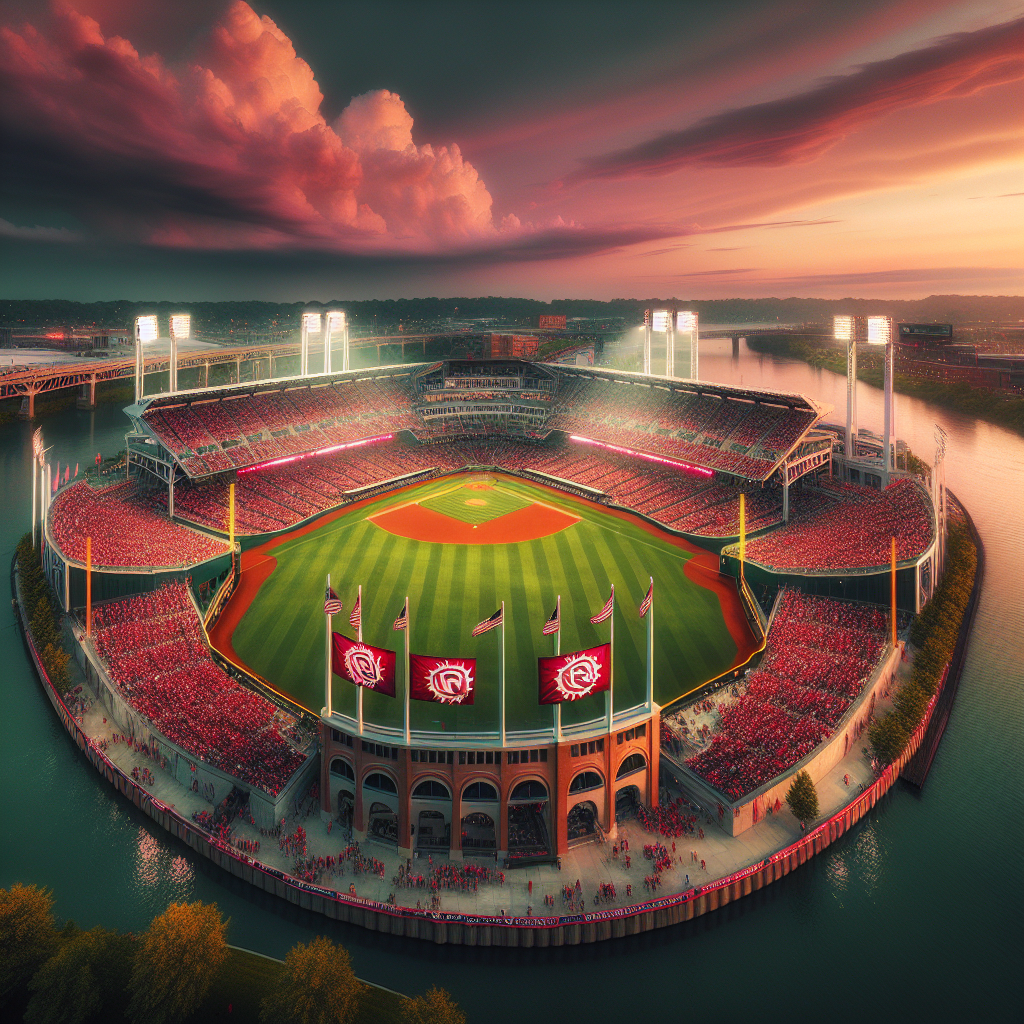
Baseball enthusiasts often find it captivating to trace the histories of iconic ballparks that have staged some of the most unforgettable moments in the sport’s history. One such hallowed ground is Riverfront Stadium, prominently recognized as the home of the Big Red Machine. This stadium, which stood as the pride of Cincinnati, saw triumphs, heartaches, and everything in between, shaping the course of modern baseball.
Introduction
Riverfront Stadium, also known as Cinergy Field in its later years, was more than just a place where baseball games were played. It was a cultural landmark and a beacon of Cincinnati’s sporting heritage. Situated on the Ohio River, this multipurpose coliseum played a significant role in baseball history from its inception in 1970 until its closure in 2002. As the residence of the ferocious Cincinnati Reds, often referred to as the Big Red Machine, Riverfront Stadium became the center stage for an era of baseball dominance marked by prowess, determination, and a blend of superlative talent.
The unmistakable architecture of Riverfront Stadium, with its circular design and AstroTurf field, symbolized a shift in arena constructions during the late 20th century. It wasn’t just a baseball stadium; its multipurpose nature allowed it to host football games, concerts, and various large events, embedding itself further into the cultural fabric of Cincinnati. The venue encapsulated the spirit of innovation, marking a departure from the old-bandbox parks to more modern, multifunctional arenas that could draw in crowds throughout the year.
Birth of a Landmark
The necessary push for a new stadium came in the mid-1960s when the city was looking to replace the aging Crosley Field. The project aimed to create a contemporary facility that could accommodate a larger audience and reflect the city’s growth. Groundbreaking for the new stadium began on February 1, 1968, and it was an ambitious project that represented a significant investment in both monetary terms and the future projection of the city’s image. Designed to be a state-of-the-art structure, the Riverfront Stadium epitomized the Modernist architectural leanings of its time.
On June 30, 1970, Riverfront Stadium opened its doors, christened by a game between the Cincinnati Reds and the Atlanta Braves. A crowd of over 51,000 spectators witnessed this historic opening, heralding the beginning of a new chapter for baseball in Cincinnati. Despite its cold, concrete exterior, the stadium quickly warmed up to fans through the thrilling performances inside its walls. The seating arrangement, which allowed for an intimate yet expansive view, facilitated a communal experience for fans whose energetic support eventually became a staple of the Big Red Machine era.
The Rise of the Big Red Machine
With the inception of Riverfront Stadium, Cincinnati Reds launched into a golden era often referred to as the age of the Big Red Machine. This nickname was not arbitrary; it was earned through relentless team performance, characterized by both dynamism and consistency from players who became household names. This period, spanning the 1970s, saw the Reds dominating the National League and securing multiple playoff victories—including World Series Championships in 1975 and 1976—establishing the stadium as a fortress of baseball excellence.
Key players such as Johnny Bench, Joe Morgan, Tony Pérez, and Pete Rose brought a harmonious fusion of hitting power, defensive dexterity, and strategic intelligence. Their collective performance turned Riverfront into an arena of celebrated sportsmanship. Managed by Sparky Anderson, this team wasn’t just winning games; they were redefining the very essence of team-based baseball. The synergy on and off-field emboldened local fans and carved Riverfront Stadium into a sanctuary of monumental baseball memories that are still cherished by many.

A Stadium of Firsts and Records
Riverfront Stadium was no stranger to historical milestones, hosting numerous unforgettable moments. One of the most significant ones came in 1974 when Hank Aaron hit his historic 714th home run, tying Babe Ruth’s long-standing record. This was a moment representative of both baseball’s evolutionary narrative and the stadium’s role as a stage for exceptional athletic achievements. Similarly, in 1985, Pete Rose hit his 4,192nd career hit in this very arena, surpassing Ty Cobb’s record, and further cementing Riverfront’s place in the annals of baseball lore.
Beyond individual accolades, the stadium also set standards with its advanced facility upgrades over time. The installation of AstroTurf marked one of the first major adoptions of artificial turf—an innovative move that influenced other ballparks nationwide. This innovation culminated in better game dynamics and player performances, albeit also ushering in debates about the impact of such surfaces on player health. Riverfront Stadium was thus a pioneer in not just game hosting, but also in advancing the technology associated with sporting venues.
The Multipurpose Legacy
While baseball was the heartbeat of Riverfront Stadium, its influence was magnified by its ability to host football games, major concerts, and socio-cultural events. It was the home of the Cincinnati Bengals from 1970 until 1999, marking another feather in the stadium’s cap as a multipurpose venue that effectively catered to both of America’s athletic passions: baseball and football. The transition between sporting formats was seamless, demonstrating the stadium’s versatile design.
Concerts and significant public gatherings further amplified Riverfront’s community impact. It hosted numerous concerts from legendary artists, thereby becoming a venue not just for sports enthusiasts but also for music aficionados. The likes of The Rolling Stones and Paul McCartney graced its stage, adding an artistic flair to its robust sporting legacy. Such events ensured that Riverfront Stadium became a holistic entertainment site that could draw diverse crowds beyond the sports domain.
The Last Years and Demolition
As the 1990s drew to a close, so too did the era of Riverfront Stadium. By this time, newer ballparks with more advanced amenities and designs were coming into vogue, and Riverfront’s concrete-heavy architecture began to look outdated. The opening of the Great American Ball Park in 2003 spelled the end for Riverfront as a functional ballpark. The final Reds game played there on September 22, 2002, was a bittersweet affair, laden with emotional farewells and nostalgic reminiscing from fans and players alike.
The stadium was subsequently demolished on December 29, 2002. Its tearing down was met with mixed emotions; while it symbolized progress and the ushering in of a new era with better facilities, it also marked the end of an iconic chapter in Cincinnati’s sporting history. The site left behind was quickly redeveloped, but the memories of Riverfront Stadium continued to live on in the hearts of those who had experienced its electrifying atmosphere.
Conclusion
Riverfront Stadium’s legacy cannot merely be encapsulated by its structural design or even its function as a multipurpose venue. It is deeply interwoven with the spirit of a city that prided itself on its athletic excellence, community engagement, and cultural vibrancy. Whether it was the indomitable Big Red Machine, the pivotal milestones in baseball records, or the multitude of events that brought fans together, Riverfront was a beacon of collective memory and shared joy.
Even though the physical structure no longer stands, its essence endures through storytelling, memorabilia, and the indelible mark it left on the city’s identity. Riverfront Stadium was more than a place; it was a testament to an era, a celebration of sporting greatness, and a haven for fans who found in its confines unforgettable moments of triumph, camaraderie, and sheer enjoyment. The aura of Riverfront Stadium lives on, reminding us that what we often call history is, in fact, the compendium of shared human experiences and the places that harbor them.
Frequently Asked Questions
1. What was Riverfront Stadium, and why was it significant?
Riverfront Stadium, later known as Cinergy Field, was one of the most storied ballparks in Major League Baseball. Located in Cincinnati, Ohio, it opened on June 30, 1970, and became the home of the Cincinnati Reds, hosting numerous memorable moments until its closure in 2002. The stadium gained legendary status as the home of the “Big Red Machine,” a term referring to the Reds teams of the 1970s that dominated the National League with their remarkable performances and charismatic players. This period was characterized by outstanding personalities like Johnny Bench, Joe Morgan, and Pete Rose, leading to multiple playoff appearances and World Series victories in 1975 and 1976, captivating fans and earning a lasting place in baseball history.
2. Why was the team called the “Big Red Machine”?
The term “Big Red Machine” was coined to describe the Cincinnati Reds during their peak years in the 1970s due to their highly efficient, powerful, and successful style of play. Managed by Sparky Anderson, they were giants of the Major League Baseball scene, sweeping up trophies and records. Their lineup was teeming with Hall of Famers and All-Stars, comprising explosive hitters, skillful pitchers, and adept fielders. This era represented the epitome of team chemistry and talent, which made Riverfront Stadium an electrifying venue for baseball enthusiasts. Fans rallied around the team, and the “Big Red Machine” became synonymous with dominance, consistency, and thrilling baseball, encapsulating an era of excellence in sports history.
3. What type of events and features did Riverfront Stadium offer?
Riverfront Stadium was a multipurpose venue, initially designed to host both baseball and football games. It was home to not only the Reds but also the NFL’s Cincinnati Bengals until Paul Brown Stadium opened in 2000. The stadium was characterized by its distinctive circular design, typical of the era’s multipurpose stadiums, with expansive seating accommodating over 52,000 baseball fans and 60,000 for football. Beyond sports, Riverfront Stadium was a hub for concerts, political events, and community gatherings. Over three decades, it witnessed not just sporting history but also cultural moments that brought people together from all over the region, making it a beloved landmark in Cincinnati.
4. What were some key games and events that took place at Riverfront Stadium?
Some of the most iconic games in baseball history took place at Riverfront Stadium. One of the standout moments was the 1975 World Series, particularly Game 6, which is often heralded as one of the greatest games in baseball history. The stadium also hosted the 1970 and 1988 All-Star Games, showcasing baseball’s top talent on a national stage. In addition to baseball, the stadium was a venue for memorable NFL games, hosting several AFC championship contests and exciting matchups. Events at Riverfront went beyond sports; famous musicians performed concerts here, including The Who and the Rolling Stones, adding to the vibrant history of the stadium.
5. What led to the closure and demolition of Riverfront Stadium?
By the late 1990s, the demand for more modern facilities led to the decision to replace Riverfront Stadium. The newer ballparks provided additional amenities, improved sightlines, and a more intimate experience for fans, features that Riverfront, with its multipurpose design, lacked. The era of specialized stadiums began to take precedence as teams sought to maximize the fan experience and financial prospects. In 2000, the opening of the nearby Great American Ball Park and Paul Brown Stadium, tailored specifically for baseball and football, respectfully rendered Riverfront obsolete. It was eventually demolished in December 2002, making way for new developments along the Cincinnati riverfront, but its legacy continues to resonate in Cincinnati’s sports culture.