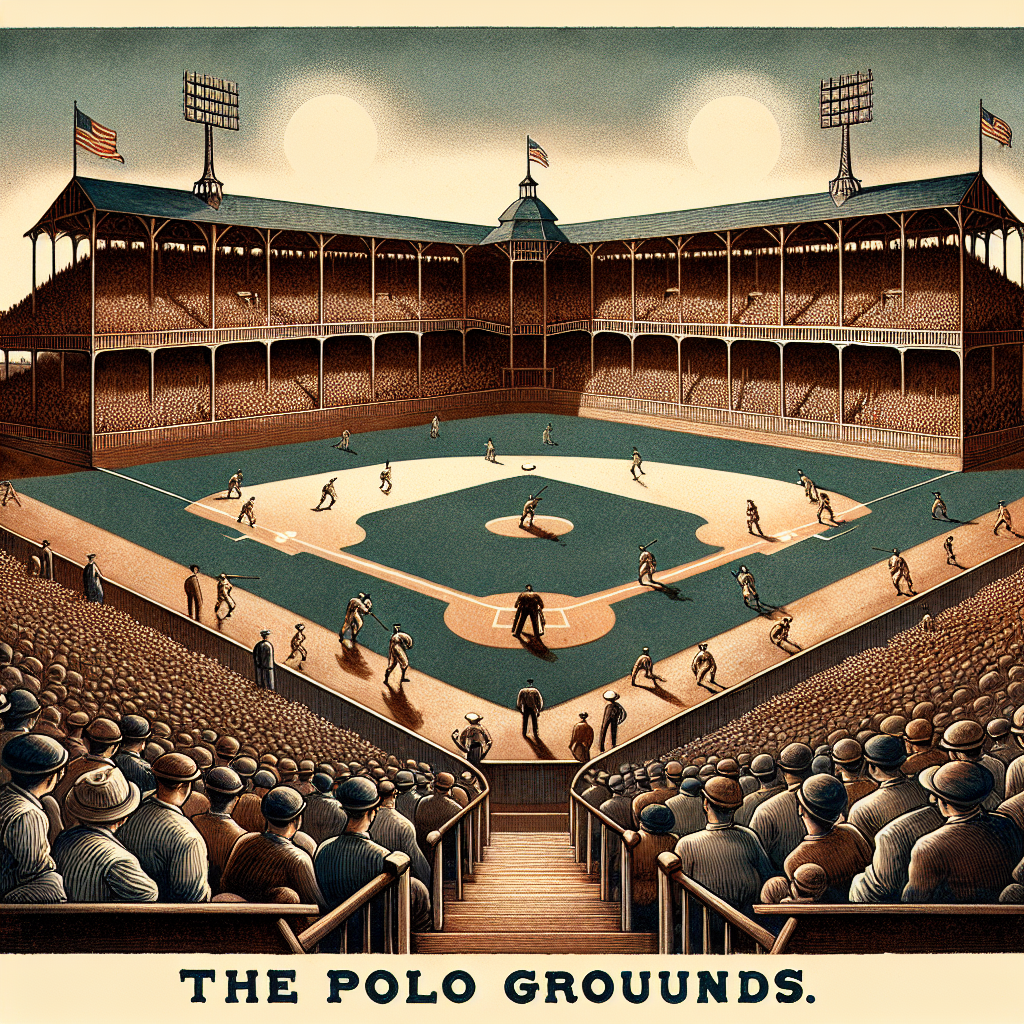
When one talks about the golden age of baseball, quintessential images of historic ballparks often come to mind. Among these, the Polo Grounds stands out as a unique and enduring icon of New York’s rich baseball heritage. Established in the heart of Manhattan, the Polo Grounds was not just a stadium; it was a hallowed stage that saw legendary feats and housed some of baseball’s most distinguished teams. This article dives deep into the intriguing history, architectural marvel, and the indelible legacy of the Polo Grounds.
Constructed initially for the New York Metropolitans in the late 19th century, the Polo Grounds witnessed numerous pivotal moments in baseball history. Over its storied 75-year existence, it served as home to not only the New York Giants but also fleetingly to the New York Yankees and the nascent New York Mets. Built in an era where baseball architecture was undergoing rapid transformation, the Polo Grounds developed a character that was unmistakably its own.
The Polo Grounds was not just renowned for its unusual shape or the emerald green that carpeted its outfield; it became a symbol of communal identity for generations of New Yorkers. Fans flocked in thousands to this iconic ballpark, where the roar of the crowd, the crack of the bat, and the excitement of the game created an atmosphere almost magical in its intensity. This ballpark etched its place in the annals of baseball history, not merely as a venue, but as a witness to some of the sport’s most storied events.
The Architectural Marvel of the Polo Grounds
The Polo Grounds wasn’t just a ballpark; it was an architectural oddity that fascinated fans and players alike. Built in a configuration quite unlike any modern stadium, the Polo Grounds featured a striking horseshoe shape. This unique design led to incredibly short foul lines but a cavernous center field, principles that baffled hitters and delighted pitchers. In fact, the distance to the center field wall measured an astounding 483 feet, making it one of the deepest outfields ever.
The stadium’s layout also included some of the most unusual quirks found in baseball. The stairways leading up to the grandstands gave fans a panoramic view of the field, while steep inclines challenged players chasing fly balls. The Polo Grounds also boasted three versions of center-field bleachers during its existence, each altering the dynamics of the game played there.
Aside from its peculiar shape, the architecture included landmarks like the ‘Coogan’s Bluff,’ a cliffside area overlooking the stadium where ticketless fans could catch glimpses of the action. The iconic John T. Brush Stairway, which still stands today as a relic of the past, allowed easy access to the stadium and facilitated the throngs of fans who made their pilgrimage to the ballpark.
These architectural features contributed to the uniqueness of the playing experience at the Polo Grounds. Outfielders had to gauge the tricky angles of the walls, pitchers had a vast expanse to work with, and hitters had enticingly short distances down the lines to aim for. It wasn’t just a place for baseball; it was a cathedral of the sport, a venue that shaped the careers of those who played within its confines.
Historic Moments at the Polo Grounds
Over its 75-year history, the Polo Grounds played host to an array of historic moments that have been etched into the annals of baseball lore. This ballpark witnessed some of the greatest games, the most unforgettable players, and historic events that still resonate with fans today.
One of the most memorable moments occurred in 1951 when Bobby Thomson of the New York Giants hit the “Shot Heard ‘Round the World.” This iconic home run decided the National League pennant, sending the Giants to the World Series and forever embedding Thomson’s name in baseball history. The event was a thrilling culmination of one of the most dramatic comebacks in the sport.
The Polo Grounds also played a key role in the careers of baseball legends like Willie Mays, who made one of the most iconic defensive plays in history – “The Catch” – during the 1954 World Series. Mays sprinted towards the deepest part of the center field and made an awe-inspiring over-the-shoulder catch, showcasing his unparalleled athleticism and solidifying his position as one of the greatest players to grace the field.
Furthermore, the Polo Grounds was the site for historical games beyond Major League Baseball. It hosted three of the famed Negro League World Series, providing a platform for African American athletes to display their extraordinary talents, thus contributing significantly to the integration and evolution of the sport.
Teams and Players of the Polo Grounds
The Polo Grounds was not only a stadium of iconic moments but also a home for legendary teams and players who defined eras of baseball excellence. Initially, it was built for the minor league New York Metropolitans and then became the illustrious home of the New York Giants for nearly six decades. Under the stewardship of the Giants, the stadium saw some of the greatest baseball players take center stage.
The Giants were a dominant force in Major League Baseball, and the Polo Grounds was their fortress. Key figures included Christy Mathewson, whose pitching mastery captivated fans, and Mel Ott, known for his prolific home run-hitting capabilities. These stalwarts became household names, they inspired generations to take up the sport.
Interestingly, the New York Yankees took up residence at the Polo Grounds for a decade before the construction of Yankee Stadium. During their tenure here, Babe Ruth famously honed his slugging skills, filling the seats with fans eager to witness his power at the plate. This period was crucial in establishing the Yankees as a juggernaut in the world of baseball.
The Polo Grounds’ final Major League tenant was the New York Mets. Although their stay was brief, it marked the transition of an era, bridging the gap between the storied past of the Giants and the future of this nascent franchise. Despite the early struggles, the Mets helped usher in a new chapter in New York’s baseball narrative, signifying the enduring legacy of the Polo Grounds.
The Roar of the Crowd
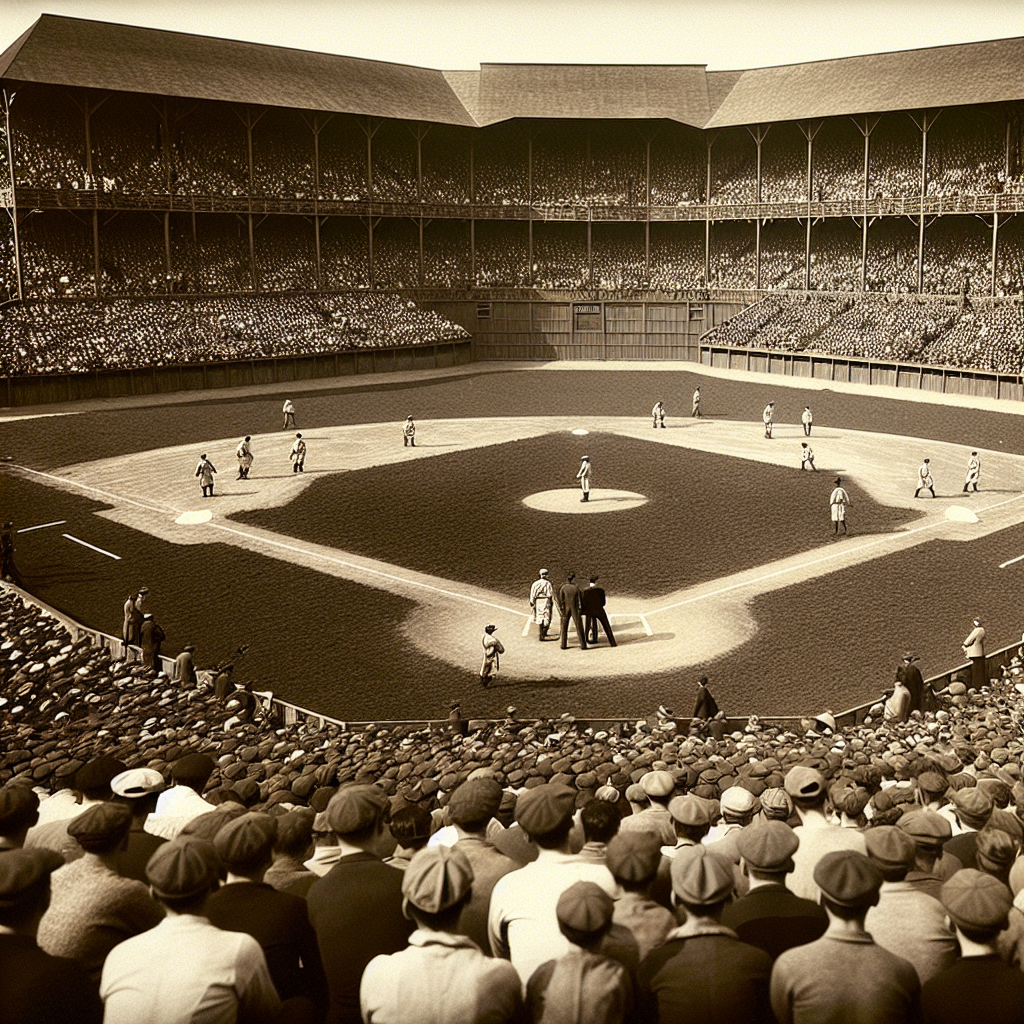
No account of the Polo Grounds would be complete without homage to the passionate fans who filled its stands. The ballpark wasn’t just a place for watching baseball; it was a communal hub where fans experienced the highs and lows of America’s pastime together. The atmosphere generated by these legions of fans became a defining feature of the Polo Grounds.
The energy within the stadium was palpable. From the raucous cheers for home runs that sailed over the short fences to the collective gasps when a center fielder chased a deep drive, the crowd was an integral part of the experience. Fans brought life to every game, their emotional investment creating a vibrant and unforgettable atmosphere.
The Polo Grounds was also a microcosm of New York City itself – diverse, bustling, and full of character. People from all walks of life came together, united by their love for the game. It was a place where bonds were formed, family traditions were established, and memories were made. Whether it was the daily commuters who stopped by for an evening game or the dedicated fans who came from far and wide, the Polo Grounds served as their collective anchor in the sea of New York City.
It wasn’t just the numbers but the quality of interactions that set this stadium apart. Fans were knowledgeable, with a deep understanding of the game. They appreciated the nuances and respected the efforts of the players, irrespective of the team they played for. This mutual respect and love for the sport fostered a sense of community that transcended the boundaries of the ballpark.
The Enduring Legacy of the Polo Grounds
The Polo Grounds may no longer physically stand, but its legacy endures in the hearts and memories of baseball aficionados. Though it saw its final game in 1963 before being demolished, the influence this stadium had on the game’s history remains profound. The Polo Grounds became a symbol of a bygone era, a testament to the passion, skill, and cultural significance of baseball in America.
Its architectural uniqueness, historic moments, and the iconic players and teams that called it home have cemented the Polo Grounds as an irreplaceable part of baseball lore. Long after its demolition, former players and fans reminisce about the ‘ol ballpark, bringing anecdotes and tales to life with every retelling, ensuring that the spirit of the Polo Grounds continues to resonate.
Modern stadiums may boast advanced amenities and innovative designs, but the section of baseball history that the Polo Grounds occupies remains unmatched. It serves as a reminder of the sport’s evolution, the timeless appeal of the game, and the communal joy it can bring. The Polo Grounds was more than just a ballpark; it was an institution that contributed vastly to the narratives that have shaped baseball into what it is today.
For contemporary baseball fans and historians alike, the Polo Grounds stands as a beacon of nostalgia and inspiration. It played a crucial role in bridging various eras of the sport, acting as a stage for monumental games, remarkable players, and legions of passionate fans. In doing so, the Polo Grounds etched itself into the very fabric of baseball culture, ensuring that its legacy will be celebrated and remembered for generations to come.