
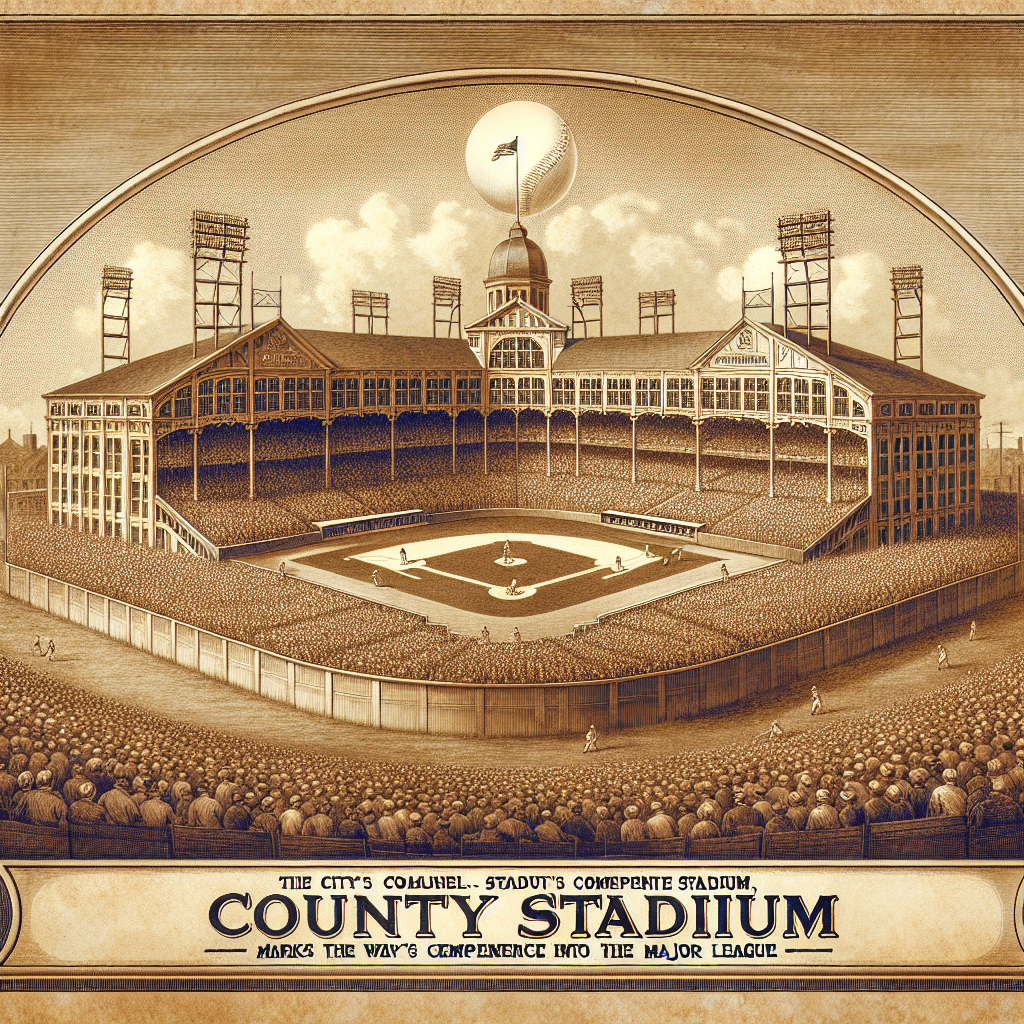
In the heart of America’s Dairyland lies a sports treasure, revered by baseball aficionados and Milwaukeeans alike: County Stadium. Erected in the post-World War II era, this modest yet monumental ballpark heralded a new dawn for Major League Baseball (MLB) in Milwaukee. Beyond being a mere sports venue, County Stadium embodied the city’s aspirations, its fervent love of baseball, and the unyielding spirit of its community. In its heyday, it bore witness to historic games, celebrated players, and ecstatic fans, etching itself indelibly into the annals of baseball history.
Constructed in 1953, initially to lure a Major League team to Milwaukee, County Stadium was a beacon of hope during a transformative period for baseball. The idea of luring the Boston Braves to Milwaukee might have seemed far-fetched, but thanks to the concerted efforts of local businessmen and city officials, this dream rapidly morphed into a resounding reality. The result was electric. By 1953, the Braves found a new home, and Milwaukee was officially placed on the major league map, catapulting the city to national prominence.
The inauguration of County Stadium wasn’t just a local event; it reverberated nationwide, showcasing the potential of mid-sized American cities to host major league teams. The Braves’ immediate success – often reminiscent of a modern-day fairy tale – neatly dovetailed with the excitement of the new stadium, creating an atmosphere that was practically palpable. Over the years, County Stadium became more than just a baseball field. It was Milwaukee’s heartbeat, a place where dreams took flight and memories were forged in the crucible of America’s favorite pastime.
This article takes an in-depth look at the iconic County Stadium, chronicling its significance in baseball history, the memorable events within its hallowed stands, and the enduring legacy it has left on Milwaukee and the broader baseball community.
A New Home for the Braves
Milwaukee County Stadium’s initial innings were deeply intertwined with the relocation of the Boston Braves. The early 1950s were a turbulent period for the Braves, struggling both on the field and at the box office. Facing dwindling attendance and sagging revenues, the Braves’ ownership saw a ray of hope in Milwaukee’s brand new stadium. The dream was ambitious: to move an established MLB team across the country. Yet, the financial incentives, combined with Milwaukee’s vibrant baseball culture and the state-of-the-art County Stadium, were too compelling to ignore.
The relocation to Milwaukee in 1953 marked a seismic shift in baseball’s geography. When the Braves played their first home game at County Stadium on April 14, 1953, against the St. Louis Cardinals, they were greeted by a sell-out crowd of enthusiastic fans. This historic game was more than a win for the Braves; it was a victory for Milwaukee. The stands echoed with cheers, and the city reveled in newfound major league status. Over the next decade, County Stadium would become not only a sporting venue but also a symbol of communal pride and the embodiment of Milwaukee’s spirit.
During their tenure at County Stadium, the Braves experienced unprecedented success. They clinched National League pennants in 1957 and 1958, culminating in a World Series victory in 1957. This golden period of Milwaukee Braves baseball energized the city, and County Stadium was the epicenter of this baseball renaissance. Contributing to this success were legendary names like Hank Aaron, Eddie Mathews, and Warren Spahn, who set a high bar of excellence on the County Stadium diamond. Their legendary performances echoed through the corridors of the stadium, etching unforgettable moments into its storied history.
This era also witnessed an outpouring of fan support that became the lifeblood of County Stadium. Attendance figures soared, demonstrating that Milwaukee could not only support but passionately sustain a Major League Baseball team. The synergy between the Braves and their fans fostered a thriving baseball culture that continues to resonate in Milwaukee’s sports narrative. The team’s departure in 1965 was poignant, marking the end of a golden era but also underscoring the stadium’s role in elevating Milwaukee on the national stage.
The Birth of the Brewers
The departure of the Braves left a void in Milwaukee’s sporting landscape, but it wasn’t long before the city would once again be thrust into the national baseball limelight. County Stadium, already steeped in historical significance, found its soul revived with the arrival of the Milwaukee Brewers in 1970. Initially born as the Seattle Pilots, the team faced financial difficulties and relocated to Milwaukee after just one season. With this move, County Stadium became the new homeland for the Brewers, a team destined to carve out its own chapter in baseball history.
The Brewers’ early years were a period of rebuilding and establishing their identity. County Stadium, with its iconic façade and intimate setting, provided a nurturing environment for this fledgling franchise. The fans, still reeling from the Braves’ departure, embraced the Brewers with open arms, showcasing their unwavering love for the sport. The stadium once again echoed with the sounds of roaring crowds, the crack of bats, and the timeless rhythm of baseball.
Throughout the 1970s and 1980s, County Stadium bore witness to numerous memorable moments. Perhaps none more dramatic than the Brewers’ 1982 season, a banner year that saw the team clinch the American League pennant and advance to the World Series. Stars like Robin Yount, Paul Molitor, and Rollie Fingers became household names, their heroic performances solidifying their places in Brewers’ lore. The stadium was a cauldron of excitement during that magical season, climaxing with the unforgettable home games in the World Series against the St. Louis Cardinals.
While the Brewers fell just short of championship glory in 1982, the atmosphere at County Stadium during this period was nothing short of electric. The loyal fan base turned each game into a celebration, a testament to the deep connection between the city and its baseball team. The Brewers’ presence reaffirmed County Stadium’s status as more than just a sports venue—it was a cultural and community hub, where families and friends gathered to share in the collective joy and heartache of baseball.
The legacy of the Brewers’ early years at County Stadium is reflected in the continued passion for the team, which persists to this day. The foundation laid during those formative years has been instrumental in shaping the franchise’s enduring relationship with its fans, forever anchored in the memories made within the storied confines of County Stadium.
A Stadium of Firsts
County Stadium was a catalyst for numerous groundbreaking events and notable ‘firsts’ in the realm of baseball. It stood as a testament to the innovative spirit of Milwaukee, adapting to changing times and pioneering advancements that would shape the future of the sport. The stadium wasn’t just a silent witness to historic moments; it was an active participant and a stage where unique spectacles unfolded.
One of the standout ‘firsts’ occurred on May 8, 1975, when the Milwaukee Brewers hosted the Cleveland Indians in what was the first Major League Baseball game to feature a woman umpire. Bernice Gera, breaking gender barriers in a predominantly male profession, took to the field at County Stadium. Her presence was a powerful statement about inclusivity and the evolving nature of baseball, and the game became a landmark event in the history of sports.
Adding to its legacy, County Stadium was also the site of the first-ever fan ‘Kiss-Cam’. This light-hearted and now widely beloved in-game entertainment began as a quirky experiment but quickly became a staple feature in ballparks across the country. The ‘Kiss-Cam’, with its romantic or humorous moments, added a unique charm to the stadium, enhancing the fan experience and embedding itself in the culture of modern sports events.
The brass foot-wiping shoe at County Stadium was another quirky yet iconic tradition that garnered its own folklore. Positioned at the base of the players’ entrance, it became a ritual for many players to give it a tap before taking the field. Such traditions, though small, contributed to the character and charm of the stadium, creating an endearing bond with both players and fans alike.
Moreover, the stadium served as the proving ground for various technological innovations in broadcasting and stadium management. It embraced the growing influence of televised sports by upgrading its facilities to accommodate large-scale broadcasts, eventually hosting the nationally televised Game of the Week and numerous playoff games. These adaptations ensured that County Stadium remained relevant in an era where technology was rapidly transforming the way audiences engaged with sports.
Ultimately, County Stadium’s legacy as a venue of firsts is a testament to its enduring influence in the world of baseball. It was a place where boundaries were pushed, where the old guard met the new, and where the spirit of innovation and tradition harmoniously coexisted.
County Stadium’s Community Impact
Beyond the electrifying games and iconic moments, County Stadium was intrinsically woven into the fabric of the Milwaukee community. It was more than a sports venue; it was a communal gathering space where lifelong memories were forged. The stadium fostered a sense of camaraderie and unity among Milwaukeeans, bringing people from diverse backgrounds together under a common passion for baseball.
From the tailgating traditions to local school trips, County Stadium was a place where families and friends congregated to share in the joy of the game. Sundays at the stadium, particularly during Little League days, gave young aspiring players the chance to dream big, envisioning themselves stepping onto the field as future stars. These community-focused events fostered a sense of inclusiveness, making baseball accessible to all and nurturing the next generation of fans and players.
The stadium also played a pivotal role in various charitable initiatives and community programs. Numerous fundraising events, benefit games, and community outreach efforts were hosted at County Stadium, directly impacting local organizations and causes. Players often engaged with fans through meet-and-greets, autograph sessions, and community service, further strengthening the bond between the team and the city. This level of engagement helped build a reciprocal relationship where the community felt a genuine connection to both the team and the stadium.
County Stadium’s influence extended into the city’s cultural and economic realms as well. Local businesses thrived on game days, with restaurants, hotels, and shops buzzing with activity from fans and tourists alike. The influx of visitors provided economic boosts and created jobs, establishing County Stadium as not just an entertainment venue but a vital component of Milwaukee’s economic landscape.
Moreover, the communal experiences fostered at County Stadium transcended generations. For many, attending games became a family tradition, passed down from grandparents to parents to children. Stories of legendary games, favorite players, and unforgettable moments were shared and cherished, cementing the stadium’s place in the collective memory of Milwaukee’s citizenry. The sight of the stadium on a game day, packed with fans donning their team colors, became a symbol of societal unity and local pride.
Even though County Stadium no longer stands, its impact is felt throughout Milwaukee. The sense of community, the traditions, and the shared experiences it fostered continue to resonate in the hearts of those who frequented its stands. It was not just a place to watch baseball; it was a cornerstone of communal identity, a place where Milwaukee came together, forged memories, and celebrated life through the game of baseball.
The Final Innings
The twilight years of County Stadium were marked by a nostalgic mix of reflection and anticipation for the future. By the 1990s, it was clear that the venerable stadium, despite its rich history, was lagging behind modern ballpark standards. Issues ranging from uncomfortable seating to outdated facilities highlighted the need for a new venue that could offer fans a more contemporary and enjoyable experience. Thus began the discussions and eventual planning for what would become Miller Park, the new home of the Milwaukee Brewers.
As the Brewers played their final seasons at County Stadium, there was a palpable sense of celebration of its storied past and a bittersweet farewell. Fans flocked to the stadium to soak in the ambiance one last time, to relive old memories, and to create new ones. Each game carried a sense of occasion, each roar from the crowd a tribute to the history that had unfolded within those walls.
The final game at County Stadium was a fitting end to an illustrious chapter in Milwaukee’s baseball history. Played on September 28, 2000, against the Cincinnati Reds, it was an emotional day for players and fans alike. Commencing with a myriad of pre-game ceremonies that honored past players and celebrated the stadium’s legacy, the event was a poignant reminder of the deep connection between the community and their beloved ballpark. The game culminated with post-game fireworks, a dazzling display that illuminated the darkening sky, symbolizing both an end and a new beginning.
The closing of County Stadium was not just about moving to a new facility; it was about transitioning an era, preserving the memories of yesteryears while embracing the promise of the future. The Braves’ triumphant seasons, the Brewers’ thrilling 1982 campaign, and countless other moments were collectively remembered, cherished, and honored. Fans carried these memories with them to Miller Park, ensuring that the legacy of County Stadium lived on beyond its physical structure.
While the stadium was eventually demolished in 2001, its spirit endures. In its place now stands a Little League baseball field—a nod to its historic past and a symbol of hope and inspiration for future generations. This final tribute ensures that County Stadium will forever hold a special place in the heart of Milwaukee. It remains a beacon of the city’s rich baseball heritage, a testament to the enduring love of the game, and a reminder of the community’s unwavering spirit and support.
County Stadium may no longer dominate the Milwaukee skyline, but it continues to resonate in the stories shared, the traditions upheld, and the collective memory of all who experienced its grandeur. Its legacy is enshrined not just in the records and accolades, but in the hearts of Milwaukee’s citizens, ensuring it will always be remembered as the birthplace of Milwaukee’s major league dreams.
Conclusion
As we reflect on County Stadium’s storied history, it’s evident that this humble ballpark was far more than a sports venue. County Stadium was a symbol of Milwaukee’s zeal for baseball, its love for community, and its ability to dream big. From the moment it opened its gates to the Boston Braves in 1953, to its final innings with the Brewers in 2000, County Stadium was a place where aspirations were realized, and memories were etched into the fabric of baseball lore.
The stadium’s impact rippled far beyond the diamond, influencing the cultural, economic, and social facets of Milwaukee life. It was a gathering place for families, a playground for young fans, and a shrine for baseball purists. The roar of the crowd, the smell of a hot dog fresh off the grill, and the ritual of tailgating are just a few of the sensory experiences that defined a visit to County Stadium. These elements combined to create a unique atmosphere that made each game a communal celebration.
County Stadium’s legacy is preserved in the stories shared by those who sat in its stands, the generations of fans who passed down their love for the game, and the historic moments that unfolded on its field. The Braves’ triumphant years, the Brewers’ journey to the World Series in 1982, and the countless personal memories of fans are testaments to the stadium’s lasting influence. Even though it has been replaced by Miller Park, now known as American Family Field, the spirit of County Stadium lives on, ensuring that its contributions to Milwaukee’s baseball heritage will never be forgotten.
As you walk the grounds where County Stadium once stood, now home to a Little League field, it’s impossible not to feel a sense of reverence for the history that was made there. The field serves as a poignant reminder that while the physical structure may be gone, the essence of what County Stadium represented continues to inspire and shape the future of baseball in Milwaukee. It stands as a bridge between the past and the future, a testament to the enduring love for the game that transcends generations.
In conclusion, County Stadium’s journey from an ambitious project to a revered landmark is a story of dreams realized and a community united by a common passion. It’s a story that resonates deeply within the heart of Milwaukee and serves as a reminder of the power of sports to bring people together. As new chapters in Milwaukee’s baseball history continue to unfold, the legacy of County Stadium will forever remain a cornerstone of the city’s rich and vibrant sports culture.